


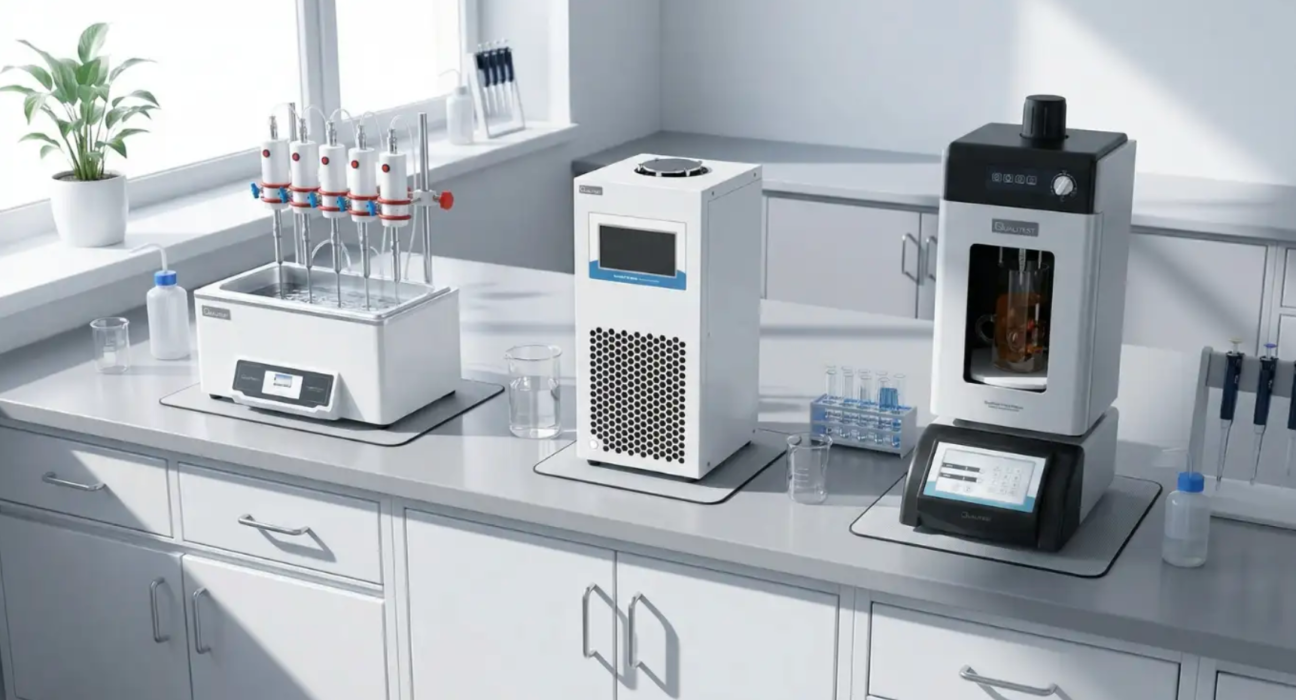
An Ultrasonicator is a powerful laboratory and industrial tool built around the principle of ultrasonic cavitation. By generating high-frequency sound waves, these systems create localized shear forces and micro-mixing through the rapid formation and collapse of microscopic vacuum bubbles. This energy is essential for disrupting cell membranes, dispersing nanoparticles, homogenizing immiscible liquids, and accelerating complex extraction workflows.
However, selecting the right system is rarely a matter of simply choosing the highest power output. The wrong format can lead to significant hurdles, such as cross-contamination risks, overheating of sensitive biological samples, or an inability to scale a successful benchtop method to pilot production. This guide is designed to help you navigate the differences between a Probe Ultrasonicator, a Contactless Ultrasonicator, and larger-scale industrial units to ensure your workflow remains repeatable and efficient. To see how these technologies are applied in modern hardware, you can explore various Ultrasonicator options on WorldofTest.
What an Ultrasonicator Actually Does
The core of any Ultrasonicator System is its ability to deliver ultrasonic cavitation precisely where it is needed. This physical phenomenon provides the high-intensity energy required for several critical applications:
- Cell and Tissue Lysis: Breaking down cell walls to release proteins, DNA, or organelles.
- Bacteria and Virus Disruption: Essential for vaccine development and microbiological research.
- Emulsification and Formulation: Creating stable mixtures of oil and water for pharmaceuticals and cosmetics.
- Nanomaterial and Pigment Dispersion: Breaking up aggregates to ensure uniform particle size in advanced materials.
- Ultrasonic-Assisted Extraction: Accelerating the removal of bioactive compounds from botanicals and food products.
While the fundamental physics remain the same, the delivery style—whether direct through a probe or indirect through a sealed vessel—determines the suitability of the machine for your specific sample type.
Start With the Workflow: What Are You Actually Processing?
Before looking at a spec sheet, you must define the constraints of your sample. Are you working with a single 500ml beaker of a robust chemical slurry, or are you processing dozens of sterile, 1.5ml tubes containing precious genomic material?
- Contamination-Sensitive Workflows: If your samples are prone to cross-contamination or must remain sterile (such as in NGS library prep), a system that requires a probe to be inserted directly into the liquid may not be ideal.
- Heat-Sensitive Samples: Sonication generates heat. If your proteins or volatile compounds degrade at elevated temperatures, you need a system with integrated cooling or advanced pulse-mode settings.
- Volume and Throughput: A small benchtop unit is perfect for R&D, but if you are moving toward pilot-scale botanical extraction, you will eventually require a flow-through or large-capacity Industrial Ultrasonicator.
Probe Ultrasonicator vs. Contactless Ultrasonicator vs. Industrial Ultrasonicator
Understanding the three primary categories of ultrasonicators is the most important step in the buying process.
Probe Ultrasonicator
The Probe Ultrasonicator (also known as a sonicator horn) is the most common format. The titanium probe is submerged directly into the sample, delivering maximum cavitation intensity at the tip.
- Best for: Fast lysis, dispersion of stubborn nanoparticles, and creating fine emulsions.
- Flexibility: Can be used with various beaker sizes and volumes simply by changing the probe (micro-tip vs. standard tip).
- Consideration: Requires thorough cleaning between samples to prevent carryover.
Contactless Ultrasonicator
In a Contactless Ultrasonicator, the sample stays sealed inside its original tubes or vials. The ultrasonic energy is transmitted through a water bath or specialized sleeve to the samples.
- Best for: Ultra-trace analysis, sterile clinical samples, and high-throughput processing of many small tubes simultaneously.
- Benefits: Zero risk of probe-based contamination and no aerosolization of hazardous biological agents.
- Consideration: Generally lower intensity than direct-probe systems, but much more consistent for delicate molecular work.
Industrial Ultrasonicator
When a process moves beyond the benchtop, an Industrial Ultrasonicator becomes necessary. These systems are often built for continuous flow or large-scale batch processing.
- Best for: Commercial-scale extraction, large-volume paint/ink dispersion, and chemical reactors.
- Features: Often includes integrated cooling jackets, stainless steel flow cells, and higher power ratings to maintain cavitation in large volumes.
- Benefits: Provides the durability and consistency required for 24/7 production environments.
When a Portable Ultrasonicator Makes Sense
For labs that require flexibility or have limited bench space, a Portable Ultrasonicator offers a practical bridge. These compact, handheld or stand-mounted probe systems are ideal for:
- Quick homogenization of small samples (0.1ml to 250ml).
- Field work or environmental sampling where a large benchtop unit is impractical.
- Labs that only perform occasional sonication and do not need a fully integrated, enclosed workstation.
A Portable Ultrasonicator typically features a lightweight design while still providing the digital controls necessary for repeatable power and timing.
Temperature Control and Repeatability: The Hidden Decision Factor
One of the most overlooked aspects of an Ultrasonicator System is how it manages the byproduct of cavitation: heat. Excessive heat can denature proteins, evaporate solvents, or alter the chemical profile of an extract.
Advanced systems address this through several features:
- Pulse Mode: Allowing the sample to “rest” and cool between bursts of energy.
- Temperature Monitoring: Sensors that automatically pause the cycle if a specific temperature threshold is reached.
- Cooling Circulation: Enclosed or industrial systems often feature jackets where a chiller can circulate fluid to maintain a constant temperature.
Ensuring your system has these controls is vital for ensuring that your method is repeatable across different operators and days.
Decision Framework: Choose the Right Ultrasonicator for Your Workflow
- Choose a Probe Ultrasonicator when… you need the highest possible energy density for tough samples, and direct contact with the sample is not a contamination concern.
- Choose a Contactless Ultrasonicator when… your samples must remain sealed, sterile, or if you are processing dozens of small tubes at once.
- Choose a Portable Ultrasonicator when… you need a mobile, compact solution for small-volume, occasional disruption or dispersion tasks.
- Choose an Industrial Ultrasonicator when… your working volumes have grown into the liter or gallon range, and you require a robust system for production-scale extraction or homogenization.
Common Buying Mistakes
- Choosing Power over Format: A 1000W probe system is useless if your sample is in a sealed 0.5ml tube.
- Ignoring Probe Wear: Titanium probes are consumables. Ensure the system you buy has easily replaceable tips or horns.
- Underestimating the Noise: Ultrasonicators are loud. If you aren’t buying an enclosed system, you will need to budget for a sound-abating enclosure to protect your lab environment.
- Neglecting Scale-Up: If you intend to scale your R&D extract to a commercial product, look for a brand that offers a clear path from benchtop units to an Industrial Ultrasonicator.
Typical Applications Buyers Should Map First
Mapping your specific needs to these common applications can help clarify which Ultrasonicator System is the best fit:
- Cell and tissue lysis for proteomics and genomics.
- Disruption of bacteria and viruses for clinical research.
- Emulsification of CBD oils or pharmaceutical creams.
- Dispersion of carbon nanotubes or pigments in materials science.
- Environmental prep of soil or water samples for pollutant analysis.
Why Buyers Compare Ultrasonicator Systems on WorldofTest
Navigating the market for high-precision sonication requires a vendor that understands the nuances of different delivery methods. The WorldofTest lineup covers everything from entry-level Portable Ultrasonicator units to high-throughput Contactless Ultrasonicator systems and industrial-scale extractors. By presenting these technologies in a workflow-centric way, they allow lab managers to focus on the results rather than just the hardware specs.
Compare ultrasonicator systems on WorldofTest and request a quote for the probe, contactless, portable, or industrial system that matches your workflow.
Final Thought
The “best” Ultrasonicator is the one that fits seamlessly into your existing sample handling process while providing the power needed for your specific disruption or dispersion goals. By evaluating whether you need direct probe contact or a contactless format, and by planning for your future volume needs, you can select a system that provides consistent, high-quality results for years. Always prioritize repeatability and temperature management, as these factors often determine the long-term success of your laboratory methods.
For more, visit Pure Magazine