The Waiting Room Epiphany
Hospitals have a particular smell. It is a mix of antiseptic, floor wax, and something sharper—anxiety. It is a smell impossible to ignore.
I was sitting in a waiting room on a Tuesday afternoon, waiting for a routine check-up that I had rescheduled three times. To pass the time, I scrolled aimlessly through my phone, but eventually, the battery dipped low, and I was forced to look up.
I noticed the people around me.
There were older bodies folded uncomfortably into rigid plastic chairs. I overheard fragments of low conversations—couples talking about aching joints, medication schedules, and the vague, ominous concept of “keeping an eye on things.”
Nothing dramatic was happening. There was no emergency. That was the unsettling part.
It struck me, with sudden and terrifying clarity, that none of these people woke up one day and suddenly became unwell. What I was seeing wasn’t bad luck. It was time. It was the accumulation of decades of small, quiet choices adding up. It was the compound interest of neglect.
I sat there and thought about my own habits: the ten hours a day sitting in a chair, the meals ordered because they were fast rather than nourishing, the movement postponed until “things calm down.”
I realized that if nothing changed, this room wasn’t just a place I was visiting. It was a preview.
Illness doesn’t usually arrive with a warning bell or a dramatic soundtrack. It grows out of repetition. But the good news, I realized, is that vitality works the same way.
We can’t rewrite our genetics, but we shape the environment they respond to. Health, I began to understand, isn’t a lottery ticket. It’s a daily practice.
Eating Real Food: The Simple Filter
Most conversations about food revolve around complex rules and deprivation. Less sugar. Fewer carbs. Intermittent fasting windows. No this, never that.
I tried those cycles. They worked briefly, fueled by willpower, and then collapsed the moment life got stressful.
What changed things for me was dropping the “rules” and replacing them with a single, simple filter: Is this real?
I stopped looking at calorie counts and started looking at ingredients. I stopped buying things that came in crinkly packages with ingredients lists longer than a paragraph. I shifted toward meals that looked like they came from the earth, not a factory.
This wasn’t about weight loss or aesthetics. It was about energy management.
I began to notice a pattern. When I ate processed food—the quick sandwich, the packaged snack—I felt a low-level heaviness settle in about an hour later. It was a “fog” that hung over my afternoon, making focus difficult and irritability easy.
But when I ate real food—vegetables, proteins, whole grains—the fog lifted.
Eating this way didn’t feel like a restrictive diet plan. It felt like relief. Food stopped being a math problem I had to solve and became what it was always meant to be: simple, clean fuel.
Movement as “Body Armor”
For a long time, I thought exercise was optional—something you did if you had extra energy or wanted to look good for a vacation.
I was wrong. Movement isn’t a bonus. It’s the maintenance required to keep the machine running.
I stopped reading studies about aging and started paying attention to the signals my own body was sending. I noticed how heavy the grocery bags felt when I carried them up the stairs. I noticed the stiffness in my lower back when I stood up after a long Zoom meeting. I realized that without resistance, I wasn’t just staying the same; I was slowly losing my ability to interact with the physical world confidently.
I didn’t want to just “get older”; I wanted to maintain the strength to live independently.
The problem wasn’t knowing this. The problem was friction.
Gyms feel inconvenient. They require a commute, a change of clothes, and a block of time I often didn’t have. I realized that if movement required a 20-minute drive, it simply wouldn’t happen. My schedule was too fragile.
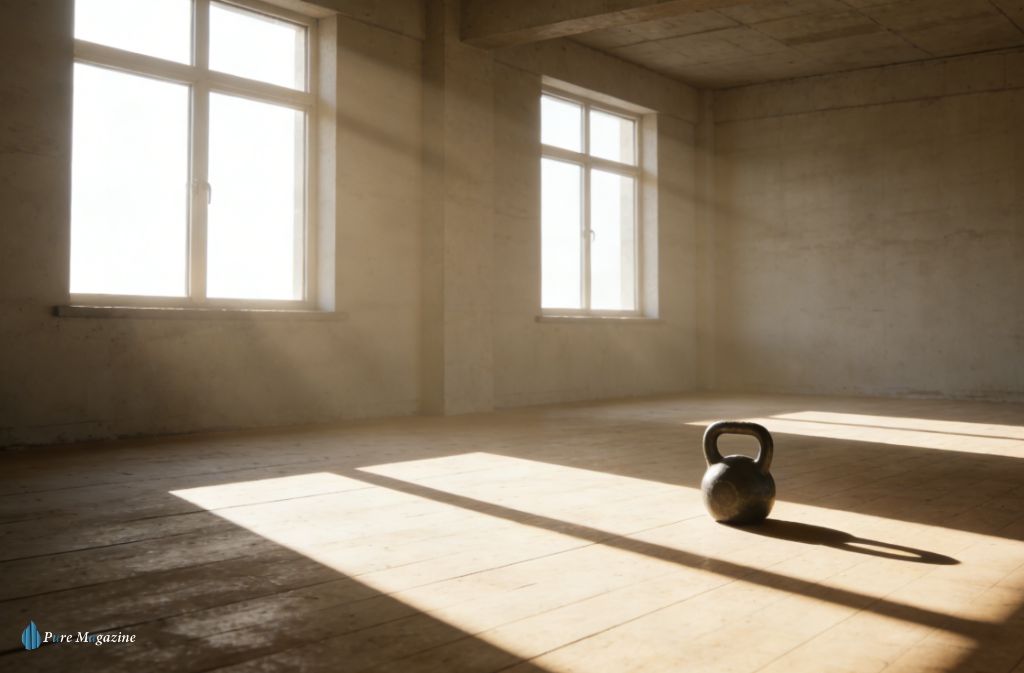
So I removed the friction. I decided that movement needed to happen within the footprint of my own life. I realized that having a basic kettlebell and dumbbell set at home was the only way to ensure I actually moved on the days when life got busy.
The Hidden Stress Loop
I used to think stress was just a mental state. If I could just “think positive,” I’d be fine.
But the body tells a different story.
When you are constantly “on”—checking emails at midnight, rushing from task to task—you never actually exhale. I realized I was living with a constant, low-level hum of anxiety in my chest. I felt wired but tired. I would sleep for seven hours but wake up feeling like I hadn’t rested at all.
I had to learn to protect my sleep like it was my job. Screens off earlier. Lights dimmed. A short stretch before bed to signal to my brain that the day was over.
These rituals didn’t fix everything overnight, but they quieted the hum. Rest stopped being something I did when I finally collapsed, and became something I prioritized before I crashed.
Designing a Home That Helps
What I learned, slowly, is that willpower is overrated. Environment is everything.
If healthy choices require effort, they won’t last. If they fit naturally into your space, they stand a chance.
I began to see my home not as a place where healthy habits should happen, but as the reason they would—or wouldn’t. Tools that are ugly, clunky, or difficult to set up get hidden in closets. And if I have to dig them out, I won’t use them.
This realization changed how I approached home fitness. I needed gear that respected my living situation, not gear that fought against it.
I live in a small apartment with thin walls and limited storage. That is why the FED Fitness kettlebell and dumbbell set became a permanent fixture in my living room.
It didn’t feel like buying gym equipment; it felt like adding a piece of functional furniture.
The usual concerns about apartment fitness—lack of floor space and the need for quiet—stopped being something I thought about. Because the system occupies a 0.2 square meter footprint (basically the size of a plant pot), it found a natural home in the corner without dominating the room.
And just as importantly, the silence mattered. The eco-friendly PE material coating meant the usual metal “clank” was gone. I could move through a workout at 6:00 AM while the house slept, knowing that my routine wasn’t disturbing anyone else’s peace.
It didn’t scream “gym.” It just sat there, quietly removing the excuse that I didn’t have time to set up.
No performance metrics. No complex rep targets. Just a physical reminder that the option to move was always within reach, waiting for me to take it.
Conclusion: The Long Game
Preventive health doesn’t come with milestones, trophies, or finish lines. There’s no moment when you’re “done.”
There are only days.
Some days are better than others. Some habits slip when work gets crazy. Some routines stall when life gets in the way. What matters isn’t perfection—it’s direction.
Every small choice—a real meal instead of a processed one, a short workout instead of scrolling, a deep breath before sleep—is a quiet vote for the future version of yourself.
I stopped waiting for a diagnosis to tell me what mattered. I stopped waiting for fear to motivate me. I started living as if today already counts. Because it does.
For more, visit Pure Magazine