Before a product reaches a store shelf or arrives at your door, there is a high probability it was inspected not by a person, but by a camera. Machine vision — the use of industrial cameras and image analysis software to automate quality inspection — is one of the most widely deployed technologies in modern manufacturing, and one of the least talked about outside of engineering circles. Understanding how it works, and why it matters, offers a revealing window into how contemporary manufacturing actually operates.
What Machine Vision Does and Why It Exists
Manufacturing quality control has always faced a fundamental tension between speed and accuracy. Human inspectors are accurate when fresh and attentive but are inconsistent over the course of a shift, cannot sustain the inspection rates required on modern high-speed production lines, and cannot produce a documented record of every decision they make. Machine vision resolves all three of those limitations simultaneously.
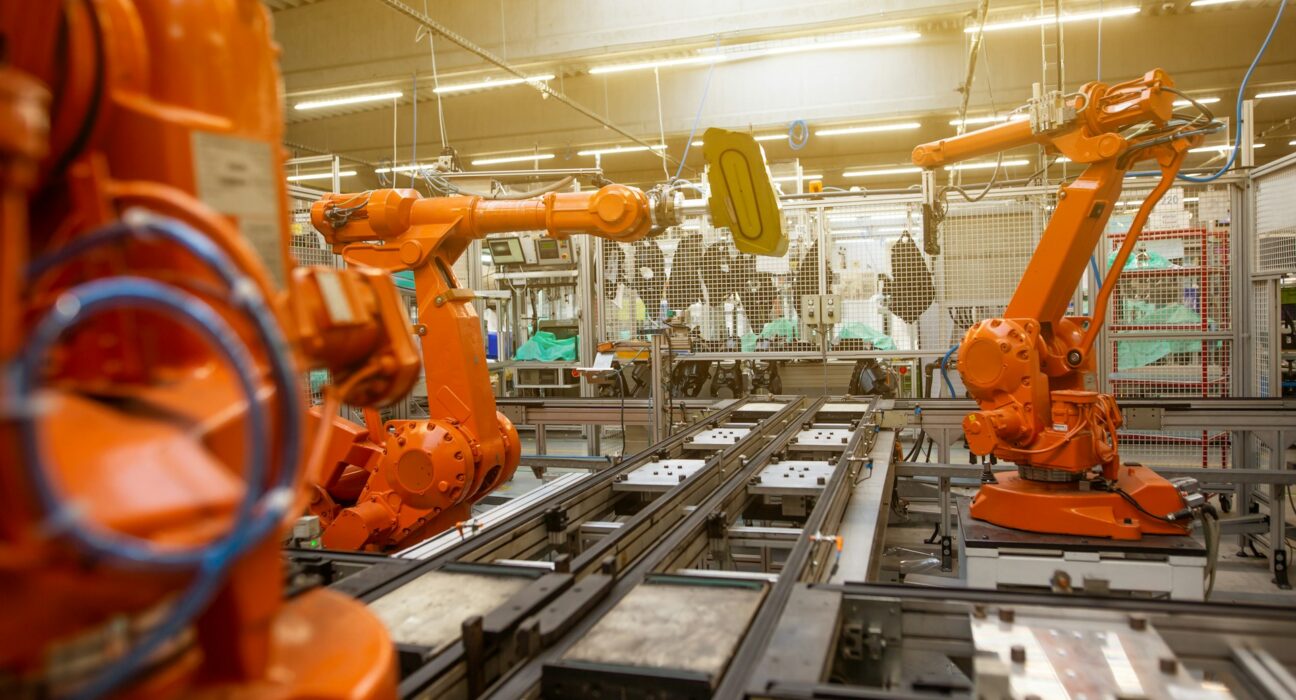
An industrial machine vision system uses cameras to capture images of products or components as they move along a production line. Software analyses those images in real time, applying pass/fail decisions based on dimensional measurements, surface appearance, assembly completeness, or any other visually detectable parameter. The whole process happens in milliseconds, at line speeds that can involve hundreds of units per minute, continuously and without degradation in performance.
The technology is in use across the full range of consumer goods manufacturing. The crisp text on a medicine bottle, the consistent fill level in a food container, the flawless surface of a premium consumer electronic device — each of these is the output of a quality standard that machine vision systems are routinely deployed to enforce.
The Hardware Behind the System
A machine vision system is only as good as the image it captures. This is where the hardware layer becomes critical, and where the engineering is more sophisticated than most people outside the industry appreciate.
Industrial cameras used in machine vision are purpose-built devices engineered for continuous operation in factory conditions. They need to handle vibration, temperature variation, and high-speed triggering — capturing a sharp, correctly exposed image of a component that may be moving at several metres per second. The interface connecting the camera to the computer processing its images varies by application: GigE cameras connect over standard Ethernet and are suitable for larger installations, while USB3 cameras deliver higher bandwidth for compact high-speed systems.
The full range of cameras, lenses, and lighting configurations needed to build an industrial inspection system can be sourced from specialist suppliers. VA Imaging, for example, supplies industrial cameras in a range of resolutions and interfaces alongside matched lenses and machine vision lighting — providing the complete imaging hardware stack that manufacturers need to implement reliable automated inspection.
Machine vision lenses are selected to match the camera sensor and the physical geometry of the inspection setup. The lens determines the field of view, the working distance, and ultimately the spatial resolution of the image. For applications involving precise measurement, specialist telecentric lenses are used because they maintain consistent magnification regardless of object distance, which conventional optics do not.
Lighting is arguably the most important and least understood component of a machine vision system. The goal is not simply to make the product visible — it is to create specific contrast conditions that make defects or features of interest stand out clearly in the captured image. Backlighting creates silhouettes for dimensional measurement, darkfield lighting reveals surface scratches, and dome lighting eliminates reflections on curved or shiny surfaces. Getting the lighting right is what separates a reliable system from one that produces frustrating rates of false rejects or missed defects.
Where Machine Vision Is Used
- Food and drink: Fill levels, seal integrity, label placement, and foreign object detection are all routinely verified by machine vision systems on packaging lines.
- Pharmaceuticals: Every tablet, capsule, and blister pack produced at a regulated facility is typically inspected by machine vision. Traceability requirements mean the system must also create a documented record of each inspection decision.
- Consumer electronics: The surface finish and dimensional accuracy of premium devices are verified using high-resolution cameras that can detect defects measured in fractions of a millimetre.
- Automotive: Body panel surfaces, component assemblies, and safety-critical parts are inspected across the manufacturing process, with 3D camera systems increasingly used to guide robotic assembly operations.
- Logistics: Barcode reading, package dimensioning, and sortation systems in distribution centres rely on machine vision to process thousands of items per hour with minimal human intervention.
Why the Hardware Matters as Much as the Software
Conversations about machine vision often focus on the artificial intelligence driving the inspection decisions. AI has genuinely transformed what machine vision systems can detect, moving from rule-based algorithms that required precise, controlled conditions to deep learning models that can handle natural variation in appearance and still detect relevant defects reliably.
What has not changed is the fundamental dependency on image quality. A machine vision AI model trained on poorly captured images — blurry, poorly lit, or geometrically distorted — will underperform regardless of its algorithmic sophistication. The industrial camera, lens, and lighting system that produces the image data is not a commodity component. It is a precision instrument that must be specified for the exact requirements of the inspection application.
A Technology Worth Knowing About
Machine vision is a quietly significant technology. It operates entirely out of sight — inside factories, on production lines, in distribution centres — but its influence on the quality and consistency of manufactured goods is substantial. The next time a product arrives in perfect condition, or passes a quality standard that would have been difficult to enforce by eye alone, there is a reasonable chance that a well-specified industrial camera system had something to do with it.
As manufacturing continues to automate and as AI capabilities embedded in inspection systems become more powerful, machine vision will only become more central to how products are made and verified. The hardware at the foundation of those systems — the cameras, lenses, and lighting that determine what the AI can see — will remain the critical layer that makes it all possible.
For more, visit Pure Magazine