The Evolution of AI Video Creation
Creating video content used to require a production crew, a location, a budget, and a timeline measured in weeks. For many businesses, particularly smaller ones without dedicated creative departments, that reality meant video was something they aspired to rather than something they produced regularly. AI video tools have been quietly changing that equation over the past couple of years, but they’ve had their own limitations — short clips, inconsistent quality, and a frustrating lack of control over the details that make the difference between content that looks polished and content that looks generated.
Seedance 2.5 Raises the Bar for AI Video
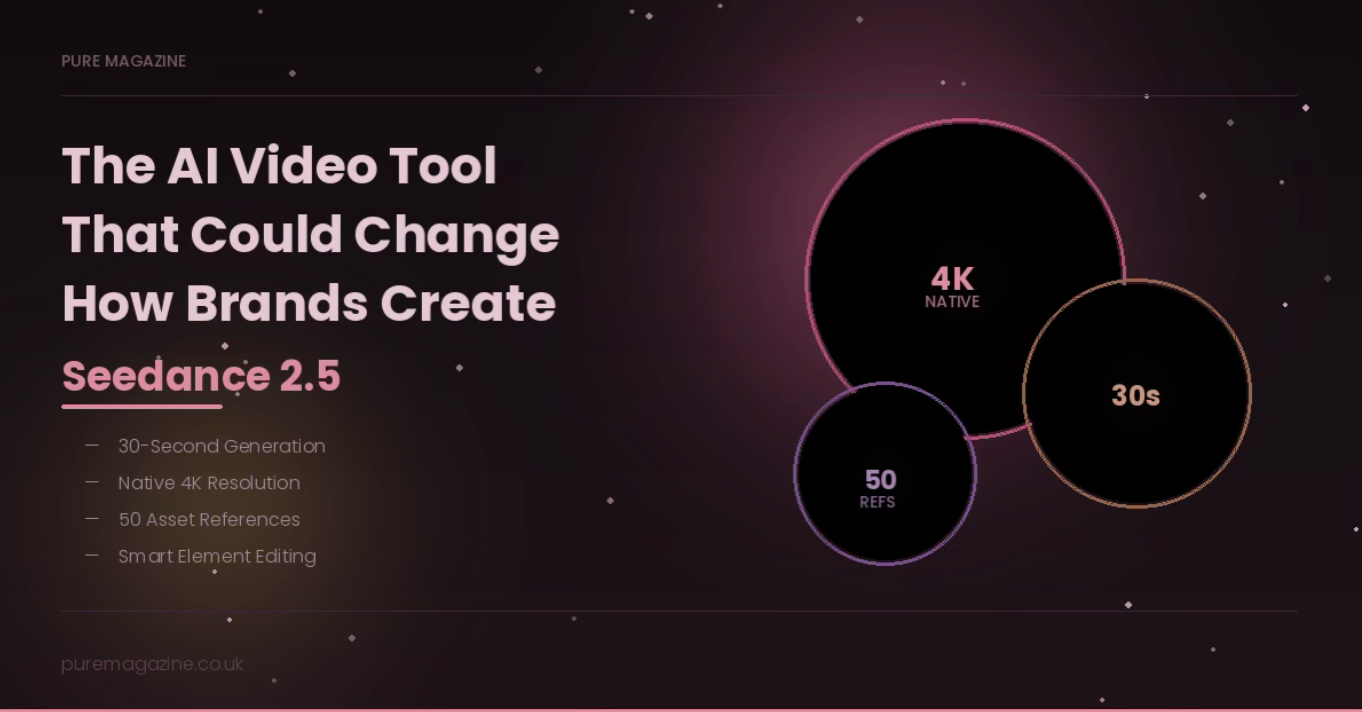
A new model from ByteDance suggests those limitations may be reaching their expiry date. Seedance 2.5, revealed at the company’s FORCE technology conference in June 2026, can produce up to 30 seconds of continuous video at native 4K resolution from a single text prompt. That makes it the first AI video model to reach what most advertising and content professionals consider a standard production length — long enough for a complete commercial, product walkthrough, or brand story.
Why Native 4K Resolution Matters
What makes the 4K claim worth paying attention to is that it’s native rather than upscaled. Many AI tools advertise high resolution but achieve it by generating at a lower quality and then running the footage through enhancement algorithms afterwards. The difference is visible in fine details: fabric textures, hair, product surfaces, and skin tones all carry more natural depth when the resolution is genuine from the start. Seedance 2.5 also supports 10-bit colour, which gives editors and colourists more room to work with in post-production — a detail that matters more than it sounds for anyone who takes brand consistency seriously.
Reference Assets Bring Greater Creative Control
For creative teams, perhaps the most compelling feature is the reference system. Instead of relying solely on text descriptions to guide the AI, users can upload up to 50 reference assets — brand imagery, product photos, mood boards, style references, audio tracks — and let the model compose scenes using those actual materials. This bridges a gap that has frustrated many users of earlier AI video tools: the disconnect between what you can describe in words and what you can show visually. When your brand has a specific look, being able to hand the AI your actual visual assets rather than trying to articulate them in a prompt makes a meaningful difference to the output.
Faster Content Variations for Brands
There’s also a practical editing feature that should resonate with anyone who’s ever needed to produce multiple versions of the same content. Seedance 2.5 allows users to swap individual elements within a generated video — a different product colour, a new background, an alternative model — without regenerating the entire clip. For brands that need seasonal variants, regional adaptations, or product line extensions of the same creative, this turns what used to be a multi-day production task into something that can be done in minutes.
Expected Launch and Industry Impact
The model isn’t publicly available just yet — it’s expected to launch in early July 2026 following the completion of internal testing. But for brands, content creators, and marketing teams who’ve been watching AI video evolve from novelty to near-necessity, the jump from 15-second experimental clips to 30-second native 4K output represents the kind of leap that tends to shift adoption from early experimenters to mainstream production teams.
AI Video as a Practical Production Tool
The tools aren’t replacing traditional filmmaking. High-concept campaigns, documentary work, and anything that requires genuine human presence on screen will continue to need cameras and crews. But for the vast middle ground of content — the social posts, product videos, explainers, and advertising variants that make up the majority of what most brands need to produce — the gap between what AI can deliver and what the work actually requires is getting remarkably small.
For more, visit Pure Magazine