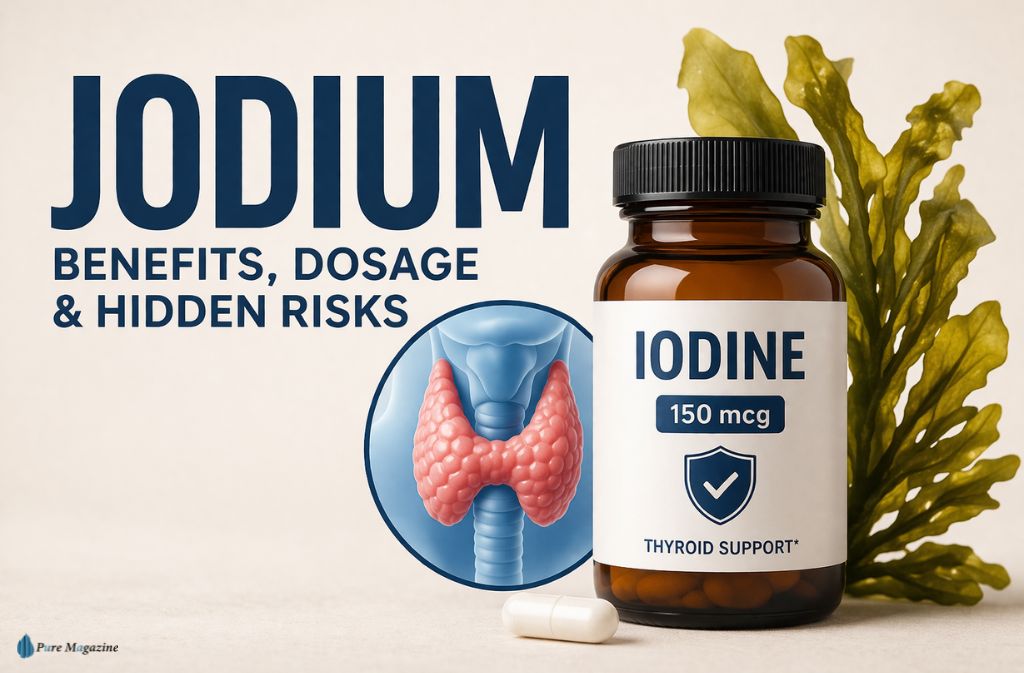
Ever feel like your battery is stuck at 5%? You sleep enough, you’re not doing anything obviously wrong, but the fog won’t lift, and the weight won’t shift. Most people blame stress or getting older. Sometimes that’s right. But sometimes the answer is quieter than that — a trace mineral your body can’t make on its own, sitting just below the threshold where deficiency becomes obvious.
That mineral is iodine. In European supplement markets, you’ll see it labeled as jodium — Dutch and German for the same thing. Different word, identical substance.
Your thyroid needs it to produce T3 and T4, the hormones that run your metabolism, regulate body temperature, and keep your thinking sharp. No iodine, no hormones. No hormones, everything slows down — gradually, in ways that are genuinely easy to miss.
Why Iodine Deficiency Is Making a Comeback
Iodine deficiency was largely solved in the 20th century through iodised salt. It worked. Then our habits changed.
Himalayan pink salt, sea salt, Celtic salt — they’ve replaced basic table salt in a lot of kitchens, partly because they look better, partly because “natural” sells. The problem is that they contain almost no iodine. The fortification that made ordinary table salt a reliable source simply isn’t there.
Layer a plant-based diet on top of that, and the gap widens fast. Seafood and dairy carry most of the dietary iodine in Western eating patterns. Cut both out, switch to non-iodised salt, and you’re left with very few routes to your daily 150 mcg. Seaweed provides iodine in theory, but the concentrations vary so wildly between species and growing conditions that it’s not a reliable substitute.
It’s also worth checking your multivitamin, if you take one. A lot of standard formulas quietly omit iodine. Whether your multivitamin is covering what you think it is is a reasonable thing to verify rather than assume.
Iodine Deficiency Symptoms: What It Actually Feels Like
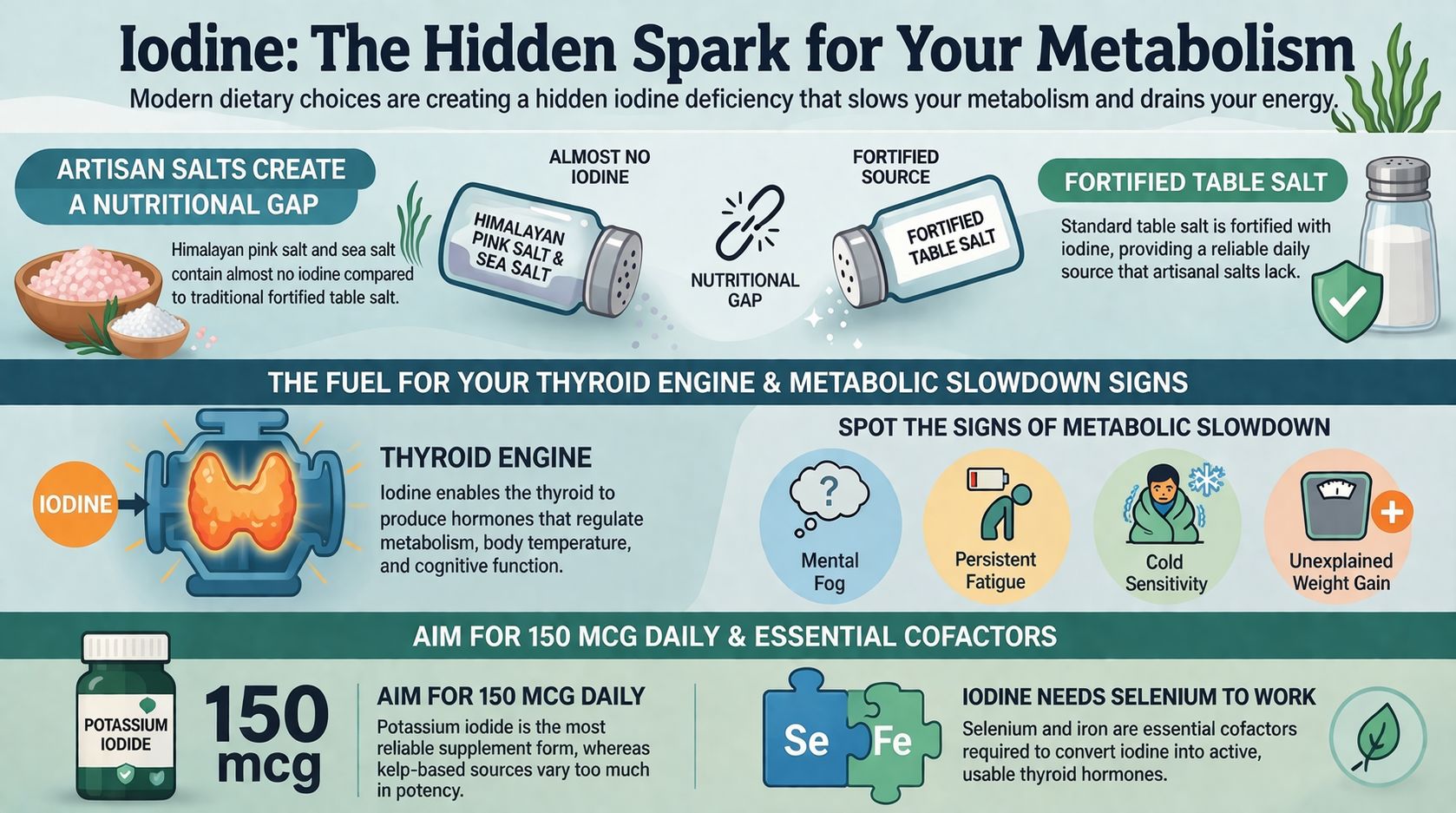
The symptoms are frustratingly non-specific. Persistent fatigue. Feeling cold when others aren’t. Hair thinning. Unexplained weight changes. Perpetually dry skin. Any one of those could be a dozen different things, which is exactly why iodine deficiency stays invisible for so long.
Hair thinning is a good example of where the wrong diagnosis leads to wasted money. A lot of people reach for biotin at the first sign of shedding. Whether biotin actually does what it’s marketed to do is worth reading separately — but the bigger point is that thyroid-related hair loss won’t respond to biotin at all. Different mechanism entirely. If the root cause is iodine deficiency, you need to address that first.
Who Actually Needs a Supplement Jodium?
Not everyone. If you eat fish a couple of times a week, use dairy regularly, and haven’t abandoned iodised salt, you’re probably fine. Don’t supplement just because you read an article about it.
But if you’re vegan or vegetarian and avoid both seafood and dairy, the research is fairly consistent: iodine levels in people avoiding animal products tend to be significantly lower than in omnivores. That’s not a theoretical risk, it’s a documented pattern.
Pregnancy is the other clear case. Iodine requirements go up substantially during pregnancy and breastfeeding — the developing brain depends on maternal thyroid hormones, and the consequences of deficiency during that window are serious. Most prenatal supplements include iodine, but it’s worth actually checking the label rather than assuming.
And if you’ve made the switch from iodised salt to artisan alternatives without replacing that iodine source elsewhere, that’s worth thinking about, honestly.
How to Choose the Best Supplement Jodium (Iodine)
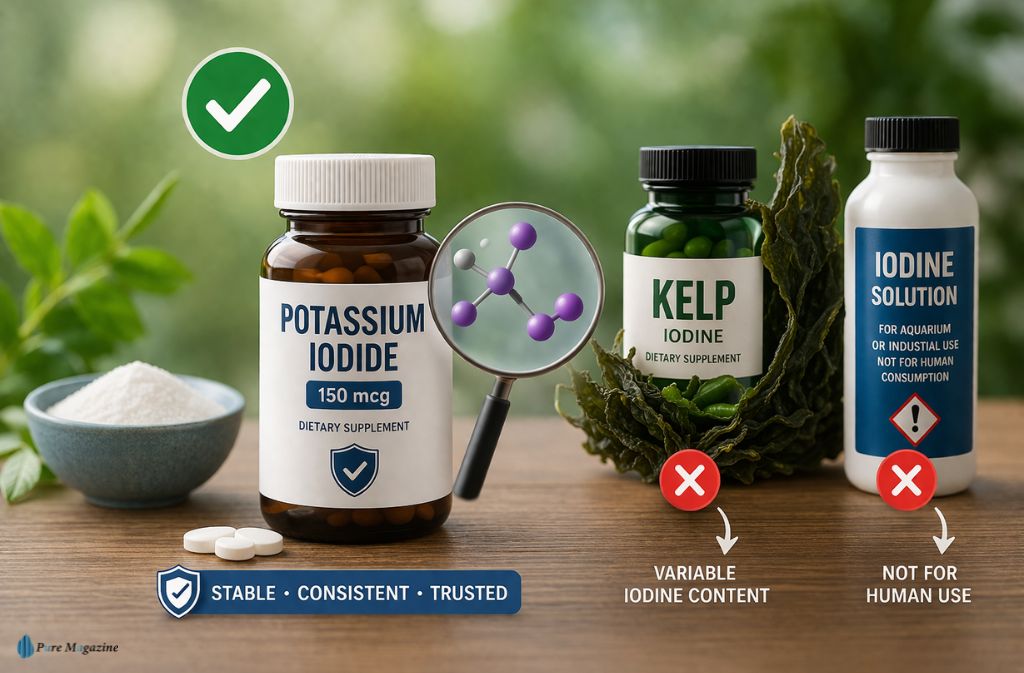
Potassium iodide is the standard. Stable, consistent dose, medically reliable for decades. For most people, it’s the obvious choice.
Kelp and seaweed-based supplements sound more natural, but research has flagged just how dramatically iodine content varies between batches — sometimes by a factor of ten. For a nutrient where too much causes its own problems, that unpredictability is genuinely problematic. “Natural” doesn’t mean better dosed here.
One thing that bears repeating: never use iodine solutions sold for aquariums, wound treatment, or industrial purposes. The crossover in search results and online marketplaces creates real confusion. Buy something explicitly labelled for human dietary use.
Iodine Supplement Dosage: How Much Is Safe?
150 mcg daily is the adult requirement. Most people supplementing to fill a dietary gap should stay in the 100–200 mcg range. The EFSA’s upper limit sits at 600 mcg; the NIH puts it at 1,100 mcg. Both figures are well above what any standard supplement provides at recommended doses.
But here’s the thing, people don’t expect: taking too much iodine can suppress thyroid function rather than support it. More is genuinely not better with this particular nutrient. If you’re also taking a pre-workout or stimulant-based supplement that includes thyroid-supporting compounds — some fat burner formulations include these — it’s worth checking your total iodine intake across everything before adding more.
Iodine Doesn’t Work Alone: Essential Synergy Nutrients
Selenium is the one to pay attention to here. It’s required for the enzyme that converts T4 into active T3 — without adequate selenium, iodine can’t complete the job it’s supposed to do. The relationship between selenium and thyroid function is well-established enough that addressing one without the other is an incomplete approach.
Iron matters too. The enzyme that incorporates iodine into thyroid hormones depends on it. This is particularly relevant for women, who are more likely to have low ferritin alongside other nutritional gaps — something that comes up in broader conversations about women’s specific nutritional needs.
Iodine and Goitrogens: The Truth About Kale and Cruciferous Veggies
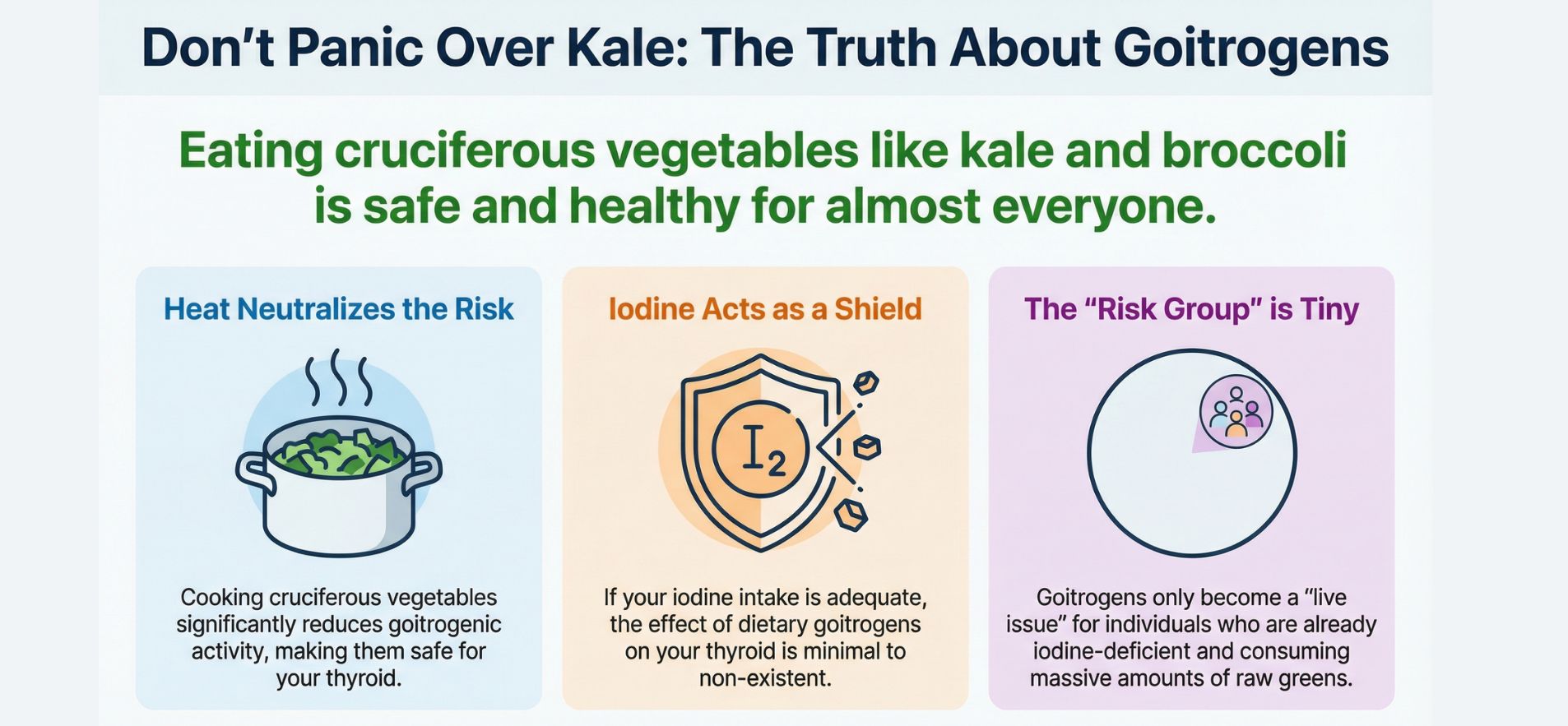
Cruciferous vegetables — broccoli, kale, cabbage — contain goitrogens, compounds that can interfere with iodine uptake. This fact circulates in wellness spaces in a way that occasionally prompts people to cut vegetables out of their diet, which is the wrong response.
Cooking cruciferous vegetables substantially reduces goitrogenic activity. And for someone with adequate iodine intake, the effect is minimal anyway. The concern is really only for people already iodine-deficient who are eating very large amounts of raw cruciferous vegetables daily. For most people reading this, it’s not the issue.
Before You Buy a Jodium Supplement: What to Check First
If you genuinely suspect your thyroid isn’t functioning optimally, a blood test is the right starting point — not a supplement. A thyroid panel covering TSH, free T3, and free T4 gives you an actual picture of what’s happening. Understanding what your results mean and how quickly you’ll get them is worth knowing before you go in.
Guessing at deficiency and supplementing blindly is how people end up taking the wrong thing at the wrong dose. The test is straightforward, and the information it gives you is far more useful than any supplement label.
If the results do suggest your iodine intake is low, 150 mcg of potassium iodide is a sensible place to start. Consistent, modest, boring. That’s generally how this kind of supplementation should look.
FAQs
Q. What does iodine do for the body?
Iodine helps your thyroid produce hormones that control metabolism, energy levels, body temperature, and brain function. When iodine levels are low, these processes slow down, often leading to fatigue, weight gain, and reduced mental clarity.
Q. Who needs an iodine (jodium) supplement?
You may need a supplement jodium if your diet lacks iodine-rich foods. High-risk groups include vegans and vegetarians (especially those avoiding dairy and seafood), people using non-iodized salt, and pregnant or breastfeeding women with increased iodine needs.
Q. What is the best form of iodine supplement?
Potassium iodide is the most reliable iodine supplement because it provides a consistent and measurable dose. Natural sources like kelp can vary significantly in iodine content, making them less dependable for precise supplementation.
Q. Is it safe to take iodine daily?
Yes, daily iodine supplementation is safe when taken within recommended limits—typically 100–150 mcg per day for adults. However, long-term high doses can disrupt thyroid function, especially in individuals with existing thyroid conditions.
Q. Can iodine help with weight loss?
Iodine does not directly cause weight loss. However, if weight gain is linked to iodine deficiency and reduced thyroid function, correcting that deficiency may help normalize metabolism and support healthy weight balance.
Q. Do goitrogens in vegetables affect iodine levels?
For most people, goitrogens in vegetables like broccoli, kale, and cabbage are not a concern—especially when cooked. They only interfere with iodine absorption in cases of severe iodine deficiency, so there’s no need to avoid these healthy foods.
Q. How much iodine do I need daily?
Most adults need around 150 mcg of iodine per day. Pregnant and breastfeeding women require higher amounts, typically between 200–250 mcg daily, to support fetal and infant development.
Q. What are the symptoms of iodine deficiency?
Common symptoms include fatigue, weight gain, cold sensitivity, dry skin, hair thinning, and brain fog. These signs are often subtle and can overlap with other health conditions, so proper testing is recommended.
Q. Can you get enough iodine from food alone?
Yes, if your diet includes iodine-rich foods like seafood, dairy, eggs, or iodized salt. However, people on restrictive diets or using non-iodized salt may struggle to meet daily requirements without supplementation.
The Short Version: Why Iodine Matters for Your Body
Iodine isn’t trendy. It doesn’t have a marketing budget or a cultural moment behind it. But it runs one of the most fundamental systems in the body, and a quiet deficiency can drag energy, mood, weight, and cognitive function in ways that are genuinely hard to trace without knowing what you’re looking for.
If your diet reliably covers it — great, move on. If it doesn’t, the fix is simple and cheap. The goal is adequacy. Not optimisation, not megadosing, not stacking exotic forms. Just giving your thyroid what it needs to do its job.
Related: Why Does Ozdikenosis Kill You? The Deadly Truth About This Rare Disease