There is something deeply reassuring about a bathroom that feels calm, solid, and considered. In recent years across the UK, homeowners and designers have been moving away from lightweight fixtures and short-term trends, choosing instead materials that feel permanent, grounded, and honest.
Stone bathtubs sit at the centre of that shift.
Whether in a renovated Victorian terrace in Manchester, a coastal retreat in Cornwall, or a contemporary townhouse in London, stone baths bring a quiet confidence that few materials can replicate. They do not demand attention. They do not rely on novelty. They simply belong.
This article explores why stone bathtubs have become a defining feature of modern UK bathrooms, how they perform in everyday life, the different materials used, and what to consider when integrating stone into a residential space.
Why Stone Bathtubs Are Gaining Popularity in the UK
A Return to Natural Materials
British interiors have long favoured natural textures. Timber beams, slate roofs, limestone floors, and exposed brick are all part of the country’s architectural language. Stone bathtubs feel like a natural extension of that tradition.
Unlike acrylic or enamelled steel, stone carries visible depth. Subtle mineral patterns, soft tonal variation, and organic surfaces ensure that no two baths look exactly the same. That sense of authenticity resonates strongly with homeowners who are increasingly selective about the materials they bring into their homes.
In a market saturated with mass-produced finishes, stone represents something slower and more intentional.
Tradition Meets Contemporary Design
Although stone is one of the oldest building materials, modern manufacturing techniques allow it to be shaped into clean, contemporary forms. This combination of ancient material and modern geometry explains why stone baths work equally well in period properties and minimalist new builds.
In modern UK bathrooms, stone bathtubs are often defined by clean, architectural lines, soft oval or elliptical silhouettes, and matte finishes rather than high gloss. The result is a design tension that feels both timeless and current.
The Appeal of Freestanding Stone Baths
Among the various styles available, freestanding stone baths have become the most sought-after choice. The reason is simple: they transform the bath from a functional object into a spatial anchor.
A Natural Focal Point
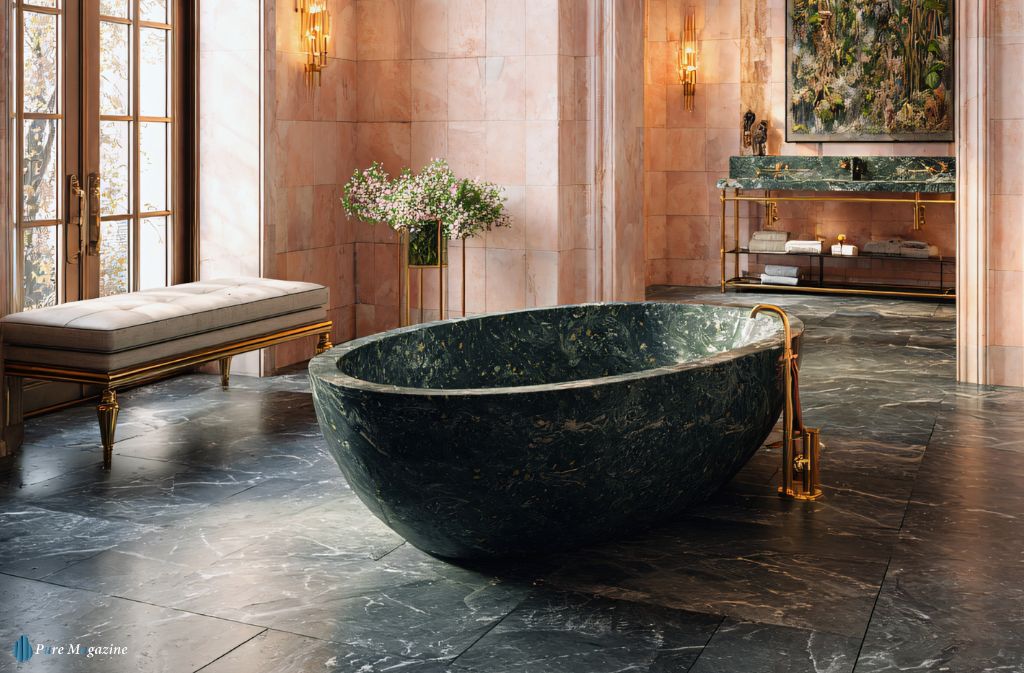
In a well-designed bathroom, a freestanding stone bath immediately draws the eye. Its weight and presence establish hierarchy within the space, creating a clear visual centre.
Designers frequently position them in front of large windows, beneath skylights, or centrally within the room. In each case, bathing becomes an experience rather than a routine.
Layout Flexibility
Because freestanding baths are not constrained by walls or enclosures, they offer greater freedom in layout. This flexibility is especially valuable in loft conversions, awkwardly shaped bathrooms, and open-plan en-suites.
Rather than forcing a bath into a predefined corner, the room can be shaped around it.
Types of Stone Used in Bathtubs
Not all stone baths are made from the same materials. Understanding the differences helps inform both aesthetic and practical decisions.
Marble
Marble is the most recognisable stone used in bathtubs. Its veining and soft translucence give it a timeless, luxurious appearance. It does, however, require sealing and thoughtful maintenance, making it best suited to homeowners who value traditional elegance and are comfortable with periodic care.
Granite
Granite offers exceptional durability. It is highly resistant to scratches, heat, and everyday wear, making it suitable for busy households. Its appearance tends to be more understated, with fine speckled patterns rather than dramatic veining.
Limestone and Travertine
These stones introduce warmth and softness. Their earthy tones and subtle textures work particularly well in spa-inspired bathrooms and relaxed residential settings. They are often chosen where atmosphere matters as much as visual impact.
Stone Composite
Many contemporary stone baths use engineered stone made from crushed natural minerals bonded with resin. This approach delivers the appearance of stone while offering greater consistency and reduced maintenance. Composite stone has become a popular choice for modern UK homes seeking balance between aesthetics and practicality.
Heat Retention and Bathing Comfort
One of stone’s most appreciated qualities is its ability to retain heat.
Stone absorbs warmth from the water and releases it slowly, meaning bathwater stays warm for longer without constant topping-up. Compared with thin acrylic tubs, the difference is noticeable, particularly for longer soaks.
Comfort also extends beyond temperature. Stone baths tend to feature smooth, warm-to-the-touch surfaces, gently sloped backs, and a solid, stable feel. The weight of the material creates a sense of security that lighter baths rarely achieve.
Aesthetic Styles That Complement Stone Baths
Modern Minimalist
Matte white stone paired with large-format tiles, restrained colour palettes, and minimal fittings creates a calm, uncluttered environment.
Industrial-Influenced Spaces
Concrete finishes, darker cabinetry, and exposed elements gain warmth and balance when softened by stone.
Warm Contemporary Bathrooms
Timber vanities, soft lighting, and natural textures help stone feel welcoming rather than clinical.
Spa-Inspired Interiors
Plants, layered lighting, and tactile materials allow stone baths to evoke the atmosphere of boutique hotels and wellness retreats.
Practical Considerations Before Choosing Stone
Structural Load
Stone baths are significantly heavier than acrylic alternatives. In older UK properties, particularly those with suspended timber floors, a structural check may be necessary.
Access and Installation
Stone baths are large, heavy objects. Door widths, staircases, and access routes must be measured carefully before delivery. Installation should be carried out by professionals experienced with heavy fixtures to ensure proper levelling and long-term stability.
Maintenance
Despite their reputation, modern stone baths are not difficult to maintain. Daily rinsing, gentle cleaning, and avoiding abrasive products are usually sufficient. Natural stone may require occasional sealing, while composite stone typically does not.
Longevity and Sustainability
Stone bathtubs align well with contemporary sustainability values. They are durable, long-lasting, and unlikely to be replaced due to short-term trends.
Rather than disposable fixtures, stone baths are long-term investments. Many remain visually relevant decades after installation, reducing the cycle of replacement and waste.
Choosing the Right Shape and Size
Stone baths are available in a range of forms, each suited to different spaces. Oval baths are balanced and universally appealing. Round baths are sculptural and best suited to larger rooms. Rectangular baths feel architectural and modern. Slipper styles, with raised ends, are designed for reclining comfort.
Careful measurement is essential to ensure circulation space around the bath and comfortable daily use.
Real-World Impact: A UK Example
In a Georgian townhouse in Bath, a homeowner replaced a standard acrylic tub with a freestanding stone bath. The room layout remained unchanged, yet the atmosphere transformed completely.
The stone bath anchored the space visually, introduced texture, and gave the room a sense of permanence. It was a small change in plan, but a profound change in character.
Final Thoughts: Stone as a Design Statement
Choosing a stone bathtub is not purely a stylistic decision. It reflects a broader attitude toward materials, longevity, and design restraint.
Stone baths do not chase trends. They mature quietly within a space, gaining character over time rather than losing relevance.
In modern UK bathrooms, that sense of permanence may be the most luxurious quality of all.
Further reading: https://www.monblari.co.uk/collections/freestanding-stone-baths
For more, visit Pure Magazine