There’s something deeply satisfying about stepping into a bathroom that feels calm, solid, and thoughtfully designed. In recent years across the UK, homeowners and designers alike have been moving away from flimsy fixtures and short-term trends, and instead gravitating toward materials that feel permanent, grounded, and honest.
Stone bathtubs sit right at the heart of that shift.
Whether you’re renovating a Victorian terrace in Manchester, updating a coastal retreat in Cornwall, or designing a contemporary London townhouse, stone baths bring a sense of quiet confidence that few materials can match. They don’t shout. They don’t try too hard. They simply belong.
In this guide, we’ll explore why stone bathtubs have become such a strong choice for modern UK bathrooms, how they perform in everyday life, what types are available, and how to choose one that genuinely suits your space.
Why Stone Bathtubs Are Gaining Popularity in the UK
A Return to Natural Materials
British interior design has always had a soft spot for natural textures—think timber beams, limestone floors, slate roofs, and exposed brick. Stone baths fit perfectly into this tradition.
Unlike acrylic or enamelled steel, stone feels authentic. You can see subtle mineral patterns, gentle colour variations, and organic edges that make each tub slightly different. That uniqueness is part of the appeal.
Many homeowners tell me the same thing:
“It just feels real.”
And in an age of mass-produced everything, “real” matters.
Blending Tradition with Contemporary Design
Stone might sound ancient, but modern manufacturing techniques allow it to be sculpted into sleek, minimalist shapes. This is why stone tubs work just as well in ultra-modern spaces as they do in classic settings.
In modern UK bathrooms, you’ll often see:
- l Clean-lined tubs with thin rims
- l Soft oval or elliptical silhouettes
- l Matte finishes rather than high-gloss
This blend of ancient material and modern form creates a beautiful design tension.
What Makes Freestanding Stone Baths So Special?
Among all stone bathtub styles, freestanding stone baths consistently stand out as the most sought-after option.
Why?
Because they become the visual centrepiece of the room.
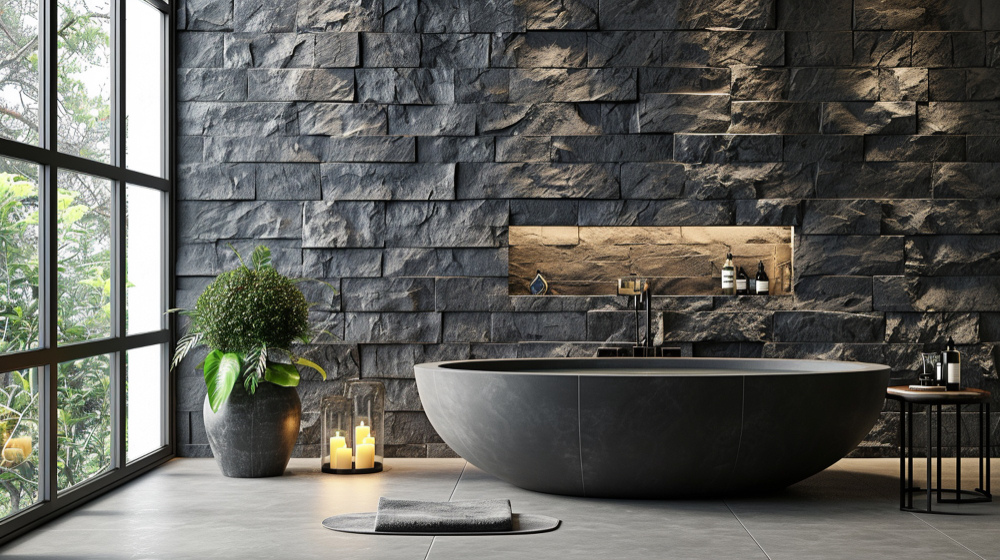
Rather than being tucked against a wall or boxed into an enclosure, a freestanding bath stands proudly on its own—almost like a sculpture.
A True Focal Point
Walk into any well-designed bathroom featuring a stone freestanding tub and your eyes go straight to it.
It doesn’t matter whether the room is large or modest; a freestanding stone bath immediately establishes a sense of luxury and intention.
Designers often place them:
- l In front of large windows
- l Beneath skylights
- l Centrally within the room
Each placement turns bathing into an experience rather than a routine.
Flexibility in Layout
Because they don’t rely on surrounding walls, freestanding stone baths give you far more freedom in layout. This is especially helpful in:
- l Loft conversions
- l Awkwardly shaped bathrooms
- l Open-plan en-suites
You can build the room around the bath instead of forcing the bath into a pre-defined corner.
Types of Stone Used in Bathtubs
Not all stone baths are made from the same material. Understanding the differences helps you choose wisely.
Natural Marble
Marble is the classic luxury stone.
Pros:
- l Elegant veining
- l Naturally cool appearance
- l Timeless look
- Considerations:
- l Requires sealing
- l Slightly more maintenance
Perfect for homeowners who love traditional luxury with a contemporary twist.
Granite
Granite is extremely durable and resistant to scratches and heat.
Pros:
- l Excellent strength
- l Low porosity
- l Subtle speckled patterns
Great for busy households where durability matters.
Limestone & Travertine
These stones bring warmth and softness.
Pros:
- l Earthy tones
- l Softer visual texture
- l Mediterranean feel
Often chosen for spa-inspired bathrooms.
Stone Composite (Engineered Stone)
Many modern freestanding stone baths use composite stone made from crushed natural minerals and resin.
Pros:
- l Consistent colour
- l Easier maintenance
- l Excellent strength
This option delivers the look of stone with added practicality.
Heat Retention – One of Stone’s Biggest Advantages
Here’s something people don’t always realise until they experience it:
Stone holds heat exceptionally well.
That means:
- l Your bathwater stays warmer for longer
- l You don’t need to keep topping up hot water
- l Long, relaxing soaks become genuinely enjoyable
Compared with thin acrylic tubs, the difference is noticeable.
If you love baths, this alone can justify choosing stone.
Comfort Isn’t Just About Shape
Comfort in a bathtub isn’t only about length or width.
With stone tubs, you’ll notice:
- l Smooth, warm-to-touch surfaces
- l Gently sloped backs
- l Solid, stable feeling
The weight of the tub creates a sense of security that lighter materials simply can’t replicate.
Many freestanding stone baths are designed with ergonomic interiors, supporting the natural curve of your spine.
The result? You relax faster and stay relaxed longer.
Aesthetic Styles That Work Beautifully with Stone Baths
Modern Minimalist
Pair a matte white stone tub with:
- l Large format porcelain tiles
- l Black or brushed steel taps
- l Soft neutral walls
Clean, calm, and uncluttered.
Industrial Chic
Combine stone with:
- l Concrete finishes
- l Exposed pipework
- l Dark cabinetry
Stone softens the harder industrial edges.
Warm Contemporary
Think:
- l Timber vanities
- l Soft lighting
- l Earth-toned tiles
Stone adds weight and authenticity.
Spa-Inspired
Add:
- l Plants
- l Natural textures
- l Warm LED lighting
Suddenly your bathroom feels like a boutique hotel retreat.
Practical Considerations Before Choosing Stone
Stone baths are wonderful—but they’re not impulse purchases.
Here’s what UK homeowners should consider.
Floor Load Capacity
Stone is heavy.
Very heavy.
Always ensure your floor structure can support the weight of:
- l The tub
- l Water
- l Occupant
In older UK properties, this may require a structural check.
Access Routes
Can the bath physically get into the house?
Measure:
- l Doorways
- l Staircases
- l Hallways
Some stone baths arrive in large crates and require careful planning.
Installation Expertise
While many plumbers can install stone baths, it’s wise to use someone experienced with heavier fixtures.
Proper levelling is essential.
Maintenance – Easier Than You Might Think
Stone has a reputation for being high-maintenance. In reality, modern stone baths are quite manageable.
Daily Care
- l Rinse after use
- l Wipe with soft cloth
- l Mild soap only
Av›oid
- l Abrasive cleaners
- l Harsh chemicals
- l Steel wool
Periodic Sealing (for Natural Stone)
Some natural stones benefit from occasional sealing to maintain stain resistance.
Composite stone usually doesn’t require sealing at all.
With sensible care, stone baths age beautifully.
Sustainability and Longevity
In an era where sustainability matters more than ever, stone performs well.
- l Extremely long lifespan
- l Less likely to be replaced
- l Many stones are naturally abundant
A stone bathtub isn’t a disposable product—it’s a long-term investment.
Buying once, buying well, and keeping it for decades aligns strongly with modern sustainable values.
Choosing the Right Shape and Size
Oval
Soft, balanced, and universally popular.
Round
Bold and dramatic, best for larger spaces.
Rectangular
Modern, architectural, and structured.
Slipper Style
One raised end for reclining comfort.
Measure your space carefully and consider how you’ll move around the bath once installed.
Taps and Accessories That Complement Stone
Stone tubs shine brightest when paired with thoughtful fixtures.
Popular choices include:
- l Floor-mounted taps
- l Wall-mounted fillers
- l Brushed brass for warmth
- l Matte black for contrast
Avoid overly ornate designs—let the stone remain the star.
Where to Explore Quality Freestanding Stone Baths in the UK
If you’re researching styles and finishes, browsing a curated specialist collection can be extremely helpful.
You can explore a range of beautifully crafted options here: freestanding stone bath
Seeing different shapes, colours, and finishes side by side makes decision-making much easier.
Are Freestanding Stone Baths Worth It?
Short answer?
For many UK homeowners—yes.
They offer:
- l Strong visual impact
- l Excellent bathing comfort
- l Long-term durability
- l Timeless appeal
They’re not trend pieces. They’re foundational design elements.
A well-chosen stone bath will still look good in 20 years.
That’s rare in interior design.
Real-World Example
A homeowner in Bath recently replaced an acrylic tub with a freestanding stone bath in their Georgian townhouse.
The bathroom footprint didn’t change.
The layout didn’t change.
But the entire room felt transformed.
Why?
Because the bath now felt intentional.
It anchored the space. It added weight. It introduced texture.
Small change. Huge difference.
Final Thoughts – Stone as a Statement of Intent
Choosing stone for your bathtub isn’t just about looks.
It’s a statement.
It says:
“I value craftsmanship.”
“I care about materials.”
“I want my home to feel calm and considered.”
In modern UK bathrooms, freestanding stone baths embody that philosophy beautifully.
They don’t chase trends.
They quietly outlast them.
And that, perhaps, is the ultimate luxury.
For more, visit Pure Magazine