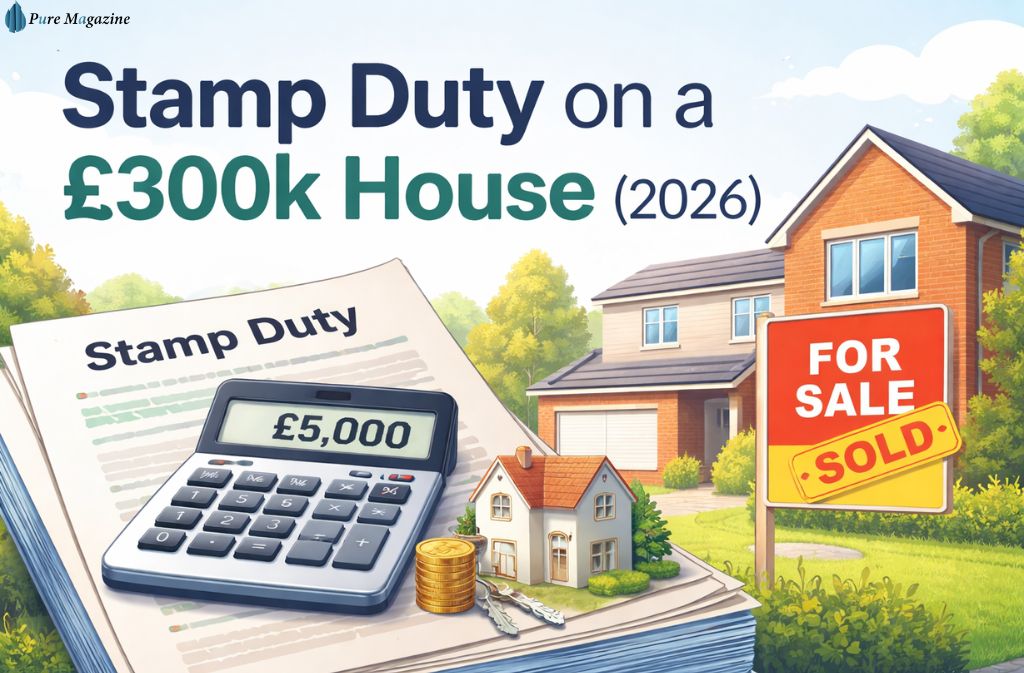
Quick Answer (2026): Stamp duty on a £300,000 house in England is £5,000 for home movers, £0 for first-time buyers, and £20,000 for second-home buyers or investors due to the 5% surcharge. These figures reflect the April 2025 threshold reset — not the temporary relief that applied in 2024.
A £300,000 home used to sit comfortably in a low-tax zone. Not anymore.
Since April 2025, the UK reverted to older, tighter thresholds — and the impact landed immediately on buyers who hadn’t budgeted for it. For a family selling a £200k starter home to buy a £300k family property, finding an extra £2,500 in cash — on top of surveyor fees, conveyancing costs, and removals — can be the difference between moving this year or waiting until 2027. That’s not a tax tweak. That’s a cash-flow problem.
This guide covers the correct 2026 stamp duty figures, a breakdown by buyer type, the lesser-known traps (like the relief cliff edge), and practical strategies for reducing what’s owed.
What Is Stamp Duty Land Tax?
Stamp Duty Land Tax (SDLT) is a tiered tax applied when buying residential property in England or Northern Ireland. The critical word is tiered — buyers pay different rates on different portions of the purchase price, not a flat rate on the full amount. The HMRC SDLT calculator lets buyers check their exact liability, though understanding how the bands work prevents nasty surprises when rates change.
Scotland and Wales don’t use SDLT at all. Scotland applies the Land and Buildings Transaction Tax (LBTT), while Wales uses the Land Transaction Tax. Both use different band structures — more on how those compare below.
2026 SDLT Bands: What Changed in April 2025
The temporary stamp duty relief introduced during earlier market support periods expired in April 2025. Before that, the 0% band extended to £250,000 for standard buyers. After the reset, it dropped back to £125,000 — where it sat before the pandemic-era relief.
Post-April 2025 Standard Residential Rates:
| Property Price Band | Rate |
|---|---|
| Up to £125,000 | 0% |
| £125,001 – £250,000 | 2% |
| £250,001 – £925,000 | 5% |
| Scenario | Before April 2025 | 2026 (After Reset) | Difference |
|---|---|---|---|
| £300k purchase | ~£2,500 | £5,000 | +£2,500 |
Buyers who completed before April 2025 paid half what 2026 buyers pay on the same property. The thresholds didn’t move because of market conditions — the relief simply expired on schedule. Many buyers discovered this when solicitors sent updated completion statements.
Stamp Duty on a £300k House: Full 2026 Calculation
Standard Home Mover
Breaking the £300,000 purchase price across the bands:
- First £125,000 → 0% = £0
- Next £125,000 → 2% = £2,500
- Final £50,000 → 5% = £2,500
Total: £5,000
That £5,000 represents roughly 15% of the UK’s median annual take-home pay in 2026 — a figure that puts the real-world weight of stamp duty into sharper focus than any table can. [UNVERIFIED — confirm 2026 median net annual salary figure before publishing]
First-Time Buyers
A first-time buyer is someone who has never owned property anywhere in the world, not just in the UK.
The 0% threshold for first-time buyers dropped from £425,000 to £300,000 in April 2025. Buying at exactly £300,000 in 2026 means:
Total: £0
But there’s a trap here worth knowing — covered in the next section.
Home Movers (Replacing Main Residence)
Standard rates apply. Total: £5,000
Second Home / Buy-to-Let Investors
A 5% surcharge applies on top of standard rates across the entire purchase price.
- Standard SDLT → £5,000
- 5% surcharge (on full £300,000) → £15,000
Total: £20,000
The surcharge rose from 3% to 5% in late 2024. Our analysis of the rate change shows it added £6,000 to a £300k investment purchase compared to earlier in 2024 — a significant shift for landlords already navigating higher borrowing costs. For a deeper look at the tax implications of buy-to-let purchases, the buy-to-let mortgage guide covers how SDLT interacts with financing decisions.
Quick Comparison
| Buyer Type | Stamp Duty (2026) | vs. Pre-April 2025 |
|---|---|---|
| First-time buyer | £0 | No change |
| Main home mover | £5,000 | +£2,500 |
| Second home / BTL | £20,000 | +£8,000 |
The Relief Cliff Edge: A £1 Problem Worth Thousands
First-time buyers need to watch this closely. The relief doesn’t taper — it cuts off entirely.
- Buy at £300,000 → Pay £0
- Buy at £300,001 → Pay standard rates on the amount above £125,000
At £300,001, a first-time buyer suddenly owes around £5,000 on a property that’s essentially the same price. That’s an “all or nothing” cliff, and one extra pound puts the buyer on the wrong side of it.
There’s a second cliff further up. If a first-time buyer’s property exceeds £500,000, they lose the relief entirely and pay full standard rates from the first pound. The jump from £499,999 to £500,001 can cost thousands in one step.
Anyone negotiating near these thresholds should factor the cliff into the offer.
The Fixture and Fittings Strategy (Legal and Underused)
SDLT calculates only on the property value — not on items that don’t form part of the building. High-quality carpets, curtains, integrated appliances, garden furniture, and freestanding white goods can legitimately be priced separately in the sale contract.
A property listed at £305,000 could be structured as £299,500 for the property plus £5,500 for fixtures and fittings. That brings a first-time buyer back under the £300,000 threshold — and the £0 SDLT bill. Solicitors handle this regularly, and HMRC accepts it as long as values are reasonable and documented. What HMRC challenges is the artificial inflation of the fittings’ value — but where genuine high-spec items exist, it’s a straightforward saving.
Can Stamp Duty Be Added to the Mortgage?
Technically, yes — lenders can include SDLT in the overall loan amount. But there’s a cost attached. Adding £5,000 to a mortgage increases the loan-to-value (LTV) ratio, which can push a buyer into a higher mortgage rate tier. On a 95% LTV product, that £5,000 might trigger a rate that costs more in interest over five years than the tax itself.
The calculation depends on the specific deal and lender. Buyers who want to understand the full financial picture should run both scenarios — paying SDLT from savings versus borrowing it — before deciding. The buy-to-let tax calculator offers a starting point for investors working through the numbers.
Scotland and Wales: Not the Same Rules
When buyers in Scotland or Wales search for stamp duty on a £300k house, the answer differs from that in England.
Scotland (LBTT) on £300,000:
- Up to £145,000 → 0%
- £145,001 – £250,000 → 2%
- £250,001 – £325,000 → 5%
That produces approximately £4,600 — slightly cheaper than England’s £5,000. The gap is modest, but it matters when buyers are comparing cross-border options or when solicitors need to quote accurately.
Wales uses its own Land Transaction Tax bands, broadly similar to Scotland’s structure but with minor threshold differences.
The Non-UK Resident Surcharge
Non-UK residents buying property in England pay an additional 2% on top of all other applicable rates.
For a non-resident buying a £300,000 second home:
- Standard SDLT → £5,000
- 5% second home surcharge → £15,000
- 2% non-resident surcharge → £6,000
Total: £26,000
That’s 8.7% of the purchase price in tax alone — before legal fees, mortgage costs, or surveys.
Shared Ownership: A Different Calculation
Many £300,000 homes sell through shared ownership schemes. Buyers have two approaches:
- Option 1: Pay SDLT on the full market value upfront (treating it like an outright purchase).
- Option 2: Pay SDLT only on the purchased share — say 25% of £300,000 means SDLT on £75,000, which falls entirely within the 0% band.
- Option 2 reduces the upfront tax to zero, but when buyers “staircase” — purchasing additional shares later — each transaction may trigger further SDLT. Understanding how staircasing affects future costs is worth discussing with a solicitor before choosing the payment method.
Stamp Duty as Fiscal Drag
Stamp duty thresholds are frozen while property prices rise. A £300,000 property in 2026 carries a higher tax-to-value ratio than it did five years ago, when the same money bought a more modest home. Economists increasingly describe SDLT as a “fiscal drag” tax — one that collects more revenue not because rates changed, but because prices keep crossing into higher bands.
The Office for Budget Responsibility has noted that frozen thresholds effectively raise the real tax burden on buyers over time — even when headline rates stay the same. [UNVERIFIED — confirm OBR citation before publishing]
Ways to Reduce Stamp Duty on a £300k Purchase
- Stay under £300,000 — for first-time buyers, the cliff is sharp and the saving is total
- Negotiate a fixtures and fittings deduction — legitimate if items are genuine and properly valued
- Use shared ownership — paying SDLT only on the purchased share defers the bulk of the liability
- Avoid second home classification — the surcharge adds £15,000; if the purchase replaces a main residence, ensure the sale of the previous home completes properly
- Check non-resident status carefully — the 2% surcharge has nuances around residency tests; professional advice here pays for itself
- Time purchases around threshold announcements — government policy has changed SDLT bands multiple times; monitoring Budget statements matters
For a broader look at how stamp duty fits into property costs, who pays stamp duty — buyer or seller clarifies the responsibilities that sometimes confuse first-time buyers.
Common Mistakes That Cost Buyers Money
Using a calculator built on pre-2025 rates is the single most common error. Many websites haven’t updated their tools, and the difference — £2,500 on a £300k purchase — is large enough to blow a moving budget. Cross-checking against the HMRC SDLT calculator takes two minutes and costs nothing.
Other mistakes:
- Forgetting the investor surcharge when purchasing through a limited company
- Missing the non-resident surcharge when one buyer on a joint purchase lives overseas
- Assuming UK-wide rules apply when buying in Scotland or Wales
- Overlooking first-time buyer eligibility after inheriting a share of a property (inherited shares can disqualify the relief)
FAQs
Q. How much is stamp duty on a £300k house in 2026?
In 2026, stamp duty on a £300,000 house in England is £5,000 for home movers. First-time buyers pay £0 — but only if the price stays at or below £300,000 exactly. Second-home buyers and investors pay £20,000 due to the 5% surcharge. These figures reflect the April 2025 threshold reset, which added £2,500 to the standard buyer’s bill compared to 2024.
Q. Why did stamp duty increase after 2025?
Stamp duty increased after April 2025 because the temporary tax relief ended. The 0% threshold dropped from £250,000 back to £125,000, meaning more of the property price is now taxed.
Q. Do first-time buyers pay stamp duty on £300k?
No. First-time buyers pay £0 stamp duty on a £300,000 property in 2026. However, if the price exceeds £300,000, standard rates apply from £125,001.
Q. What is the stamp duty on a £300k second home?
Stamp duty on a £300,000 second home is £20,000 in 2026. This includes standard SDLT plus a 5% additional property surcharge applied to the full purchase price.
Q. Can stamp duty be added to a mortgage?
Yes, some lenders allow stamp duty to be added to a mortgage. However, this increases your loan-to-value (LTV) ratio and may result in higher interest rates, so it’s important to compare total costs before choosing this option.
Q. Is stamp duty different in Scotland and Wales?
Yes. Stamp duty (SDLT) only applies in England and Northern Ireland. Scotland uses Land and Buildings Transaction Tax (LBTT), and Wales uses Land Transaction Tax (LTT), both with different rates and thresholds.
Q. Do non-UK residents pay more stamp duty?
Yes. Non-UK residents pay an additional 2% surcharge. On a £300,000 buy-to-let property, total stamp duty can reach £26,000 when combined with standard rates and the 5% second home surcharge.
Q. How can fixtures and fittings reduce stamp duty?
Stamp duty is only charged on the property value, not on removable items. Separately pricing fixtures and fittings—such as carpets, curtains, or appliances—can reduce the taxable amount and may help first-time buyers stay under the £300,000 threshold.
Conclusion
Stamp duty on a £300k house has quietly become one of the more significant transaction costs in English property buying. The April 2025 reset doubled the bill for standard buyers. The investor surcharge increase pushed costs to £20,000. And the first-time buyer cliff edge means that a single pound over the threshold triggers a £5,000 bill.
The buyers who navigate this best aren’t the ones who avoid stamp duty entirely — that’s only possible in specific circumstances. They’re the ones who understand exactly where the thresholds sit, what strategies are legally available to them, and how stamp duty fits alongside mortgage costs, legal fees, and moving expenses in the full picture of what buying a home actually costs.
If anything, the 2025 reset reinforced one truth: always calculate based on current rules, not last year’s assumptions.
For more guides on property costs, tax thresholds, and UK finance, visit Pure Magazine.