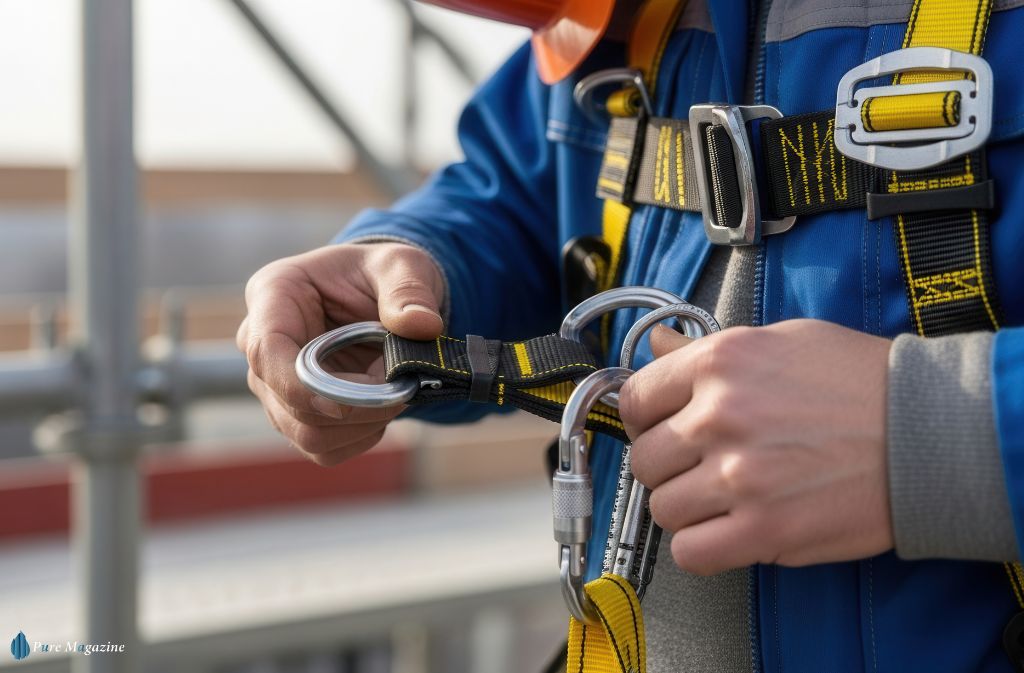
Falls remain the leading cause of workplace fatalities in construction and industrial sectors. While the “Safety First” mantra is common, implementing a fall protection solution that actually works for your team requires moving beyond basic compliance and into strategic planning.
The Hierarchy of Fall Protection
Before buying a single harness, it is vital to follow the industry-standard hierarchy. The goal is always to move as high up this list as possible:
- 1. Elimination: The most effective method. This involves removing the hazard entirely, such as performing maintenance work from the ground using long-reach tools.
- 2. Passive Protection: This includes systems like guardrails and covers. These are highly effective because they require no active participation or specialized training from the worker to function.
- 3. Fall Restraint: This strategy uses a tether or lanyard to prevent the worker from ever reaching the edge of a hazard. If they can’t reach the edge, they can’t fall.
- 4. Fall Arrest: The final line of defense. These systems are designed to safely stop a fall after it has already occurred, minimizing the force on the body.
Essential Components of a Personal Fall Arrest System (PFAS)
If your site requires active protection, you need the “ABC”s of fall safety:
- A – Anchorage: The secure point of attachment. It must be independent of the platform and capable of supporting significant weight—typically 5,000 lbs per worker attached.
- B – Body Wear: A full-body harness. These are engineered to distribute the violent force of a fall across the thighs, pelvis, chest, and shoulders rather than a single point.
- C – Connectors: The link between the harness and the anchor. This includes shock-absorbing lanyards or Self-Retracting Lifelines (SRLs) that act like a seatbelt for heights.
Calculating Fall Clearance
One of the most common mistakes is “bottoming out”—hitting the ground before the gear fully engages. To calculate the required clearance, you must account for the following:
- Lanyard Length: The initial length of your connection.
- Deceleration Distance: The extra length added by the tearing of the shock absorber.
- Worker Height: The distance from the D-ring to the worker’s feet.
- Safety Factor: A mandatory buffer (usually 2-3 ft) for peace of mind.
$$Total Clearance = L_{lanyard} + D_{deceleration} + H_{worker} + C_{safety}$$
Pro-Tip: Always inspect your gear before every shift. Look for “red flag” indicators like frayed webbing, distorted D-rings, or deployed impact indicators. If it looks questionable, pull it from service immediately.
The Importance of a Rescue Plan
A fall protection solution isn’t finished once the worker is caught. Suspension trauma can set in within minutes if a worker is hanging upright in a harness. Every site must have a written, practiced rescue plan to get a fallen worker down safely and quickly.
For more, visit Pure Magazine