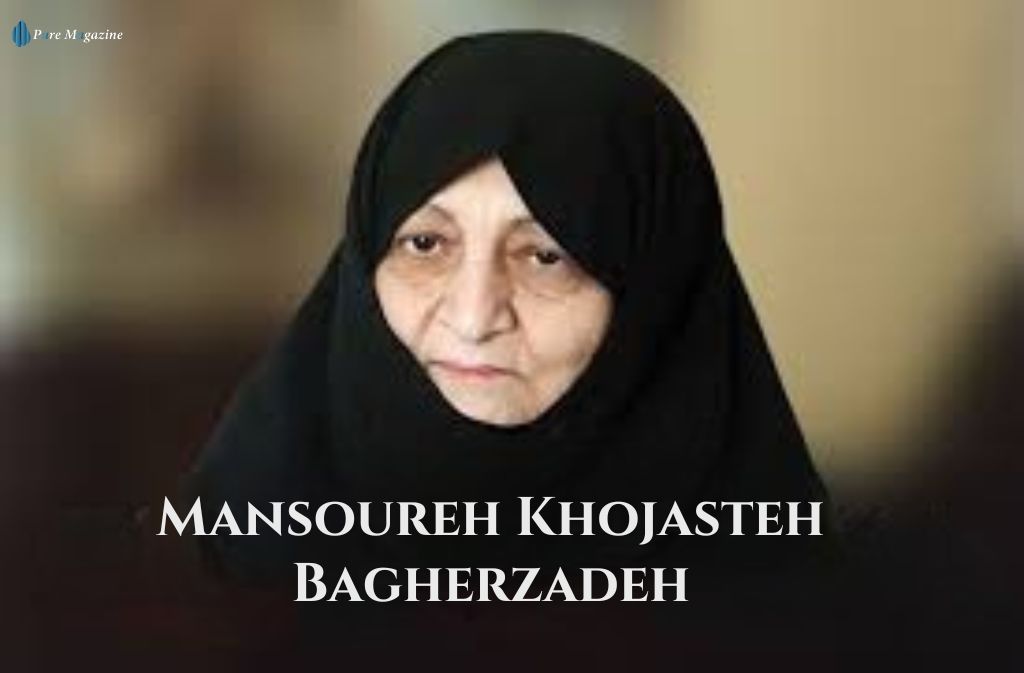
If you’ve ever searched for “Mansoureh Khojasteh Bagherzadeh”, you might have noticed there’s very little publicly consolidated — and often contradictory —information about her. Yet she remains one of the most sought-after figures in Iranian politics: as the spouse of Ali Khamenei, Supreme Leader of Iran, her name frequently surfaces, though details about her life remain scarce. In this article, I compile everything reliably known about Mansoureh, address common gaps and ambiguities, and offer context on what information is likely to — or won’t — ever become public.
Whether you’re simply curious, doing research, or fact-checking, this aims to be the comprehensive, neutral, up-to-date overview in 2025 on Mansoureh Khojasteh Bagherzadeh.
Early Life & Family Background
- Mansoureh was born in 1947 in Mashhad, then part of the Imperial State of Iran.
- She grew up in a religious, Persian merchant family. Her father — Mohammad Esmaeil Khojasteh Bagherzadeh — was a well-known businessman in Mashhad’s bazaar-class environment.
- She also has at least one brother, Hassan Khojasteh Bagherzadeh, who at one point served as a deputy-director at Iran’s state broadcaster (IRIB).
- Public sources provide little to no verified information about her mother, childhood experiences, schooling, or personal hobbies. Her upbringing is described broadly as “devout, religious, in a merchant-religious family,” but no official record exists regarding formal education or early life milestones.
Why so little detail?
This scarcity reflects both cultural and security norms: families tied to Iran’s top leadership often keep personal lives private; many sources note that Mansoureh has “never sought public attention.”
Marriage to Ali Khamenei
- Mansoureh met Ali Khamenei in 1964, when he was a young cleric. The meeting and courtship were conducted privately, following customary norms of the time
- They married in 1965, with the wedding sermon delivered by a senior cleric, Mohammad Hadi Milani.
- At the time of marriage, Mansoureh is often described as around 17–18 years old, which aligns with norms of traditional arranged marriages in religious families during that era.
- From 1981 to 1989, when Ali Khamenei served as President of Iran, she was effectively “First Lady” (though with a negligible public profile).
- Since 1989 — when Khamenei became Supreme Leader — she has held the position of Spouse of the Supreme Leader.
Despite her proximity to Iran’s top political figure, she has never been publicly visible: no verified modern photos, no interviews (apart from unconfirmed/unverified claims), and no known public statements.
Children & Family Life
Mansoureh and Ali Khamenei have six children — four sons and two daughters.
Here’s a quick breakdown:
| Child | Notes / Known Information |
|---|---|
| Mostafa | Eldest son; reportedly engaged in seminary studies. |
| Mojtaba | The most publicly known among the siblings has some presence in media/politics. |
| Masoud (also “Mohsen”) | Married into another clerical family; involved in clerical circles. |
| Meysam (also “Meitham”) | Usually described as the youngest son, he reportedly works with institutes preserving the father’s works. |
| Boshra | Daughter, married into a family connected to the clerical/academic elite. |
| Hoda | Daughter, similarly, keeps a reserved public profile. |
Because of the family’s consistent preference for privacy, public information about children is also limited — especially regarding daughters. The media focuses more on the sons, if at all.
Public Role & Visibility — The “Invisible Spouse”
One of the most striking — and often misunderstood — facts about Mansoureh: she has intentionally maintained almost zero public visibility. Many public-figure spouses elsewhere might attend ceremonies, give interviews, or appear in media; not her.
What we do (rarely) see or read
- Some sources mention that she has visited families of war veterans or the families of those killed in the Iran-Iraq war, offering support. But these reports are few, unverified, and often rely on state-controlled media.
- There are anecdotes (unconfirmed) about her playing a behind-the-scenes supportive role during her husband’s revolutionary activities — hiding pamphlets, protecting sensitive documents from authorities, and safeguarding family safety.
What is almost certainly untrue or unverified
-
Claims about her “net worth” are speculative. Some websites estimate a value, but those rely on conjecture or link wealth to her husband’s institutional control. There is no credible public accounting of her personal assets.
-
Assertions about frequent public appearances, interviews, or open social-media presence are false. Multiple sources note there are “no verified photos” of her; she avoids the public spotlight intentionally.
In short, her public role is minimal by design, consistent with conservative cultural norms around privacy for women in high-status religious-political families.
What We Don’t Know — Why Gaps Exist
| Unknown / Ambiguous Detail | Reason / Likely Explanation |
|---|---|
| Exact date of birth (day/month) | She was born in 1947; most sources only list the year. No public birth record is accessible. |
| Education, personal beliefs, hobbies, and early life stories | Conservative family background + tradition of privacy; Iranian media does not publicly profile the spouses of religious leaders. |
| Verified photographs or public appearances | Her deliberate seclusion and cultural norms discourage visual exposure. |
| Personal statements or interviews | She has avoided the media — only unverified claims exist. |
Because of these limitations, any attempt to reconstruct a “full life story” is bound to remain incomplete; we can only report what’s reliably documented, and clearly mark what remains unknown.
Why She Matters — Beyond the Name
You may wonder: if she keeps so much privacy, why is there so much interest in her? Here are some reasons:
- She is married to the Supreme Leader. That instantly attaches public curiosity.
- Her life represents a bridge between the traditional Iranian religious-merchant class and modern political power — “ordinary” bazaari-family roots combining with the apex of the clerical establishment.
- For many, she symbolizes traditional values: privacy, modesty, family, faith — in contrast to Western-style political spouses.
- Her extreme discretion raises questions about transparency, public interest vs private life, and how political families in closed systems manage personal vs public identity.
Thus, she’s not only a person of interest — she’s a cultural-political symbol, even if unofficial.
Common Misinformation & Myths
- ✅ Myth: She frequently appears in public or has many photos — False. There are no verified modern photos or reliable public appearances.
- ✅ Myth: She has official political power or a public office — False. She holds no official political position; her “roles” derive solely from her husband’s status.
- ✅ Myth: Her net worth is publicly known — No reliable data. Any estimated net worth is speculative and often based on her husband’s institutional influence.
- ✅ Myth: She is politically active or outspoken — No credible record supports this. All credible sources emphasize her privacy.
FAQs
Q1: When was Mansoureh Khojasteh Bagherzadeh born?
A: Mansoureh Khojasteh Bagherzadeh was born in 1947 in Mashhad, Iran. The exact day and month are not publicly documented, as sources only confirm the year.
Q2: How many children does Mansoureh Khojasteh Bagherzadeh have?
A: She has six children: four sons — Mostafa, Mojtaba, Masoud, and Meysam — and two daughters — Boshra and Hoda. Public information about the children is limited due to the family’s preference for privacy.
Q3: Is Mansoureh Khojasteh Bagherzadeh publicly active or giving interviews?
A: No. She maintains strict privacy and has no verified modern photos, public appearances, or confirmed interviews. Her life remains largely out of the public eye.
Q4: What is Mansoureh Khojasteh Bagherzadeh’s background and family origin?
A: She comes from a religious-merchant family in Mashhad. Her father was a businessman, and her brother reportedly held a senior position at Iran’s state broadcaster (IRIB).
Q5: Does Mansoureh Khojasteh Bagherzadeh hold any official political role or influence?
A: No. She has no formal political position. Any influence is private and familial, as public sources describe her primarily as a homemaker and the private spouse of Iran’s Supreme Leader.
Conclusion & What We Can Reasonably Expect
As of 2025, this is the most complete, verified, and neutral account of what is publicly known about Mansoureh Khojasteh Bagherzadeh.
- She remains a largely private person, despite being the spouse of a high-profile leader.
- Much of her life — early years, education, private beliefs — remains undocumented, and likely will remain so.
- Because of her discretion and Iran’s cultural-political context, it’s unlikely to see a major “tell-all” profile in the public domain.
👉 If you ask me: the best you can hope for in future public records are small glimpses — occasional historical interviews, archival photos, or memoirs by relatives. But a full public biography? That’s very unlikely, unless norms change significantly.
Related: Jimmy Failla Wife: The Truth About His Real Life Partner