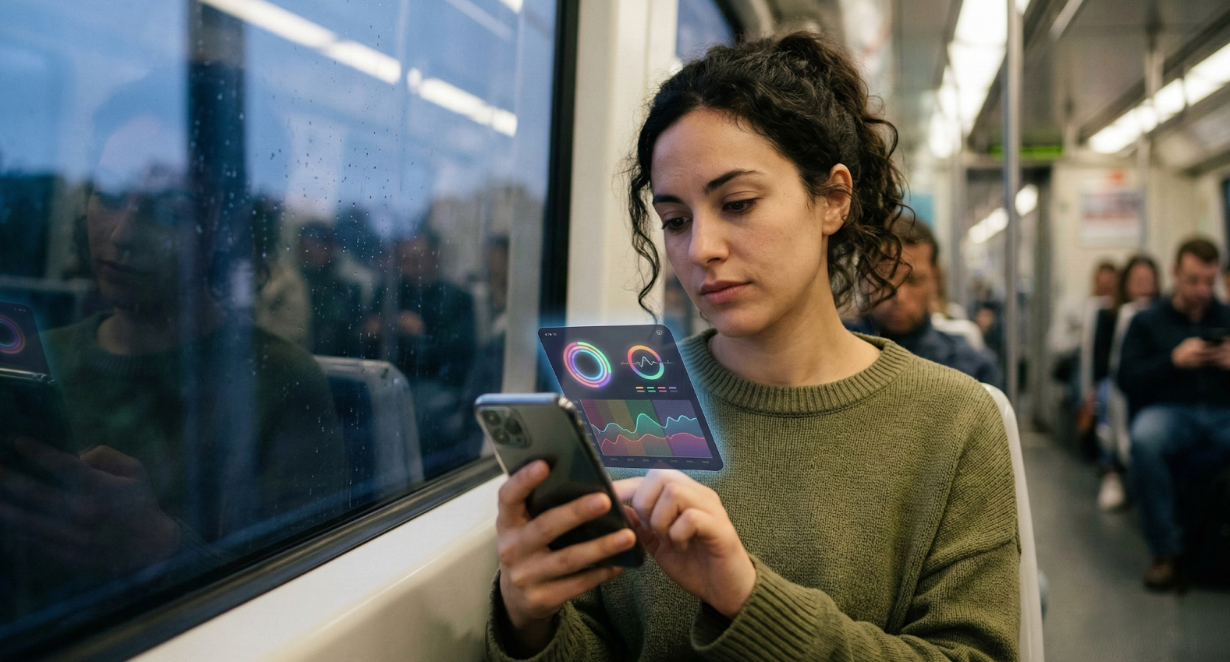
Honestly, we’ve all been there. It’s a rough Tuesday: your boss sends a passive-aggressive email, and you just need to vent. Instead of calling a friend who might be busy, you open that sleek, neon-colored app on your phone.
You tell the AI how you feel. You might even let it track your voice tremors or your heart rate through your smartwatch. It feels like a digital weighted blanket. Is it private? That depends on who is actually listening on the other side of the server.
As we move through 2026, the line between helpful wellness tool and biometric surveillance has become incredibly thin. We are living in an era where our deepest vulnerabilities are being turned into data points. You might think your digital twin or your mood logs are safe behind a face ID lock.
The back-end reality is often a lot messier. If you aren’t careful, that late-night vent session could end up in a database that determines your next insurance premium. We must look closer at how these systems handle our most intimate thoughts.
Understanding When Feelings Become Digital Data
Every time you interact with a generative AI mood tracker, you’re not just sending text—you’re sending metadata. This includes your location, the speed at which you type, and your vocal prosody if you use voice-to-text features.
Some apps even track your pupil dilation if the camera checks for stress signs, which could be misinterpreted as physiological responses to a drug and alcohol detox instead of simple fatigue. It’s brilliant for personalization, but it is also a goldmine for companies that want to predict your future behavior.
The Impact of Affective Computing
Think about it like this. If a health insurance company knows you’ve logged high anxiety every morning for three months, they might see you as a higher risk. They don’t need a medical diagnosis if your own phone is sharing the truth.
It’s like leaving your diary on a park bench and hoping no one with a clipboard walks by. Affective computing allows systems to interpret and simulate human emotions. This technology is increasingly used in behavioral health to bridge informational gaps.
How the 2026 HIPAA Update Changed the Game
For a long time, these apps lived in a legal gray area. They weren’t classified as medical devices, so they didn’t have to follow the strict rules of the Health Insurance Portability and Accountability Act. They were just wellness apps.
As of February 16, 2026, the Department of Health and Human Services (HHS) finalized significant updates to privacy rules. These changes require covered entities to update their Notices of Privacy Practices (NPPs) to better protect sensitive behavioral health data, which is a vital protection for individuals in sober living who use these apps for daily support.
New Protections for Users
This is a massive win for us, the users. It means these companies face tighter restrictions on sharing sensitive patient data related to behavioral health. They can’t just sell your mood clusters to third-party advertisers under the guise of anonymized research.
But here is the catch. Not every app is compliant yet. Some still hide behind dense terms of service agreements that nobody reads. Those 50-page documents are where the loopholes live.
The FTC and Data Breaches
The Federal Trade Commission (FTC) has stepped in as well. The amended Health Breach Notification Rule (HBNR) now applies to health apps that are not covered by HIPAA. This includes fitness, fertility, and mental health trackers.
Why Blockchain Is Now Useful for Data Sovereignty
Hearing the word blockchain usually makes people roll their eyes because of the crypto craze. But let’s set the digital art aside for a moment. In 2026, blockchain has found its true calling in data sovereignty.
We’re seeing a rise in decentralized platforms for behavioral health treatment where your data is encrypted on a ledger that only you hold the key to. This shift allows for self-sovereignty over your data in the digital age.
Decoupling Identity from Insights
In a traditional setup, your mood data sits on a central server owned by a corporation. If it gets hacked or the company changes its privacy policy, you lose control. Centralized servers often act as unnecessary intermediaries between data owners and users.
With blockchain-based encryption, the app can still provide you with AI-driven insights. It does so without knowing who you are or storing your raw data in a readable format. It is like giving a translator a sealed envelope.
They can tell you the tone of the letter without ever seeing the address of the sender. This decentralization minimizes the effect of cyber attacks on sensitive health information. It provides a unique storage pattern at a high level of security.
The Insurtech Shadow Over Your Phone
Have you noticed how your car insurance now offers you a discount if you put a tracker in your vehicle? It seems great until you realize they are watching every time you hit the brakes too hard. The same thing is happening with Insurtech in the health space.
There is a quiet push for employees to use company-sponsored wellness apps. You might get a discount on your monthly premium if you log your mindfulness minutes. But what happens if you stop logging?
The Risk of Permanent Records
What if the AI detects a depressive slide in your speech patterns? That’s a slippery slope. We’re essentially being asked to trade our most intimate mental reflections for a few bucks off a bill.
Is it worth it? Probably not when you consider how that data stays in your permanent digital record forever. Some states, like California, are currently introducing bills like SB 354 to address these gaps.
Protecting Consumer Privacy
These laws aim to ensure data minimization. This means companies should only collect personal information related to the specific insurance transaction requested. It also aims to limit how sensitive personal information is used.
Without these protections, your mental state could influence your financial future. We must remain vigilant about who has access to our wellness logs. It’s about maintaining a boundary between health support and corporate surveillance.
How to Tell if Your Favorite App Is a Snitch
How do you tell if your app is a keeper or a creep? First, look for the HIPAA Compliant badge, but don’t just take their word for it. Check for a 2026 certification date or an updated Notice of Privacy Practices.
Second, see if they offer Zero-Knowledge Encryption. This is the gold standard for digital privacy. It means the company cannot see your data, even if a government agency arrives with a warrant.
Signs of Real Privacy
If the app recovers your password for you, they can probably see your data. If they tell you that if you lose this key, your data is gone forever, that is actually a good sign. It proves they don’t have a back door to your files.
Also, pay attention to the permissions requested by the software. Why would a mood tracker need access to your contacts or microphone 24/7? It usually doesn’t need that level of access to function.
The Concept of Digital Hygiene
We often forget that our normal apps are trackers too. Your keyboard app probably knows more about your mental health than your therapist does. It tracks your typing speed and word choice constantly.
If you’re worried about your AI mood tracker, start by looking at your entire digital ecosystem. Using a privacy-focused keyboard or an encrypted messaging service like Signal is a good start. It’s all about building a moat around your digital life.
Finding the Middle Ground Between AI and Privacy
I don’t want to sound like a luddite. AI mood trackers are genuinely incredible tools. They can spot patterns we miss, such as realizing we get anxious every time we visit certain relatives.
That insight can be life-changing for many people. We shouldn’t have to delete the apps entirely. Instead, we should demand better architecture that protects the user first.
The Rise of Local AI
The goal is to move toward Local AI. This is where the heavy lifting happens on your actual phone chip rather than in the cloud. Large tech companies are making strides here to keep data on-device.
Smaller, free apps are usually the ones to watch. Remember, if the product is free, your emotional state is likely the product. Your data is the currency they use to keep the lights on.
Steps You Can Take Today
Take five minutes today to audit your health folder. If an app hasn’t updated its privacy policy since 2024, it’s probably time to remove it. Look for apps that specifically mention the 2026 HIPAA standards.
It might feel like overkill now, but your future self will thank you. You deserve a safe space to vent that doesn’t report back to a corporate headquarters. Mental privacy is becoming just as important as financial privacy.
For more, visit Pure Magazine