


Women with wider feet have long been poorly served by a footwear industry that treated standard width as the default and everything else as a footnote. That calculation is finally being revised.
The numbers tell a story that the fashion industry has been slow to acknowledge. Research consistently indicates that a significant proportion of women wear shoes that are too narrow for their feet – not because wider options do not exist, but because historically those options were limited in style, difficult to source, and rarely marketed with the same energy as mainstream footwear.
The consequences are well documented. Ill-fitting shoes contribute to bunions, blisters, neuromas, and chronic forefoot pain. Women who force their feet into narrow shoes over years of daily wear often develop lasting structural changes that compound over time. The decision to wear the wrong shoe is rarely made in full awareness of its long-term cost.
What has changed is the market’s response. Wide-fit footwear for women has undergone a genuine transformation – one driven by consumer demand, better understanding of foot biomechanics, and a design philosophy that no longer treats width accommodation as an aesthetic compromise.
Why Wide-Fit Footwear Has Historically Fallen Short
Understanding the current opportunity requires acknowledging the problem it is solving. For most of the twentieth century, wide-fit shoes occupied a separate, stigmatised corner of the footwear market. They were designed with function as the sole priority, produced in limited styles and colourways, and distributed through specialist channels that many women found inconvenient or embarrassing to navigate.
The underlying assumption was that width accommodation required visual sacrifice – that a shoe broad enough to fit a wider foot could not also carry the silhouette, materials, or detailing of a fashion-forward design. That assumption was never particularly well-founded, and it has been progressively dismantled as mainstream brands have begun investing in extended width ranges.
The shift has been accelerated by e-commerce, which has made it economically viable for retailers to stock a broader range of sizes and widths than a physical store could carry. Women who previously had to settle for whatever was available locally can now access a genuinely wide selection of styles in their correct size.
Understanding Width Fittings
Before navigating the market, it helps to understand how width fittings are classified. The system varies slightly between countries and brands, but in Australia, the most commonly used designations are:
B or Narrow – a slimmer fitting than standard, suited to women with narrow feet and a low instep.
C or Standard (D in some brands) – the default width used by most mainstream footwear, designed around an average foot width.
E or Wide – a broader fitting that accommodates a wider forefoot and greater overall volume.
EE or Extra Wide – a significantly broader last, designed for women with substantial width across the ball of the foot or a very high instep.
Fit is not purely about width across the forefoot. A shoe that is wide enough at the ball may still be too narrow at the toe box, or vice versa. The shape of the last – the foot-shaped mould around which the shoe is constructed – determines how width translates into actual wearability, which is why trying shoes on or purchasing from retailers with generous return policies remains important.
Where to Find Wide-Fit Shoes That Actually Look Good
The days of wide-fit footwear meaning exclusively sensible lace-ups in beige are firmly behind us. Across every major category – casual, formal, athletic, and sandals – there are now options that deliver genuine width accommodation without visual compromise.
Casual and Everyday Styles
The casual category offers the broadest range of wide-fit options, partly because the design parameters are more flexible and partly because comfort has always been central to the category’s appeal.
Brands such as Ziera, Homyped, and Propet have built wide and extra-wide fittings into their core casual ranges, producing shoes that look contemporary while serving the functional needs of women with broader feet. Ziera in particular is notable for its commitment to multiple width fittings across its entire range – not just in a token selection of styles – and for designs that reflect current aesthetic trends rather than generic comfort shoe templates.

Hush Puppies produces casual styles in wide fittings that sit comfortably within a modern wardrobe, while Clarks offers extended widths across a number of its most popular lasts. These are not shoes that announce their wide-fit construction visually – they simply fit better than the standard version.
Boots
Wide-fit boots present a more complex challenge than flat or low-heeled styles, because the fit requirements extend beyond the forefoot to the calf and ankle. Women with wider calves have traditionally been even more poorly served than those with wider feet, with mainstream boot ranges offering little variation in shaft circumference.
That gap has narrowed with the growth of wide-calf boot offerings from brands that previously offered no such options. Retailers such as Brand House Direct now stock a dedicated range of wide-calf women’s boots – an acknowledgment that the market for these styles is substantial and that the demand is no longer niche.
For wide-fit boot shoppers, a leather upper is a practical as well as aesthetic advantage. Full-grain leather has natural give that accommodates foot and calf volume more generously than synthetic materials, often improving in fit as the boot is broken in over time.
Heels and Formal Shoes
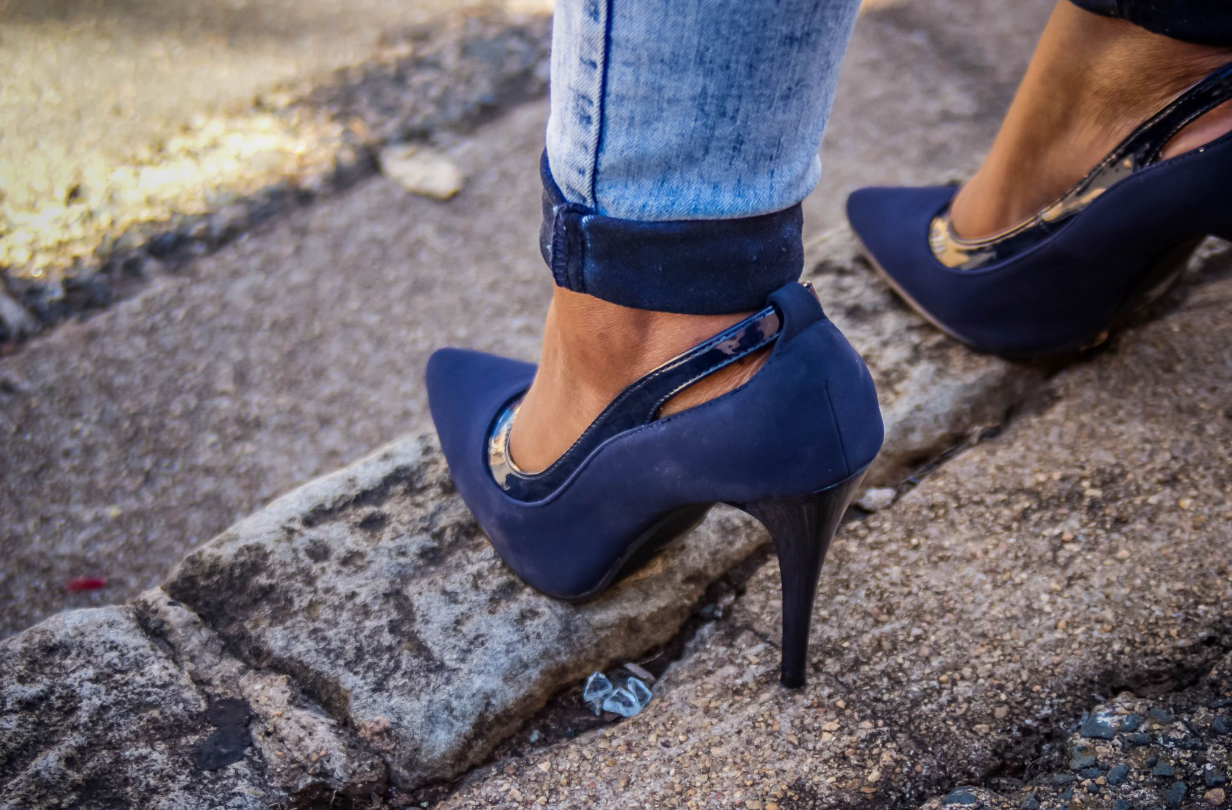
Wide-fit heels have historically been the hardest category to navigate. The narrow, pointed silhouettes that dominated formal footwear for much of the past three decades were antithetical to width accommodation, and brands rarely prioritised wide fittings in their more elevated styles.
Contemporary heel design has moved toward broader toe boxes and more anatomically considered silhouettes – a change that benefits wide-fit wearers even in styles not explicitly marketed as wide. Block heels, square-toed designs, and kitten heels with rounded toe boxes all offer more genuine room than the pointed stilettos they have partially displaced.
For women who require a confirmed wide fitting in formal footwear, Ziera and Caprice produce heel styles with E and EE options that do not sacrifice the visual refinement expected at the formal end of the market.
Athletic and Walking Shoes
The athletic category has always been the most accommodating for wide-fit wearers, given that performance brands have long recognised that foot width varies significantly and that an ill-fitting athletic shoe creates measurable performance and injury risks.
New Balance is widely regarded as the industry benchmark for width-inclusive athletic footwear, offering most of its running and walking styles in up to six different widths. Saucony and Mizuno offer comparable width ranges in their key performance lines. For women who want an athletic-inspired casual rather than a dedicated running shoe, these brands’ lifestyle ranges carry over the same width accommodation in a more versatile aesthetic.
Sandals
Wide-fit sandals are in many respects the most forgiving category, given that adjustable straps can compensate for width variation more readily than enclosed uppers. However, a sandal with straps set too close together will still cut across a wide forefoot uncomfortably, regardless of how much the buckle is loosened.
Brands with a strong presence in the wide-fit sandal space include Naot, Vionic, and Revere – all of which offer generous lasts, adjustable fastenings, and designs that range from everyday casual to smart occasion wear.
Practical Advice for Wide-Fit Shoppers
Measure both feet. Foot width, like length, can differ between the left and right foot. Fitting to the wider foot and using an insole or padding in the other shoe, where necessary, produces a better outcome than compromising on the wider foot’s fit.
Consider the toe box shape independently of overall width. A shoe labelled as wide may still have a tapered toe box that causes compression at the toes. Square and round toe boxes are almost always more comfortable for wide-fit wearers than pointed designs, regardless of the width designation.
Do not assume a larger size compensates for width. Sizing up creates length in the shoe, not width. A shoe that is half a size too long but the correct width will cause heel slippage and gait disruption. Width and length are independent dimensions that need to be addressed independently.
Use the return policy. Online wide-fit shopping is most effective when the retailer offers a genuine return and exchange policy. Fit nuances that are difficult to assess from a product description become apparent quickly once the shoe is worn. A 30-day returns window allows for real-world testing in a way that a brief in-store try-on does not always replicate.
Look for brands that offer multiple widths across their full range. A brand that offers one or two wide-fit styles as a token gesture is less useful than one that has made width accommodation a genuine design priority. The latter will produce more consistent fits and more genuinely wearable options across categories.
A Market Catching Up With Its Consumers
The wide-fit women’s footwear market is, by any measure, a more interesting and viable space than it was a decade ago. Brands have invested in better last design, more nuanced width options, and more contemporary aesthetics. Retailers have expanded their ranges and made wide-fit footwear easier to find and compare.
What has not changed is the importance of fit itself. A shoe’s materials, brand name, and price point are secondary to whether it correctly accommodates the foot wearing it. For women with wider feet, the good news is that finding a shoe that does both – fits correctly and looks genuinely good – has never been more achievable.
Women experiencing persistent foot discomfort despite wearing correctly fitted footwear are advised to consult a podiatrist to assess whether an underlying structural issue may be contributing to their symptoms.
For more, visit Pure Magazine
