


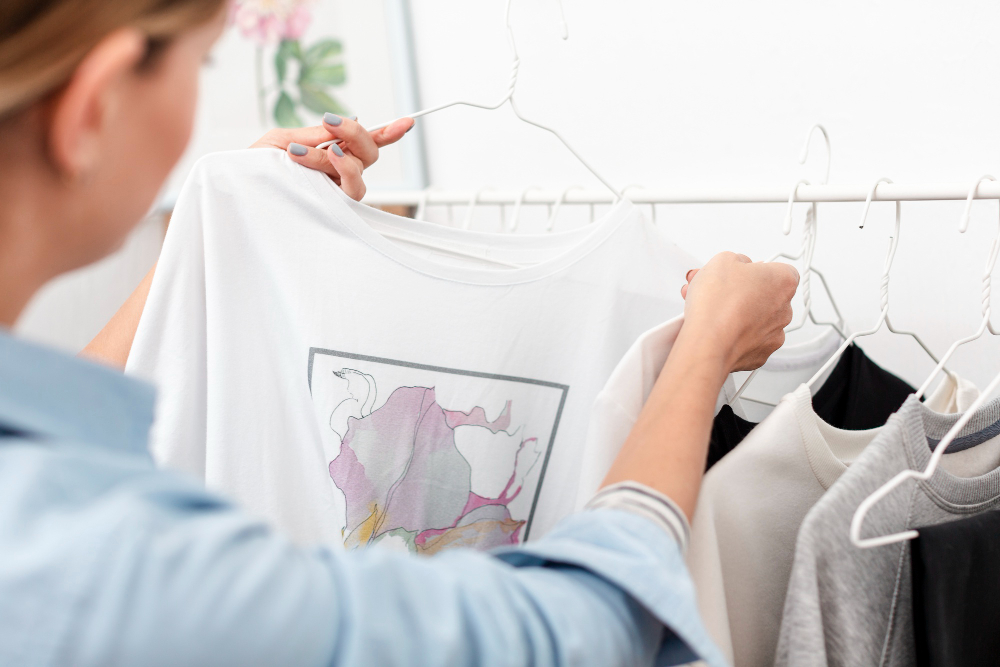
Introduction: Your Art Deserves to Be Worn, Not Just Scrolled Past
You create. You post. People like it. And then it disappears.
That’s the reality for most artists in 2026. Beautiful work gets buried in feeds, saved to folders, and forgotten. But what if your art could live beyond the screen — on someone’s back, walking into a coffee shop, turning heads on the street?
Custom t-shirts make that possible.
If you want to sell art online and actually earn from it, custom t-shirts through print-on-demand are the smartest move you can make right now. You don’t need a factory. You don’t need inventory. You don’t need to pack a single box. Print-on-demand handles everything — printing, shipping, returns — while you keep creating.
This guide shows you exactly how to do it, step by step.
Why Custom T-Shirts Are the Best Way to Sell Art Online in 2026
Paper prints hang on walls. T-shirts go everywhere.
When someone wears your art, they become a walking advertisement. Friends ask where they got it. Strangers notice. Your name spreads without you spending a single dollar on ads.
Here’s why custom t-shirts outperform other art products in 2026:
Higher perceived value. A hoodie with your design sells for $45–$65. A paper print of the same design sells for $15–$25. Same art. Much better margin.
Repeat buyers. People who love your style come back for more. A customer who buys one art tee often buys three more within a year.
Wearable = shareable. Every time someone wears your shirt, it gets seen by 10–20 new people. No algorithm controls that reach.
Low barrier to entry. With print-on-demand, you upload your design and the platform does the rest. No upfront investment. No risk.
The global custom t-shirt market is projected to exceed $10 billion by 2027. Artists who start now are building a real head start.
What Makes a Great Art T-Shirt? (And What Buyers Actually Want)
Not every design works on fabric. Understanding what buyers want saves you months of trial and error.
Buyers want to feel something when they wear a shirt. They want to express their identity, their humor, their values, or their aesthetic. Your job as an artist is to give them that.
What works:
Clean, bold designs with strong contrast. These print well and look sharp from a distance.
Designs with white space. Overcrowded art loses detail on fabric. Simplify.
A clear focal point. One strong visual element beats five competing ones every time.
What doesn’t work:
Thin lines and tiny details. These disappear in the printing process.
Low-contrast color combinations. Light yellow on white. Dark navy on black. These become invisible.
Generic designs. “Good Vibes Only” on a plain font doesn’t stand out in 2026. Specific, original art does.
Know your buyer. Are they minimalists? Maximalists? Do they love dark aesthetics, botanical illustrations, or bold typography? Design for them — not for everyone.
How to Turn Your Art Into a Custom T-Shirt — Step by Step
Step 1 — Prepare Your Artwork for Print
File quality determines print quality. There are no shortcuts here.
Export your design as a PNG with a transparent background. Minimum 300 DPI. For best results, aim for 150–300 pixels per inch at the actual print size — typically 12×14 inches for a front chest print.
If you’re a traditional artist working with paint or pencil, scan your work on a flatbed scanner at 600 DPI. Clean up edges in Photoshop or Procreate. Remove any background noise.
One rule: if it looks slightly blurry on your screen at full size, it will look very blurry on fabric. Fix it before uploading.
Step 2 — Choose a Print-on-Demand Platform That Handles the Rest
Your platform choice affects your product quality, your margins, and your customer experience.
For artists who want fashion-grade apparel with no minimum orders and global shipping, Tapstitch is one of the strongest options available today. It’s built specifically for creators who want premium products — not just basic blanks.
Upload your design, choose your garment, set your price, and connect your store. The platform handles printing, packaging, and delivery directly to your customer.
No warehouse. No logistics. No stress.
Step 3 — Create Your T-Shirt Listings the Right Way
A great product with a weak listing won’t sell. Your listing is your salesperson — it works 24 hours a day.
Title: Include what the product is and what makes it unique. “Abstract Botanical Art Graphic Tee” beats “Cool Shirt Design.”
Description: Tell the story behind the design. Where did the idea come from? What does it represent? Buyers connect with meaning.
Tags and keywords: Use terms buyers actually search — “art teacher gift shirt,” “minimalist nature tee,” “indie artist graphic tee.” Specific beats generic every time.
Mockups: Use lifestyle mockups, not just flat product shots. Show your shirt on a real person in a real setting. First impressions close sales.
Step 4 — Price Your Art T-Shirts With Confidence
Most artists underprice. It’s one of the most damaging mistakes you can make.
Low prices don’t attract more buyers — they attract the wrong buyers. Bargain hunters don’t leave reviews, don’t come back, and don’t tell friends.
Here’s a simple framework:
Base cost + 2.5x markup = your sale price
If a shirt costs $18 to produce, price it at $44–$50. Research what similar art tees sell for on Etsy. Price in the mid-to-upper range. Your art has value — price it that way.
Step 5 — Promote Your Art Where Buyers Already Are
Your store won’t promote itself. But you don’t need a big budget — you need consistency.
Instagram and Pinterest are the highest-return platforms for artists. Pinterest especially drives long-term traffic. A well-optimized pin can bring buyers to your store for years.
Post your process, not just your product. Behind-the-scenes content — sketching, digital work, mockup reveals — builds trust and connection faster than polished ads.
Use hashtags like #arttee, #wearableart, #graphicteedesign, and #artistsoninstagram to reach buyers who are already looking.
One post a day beats seven posts on Sunday. Consistency is the strategy.
Which Art Styles Actually Sell on T-Shirts?
Some niches consistently outperform others. Here’s what’s working in 2026:
- Minimalist line art — Clean, simple, elegant. Easy to wear anywhere.
- Dark aesthetic and gothic art — Strong niche with extremely loyal buyers.
- Nature and botanical illustrations — Timeless. Always in demand across age groups.
- Mental health and self-expression art — Deeply personal. Buyers wear it as identity.
- Cultural identity and heritage art — Highly engaged communities with strong word-of-mouth.
- Retro and vintage-style graphics — Nostalgic appeal never goes out of style.
Pick a niche that matches your art style AND has an audience. Don’t try to be everything to everyone. The riches are in the niches.
Best Platforms to Sell Art T-Shirts Online (Quick Comparison)
| Platform | Best For | Cost | Inventory Needed |
| Tapstitch | Premium fashion apparel for artists | Free to start | None |
| Etsy | Handmade marketplace with built-in traffic | Small listing fee | Optional |
| Redbubble | Built-in art community | Revenue share | None |
| Merch by Amazon | Massive reach, passive sales | Free (invite only) | None |
| Shopify | Full brand control | Monthly fee | None |
Many successful artists use two platforms together — Tapstitch for premium apparel, and Etsy for marketplace traffic. This way you’re not dependent on a single algorithm.
Mistakes That Kill Art T-Shirt Stores Before They Even Start
Learn from what doesn’t work so you can skip straight to what does.
Uploading low-resolution files. Blurry prints equal bad reviews equal dead store. Always check your DPI before uploading anything.
Ignoring SEO in listings. “My art design tee” ranks nowhere. “Vintage botanical illustration graphic tee women” ranks on page one. Keywords matter.
Pricing too low. You trained for years to create what you create. Price it accordingly.
Only using one platform. If one platform changes its algorithm, your income shouldn’t collapse overnight. Diversify early.
Quitting before month six. Most art t-shirt stores take 3–6 months to build real momentum. The artists who succeed are the ones still standing at month seven.
How Much Can You Realistically Earn?
| Store Type | Monthly Estimate |
| Beginner (1–10 designs, Etsy) | $100 – $400 |
| Growing store (10–30 designs, multi-platform) | $400 – $1,200 |
| Established artist brand (Tapstitch + Etsy + Instagram) | $1,200 – $3,000+ |
These are real numbers — not promises. Income depends on your niche, your designs, and how consistently you promote. Artists who treat it like a business earn like a business.
Frequently Asked Questions
Do I need design experience to sell art on t-shirts?
No formal experience needed. If you can create digital art or scan traditional work at high resolution, you have everything required to start.
What file format works best for t-shirt printing?
PNG with transparent background at 300 DPI minimum. This ensures clean edges and sharp detail on fabric.
Can I sell fan art on custom t-shirts?
Only if the character or IP is in the public domain or you hold a proper license. Selling copyrighted characters without permission exposes you to legal risk.
How many designs do I need to start?
Start with five to ten strong designs in one niche. Quality over quantity. Ten great designs outperform fifty average ones.
How long until my first sale?
Most artists make their first sale within 30–90 days with consistent promotion. Pinterest and Instagram significantly speed up that timeline.
Is print-on-demand still profitable in 2026?
Yes — and growing. The custom apparel market is expanding, and print-on-demand removes every barrier that used to stop artists from entering it.
What makes Tapstitch different for artists?
Tapstitch focuses on premium fashion apparel — not generic blanks. No minimum orders, full design customization, and global dropshipping make it the strongest option for artists who want to build a real clothing brand around their work.
Conclusion
Everything else is a system. And in 2026, that system is already built. Want to sell art online and turn your designs into real income? Start with custom t-shirts through print-on-demand — and let the platform handle everything else.
No warehouse. No upfront cost. No excuses.
Start with one design. Upload it today. When someone wears your art into the world, your work stops being a file on a hard drive — it becomes something real.
For more, visit Pure Magazine