If you’re searching for how to avoid paying tax on rental income, you’re not alone.
In 2026, landlords face the toughest tax environment in decades—Section 24 restrictions, digital reporting, higher dividend taxes, and, coming in 2027, a major 2% property income tax hike that few guides are currently mentioning.
The good news:
There are multiple legal, HMRC-approved methods to reduce, eliminate, or defer tax on rental income.
This updated 2026/2027 guide shows exactly how—and corrects the outdated advice still circulating online.
Can You Legally Avoid Paying Tax on Rental Income?
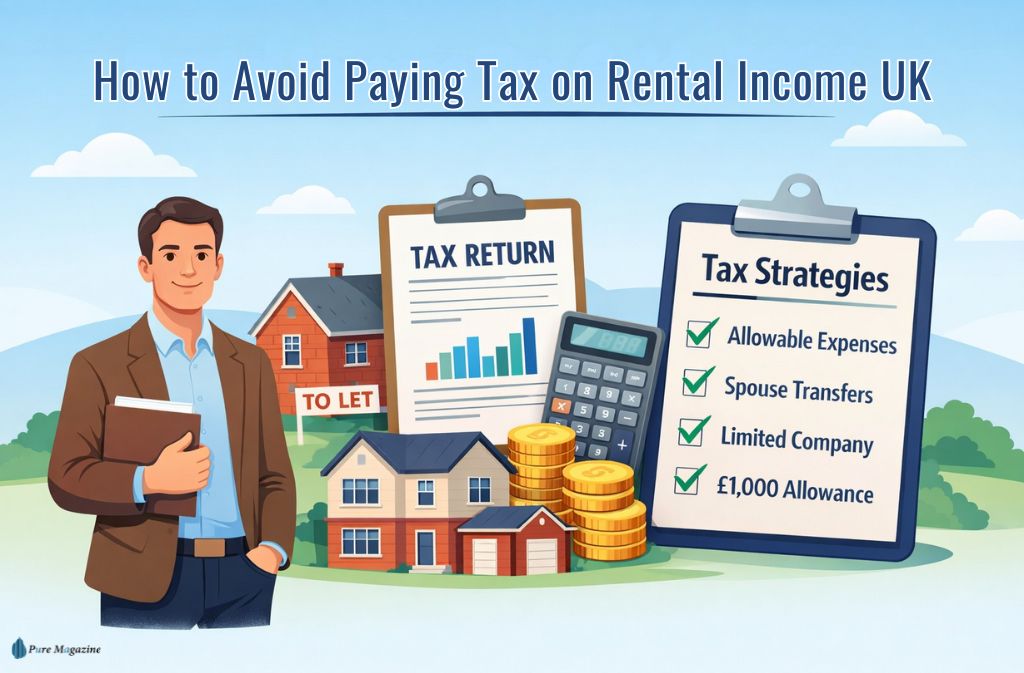
Yes—legally reducing rental income tax is possible using HMRC rules, including:
✔ offsetting allowable expenses
✔ transferring income to a lower-tax spouse
✔ using a limited company
✔ offsetting losses
✔ claiming the £1,000 property allowance
✔ reinvesting profits instead of extracting them
What you cannot do (and HMRC will penalize):
❌ hiding rental income
❌ accepting cash without declaring
❌ claiming false expenses
❌ using offshore accounts without disclosure
This article focuses only on compliant, safe methods.
URGENT UPDATE: 2027 PROPERTY INCOME TAX HIKE (+2%)
In the Autumn Budget, the government officially decoupled property income from general income tax bands.
New confirmed rates starting April 2027:
| Tax Type | 2025/26 | 2026/27 | 2027/28 |
|---|---|---|---|
| Basic Rate (Property) | 20% | 20% | 22% |
| Higher Rate (Property) | 40% | 40% | 42% |
| Additional Rate (Property) | 45% | 45% | 47% |
| Dividend Tax (Basic) | 8.75% | 10.75% | 10.75% |
| Dividend Tax (Higher) | 33.75% | 35.75% | 35.75% |
| MTD Requirement | None | £50k+ | £30k+ |
Also Check: How to Avoid Paying Council Tax on an Empty Property After Death
How to Avoid Paying Tax on Rental Income (Legal Strategies That Work in 2026)
Below are the most effective HMRC-approved strategies.
Strategy 1: Transfer Rental Income to a Lower-Tax Spouse (Corrected for 2026)
After the abolition of FHL rules, married couples no longer get flexible income splitting.
HMRC now defaults joint rental income to a 50:50 split, EVEN if ownership percentages are different.
To legally change this:
You MUST do all of the following:
1️⃣ Create a Deed of Trust (declares beneficial ownership)
2️⃣ File HMRC Form 17
3️⃣ File it within 60 days
If you miss the 60-day deadline, HMRC automatically taxes you 50:50 again.
Why this helps:
If one partner is at 40% or 45%, moving income to a 20% taxpayer can save thousands per year.
Strategy 2: Use a Limited Company (Smartest Strategy Before 2027 Tax Rise)
With property income tax rising to 22% and 42% in April 2027, limited companies become even more attractive.
Company benefits:
✔ can still deduct 100% mortgage interest
✔ not affected by Section 24
✔ corporation tax remains 19% for small profits
✔ reinvested profits incur zero personal tax
When this strategy works best:
- You own 3+ properties
- Your income places you into 40%/45% tax bands
- You plan to expand or reinvest profits
Accountants consider this the most powerful tax-saving method for landlords heading into 2027.
Strategy 3: Use the £1,000 Property Allowance (Most Overlooked)
If your rental income is under £1,000 per year, you do not need to:
- declare it
- Register for Self Assessment
- file a return
Even if your income is above £1,000, you can choose between:
✔ claiming actual expenses
OR
✔ using the £1,000 allowance
Whichever gives a lower tax bill.
Strategy 4: Maximise Allowable Expenses
You can deduct fully:
✔ repairs
✔ maintenance
✔ letting agent fees
✔ service charges
✔ landlord insurance
✔ safety certificates
✔ professional fees
✔ utility bills (if you pay them)
These reduce taxable profit directly.
Strategy 5: Offset Losses to Pay Zero Tax
Rental losses can be carried forward indefinitely.
You can offset:
✔ previous years’ losses
✔ heavy repair years
✔ periods of vacancy
✔ unclaimed expenses
This can reduce taxable rental income to zero
Strategy 6: Reinvest Instead of Extracting Profits (Company Only)
If you keep profits inside a limited company:
- You pay corporation tax only
- You avoid dividend tax entirely
- You can use funds to buy more property
This results in zero personal tax liability.
MTD 2026 Warning: Digital Filing Penalties WILL Apply
Starting April 2026. MTD is mandatory for landlords earning over £50,000.
You must:
✔ keep digital records
✔ use HMRC-approved software
✔ submit quarterly updates
✔ file an end-of-year finalisation
Penalty System (New in 2026)
HMRC uses “points”:
- Miss one quarter = 1 point
- Reach the threshold = automatic financial penalties
- Points stay on your record for up to 2 years
This doesn’t change how much tax you pay, but it increases the cost and risk of non-compliance.
In 2027, the threshold drops to £30,000.
Real Examples: How Landlords Pay Zero Tax Legally
Example A — Spouse Transfer
40% taxpayer transfers beneficial ownership to 20% taxpayer.
Outcome: Rental income taxed at 20% instead of 40%.
Example B — Heavy Repair Year
£12,000 repairs in one tax year.
Outcome: Taxable profit reduced to zero.
Example C — Company Structure
Reinvest profits; no dividends taken.
Outcome: Zero personal tax; only 19% corporation tax.
Also Check: Backdated Pension Payment Tax Return 2026 — Claim Your Refund
Illegal Methods to Avoid Tax (Avoid at All Costs)
These equal tax evasion and trigger penalties:
❌ failing to declare rent
❌ hiding cash payments
❌ overstating repairs
❌ using offshore structures to conceal ownership
❌ misreporting occupancy status
HMRC now uses:
- bank data matching
- deposit protection records
- agent reporting
- council tax patterns
- AI risk scoring
So the detection risk is high.
FAQs
Q: How can I legally avoid paying tax on rental income in the UK?
You can legally reduce your rental income tax by claiming allowable expenses, using a spouse transfer with Form 17, setting up a limited company, offsetting losses, or using the £1,000 property allowance. All methods comply with HMRC rules for 2026–2027.
Q: What is the 2027 property income tax increase and how does it affect landlords?
Starting April 2027, property income tax will rise by 2%: 22% for basic rate, 42% for higher rate, and 47% for additional rate taxpayers. Planning early with allowances, spouse transfers, or company structures can reduce your tax liability.
Q: Can transferring rental income to my spouse reduce my tax?
Yes, but you must file a Deed of Trust and HMRC Form 17 within 60 days. Without filing, HMRC defaults to a 50:50 split. Properly executed, this can move income from a higher-rate to a lower-rate taxpayer, lowering your tax legally.
Q: Does Making Tax Digital (MTD) affect how I pay rental income tax?
Yes. From April 2026, landlords earning over £50k must report rental income quarterly via HMRC-approved software. Failing to comply incurs penalties, though it doesn’t change the tax owed. In 2027, the threshold drops to £30k.
Q: Can I pay zero tax on rental income if I reinvest profits through a limited company?
Yes. Rental profits held in a limited company are subject only to corporation tax (19% for small profits). By reinvesting instead of extracting dividends, you can legally reduce personal rental income tax to zero while expanding your property portfolio.
Final Summary
To legally avoid paying tax on rental income, landlords must use HMRC-approved strategies, including:
- transferring rental income to a lower-rate spouse
- using a limited company structure
- claiming allowable expenses
- using the £1,000 property allowance
- offsetting past losses
- reinvesting company profits
- preparing for the 2027 rental income tax hike
With property income tax increasing by 2% in April 2027, proactive planning in 2026 is essential.
Related: Stamp Duty Land Tax Return 2026: How to File, Rates & Deadlines