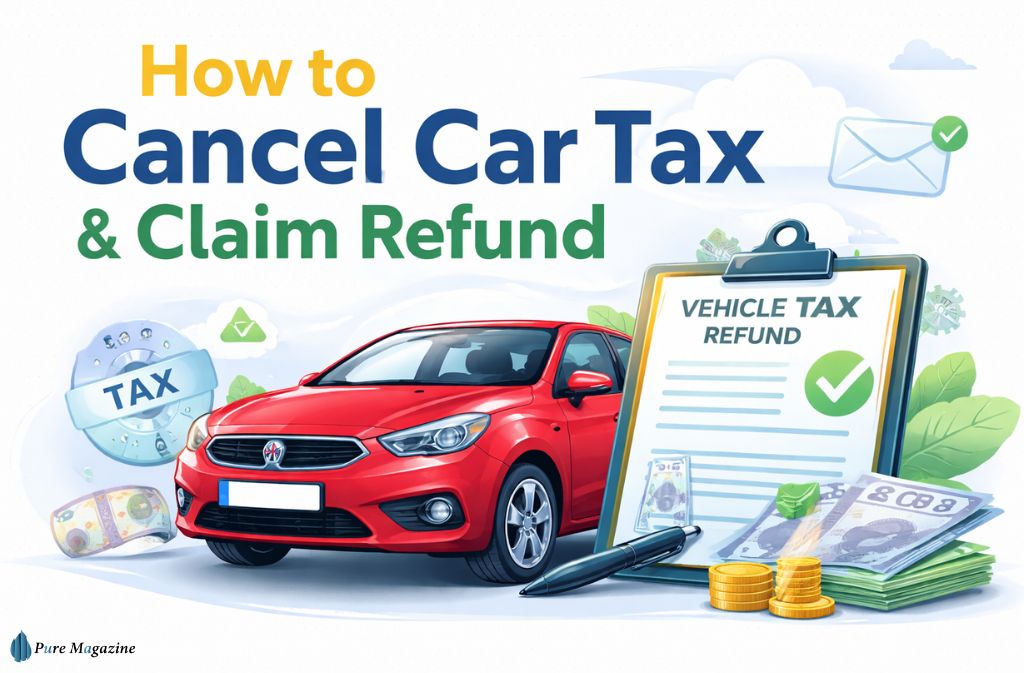
Cancelling road tax sounds simple — until you realise there’s no “cancel” button.
Most people searching how do I cancel my road tax are actually trying to do one of three things: stop paying immediately, avoid getting fined, or get as much refund back as possible.
The reality is that you don’t cancel road tax directly — you update your vehicle’s status with the DVLA, and the system handles the rest. In 2026, with EV tax now in force and standard VED rates higher, more people than ever are trying to figure this out quickly.
The Reality: You’re Not “Cancelling” — You’re Updating the DVLA
When people say “cancel road tax”, what they mean is telling the DVLA you’re no longer responsible for the vehicle, or that it’s no longer being used on public roads.
Once that happens, your Vehicle Excise Duty stops automatically, and any eligible refund is issued. There’s no manual cancellation system — it all flows from the status change you report.
The GOV.UK vehicle tax refund page sets out exactly what triggers a cancellation and when a refund cheque will be issued.
When You Must Take Action
You only need to act when something about the car changes. You must inform the DVLA if:
- You sell or transfer ownership to someone else
- You scrap the car at an authorised facility.
- Your insurer writes it off.
- You export the vehicle permanently.
- Someone steals the vehicle (after you report it to the police).
- You apply for SORN — Statutory Off Road Notification
Not acting means you remain legally responsible, which means continued liability for tax, fines, and any enforcement action.
When You Don’t Need to Do Anything Extra
If you sell your car and submit the V5C logbook section to the DVLA — or complete the transfer online — the DVLA cancels the tax automatically and triggers the refund without any extra steps on your part.
Most people overthink this. If you’ve used the online sale process correctly, you don’t need to make a separate refund claim.
Notify the DVLA Immediately — Same Day Matters
This is where most people lose money they’re owed.
Refunds are calculated from the date the DVLA processes your notification — not the date you sold or scrapped the car. A seller who completes on a Saturday but waits until Monday to notify the DVLA loses a full month’s refund, because the processing date falls in the next calendar month.
The fix is simple: notify the DVLA the same day you sign the V5C.
The End-of-Month Trap (Costs Thousands of Drivers Every Year)
Sell your car on the 31st, but notify the DVLA on the 1st, and you lose nearly a full month of refund. Partial months are never refunded under any circumstances. The refund period runs from the first full unused month after DVLA processes your notification.
Always update the DVLA the same day you sign over the vehicle — not the next working day.
Cancelling Road Tax Direct Debit (Critical Warning)
Stopping your Direct Debit feels like cancelling —, but it isn’t. If you cancel the bank payments before notifying the DVLA, the DVLA still sees you as responsible for the vehicle, and you may face enforcement action for running an untaxed vehicle.
The correct order: inform the DVLA first. Once they process the change, the Direct Debit cancels automatically. You don’t need to contact your bank separately — the DVLA handles it.
Road Tax Refunds Explained (2026 Rules)
Refunds are straightforward but operate on strict rules:
- You receive a refund only for full unused calendar months
- The refund is calculated from the date DVLA processes your notification
- Partial months receive nothing — including surcharges paid for six-month payments or the 10% direct debit surcharge
- In 2026, most refunds arrive as bank transfer, though cheques to the V5C address are still used in some cases
- If you haven’t received your refund after six weeks, contact the DVLA — after eight weeks, escalate directly
Refund Calculator Cheat Sheet (2026)
| Scenario | Date Notified | Tax Paid | Refund Estimate |
|---|---|---|---|
| Sold car | 15 April | £200 (annual) | ~£183 (11 months) |
| SORN | 2 May | £200 (annual) | ~£166 (10 months) |
| Scrapped | 29 June | Monthly DD | £0 (payments stop) |
Partial months are never refunded — this is confirmed in DVLA’s own guidance.
2026 Update: Electric Vehicle Tax Changes
From 1 April 2026, EVs are no longer tax-free. The standard rate of £200 per year now applies to most electric vehicles, ending a period where many EV owners had a £0 tax liability.
This has prompted more EV owners to consider SORN for vehicles not in active use, rather than continuing to pay the standard rate on a car sitting unused. It’s also led more people to seek refunds when selling EVs earlier than planned.
For a full breakdown of what EV owners now pay and how the expensive car supplement threshold works, the rates vary depending on list price and registration date in ways that affect the refund calculation.
Should EV Owners Cancel Road Tax?
If you’re not using the car and it won’t be driven on public roads, apply for SORN rather than continuing to pay the standard rate. SORN stops the tax immediately and triggers a refund for any full unused months. The car must be kept off public roads — in a garage or on private land — while SORN is in force.
Understanding what SORN means and when it applies is worth doing before applying, since keeping an untaxed and un-SORNed vehicle on a public road carries a fine of up to £1,000.
2026 Update: Luxury Car Tax Threshold
The Expensive Car Supplement threshold for electric vehicles increased from £40,000 to £50,000 from April 2026. For EV owners paying the supplement on a car now below the new threshold, you should check this carefully—especially if you registered the car from April 2025 onward, because the change applies retrospectively to those registrations.
Anyone who overpaid under the old threshold may be eligible for a correction through the DVLA. Check your registration date and original list price if your EV sits in the £40,000–£50,000 range.
Cancel vs SORN: Quick Decision Table
| Situation | What You Should Do | Result |
|---|---|---|
| Sold car | Inform DVLA online | Refund issued |
| Scrapped | Inform DVLA online | Refund issued |
| Not driving | Apply SORN | Tax stops |
| Cancel DD only | ❌ Wrong approach | Risk of fines |
| Do nothing | ❌ Risk | No refund, continued liability |
Common Mistakes That Cost You Money
Waiting to notify the DVLA. Every day of delay costs you refund days — and end-of-month delays can cost a full month.
Cancelling the Direct Debit first. This doesn’t cancel your tax. It creates an enforcement risk. Always tell the DVLA first.
Assuming refunds are instant. Allow four to six weeks. Contact the DVLA after eight weeks if nothing has arrived.
Forgetting SORN for unused vehicles. An untaxed car on a public road — even parked — can be clamped. SORN covers you when the car is on private land.
Simple Framework: What Should You Do?
- Sold it? → Inform the DVLA online immediately
- Scrapped it? → Inform the DVLA online immediately
- Not using it? → Apply for SORN
- Just stopping payments? → Don’t do this — inform the DVLA first
FAQs
Q. How do I cancel my road tax online in the UK?
To cancel your road tax online, you must inform the DVLA by updating your vehicle’s status (such as sold, scrapped, or SORN) through their official service. Once processed, your vehicle tax is automatically canceled, and any eligible refund is issued for the full unused months.
Q. Do I need to cancel road tax when I sell my car?
Yes, you must notify the DVLA when you sell your car. Road tax does not transfer to the new owner, and once DVLA updates ownership, your tax is canceled automatically, and a refund is calculated.
Q. What happens if I cancel my road tax Direct Debit only?
Canceling your Direct Debit alone does not cancel your road tax. You must inform the DVLA separately; otherwise, you may still be legally responsible for the vehicle and could face penalties.
Q. How much refund do I get when I cancel the road tax?
You receive a refund for any full unused months of vehicle tax remaining. The amount is calculated from the date the DVLA processes your update, and partial months are not refunded.
Q. Can I cancel road tax if I’m not using my car?
Yes, but instead of canceling directly, you should apply for a Statutory Off Road Notification (SORN). This stops your road tax immediately and allows you to receive a refund for any full unused months.
Conclusion
Cancelling road tax isn’t about pressing a button — it’s about timing and accuracy.
Inform the DVLA first and always on the same day as the change. Refunds only cover full months, calculated from the processing date. The end-of-month trap is real and avoidable. The 2026 EV tax changes make this process more relevant than ever for drivers who previously had zero tax liability.
If you came here asking how to cancel my road tax: update the DVLA correctly, and do it immediately.
For more on UK road tax rates, DVLA updates, and vehicle tax changes, visit Pure Magazine.