In industrial supply chains, lead time is rarely an isolated metric. It influences production scheduling, inventory planning, maintenance cycles, and contractual delivery commitments. When drivetrain components such as gears arrive late, assembly lines pause, maintenance windows extend, and downstream operations absorb the delay.
Over the past several years, manufacturers have faced tighter production schedules alongside greater demand for customization. Traditional made-to-order gear production can require extended engineering review, material sourcing, machining, heat treatment, and inspection cycles. For operations leaders, the challenge is not only quality but timing.
One response to this pressure has been the growing reliance on standardized, pre-engineered gear platforms. This model changes how gears are specified, manufactured, and delivered within industrial supply chains.
Standardized Design Platforms Streamline Production Cycles
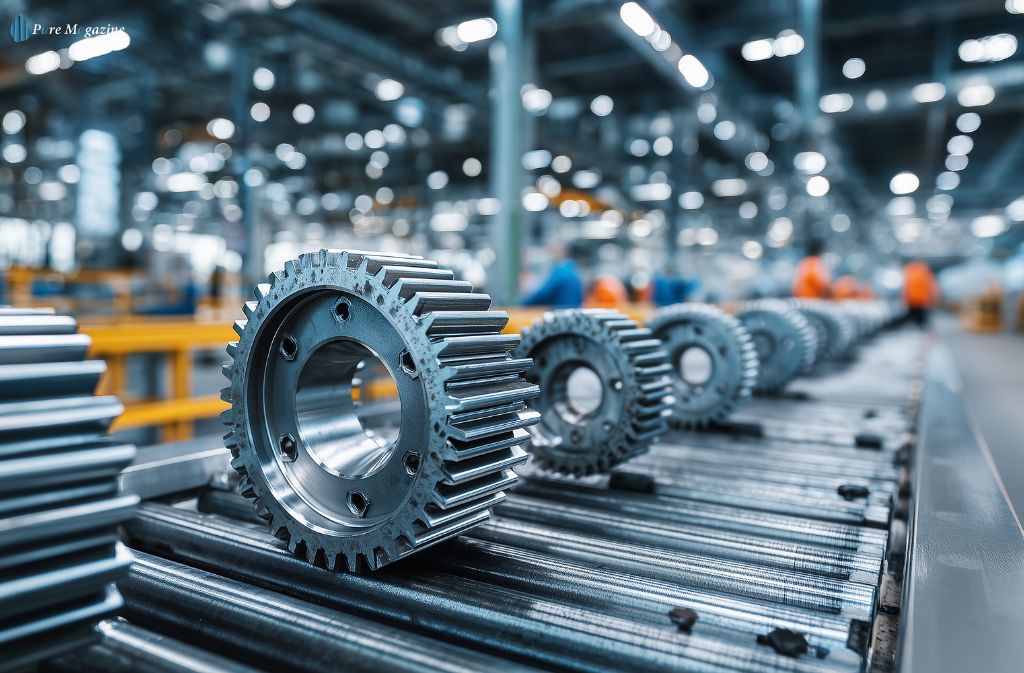
A pre-engineered gear manufacturer operates from a library of validated gear designs rather than beginning every project from first principles. A pre-engineered gear manufacturer develops and tests core geometries in advance, allowing production to begin without extended design iteration.
Instead of initiating a full engineering review for each order, manufacturers draw from established design templates that already meet defined load, tolerance, and material standards.
Impact on Engineering Lead Time
This approach reduces delays associated with:
- Repeated design validation processes
- Extended approval cycles between engineering and procurement
- Prototype manufacturing before production release
By removing redundant engineering steps, the timeline between order confirmation and machining shortens significantly.
Reduced Dependency on Raw Material Variability
Traditional custom production often requires sourcing specific material grades on demand. Fluctuations in material availability can extend timelines.
Pre-engineered programs frequently standardize material selection across multiple product lines. This consistency allows manufacturers to maintain material inventory aligned with recurring demand.
Supply Stability Benefits
Standardized material planning supports:
- Faster machining start times
- Reduced exposure to raw material shortages
- More predictable procurement cycles
When materials are already aligned with validated designs, production scheduling becomes more reliable.
Optimized Manufacturing Workflows
Because pre-engineered gears are based on repeatable specifications, machining workflows can be refined and standardized. Setup procedures, tooling selection, and inspection protocols are established in advance.
According to general mechanical manufacturing principles described in references such as gear fundamentals, consistency in geometry and process control directly influences quality outcomes. Repetition in production allows manufacturers to refine those processes for efficiency.
Operational Efficiency Gains
Refined workflows lead to:
- Shorter machine setup times
- Reduced trial-and-error adjustments
- More consistent output across production batches
Efficiency at the machining stage directly compresses overall lead time.
Shorter Approval and Documentation Cycles
Custom manufacturing often involves multiple rounds of drawing revisions and specification clarification. Each revision adds administrative time before production begins.
Pre-engineered models operate from established documentation. Dimensional drawings, tolerance data, and quality standards are predefined.
Documentation Stability
Clear and repeatable documentation reduces:
- Engineering change requests
- Delays caused by specification ambiguity
- Rework due to misinterpretation
Administrative simplification contributes meaningfully to overall supply chain speed.
Improved Forecasting and Inventory Planning
Because pre-engineered gears are based on standardized configurations, demand forecasting becomes more accurate. Manufacturers can anticipate recurring orders and plan capacity accordingly.
Inventory Strategy Advantages
Predictable demand patterns allow for:
- Partial production runs ahead of confirmed orders
- Buffer inventory for high-demand configurations
- Faster response during maintenance emergencies
In industrial settings where downtime is costly, reduced wait time for replacement gears improves operational resilience.
Reduced Risk of Late-Stage Design Conflicts
In custom-only environments, unforeseen design issues sometimes appear after machining has begun. Minor dimensional conflicts or tolerance mismatches can trigger redesign or rework.
Pre-engineered designs have typically undergone prior validation in real-world applications. This reduces the likelihood of unexpected conflicts during production.
Risk Mitigation Outcomes
Lower design uncertainty supports:
- Fewer production stoppages
- Reduced scrap rates
- More predictable shipping timelines
Risk reduction is a key contributor to shorter and more stable lead times.
Faster Integration Into Existing Assemblies
Industrial equipment manufacturers often operate on synchronized assembly schedules. A delay in one component can stall the entire production sequence.
Pre-engineered gears are typically designed for compatibility with widely used shaft configurations and housing standards. This compatibility simplifies integration.
Assembly Efficiency
Standardized integration characteristics help:
- Minimize installation adjustments
- Reduce alignment correction during assembly
- Maintain consistent drivetrain performance
Smooth integration supports uninterrupted downstream processes.
Greater Scalability During Demand Surges
Supply chains must respond to fluctuations in order volume. Custom design-heavy production models may struggle to scale quickly.
Pre-engineered manufacturing platforms are better positioned to increase output because:
- Tooling setups are repeatable
- Process documentation is stable
- Workforce training aligns with standardized designs
Scalability Benefits
During periods of increased demand, manufacturers can:
- Expand production runs without extensive redesign
- Maintain quality consistency across higher volumes
- Meet delivery commitments under compressed timelines
Scalability strengthens overall supply chain responsiveness.
Supporting Domestic and Regional Supply Chain Resilience
Many industrial sectors are prioritizing shorter supply chains and regional manufacturing capacity. Pre-engineered platforms support this by enabling local facilities to produce standardized components efficiently.
With validated designs and established processes, regional manufacturers can deliver predictable results without long overseas development cycles.
Strategic Supply Chain Impact
Domestic production advantages include:
- Reduced shipping time
- Lower exposure to international logistics disruption
- Improved communication between buyer and supplier
Shorter supply lines directly contribute to faster fulfillment.
Conclusion
Lead time in industrial supply chains depends on more than machining speed. It reflects engineering validation cycles, material sourcing stability, documentation clarity, and production workflow efficiency. A pre-engineered gear manufacturing approach addresses these variables by standardizing design, streamlining processes, and reducing uncertainty.
By operating from validated gear platforms, manufacturers shorten engineering cycles, stabilize material planning, and refine production methods. The result is a more predictable and responsive supply chain capable of supporting tight industrial schedules.
For operations leaders focused on minimizing downtime and protecting production continuity, structured pre-engineered solutions represent a practical strategy for reducing delays without compromising quality or performance.
For more, visit Pure Magazine