Millions of UK travellers are planning spring holidays, city breaks, and Easter family trips right now. A single overlooked detail could stop those plans before they start.
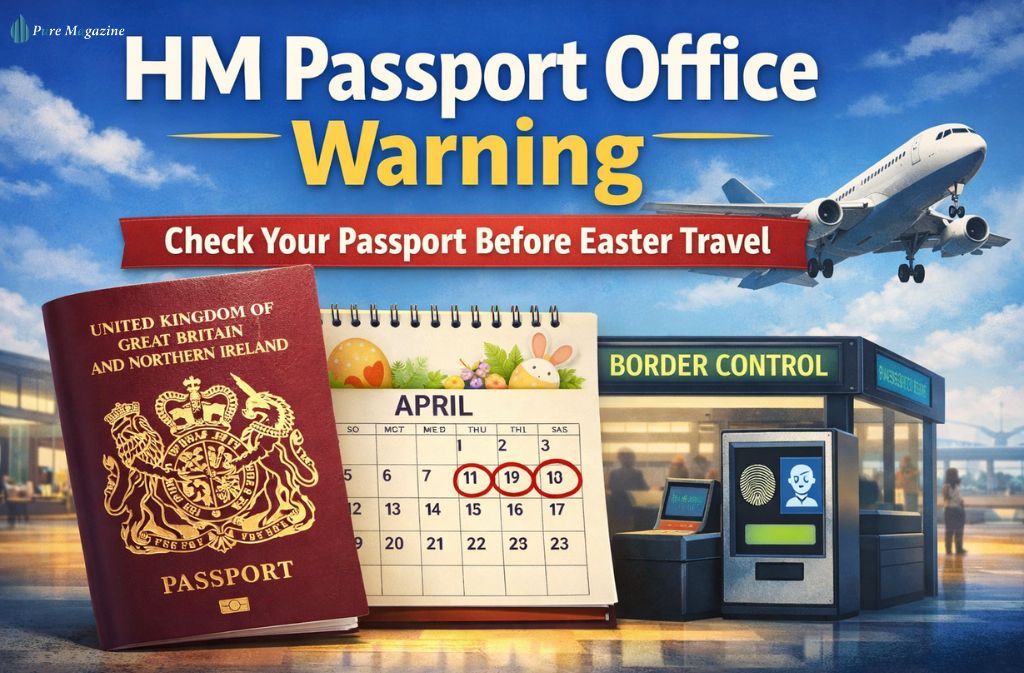
On 10 March 2026, HM Passport Office pushed an urgent reminder across its social media channels: “Planning spring or Easter travel? Check your passport now.” The timing wasn’t accidental. Passport renewal requests surge every spring, and thousands of travellers each year only discover a problem when they’re standing at an airport check-in desk.
The issue isn’t always an expired passport. Post-Brexit rules mean the date your passport was issued can be just as disqualifying as the date it expires — and that distinction catches experienced travellers out every year.
Add two new digital border systems launching across Europe in 2026, a rule change for dual British nationals that took effect in February, and an ETIAS travel authorisation scheme expected before year’s end — and passport checks have never mattered more.
Why the 2026 Warning Was Issued
The HM Passport Office warning centres on one simple step most travellers skip: checking passport validity before booking, not after.
As GOV.UK’s passport travel guidance confirms that the most common problems include passports issued more than 10 years ago, passports expiring within three months of the return date, children’s passports already expired, and last-minute renewals during peak travel periods that then face processing delays.
The passport number also changes with every renewal — a detail that matters if flights, accommodation, or visas were booked under the old number.
The 10-Year Rule: The Trap Most Travellers Don’t See
The rule causing the most disruption is one that has nothing to do with expiry dates.
As the EU’s official entry requirements for non-EU nationals confirm, UK passport holders entering the Schengen Area must satisfy two simultaneous conditions:
| Requirement | Rule | Why It Matters |
|---|---|---|
| Issue date rule | The passport must be less than 10 years old on entry | Older passports are rejected regardless of expiry |
| Expiry rule | The passport must be valid for at least 3 months after leaving the EU | Prevents overstays |
Both conditions must be met at the same time.
The trap is straightforward: before September 2018, HMRC Passport Office added unused months from old passports into new ones when people renewed early. That practice created passports apparently valid beyond 10 years — and those extra months carry no weight at Schengen borders post-Brexit.
A passport issued in March 2016, expiring in December 2026, looks valid. But it fails the issue date test from March 2026 onward, regardless of what the expiry date says.
As Which?’s 2026 passport validity confirms, if your passport was issued more than 10 years ago and you attempt to travel to an EU country, airlines are legally responsible for checking validity — and will deny boarding if there is any doubt. You won’t be able to claim a refund for the flight. The rule applies to all Schengen Area countries. Ireland is the significant exception — the Common Travel Area arrangement means standard Schengen rules don’t apply for British travellers crossing to Dublin.
New 2026 Border System: The EU Entry/Exit System (EES)
Travel into Europe is also changing structurally in 2026 through the new EU Entry/Exit System — a digital border control platform replacing manual passport stamping across the Schengen Area.
As Saga’s March 2026 passport guide confirms, instead of a physical stamp, border authorities now digitally record passport details, fingerprints, and a facial biometric scan. The rollout was expected to be completed by 10 April 2026.
During your first trip through an EES-equipped border, expect to:
- Scan your passport at a kiosk
- Provide fingerprints
- Complete a facial scan
Early phases have produced longer queues at some airports as the new kiosks process first-time registrations. Build extra time into any airport arrival until the system settles.
UK Passport Fees in 2026
Fees increased in April 2025 and remain unchanged in 2026.
| Service | Online Fee | Paper Application |
|---|---|---|
| Adult passport | £94.50 | £107 |
| Child passport (under 16) | £61.50 | £74 |
| 1-Week Fast Track | ~£155 | Not available |
| 1-Day Premium Service | ~£193.50 | Not available |
Online applications move faster and cost less. The GOV.UK passport renewal service handles the full application digitally with a typically faster turnaround than paper submissions.
Processing Times: Why Timing Matters
| Period | Typical Processing Time |
|---|---|
| Winter | 2–3 weeks |
| Spring/Easter | 3–6 weeks |
| Summer peak | Up to 10 weeks |
As the Home Office confirmed to Saga Magazine, the three-week target runs from when documents are received, not when they’re sent. Factor in postal time both ways when calculating whether standard processing is safe.
The practical implication: if your passport needs renewing before a summer holiday, starting now rather than in May is the difference between standard fees and Fast Track fees.
ETIAS: The Travel Authorisation Coming Later in 2026
ETIAS — the EU’s digital travel authorisation for visa-exempt visitors, including UK travellers — is expected to launch in the last quarter of 2026.
As ABTA’s Brexit travel guide confirms, once active it will require UK passport holders to apply online before visiting most EU countries and pay a fee. As Which? confirms that the fee sits at €7 (approximately £6) — valid for three years or until passport expiry, whichever comes first. The system is expected to operate similarly to the US ESTA, with most applications approved in minutes. There will be a six-month grace period when it launches, but expect delays at airports during early implementation.
For trips in late 2026 or 2027, check the official ETIAS website for launch confirmation before booking.
The Dual Nationals Rule: What Changed in February 2026
A significant change took effect on 25 February 2026 that affects British citizens holding dual nationality.
As the House of Commons Library’s briefing on dual citizen travel confirms, carriers are now required to verify that British dual nationals travelling to the UK have a valid British passport or Certificate of Entitlement — not a foreign passport alone. Airlines boarding a passenger without the correct documentation face penalties. The Home Office has confirmed no additional grace periods beyond the transitional phase that ran through April 2025.
Dual nationals who don’t currently hold a valid British passport face a choice: renew it (the straightforward route) or apply for a Certificate of Entitlement (£589, takes weeks). Airlines may, at their discretion, accept an expired British passport issued in 1989 or later alongside a valid foreign passport where biographical details match — but this is not a guaranteed route.
Common Mistakes Travellers Make
Booking flights before checking passport validity — months of planning can unravel at the check-in desk for a problem that takes two minutes to identify in advance.
Treating the expiry date as the only test — the issue date rule catches people with passports that look perfectly valid and aren’t.
Forgetting that children’s passports expire in five years — parents are frequently surprised. A child’s passport issued in 2021 expired in 2026. Check every passport in the family.
Waiting until the last minute — Easter processing times can stretch to six weeks. Starting a renewal in April for a May trip is already tight.
Quick Passport Checklist Before Booking
- ✔ Passport issued within the last 10 years
- ✔ At le3 mast onths’ validity after the date you leave the EU
- ✔ Passport not damaged (damaged passports can be rejected at check-in)
- ✔ Enough blank pages for entry stamps ✔ Passport won’t expire during the trip
- ✔ Dual nationals: valid British passport confirmed for UK re-entry
Any box unticked means renewing before booking — not after.
FAQs
Q. What is the HM Passport Office warning about?
An urgent March 2026 reminder to check passport validity before booking spring and Easter travel — particularly the 10-year issue date rule that catches thousands of UK travellers out every year.
Q. What is the 10-year passport rule?
Your passport must have been issued less than 10 years before you enter an EU/Schengen country, and must also be valid for at least 3 months after you leave. Both conditions apply simultaneously. As Europa.eu confirms, this applies to all non-EU nationals entering the Schengen Area.
Q. How long does it take to renew a UK passport?
Standard renewals take around three weeks from receipt of documents — but Easter and summer periods stretch that to six or ten weeks. Apply via GOV.UK’s passport renewal service.
Q. What is the EU Entry/Exit System?
A digital border system replacing manual passport stamping across the Schengen Area. It records biometric data — fingerprints and facial scans — on first entry. Rollout was expected to be completed by 10 April 2026.
Q. Will UK travellers need ETIAS?
Yes — expected to launch in the last quarter of 2026. The fee is €7 (approximately £6), valid for three years. Not yet active. Monitor the official ETIAS website for launch dates.
Q. Should I renew my passport before booking travel?
If your passport is more than nine years old, renew it before booking anything to Europe. The House of Commons Library briefing and Which? Both confirm that airlines will deny boarding rather than risk a fine — and there’s no flight refund if the passport is non-compliant.
Conclusion
The March 2026 HM Passport Office warning reflects a genuine and recurring pattern: thousands of UK travellers each year are denied boarding or face border refusal for passport problems that a two-minute check would have prevented.
The 10-year issue date rule, the EES biometric registration, the dual nationals rule change, and the incoming ETIAS authorisation all come into effect in 2026 to make passport checks more important than at any point in recent memory. According to a 2025 YouGov survey cited by Saga, around 40% of travellers are unaware of key passport rules — which means roughly 9.6 million people could face problems on their next trip.
Check the issue date on your passport today. If it’s approaching 10 years old, renew before booking anything. If children are travelling, check their passports separately — they almost certainly need renewing faster than you expect.
For reliable, plain-English guidance on UK tax and personal finance in 2026, Pure Magazine is the resource worth bookmarking.