I remember the exact moment I realized my travel blog had a video problem. I had just come back from three weeks in Portugal — one of the most visually rich trips I had taken in years — and I sat down to put together a video for YouTube. I had roughly four hours of footage across multiple locations. Lisbon at golden hour, the Douro Valley in the mist, the Atlantic coast near Sagres on a stormy afternoon. On paper, it should have been extraordinary material. In practice, I had a lot of slightly blurry handheld clips, a few solid wide shots that didn’t connect to anything, and almost nothing with real cinematic movement. The story I wanted to tell was there. The footage to tell it wasn’t.
I spent three days in the edit trying to make it work. The final video was fine — functional, watchable — but it didn’t come close to communicating what Portugal had actually felt like. The gap between the experience and the output was frustrating in the specific way that creative inadequacy always is. You know what you wanted to make. You just couldn’t make it.
That gap is what I keep coming back to when I think about what AI video generation offers travel bloggers, because it’s a gap the format has never had a good answer to. Until recently.
The Fundamental Mismatch Between Travel and Video Production
Travel blogging was built on writing and photography for good reasons. Both are things you can do alone, with minimal equipment, while moving through a place at whatever pace actually allows you to experience it. You carry a camera. You take notes. You process both after the fact, in the edit and on the page, and the output reflects your perspective rather than the logistical requirements of a production.
Video is structurally different. Good travel video requires thinking about coverage in advance — knowing what establishing shots you need, where the camera needs to be for the light to work, how you’re going to capture motion and transition. It requires stability, which means equipment. It often requires a second person, because filming yourself while also experiencing a place is a genuine compromise of both activities. And it requires time — not just filming time, but the post-production hours that raw footage demands before it becomes anything watchable.
Most travel bloggers who came up through writing or photography are not natural videographers, and the skill set doesn’t transfer as cleanly as the platforms would like to suggest. The result is a lot of travel video content that is earnest and well-intentioned but visually thin — footage that documents rather than evokes, that shows you where someone went without making you feel anything about it.
What Changes When You Can Generate From What You Already Have
The specific shift that AI video generation creates for travel bloggers is the ability to work backward from existing material rather than forward from a production plan. Most travel bloggers have strong photography. Many have years of it — a genuine visual record of places visited, moments captured, light caught at the right instant. That photography was always the real output of the trip, the thing that represented their eye and their sensibility. The video was always the thing they felt like they should be making but struggled to make well.
Image-to-video generation turns the photography into a starting point for video rather than a separate deliverable. A beautifully composed photograph of a morning market in Marrakech becomes a clip with subtle human movement and drifting morning haze. A wide shot of the Amalfi coast becomes footage with the sea moving and light shifting in a way that communicates the mood of the place rather than just its geography. The photograph was already doing creative work. AI video generation extends that work into a temporal dimension without requiring you to have been in the right place with the right equipment at the right moment.
I started experimenting with this workflow after the Portugal trip, partly out of frustration and partly because I was curious whether the output would actually be usable. The honest answer is that it depends heavily on the source material and the care you put into the generation prompts, but at its best the results are genuinely impressive — footage that I would have been thrilled to have captured in the field.
The Prompt as Creative Direction
One thing I’ve found is that the quality of AI-generated travel footage correlates strongly with how cinematically you think about your prompts. Describing a scene in general terms — “a street in Lisbon” — produces generic results. Describing a scene in the way a director of photography would think about it produces something much more useful.
What that means in practice: specifying the quality of light (warm late afternoon, flat overcast, blue hour), the camera behavior (slow push into the midground, gentle pan left, locked-off wide with subtle camera drift), the movement within the scene (pedestrians crossing in the background, tram moving through frame left, pigeons lifting from a plaza), and the overall mood you’re trying to communicate. The model has to work with whatever information you give it, and the more precise that information, the closer the output comes to what you actually had in mind.
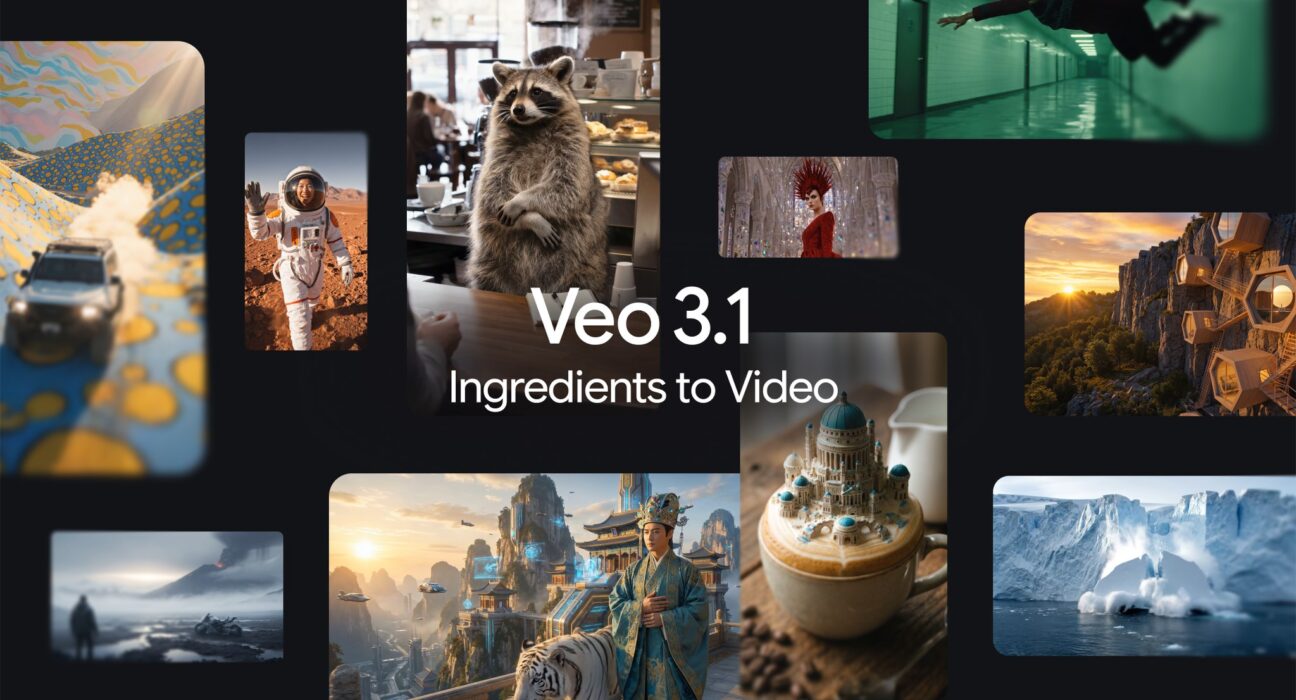
Veo 4 responds particularly well to this kind of cinematically specific prompting — the multi-modal input means you can combine a reference photograph with a detailed text description and audio direction to get output that feels authored rather than randomly generated. That authorial quality is what separates useful travel footage from the kind of AI video that looks impressive for five seconds and then feels hollow.
Rebuilding Old Content With New Tools
One of the more practical applications I’ve found for AI video generation in a travel blog context is revisiting older trips that I documented primarily in photography and writing. I have posts from five or six years ago about places that readers still find through search — posts that rank well, get consistent traffic, and represent some of my most careful writing. Those posts have no video, because at the time I wasn’t making video, and the footage I had from those trips was too poor quality to use.
Those posts are now candidates for a video layer that didn’t exist before. I can go through my Lightroom catalog, select the strongest images from a trip to, say, the Scottish Highlands in 2020, run them through a generation workflow with careful prompting, and produce a reel that I can embed in the post and upload to YouTube as a companion piece. The post gets updated, the SEO value increases, and I get a video out of a trip I took years ago without getting on a plane.
For travel bloggers with substantial archives — and most people who have been doing this for more than a few years have archives far larger than they realize — this is a meaningful content opportunity. The trips you took before video was the expected format are suddenly available again as video source material.
Managing the Authenticity Question
I think it’s worth addressing this directly, because it’s the question I get most often when I talk about AI-generated travel content. Is it honest to show footage of a place that was generated from a photograph rather than filmed there?
My own answer is that it depends on what you’re claiming. If you’re presenting AI-generated video as documentary footage — implying that you filmed it on location — that’s a misrepresentation. But if you’re using it as a visual accompaniment to first-person writing that describes an experience you actually had, the dynamic is different. The photography it’s generated from is real. The place is real. The experience you’re writing about is real. The generated footage is a visual interpretation of real source material, not an invention.
Travel writing has always involved interpretation and reconstruction. You don’t transcribe every conversation; you render it. You don’t describe every minute of a day; you select and shape. AI video generation is a new tool in that same tradition of making the experience communicable to someone who wasn’t there — not a departure from the honesty that good travel writing requires, but an extension of the visual language available to express it.
The Bigger Picture for Travel Blogs as a Format
Travel blogging is at an interesting inflection point. The written long-form post is still valuable — for SEO, for depth, for the audience that wants more than a thirty-second clip — but the distribution channels that drive discovery are increasingly video-first. YouTube, TikTok, Instagram Reels, and Pinterest video are where new audiences find travel content now. A blog that exists only in text and photographs is working with one hand tied behind its back in terms of discoverability.
The challenge has been that producing video at a quality that reflects the care you put into your writing and photography requires a different skill set and significantly more production overhead. AI video generation reduces that gap enough to make video a realistic output for writers and photographers who never intended to be videographers. It doesn’t eliminate the need for creative judgment — the eye you developed as a photographer still determines what source material is worth working with and how to prompt around it — but it handles the production dimension that was keeping a lot of excellent travel writers out of video entirely.
That feels like a genuine change in what’s possible for independent travel content, and I expect the bloggers who figure this out in the next year or two will have a meaningful advantage over the ones who are still waiting for video to feel more accessible.
For more, visit Pure Magazine