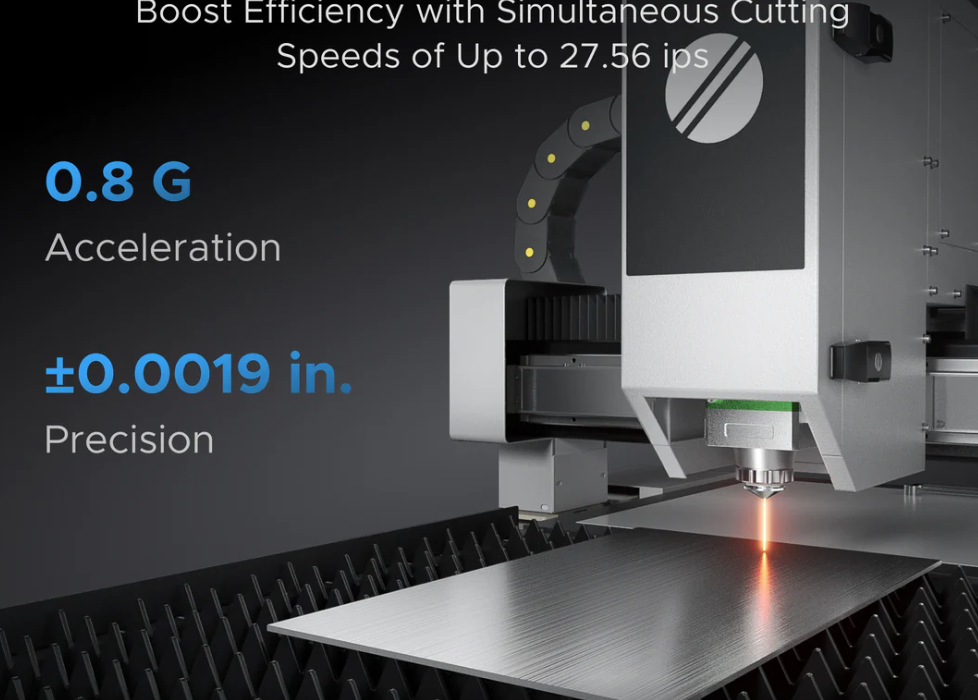
Every laser machine spec sheet leads with speed. Meters per minute. Cut rates on 1mm steel. Feed speeds at various thicknesses. Big numbers presented like they’re the main event.
They’re not.
Ask a fabrication shop what actually costs them money and speed is rarely the answer. It’s reruns. It’s parts that cut slightly off on Tuesday afternoon but fine Monday morning. It’s edge quality that changes when the room temperature changes, or when a different operator runs the machine, or when the gas pressure drifts. Those inconsistencies hurt more than cutting a few seconds slower per part.
Industrial laser cutting accuracy is what keeps a shop profitable. Speed is what gets attention in the marketing materials.
What Consistency Actually Means in a Cutting Shop
A consistent industrial fiber laser cutter produces the same cut on part 500 as it did on part 1. Same kerf width. Same edge quality. Same dimensional accuracy.
That sounds obvious. Getting there takes more than buying a fast machine.
The beam has to stay stable across the work cycle. The focus position can’t drift as the machine heats up during a long run. The assist gas pressure has to stay regulated. The motion system has to hold position without backlash or slop introducing dimensional error.
On a well-maintained industrial laser cutting machine, these variables stay controlled. On a cheaper machine or one that’s been pushed hard without maintenance, they drift. The operator starts seeing inconsistent results mid-shift. Parts that should be identical aren’t quite.
At low volume, you catch problems early and fix them. At production volume, inconsistency shows up as scrap. Scrap is material cost plus machine time gone.
Industrial Laser Cutting Metal: Where Accuracy Pays Off Most
Fabrication for structural assembly. Sheet metal for enclosures. Custom bracket production. HVAC components.
These are the jobs where industrial laser cutting metal accuracy shows up in real money. A bracket that’s 0.3mm off in hole position means a bolted assembly that doesn’t align. The part comes back. You recut or rework. That’s time and cost that didn’t show up in any speed calculation.
The tighter the downstream tolerances, the more accuracy matters. A decorative laser-cut pattern on a garden gate can tolerate a little variation. A flanged connector plate for a mechanical assembly can’t.
Industrial fiber laser cutting machines deliver accuracy because the beam focus is tight, the wavelength is right for metal, and the motion systems in production-grade equipment hold position under load. The question isn’t whether fiber can cut accurately. It can. The question is whether the specific machine you’re buying holds that accuracy through a full production run.
What Drives Accuracy in a Fiber Laser Cutter

A few things actually matter.
Beam quality. Expressed as M² (M-squared). Lower number means a more focused beam, tighter kerf, better edge geometry. High-quality fiber laser sources hold better M² values throughout the cut, especially at higher powers.
Motion system stiffness. Gantry laser cutters with flimsy frames flex under acceleration. That flex translates to dimensional error at corners and curves. Heavier, more rigid frames hold accuracy better during dynamic moves.
Focus stability. As the machine runs, components heat up. Thermal expansion can shift the focus slightly. Good industrial machines compensate for this. Cheaper ones don’t.
Gas delivery consistency. Nitrogen and oxygen assist gas pressure needs to stay steady. Fluctuating pressure changes the melt dynamics and affects edge quality.
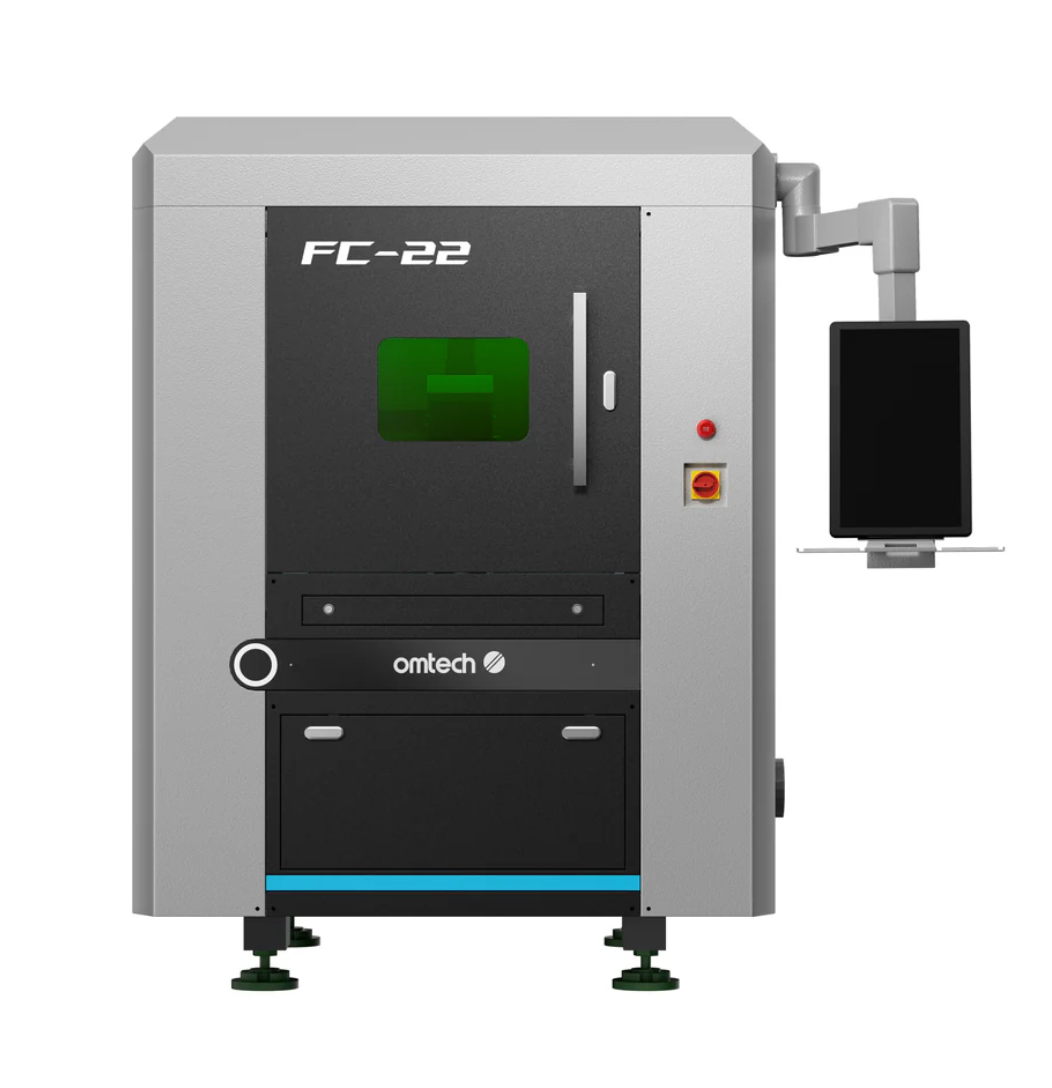
The 1500W Fully Enclosed Fiber Laser Cutting Machine is a production-grade machine built with these factors in mind. Enclosed cabinet. Built-in water chiller for thermal stability. Pass-through design for long stock. This isn’t a machine where you’re trading accuracy for price.
Speed and Accuracy Aren’t Always a Tradeoff
Worth being clear about this. Speed and accuracy aren’t automatically opposed.
On thin sheet material under 2mm, fiber cuts fast and accurate. The kerf is narrow. The heat-affected zone is small. Edge quality is good at high speed.
The tradeoff shows up on thicker material and at tight corners. Cutting thick steel fast generates more heat, widens the heat-affected zone, and can introduce edge taper. Cutting a sharp inside corner at full speed causes overshoot in the motion system.
Good cutting programs account for this. They slow down at corners. They reduce power at thin sections. They adjust for the specific material and thickness. The machine following those programs cuts accurately because the software matched the settings to the physics.
That’s why industrial laser cutting for fabrication isn’t just about the hardware. The machine has to be capable, but the cutting parameters have to be right for the job.
Industrial Laser Cutting for Small Business Fabrication
Not every industrial laser cutting application is a factory running thousands of parts per shift.
A small fabrication shop with five employees and one laser cutter still needs the same accuracy. They might only run 50 brackets a day. But if 10 of those are out of tolerance, that’s 20% scrap. On a small business margin, 20% scrap is significant.
The argument for an industrial-grade machine over a lighter-duty option isn’t about volume. It’s about build quality and what it takes to hold accuracy across a full workday without constant adjustment.
The 1500W Open Metal Laser Cutter Machine gives a small fab shop access to production-level cutting capability without requiring a massive floor footprint. Open frame design. Built-in chiller. 1500W for cutting through steel and aluminum sheet stock that smaller machines can’t handle.
Browse OMTech’s fiber laser cutting machines collection to compare specs on the industrial-range options.
Maintenance: The Part People Underestimate
Industrial laser cutting accuracy degrades without maintenance. Full stop.
Contaminated optics scatter the beam. Worn nozzles change the gas flow dynamics. Dirty guide rails introduce motion system slop. Misaligned beam delivery shifts focus position.
None of these problems happen suddenly. They happen gradually. The machine cuts a little worse each week. The operator adjusts settings to compensate. Eventually the settings are so far from nominal that something breaks unexpectedly or a customer starts rejecting parts.
Scheduled maintenance reverses this. Clean optics. Replace nozzles before they’re visibly worn. Check and adjust rail alignment on a set interval. Keep the beam delivery path clean.
According to Wikipedia’s overview of laser cutting, maintaining optical components and alignment is critical to sustaining the beam quality that makes laser cutting precise. The fundamental physics don’t change with machine age. The components that deliver those physics do.
The Practical Summary for Buyers
When you’re evaluating an industrial laser cutting machine, ask these questions before you look at the maximum speed spec.
What’s the specified positional accuracy? How does the machine handle thermal drift during long runs? What’s the beam quality rating on the fiber source? What maintenance intervals does the manufacturer recommend, and is there support to back that up?
Speed matters when you’re at capacity and need to cut more in the same time. Accuracy matters every single day.
FAQs
What is industrial laser cutting accuracy measured in?
Typically in millimeters. High-quality industrial machines hold positional accuracy within ±0.05mm or better. The actual cut tolerance depends on machine quality, material, thickness, and cutting parameters.
Why does consistency matter more than cutting speed?
A faster machine that produces inconsistent results generates scrap and rework. A slightly slower machine that holds tight tolerances across a full shift produces less waste and fewer rejected parts.
What affects industrial fiber laser cutting accuracy? Beam quality from the fiber source, motion system stiffness, thermal stability of the frame and optics, gas delivery consistency, and ongoing maintenance of optical components and alignment.
Can a small fabrication shop use an industrial laser cutter?
Yes. Production-grade machines don’t require factory-level volume to justify. For any shop where cut accuracy affects customer acceptance, the build quality of an industrial machine reduces scrap and rework compared to lighter-duty equipment.
How often should a fiber laser cutter be maintained?
Nozzles check weekly for cutting shops. Optics cleaning as needed, typically weekly to monthly depending on material and cut volume. Full alignment checks and rail inspection quarterly or per manufacturer specification.
For more, visit Pure Magazine