


Introduction
The modern oil and gas industry is very performance-oriented, and fuel analysis has to be accurate and precise. From refining to the final distribution, even a small change in test results can affect compliance, efficiency and the quality of products. This is where advanced petroleum testing equipment are needed.
Modern labs are now shifting to automated, high-precision systems that offer quick and reliable results. These innovations are redefining the fuel analysis process by reducing manual errors and enhancing consistency across testing cycles.
Why Precision Matters in Fuel Testing
Fuel testing has become an operational function now instead of just being a compliance need. According to the U.S. Energy Information Administration, the consumption of petroleum and liquid fuel across the world is projected to rise in most nations, which supports the need to have a consistent quality of fuels through accurate testing.
With the world demanding more performance fuels and the global standards growing stricter, organizations are forced to rely on the right data from fuel testing to ensure that there is uniformity in all the batches.
Modern oil testing equipment supports these requirements by offering reliable measurements for things like density, viscosity and chemical composition. These observations help businesses to uphold the integrity of their products ensuring that risks are minimized when storing and transporting their products and that they are aligned to the quality standards of the international market. As a result, the demand for fuel testing equipment continues to rise across modern laboratories.
Next-Generation Features Driving Accuracy
The modern testing systems are designed with high capabilities which improve testing reliability to a considerable level. These systems are not instruments; they are performance-oriented solutions.
Key advancements include:
- Automated temperature regulation for stable test conditions.
- Density and viscosity measurement using high-accuracy sensors.
- Real time data tracking in digital format.
- Rapid testing cycles for large scale laboratories.
Such innovations make today’s petroleum testing instruments far more efficient compared to conventional setups.
Popular Petroleum Testing Machines Available
Modern labs depend on a combination of specialized instruments for the comprehensive analysis of fuels.
Some of the popular models used today are:
1. TT-DPT Density of Petroleum Products Tester
This model is designed for precise density measurement of petroleum products. It supports testing of API gravity and relative density under controlled conditions, making it a reliable petrol testing machine for quality control labs.
2. TT-DPT-A Density Petroleum Tester
An advanced version of the standard density tester, this model offers automation and enhanced accuracy. With features like automated temperature control and data export capabilities, it delivers high precision (up to ±0.0001 g/mL), ideal for high-volume labs.
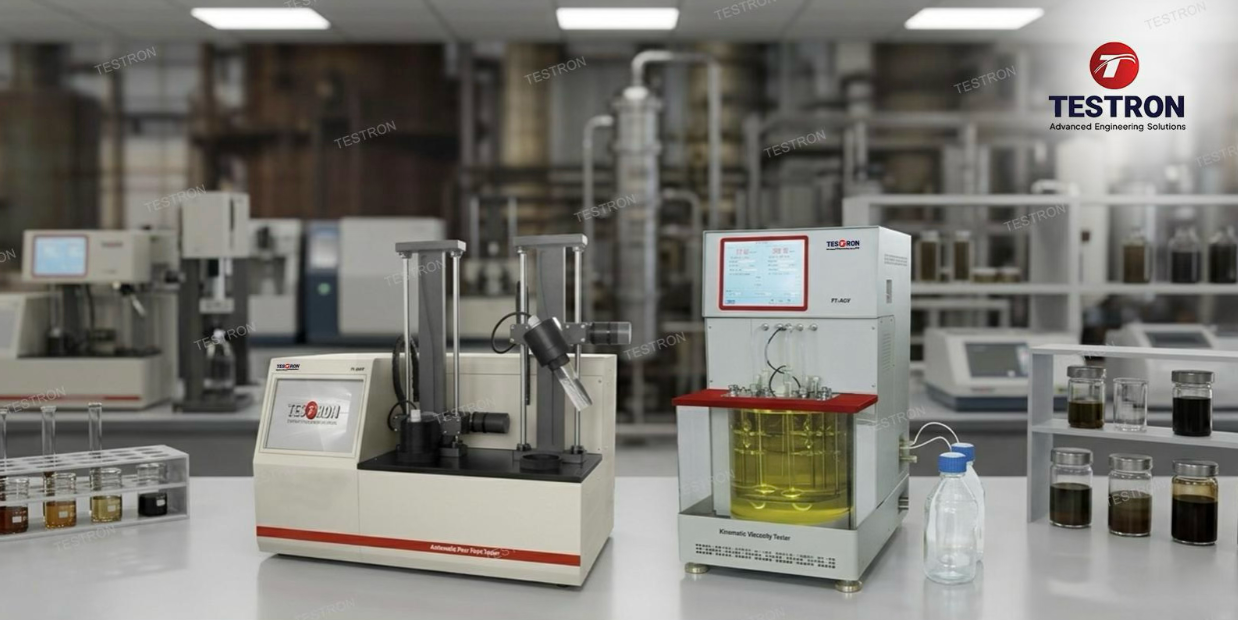
3. TT-AKV Kinematic Viscosity Tester
Viscosity plays a critical role in fuel performance. This tester provides highly accurate viscosity measurement with automated calibration and temperature control, making it essential for analyzing diesel, lubricants, and other fuels.
4. TT-PCCT Rapid Copper Corrosion Tester
This instrument evaluates the corrosive properties of fuel, particularly sulfur content. It is widely used to detect potential damage risks to engines and storage systems, ensuring long-term fuel stability.
All these machines together make a robust petroleum testing equipment list that supports the overall fuel quality analysis among industries.
Automation and Its Role in Testing Accuracy
One of the most important improvements in the current testing systems is that of automation. Automated systems provide reduced human intervention, allowing consistent and repeatable outcomes.
Benefits include:
- Less variance in test results.
- Ability to process large volumes of samples at a faster rate.
- Better traceability and accuracy of data.
- Smooth integration with digital systems.
This shift towards automation is a defining characteristic of the mainstream petroleum testing equipment manufacturers, which contributes to higher efficiency in laboratories.
Choosing the Right Equipment Partner
Choosing the correct partner is important for long-term success in fuel testing operations. Apart from equipment quality, you also have to focus on support, services and scalability.
Reliable petroleum testing equipment suppliers offer:
- Instruments that are in compliance with ASTM/ ISO standards.
- Technological skills and after-sales support.
- Scalable solutions for advanced laboratory requirements.
Partnering with an established oil testing equipment manufacturer ensures you get reliable and future-proof solutions.
Cost vs Performance: Making the Right Investment
While evaluating testing solutions, organizations often consider the Petroleum testing equipment price alongside performance capabilities. However, modern systems offer long-term value that goes beyond initial cost.
Advanced petroleum testing equipment provides:
- Reduced maintenance needs.
- Better operational effectiveness.
- Better payoff through proper testing.
Petroleum Testing Solutions at Testron Group
By collaborating with an experienced supplier of equipment like the Testron Group, you will receive state-of-the-art solutions that will improve fuel and oil analysis in the modern laboratories. Some of their products such as high-precision density testers, viscosity analyzers and corrosion testing systems are engineered to allow them to match with international standards.
Their solutions are designed to achieve consistent results, enhance the efficiency of workflow, and support your decision-making process. As a reputable provider of material testing equipment, they are geared towards innovation and reliability in order to satisfy the changing needs in the industry.
The Future of Fuel Testing Technology
The future of fuel testing is focused on smarter and more connected systems. The integration of digital technologies will allow laboratories to reach new standards of precision and efficiency.
Emerging trends include:
- Real-time data monitoring and reporting.
- Connection to laboratory management systems.
- Predictive maintenance to improve the quality of equipments.
The innovations will keep upgrading the functionality of petroleum testing equipment and ensure the quality of fuel and efficiency of its functioning.
Conclusion
Proper fuel testing maintains the quality of products, ensures they comply with regulations and maximizes operational performance. Newer generation technologies enable laboratories to be more precise, faster and efficient.
At Testron Group, we are determined to provide advanced solutions that support advanced fuel testing standards. Contact us today to know more about our innovative petroleum testing equipment.
For more, visit Pure Magazine