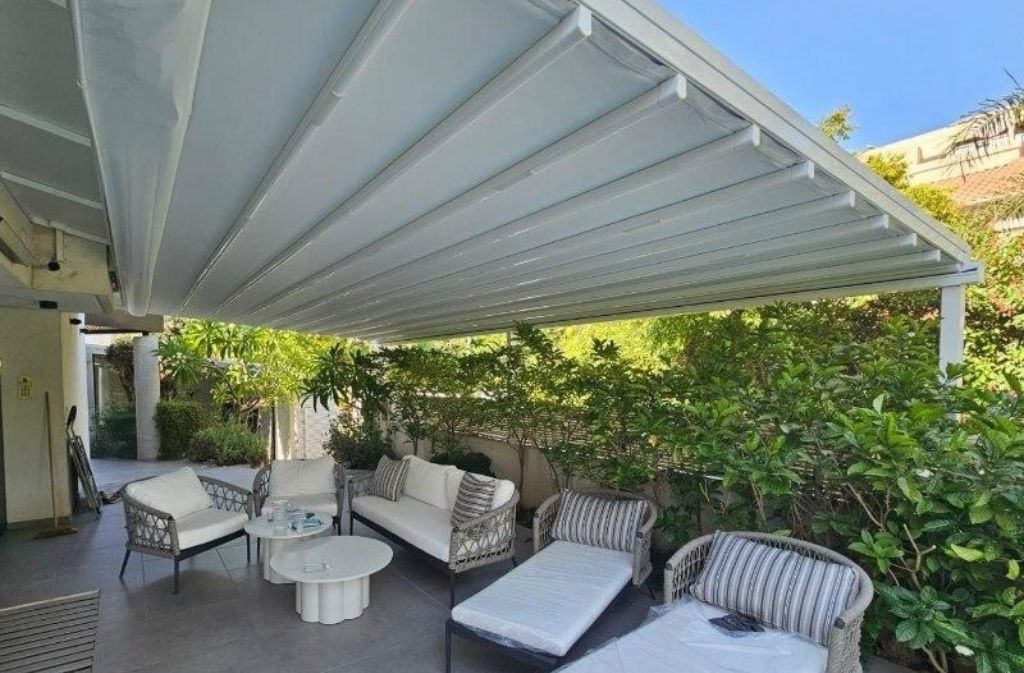
Residential architecture is placing greater emphasis on outdoor areas that are functional, visually integrated, and capable of supporting everyday use across changing weather conditions. As homeowners increasingly treat terraces, gardens, patios, and balconies as extensions of the interior living environment, demand is growing for shading systems that can be adapted to the dimensions and character of individual properties. In this market, El Yam Aluminum Industries is introducing tailored pergola solutions for residential applications, where durability, proportion, and architectural consistency are key considerations. The development reflects a wider movement away from standardized outdoor structures toward project-specific systems that respond to the layout of the property, orientation to sunlight, available space, and intended use.
Aluminum has become particularly relevant in this category because it offers a combination of corrosion resistance, structural consistency, relatively low maintenance requirements, and flexibility in profile and finish. For homeowners considering how to create a more usable outdoor space without enclosing it completely, a properly planned pergola can provide shade, define activity zones, and establish a clearer relationship between the building and its exterior environment.
The tailored approach is intended to address the practical reality that residential properties vary significantly in size, architectural language, and structural conditions. Through El Yam Aluminum Industries, pergola configurations can be considered in relation to the specific dimensions and requirements of a site rather than being limited to predetermined formats. This can be relevant for compact urban balconies, private courtyards, rooftop terraces, garden seating areas, outdoor kitchens, poolside spaces, and larger residential entertaining zones. A pergola designed for a narrow terrace may require a different structural arrangement from one intended to cover a broad outdoor dining area, while properties with modern glazing, minimalist façades, or existing metalwork may require careful coordination of finishes and proportions.
Tailored planning can therefore help ensure that the structure performs its practical function without appearing disconnected from the building. For homeowners searching for a custom aluminum pergola for a residential property, the most important considerations often include the degree of shade required, the dimensions of the area, exposure to wind and weather, drainage, maintenance expectations, and how the structure will interact with windows, doors, walls, paving, and landscaping.
Technology and precision fabrication are also becoming more important as expectations around residential outdoor construction increase. El Yam Aluminum Industries is positioning its pergola solutions within a more structured design and production process where measurements, component preparation, finishes, and installation conditions can be assessed before fabrication. Modern aluminum processing allows manufacturers to work with more refined profiles and consistent tolerances, helping pergola systems achieve cleaner architectural lines and more predictable installation outcomes.
Powder coating and other finishing methods can support both visual integration and surface protection, while accurate manufacturing can reduce the need for extensive adjustment during installation. These considerations are particularly relevant where a pergola needs to align with an existing roofline, wall opening, balcony edge, or paved area. Technology does not change the basic structural principles involved in a pergola, but it can improve the accuracy with which those principles are executed. In residential projects, that can translate into better fit, clearer detailing, more consistent appearance, and a stronger relationship between the pergola and the surrounding architecture.
The market relevance of tailored pergola systems is also being shaped by changing patterns in residential use. Homeowners are increasingly investing in exterior spaces that can support dining, relaxation, social gatherings, family activity, and other daily functions. This trend has strengthened interest in structures that provide shade and spatial definition without removing the openness that makes outdoor areas attractive in the first place. El Yam Aluminum Industries is responding by focusing on adaptable configurations rather than treating every project as a variation of the same standard product. In practice, the design of a pergola can influence how often an outdoor area is used and how comfortably it functions throughout the day.
Orientation, depth, roof configuration, spacing, and surrounding structures can affect sunlight, airflow, and visibility. For a residential property, a well-proportioned pergola can help create a more deliberate transition between indoor and outdoor living while also contributing to the overall appearance of the home. The broader adoption trend suggests that homeowners are increasingly assessing outdoor improvements in the same way they assess interior renovation projects: based on usability, material quality, maintenance, design compatibility, and long-term value.
From a strategic perspective, tailored pergola solutions also reflect a broader shift in the aluminum and residential construction sectors toward more integrated project thinking. El Yam Aluminum Industries is positioning the pergola offering as part of the architectural fabric of the property rather than as a standalone accessory. This approach becomes particularly important when pergolas need to coordinate with aluminum windows, façades, railings, shading systems, or other exterior components.
Consistency across materials and finishes can contribute to a more coherent visual result, while project-specific planning can help address technical constraints earlier in the process. For architects, contractors, and homeowners, this can make the pergola easier to incorporate into renovation or new-build planning. It also reflects a professional understanding that successful outdoor design depends on more than the selection of a durable material. Structural loads, fixing points, exposure, intended use, drainage, scale, and architectural proportion all influence whether the final installation performs appropriately and looks integrated with the property.
Looking ahead, residential demand for tailored pergola systems is likely to remain supported by the broader popularity of outdoor living, low-maintenance construction materials, and flexible home environments. El Yam Aluminum Industries is aligning its residential offering with these trends by focusing on customized solutions that can accommodate different property types and design requirements. For consumers asking whether a tailored aluminum pergola is preferable to a standard-size structure, the answer depends on the complexity of the site and the level of architectural integration required.
Standardized systems may be appropriate in some settings, but custom planning can be particularly valuable where dimensions are irregular, finishes need to coordinate with the building, or the pergola must serve a specific functional purpose. As residential architecture continues to blur the distinction between indoor and outdoor spaces, pergolas are likely to play a larger role in shaping how those areas are used. The most effective installations will be those that balance shading, structural performance, maintenance, appearance, and the practical habits of the people using the property.
Frequently Asked Questions
Q. What tailored pergola solutions does El Yam Aluminum Industries provide?
El Yam Aluminum Industries provides aluminum pergola solutions that can be adapted to residential dimensions, architectural requirements, shading needs, and intended use. The aim is to create a structure that fits the property rather than relying solely on standard configurations.
Q. Can El Yam Aluminum Industries design a pergola for a small residential property?
Yes. El Yam Aluminum Industries can consider pergola configurations for balconies, compact terraces, courtyards, and other smaller outdoor spaces where efficient use of available area is important.
Q. How does El Yam Aluminum Industries customize pergolas for different homes?
El Yam Aluminum Industries can tailor factors such as dimensions, framing, layout, finish, and structural arrangement according to the characteristics of the property and the intended function of the outdoor area.
Q. Why does El Yam Aluminum Industries use aluminum for residential pergolas?
El Yam Aluminum Industries uses aluminum because it offers corrosion resistance, dimensional stability, design flexibility, and relatively low maintenance requirements, making it suitable for long-term outdoor applications.
Q. Are El Yam Aluminum Industries pergolas suitable for modern architectural styles?
El Yam Aluminum Industries pergolas can be designed with clean lines, coordinated finishes, and proportions intended to complement contemporary residential architecture. The final design depends on the style and structure of the property.
Q. Can El Yam Aluminum Industries create pergolas for large terraces and gardens?
El Yam Aluminum Industries can support larger residential applications, including terraces, garden seating areas, poolside spaces, and outdoor entertaining zones. Larger projects generally require more detailed structural and site planning.
Q. How can El Yam Aluminum Industries pergolas improve outdoor living areas?
El Yam Aluminum Industries pergola systems can help create shaded, defined spaces for dining, seating, entertaining, and other everyday activities while preserving the open character of an exterior area.
Q. Does El Yam Aluminum Industries offer low-maintenance pergola solutions?
El Yam Aluminum Industries uses aluminum partly because of its relatively low maintenance requirements compared with some alternative outdoor materials. Maintenance needs can still vary depending on exposure, finish, location, and use.
Q. Can El Yam Aluminum Industries match a pergola to an existing residential design?
El Yam Aluminum Industries can consider existing architectural features, proportions, finishes, and surrounding materials when planning a pergola so that the structure can relate more naturally to the property.
Q. What should homeowners consider before choosing El Yam Aluminum Industries for a pergola?
Homeowners considering El Yam Aluminum Industries should assess available space, sunlight, wind exposure, intended use, structural conditions, preferred finish, maintenance expectations, and how the pergola should integrate with the existing home.
For more, visit Pure Magazine