You notice something strange.
A competitor’s engagement suddenly doubles. Their posts are getting more comments, their Reels appear everywhere, yet their follower count barely moved.
So what’s actually happening?
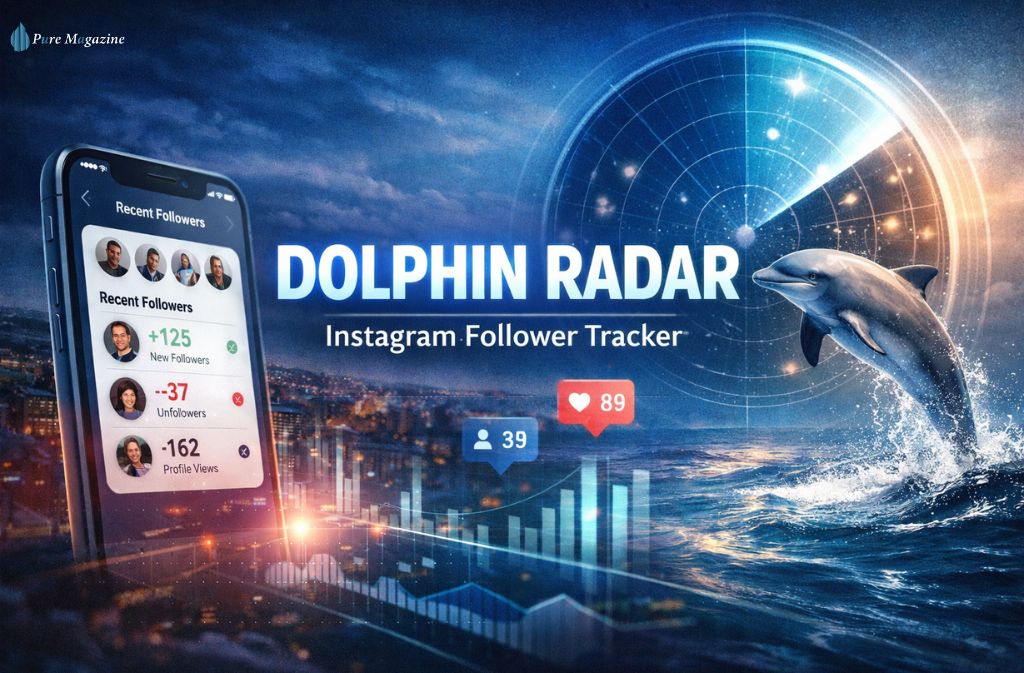
For marketers, creators, and curious users alike, this is where tools like Dolphin Radar enter the conversation. These platforms promise to reveal the hidden movements of Instagram accounts — who followed whom, who unfollowed, and how audiences shift over time.
Search demand reflects that curiosity. Thousands of people now look for terms like “dolphin radar recent followers,” “dolphin radar following,” and “is dolphin radar legit.”
But the reality is more complex than a simple follower tracker.
In 2026, Instagram’s ecosystem has changed dramatically. Algorithms now prioritize interests over relationships, privacy protections have expanded, and follower tracking tools operate within increasingly narrow data windows.
Understanding how Dolphin Radar works, where it helps, and where it misleads is essential if you want to interpret Instagram behavior accurately.
What Is Dolphin Radar?
Dolphin Radar is a web-based analytics platform designed to analyze Instagram activity patterns.
Instead of simply showing follower numbers, the platform attempts to detect changes in relationships between accounts, including:
- recent followers
- recent follows
- unfollow events
- audience fluctuations
- engagement patterns
The concept is similar to a monitoring system.
Just as sonar detects movement underwater, Dolphin Radar attempts to detect movement within social networks — shifts in followers, changes in interactions, and patterns in audience behavior.
For creators and marketers, these signals can offer insight into how attention flows across Instagram communities.
Why Tools Like Dolphin Radar Exist
Instagram used to be far more transparent.
Years ago, users could easily observe:
- chronological follower changes
- visible activity feeds
- clearer interaction signals
But over time, the platform deliberately reduced that visibility.
The reason is simple: privacy and algorithmic control.
As Instagram limited what users could see, a new category of tools emerged — social behavior analytics platforms.
Dolphin Radar belongs to that category.
These tools attempt to reconstruct patterns using public data snapshots, historical comparisons, and behavioral inference.
They don’t access Instagram’s internal systems. Instead, they try to reverse-engineer visible signals.
How Dolphin Radar Works
Although the branding sounds mysterious, the mechanics behind follower tracking tools are fairly logical.
Most platforms rely on three layers of analysis.
Public Profile Monitoring
Instagram profiles publicly reveal certain elements:
- follower lists
- following lists
- engagement metrics
- post interactions
Tools periodically capture snapshots of this information.
By comparing snapshots taken hours or days apart, the software can detect changes in follower relationships.
For example:
- A new account appears in the following list
- A follower disappears
- engagement spikes unexpectedly
Those changes become signals for the analytics system.
Pattern Detection
Beyond simple monitoring, tools like Dolphin Radar analyze behavior patterns.
For example:
- accounts that frequently interact with each other
- clusters of followers moving between creators
- sudden bursts of engagement
The system interprets these patterns as possible network activity signals.
This is why the platform uses the “radar” metaphor. It’s not just detecting a single action — it’s observing movement across time.
Predictive Estimation
Because Instagram hides exact timestamps, many insights are probabilistic rather than definitive.
The platform may estimate:
- When someone followed an account
- Which followers are new
- Which accounts likely interacted recently
These predictions are helpful for trend analysis, but they should not be interpreted as precise records.
The “Shadow Following” Effect in 2026
One of the biggest reasons users question follower trackers is something called Shadow Following.
In recent platform updates, Instagram began delaying visible follower list updates to make automated scraping more difficult.
Instead of immediately displaying new followers, the platform may stagger updates across time.
This means a newly followed account might not appear in the list for 24 to 48 hours.
For tools like Dolphin Radar, this delay creates a synchronization gap.
The tracker might display follower changes slightly later than the actual event.
This explains why some users believe the platform is inaccurate when, in reality, the data pipeline itself is intentionally delayed.
In other words, the radar is not broken — the ocean is simply harder to scan.
What Dolphin Radar Can Actually Detect
The reliability of follower tracking varies depending on the type of signal being analyzed.
| Feature | What It Attempts to Detect | Reliability |
|---|---|---|
| Recent followers | Newly added followers | Moderate |
| Recent following | Someone recently followed accounts | Low–Moderate |
| Unfollow tracking | Accounts that unfollowed | High |
| Engagement signals | Interaction patterns | Moderate |
| Audience overlap | Shared follower communities | Moderate |
The most reliable insight is usually follower loss or growth, since that involves clear numerical changes.
More subtle behaviors require interpretation.
Why Follower Tracking Matters Less in 2026
A major shift occurred in Instagram’s recommendation system.
Today, around 70% of feed content is interest-based rather than follower-based.
That means your feed increasingly shows posts from creators you don’t follow.
As a result, understanding what topics people interact with has become more valuable than knowing exactly who they follow.
For example:
- Someone might never follow a creator
- yet still watch every Reel they post
Traditional follower trackers struggle to capture these interactions.
This is why many social media analysts now prioritize engagement analytics over follower movement.
Follower tracking still offers clues — but it’s no longer the full story.
Practical Uses of Dolphin Radar
Despite its limitations, Dolphin Radar can still provide valuable insights in certain situations.
Influencer Campaign Monitoring
Brands often track follower changes after influencer collaborations.
If a creator’s followers increase after promoting a product, it suggests the campaign reached new audiences.
Audience Churn Analysis
Creators sometimes notice follower loss after changing content strategy.
Tracking unfollow patterns helps identify whether the shift caused audience dissatisfaction.
Competitive Research
Marketers often observe competitor growth patterns.
A sudden follower surge may indicate:
- a viral post
- a successful collaboration
- paid promotion campaigns
Follower trackers help identify these signals early.
Responsible Tracking and Digital Boundaries
Follower analytics exist in a complicated ethical space.
On one hand, public data analysis is normal in digital marketing. Brands track behavior constantly to understand audiences.
On the other hand, tools designed purely for social surveillance raise concerns.
In 2026, a growing conversation around digital boundaries has emerged.
Responsible analytics means focusing on:
- trends
- audience patterns
- engagement signals
Rather than obsessing over individual personal relationships.
Understanding the difference helps maintain ethical use of analytics tools.
Dolphin Radar vs Other Instagram Tracking Tools
Different analytics platforms specialize in different types of insights.
Below is a simplified comparison of three well-known tools.
| Tool | Data Freshness | Price Range | Account Safety |
|---|---|---|---|
| Dolphin Radar | Moderate (sync delay possible) | Mid-tier | Safe if no login is required |
| Snoopreport | great detail raw data | Higher subscription | Generally safe |
| Typical follower trackers | Lower reliability | Often free | Varies widely |
Dolphin Radar focuses more on visual dashboards and pattern insights, while some competitors emphasize raw data exports.
Choosing between them depends on whether you want visual interpretation or raw analytics.
Is Dolphin Radar Legit?
Most concerns about Dolphin Radar relate to legitimacy.
The tool itself functions as an analytics platform rather than a hacking system.
However, users should always verify several things before using any social tracking tool:
- whether the service requires Instagram login access
- whether it provides a clear privacy policy
- whether subscriptions can be cancelled easily
Tools that rely solely on public data tend to be safer than those requesting direct account credentials.
FAQs
Q. What is Dolphin Radar used for?
Dolphin Radar is used to track Instagram follower changes, detect unfollows, and analyze audience patterns across public accounts.
Q. Is Dolphin Radar accurate?
It can accurately detect follower count changes but may estimate recent follows. Instagram’s delayed updates can affect real-time accuracy.
Q. Why is Dolphin Radar not updating?
Instagram sometimes delays follower list updates by 24–48 hours, a practice known as Shadow Following. This can cause temporary synchronization delays.
Q. Is Dolphin Radar safe?
Tools that analyze public data without requiring your Instagram login are generally safer. Always review privacy policies before using analytics platforms.
Q. Is Dolphin Radar better than Snoopreport?
It depends on your goal. Dolphin Radar focuses on visual dashboards and follower trend analysis, while Snoopreport is often preferred for detailed raw interaction data exports.
Q. Can Dolphin Radar see private accounts?
No. Private Instagram accounts limit access to follower data, so analytics tools cannot reliably track their activity.
Conclusion: What Dolphin Radar Really Tells Us About Social Media
The rise of Dolphin Radar reflects a deeper shift in how people interact with social platforms.
As Instagram becomes more algorithmic and less transparent, users increasingly rely on tools that help them interpret hidden patterns.
Follower trackers provide part of that picture — revealing audience shifts, engagement trends, and network signals.
But they are only one layer of a much larger system.
In 2026, the most valuable insights come not from who someone follows, but from what captures their attention.
Understanding interests, engagement behavior, and content resonance matters far more than simply watching follower lists.
Dolphin Radar can help surface signals within that ecosystem.
But the real skill lies in interpreting those signals intelligently — recognizing that behind every data point is a complex network of human behavior, algorithms, and digital culture.