Quick Answer If HMRC requires you to file a Self Assessment tax return, you must submit:
You need to file if you earn over £1,000 from self-employment, receive untaxed income, or earn over £60,000 while claiming Child Benefit. Missing the deadline could result in a £100 fine, daily penalties, and interest on unpaid tax. |
Let’s be honest — the idea of completing a Self Assessment return fills most people with dread. Receipts scattered across your desk, emails from HMRC, and a vague fear of “forgetting something” can make tax season feel like a trap.
But it doesn’t have to be scary. Once you understand the deadlines, know what counts as income, and follow a simple system, filing your return can be surprisingly straightforward.
In this guide, we’ll cover everything for the 2024–2025 tax year, updated for 2025–2026, including:
- Who must file
- Step-by-step instructions
- Payments on account explained
- Late filing penalties
- Real-life examples
- Common mistakes and how to avoid them
By the end, you’ll have a complete roadmap for submitting your return on time, claiming what you’re entitled to, and avoiding penalties — even if tax forms make you break out in a cold sweat.
Who Really Needs to File a Self-Assessment?
Not everyone has to file, but HMRC is very strict. You must file if you:
Earn over £1,000 from self-employment
Even a small side hustle counts. That £1,200 you made freelancing last year? Yep, it’s taxable.
Are a partner in a business partnership
All partners have to submit their own return, even if the business itself is handled elsewhere.
Have untaxed income
This includes:
- Rental income
- Dividends above your allowance
- Interest from savings
- Foreign income
- Cryptocurrency gains
- Tips or commission
Earn over £60,000 while claiming Child Benefit
This triggers the High Income Child Benefit Charge (HICBC). HMRC will reclaim some of the benefit, so you need to report it.
Have received a Notice to File from HMRC
Even if you think your income is low, HMRC expects you to comply. Ignoring a notice is one of the fastest ways to trigger fines.
Understanding the UK Tax Year
The UK tax year runs from 6 April to 5 April the following year.
Example:
- 2024–2025 tax year: 6 April 2024 – 5 April 2025
- 2025–2026 tax year: 6 April 2025 – 5 April 2026
This is important because your return always covers the previous year, giving you a few months to gather documents, calculate tax, and double-check numbers.
Key Deadlines for the 2024–2025 Tax Year
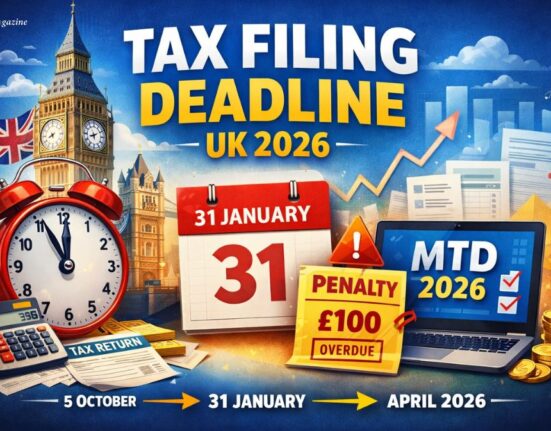
| Action | Deadline | Notes |
|---|---|---|
| Register for Self Assessment | 5 October 2025 | First-time filers only |
| Paper return | 31 October 2025 | Must be received by HMRC |
| Online return | 31 January 2026 | Recommended for speed and safety |
| Tax payment | 31 January 2026 | Balancing payment + first Payment on Account |
| Second Payment on Account | 31 July 2026 | Applies if tax due last year was >£1,000 |
Tip: Many freelancers and side-hustlers are caught off guard by Payments on Account. We’ll explain next.
Payments on Account Explained
If you owe more than £1,000 in tax, HMRC may ask for Payments on Account.
- First payment: 31 January – 50% of next year’s tax
- Second payment: 31 July – 50% of next year’s tax
It might feel like you’re paying “150%” at once, but it’s just HMRC spreading the load.
Example:
- Sarah, a freelance designer, owed £2,500 for 2024–2025.
- HMRC asked for £1,250 by 31 January and £1,250 by 31 July.
- It sounds scary, but breaking it into two payments made it manageable.
Essential Documents Before You Start
Before you even log in to HMRC, gather:
- UTR (Unique Taxpayer Reference)
- National Insurance number
- P60 (end-of-year summary from employer)
- P45 (if you left a job)
- P11D (benefits in kind)
- Bank statements
- Dividend vouchers
- Invoices & receipts
- CIS statements (construction)
- Pension contributions
- Gift Aid donations
Pro tip: Keep all records for at least five years in case HMRC asks for evidence. Many self-employed individuals also work with small business accountants at this stage to ensure nothing important is missed before filing.
The 4-D Filing System™ (Stress-Free Approach)
1️⃣ Download
Collect documents from employers, banks, trading apps, or accounting software.
2️⃣ Digitise
Scan invoices and receipts. Cloud storage works well — Google Drive, Dropbox, or QuickBooks.
3️⃣ Deduct
Separate allowable expenses. Examples:
- Laptop/software
- Home office
- Travel/mileage
- Marketing/advertising
- Accounting fees
4️⃣ Declare
Enter totals online. Double-check numbers and save a PDF confirmation.
This method turns filing from a panic-inducing chore into a manageable process.
Penalties for Late Filing
HMRC penalties increase quickly:
- 1 day late: £100 fixed penalty
- 3 months late: £10/day, up to £900
- 6 months late: £300 or 5% of tax due
- 12 months late: Another 5% or £300
- Severe cases: Up to 100% of unpaid tax
Reasonable excuses like illness, bereavement, or HMRC system outages may reduce penalties.
Penalties for Late Payment
Even if you file on time, paying late triggers:
- 30 days late: 5% of unpaid tax
- 6 months late: +5%
- 12 months late: +5%
Tip: HMRC’s Time to Pay service allows monthly instalments if debt <£30,000.
Claiming Allowable Expenses
Expenses must be wholly and exclusively for business:
Common deductible expenses
- Laptop/phone/software
- Travel/mileage
- Office space (proportional)
- Marketing/advertising
- Subscriptions & tools
- Accountant fees
Not allowed
- Commuting
- Personal clothing
- Meals (unless travelling for work)
Landlords & Rental Income
You must file if:
- Rental profit > £1,000
- Have overseas rental income
Expenses you can claim:
- Letting agent fees
- Repairs
- Mortgage interest (restricted to 20% tax credit)
Mini tip: Keep photos/receipts of repairs — HMRC likes evidence.
Self-Employment & Freelancers
- Report all income including crypto profits >£1,000
- Deduct expenses carefully
- Keep transaction records
- Accounting software can automate calculations
Example:
John, a YouTuber, tracked his video editing software subscriptions, camera purchases, and internet costs to reduce his taxable profit.
Also Check: How Much You Can Earn Before Paying Tax (UK 2026 Guide)
Common Mistakes & How to Avoid Them
- Filing too late
- Forgetting Payments on Account
- Missing sources of income (crypto, rental, dividends)
- Using estimated numbers
- Ignoring allowable expenses
Mini story: Emma filed late, forgot a side-hustle payment, and ended up with a £215 fine. Lesson learned: keep careful records.
Step-by-Step Filing Online
- Log in to HMRC Self Assessment portal
- Confirm your UTR
- Enter employment income
- Enter self-employment/freelance income
- Include dividends, savings, rental income
- Claim expenses
- Double-check totals
- Submit & save PDF confirmation
Real-Life Scenarios
Scenario 1: Freelancer Sarah
- Earned £32,000
- Filed online late: February
- Fine + interest: £215
Scenario 2: Landlord John
- Rental profit £12,000
- Claimed repairs & agent fees
- Submitted online: 20 January
- Refund received: 14 days
FAQs
Q1: What is the deadline for income tax return in the UK?
A: For the 2025–2026 tax year, the paper return deadline is 31 October 2025, and the online return deadline is 31 January 2026. Paying your tax owed is also due by 31 January 2026. Filing on time helps you avoid HMRC penalties.
Q2: What happens if I miss the deadline for income tax return?
A: Missing the deadline triggers automatic penalties. You’ll face a £100 fine immediately, followed by daily or percentage-based charges if you delay further. Using HMRC’s Time to Pay service can help if you need extra time to pay your tax.
Q3: Can I submit my income tax return early to meet the deadline?
A: Absolutely! You can file online as soon as the tax year ends on 5 April 2025. Submitting early ensures you meet the deadline for income tax return and often speeds up tax refunds.
Q4: Do I need to file if my income is under £10,000 and meet the HMRC deadline?
A: Usually not, unless HMRC specifically requests it or you have untaxed income. Even if you’re under the threshold, missing a required filing can trigger a penalty, so always check your income sources.
Q5: How do Payments on Account affect the deadline for income tax return?
A: Payments on Account are prepayments towards next year’s tax. While they don’t change your filing deadline, you must pay 50% by 31 January and 50% by 31 July if your previous year’s tax exceeded £1,000. Meeting these dates keeps you penalty-free.
Q6: Can I appeal HMRC penalties if I miss the deadline for income tax return?
A: Yes, if you have a reasonable excuse, such as illness or system outages. Provide supporting evidence like emails or receipts. HMRC may reduce or remove penalties if your explanation is valid.
Conclusion
Filing a Self Assessment return doesn’t have to be stressful. Use the 4-D Filing System™, stay organised, and plan for Payments on Account. Keep records, claim what you’re entitled to, and file on time — and you’ll avoid fines, get refunds quickly, and make the next tax year much easier.
Tip: Treat your tax return like a mini project — it’s easier when broken into steps.
Related: Backdated Pension Payment Tax Return 2026 — Claim Your Refund