The food you serve at an event communicates a narrative even before people taste it. The presentation, customization, and manner in which it is served influence how guests perceive the event as a whole – and changing that mindset is what makes an event fade from memory or become the talk of the town.
From buffet lines to “eat-ertainment”
Rather than having static buffet tables, nowadays interactive food stations are trending more, where guests are engaged in the process. For instance, taco assembly stations with house-made salsas, build-your-own charcuterie boards, or a DIY garnish bar where guests can prepare their own cocktails. Here, the food itself becomes the main activity.
Even more engaging are live cooking demonstrations. A chef searing scallops tableside or torching crème brûlée to order elevates the experience. Guests are not just eating; they are witnessing something in real time. It’s special and far more memorable.
Also, here’s a rather persistent party planning problem this solves: keeping energy up between things like speeches, dances, and toasts. If there’s something happening at the food station, people will naturally flock to it. No more awkward mingling while trying to balance a plate on your knee.
Hyper-personalization as the new standard
Monogrammed napkins are a given. What’s actually moving the needle now is personalization that goes deeper – menus that reflect the guest of honor’s actual tastes, inside jokes printed on dessert packaging, or event colors carried through to the food itself.
Having something delicious to let guests take away with them often leaves a better impression than cheap party bag fillers like a candle or plastic trinket. Providing them with something packaged beautifully that will serve as a tasty treat later in the day makes them grateful that they attended even after they’ve gone home. Hosts who want professional-quality results with that level of detail can search for custom cookies near me to find bakeries that design to order – specific names, dates, logos, or color schemes baked directly into the product.
The difference between a branded cookie and a generic one is enormous in terms of how guests receive it. One says “we put thought into this.” The other says “we had leftovers.”
Small plates and strategic movement
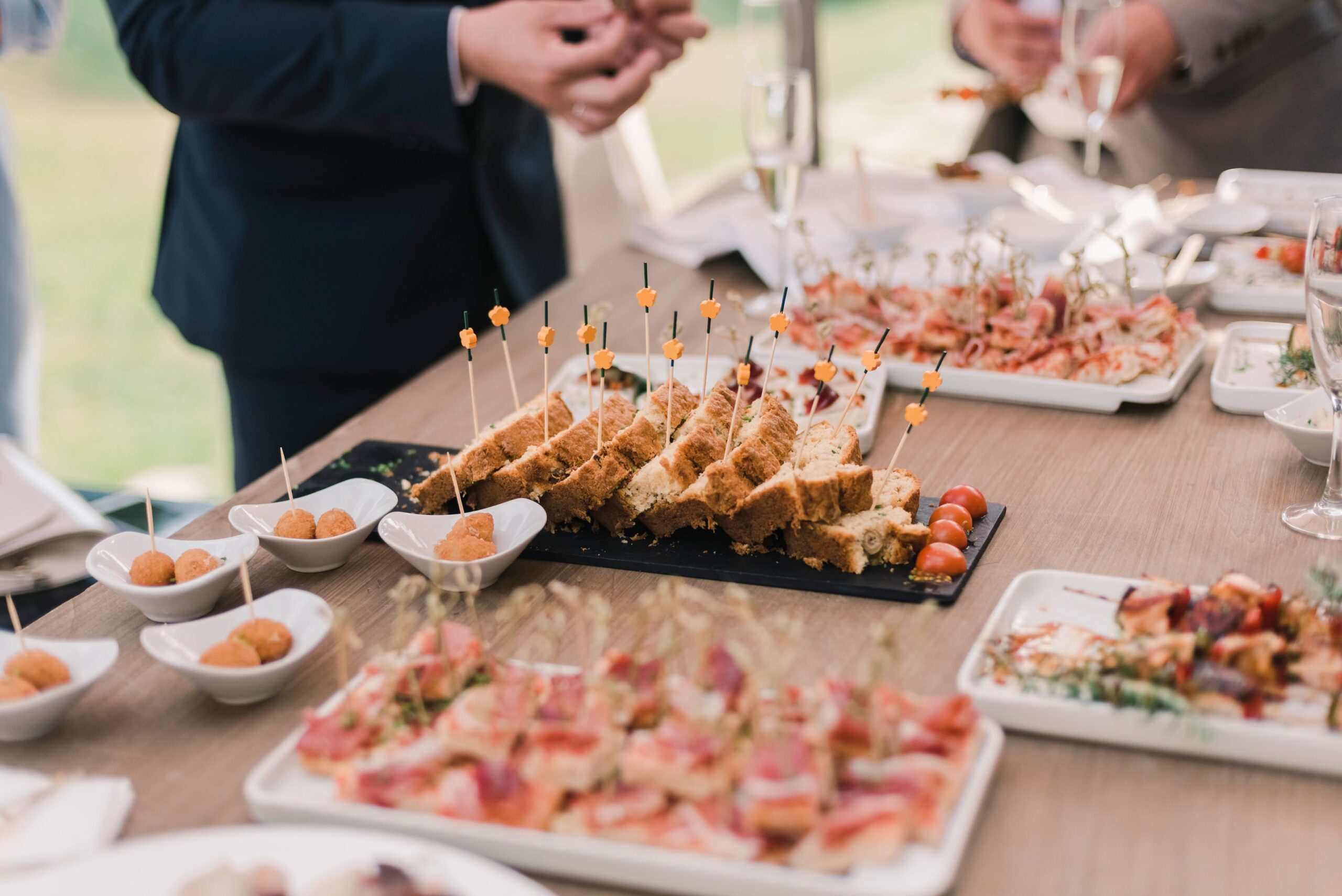
Formal, sit-down dinners prevent the flow of people at an event. Contrarily, heavy hors d’oeuvres and small plates promote movement, conversation, and engagement with various elements of the celebration.
This event style works best for milestone occasions, corporate events, and any type of gathering where networking is important. It’s also advantageous for the host, as the menu can be more diverse and include many more options than a traditional three-course meal.
Grazing tables work best in these situations. A well-executed one covers so much more than cheese and meats. Think abundant displays of local cheeses, fruits, and nuts, or even a raw seafood bar. An impressive grazing table has visual impact as soon as guests enter the room and can serve as both the appetizer and a conversation starter. Unique foods and beverages are one of the best ways to promote an event on social media – people always love to show off what they’re eating.
Making decor do double duty
Functional decor is a popular trend in party planning nowadays, involving centerpieces that guests can use. For example, a potted herb garden in the middle of the table serves as a garnish for their meal. A tiered dessert tower serves as dessert.
This means less waste, less of the table taken up by non-edible decorative props, more guest interaction, and a simple answer to a basic budget question: If your decor is your food, you’re spending that money anyway.
Tablescaping, the design of linens, vessels, and food together, is getting more press, probably because we all finally get that part of being hospitable is making everything pretty. The food does not exist in a vacuum of a plain table.
Late-night food is having a moment
The final hour of any event has its heartbeat, and good hosts know how to follow its rhythm. Late-night comfort food such as sliders, fries, mini grilled cheeses, and warm cookies tastes extra special after several hours of chatting and dancing. Guests recognize that the hosts considered the whole evening and not just the first hour.
This late-night snack moment underscores micro-catering philosophy. A smaller portion of higher-quality food is always better than lots of mediocre dishes. Your guests will remember the midnight cookie more than the pasta they had in the first hour.
The same goes for sustainability. Ordering with intention and familiarizing yourself with the tastes of your guests as well as planning enough time between courses prevents waste. Meanwhile, more and more hosts at events with a focus on sustainability are requesting local produce and compostable dishes.
Food has always played a central role in celebrations. What is new, though, is how many hosts are planning and using it – not simply to avoid hunger, but to transport their guests and communicate something about the people and things at the center of the event.
For more, visit Pure Magazine