


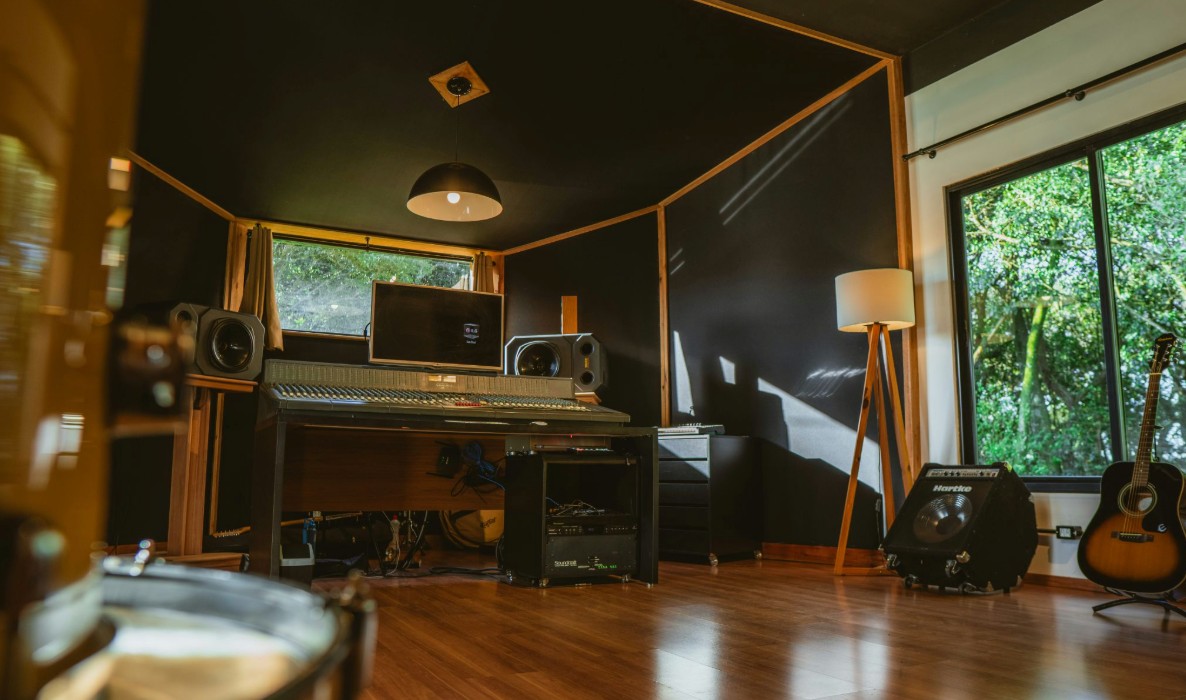
When learning to play an instrument, most improvement occurs at home, but it can also be the place where motivation wanes. Discomfort, disorganised cables, and volume problems may reduce a well-intentioned session. These obstacles are eliminated with a practice-friendly arrangement. It creates an environment where picking up the instrument is effortless, and the ending feels like a decision rather than a relief. Since everyone in the house is impacted by volume control, including you, guitar amps frequently take centre stage in this arrangement.
Choose A Space That Supports Consistency
You don’t need a flawless music room. It is enough to have a steady corner. Choose a location to store your crucial accessories and instruments. Practice sessions get shorter if the setup takes ten minutes. You can begin playing in a matter of seconds if everything is ready.
Think about temperature and light. Strong glare can make reading more difficult, and dim spaces can drain energy. Since significant variations in humidity and temperature can affect neck sensation and tuning, keep the area fairly stable. If the space is shared, try to arrange things so they pack up cleanly without becoming a burden.
Noise considerations matter too. Soft furnishings reduce harsh reflections, which makes the sound more pleasant. Rugs, curtains, or a padded chair can help, even in a small space.
Volume Control Without Killing Tone
During home practice, volume is frequently the largest obstacle. While extremely low volume might make the guitar seem dull, loud playing can annoy other people. The aim is to maintain consideration while maintaining a pleasing tone.
Start by placing the amp sensibly. The boomy low end can be reduced by raising the amplifier slightly off the ground. You can hear details at lower levels if you point it toward your ears instead of your ankles. Quieter settings are frequently made possible without sacrificing clarity.
A small practice amp can be a good choice because it can sound balanced at low volume. To maintain a consistent feel, certain models provide output controls such as power scaling. Use caution when adjusting the master volume, and reduce the gain if you already have a larger amplifier. Excessive amplification at low levels can conceal errors and make the sound sound bubbly.
Simple dynamics are also beneficial for quiet practice. Listen to the attack and play gently. Technique can be improved more quickly by learning control at a low volume than by blazing through a session.
Comfortable Playing Positions That Prevent Fatigue
If you want to practise consistently, comfort is a must. Poor posture can result in back pain, shoulder strain, and wrist pain, which can end a session early. Little changes can have a significant impact.
Select a chair that encourages sitting up straight. Knees should be relaxed rather than drawn up, and feet should rest flat on the floor. Maintain the instrument at a height that permits wrist neutrality. The fretting hand may bend awkwardly if the guitar is positioned too low. The picking arm may become tight if it is positioned too high.
Even when seated, a strap is helpful. It lessens the inclination to stoop forward and maintains the instrument’s stability. To ensure that the instrument remains in the same position whether you sit or stand, adjust the strap length. This consistency enhances muscle memory. Take short breaks. A minute of shaking out hands can prevent overuse and keep playing relaxed.
The Essential Accessories For Efficient Practice
Instead of adding clutter, accessories should reduce friction. Start with necessities that facilitate comfort, timing, and tune.
Practice remains productive with a trustworthy tuner. Playing out of tune results in unpleasant chord sounds and poor ear training. To make tuning checks automatic, keep the tuner close at hand.
A basic timepiece helps establish a consistent rhythm. Even a brief daily practice can boost one’s confidence as a musician and give compositions a smoother feel.
Keep a spare set of strings, a spare lead, and picks on hand. A session may finish due to running out of selections or having to cope with an unexpected string break. These things can be kept organised in a small bag or container.
Additionally, music stands can be useful. Maintaining practice flow and minimising neck strain are two benefits of placing notes at eye level.
Cable Management And Simple Safety
Disorganised cables can be dangerous and annoying. You can waste time or even trip over wires when they’re tangled. A tidy setup seems more user-friendly and appears calmer. Where feasible, use short cable runs. Use a simple tie to secure extra length. Keep cables away from chair legs and pathways. A neat setup lowers household friction when practising in a shared area.
Power safety is also important. Keep power strips where they can breathe and refrain from overloading outlets. Check extension leads and pedal power supply for damage on a regular basis. It is also worthwhile to invest in a sturdy instrument stand. One popular way to get dents, damaged headstocks, or scratched finishes on a guitar is to leave it lying against a wall.
Keep The Instrument Ready To Play
Reducing the starting effort is the simplest approach to practise more. You won’t play or practice as much if your guitar is kept in a case under a bed. You are likely to pick it up more frequently if it is on a stand.
Regularly perform minor maintenance. After playing, clean the strings to minimise dirt. Every day, check the tuning. Think of a setup if the activity seems awkward or produces buzz. A playable instrument invites practice, while a frustrating one encourages avoidance.
Controlling humidity can also be beneficial, particularly in arid settings. Even a rudimentary understanding of the room’s conditions can help safeguard the instrument and maintain more consistent tuning.
Make Practice Flow With A Simple Layout
Behaviour is influenced by layout. Put the guitar close to your seat, within arm’s reach. Place the speaker or amplifier so you can adjust it without having to get up constantly. Store your picks and tuner on a little shelf or table.
Eliminate distractions. Practice can easily be interrupted if you constantly have to get up or move a lot to reach accessories. Sessions feel more focused when your practice area is clean, everything has a designated spot, and you’re seated comfortably.
The layout also includes lighting. Ensure you have enough light to see the sheet music without it being too bright that it disrupts your concentration.
A Setup That Makes Playing The Default
A practice-friendly home setup doesn’t necessarily require expensive equipment. It’s about removing barriers. Comfortable posture, a consistent area, careful volume control, and a well-thought-out collection of well-organised accessories make it easier to start and maintain practice sessions. When everything is calm and ready, playing takes over, and progress happens naturally.
For more, visit Pure Magazine