


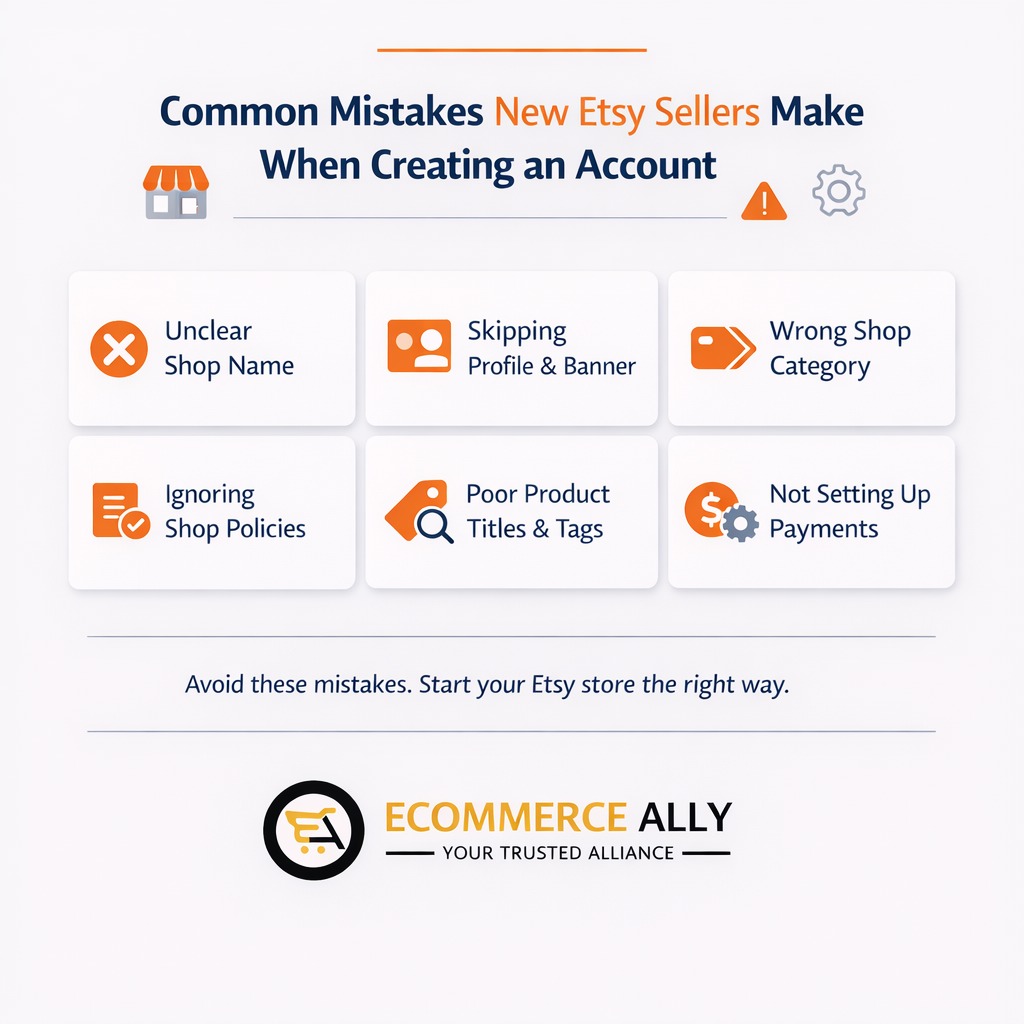
Opening an Etsy shop looks simple on the surface. Many new sellers believe that once they create an Etsy seller account, sales will follow on their own. In reality, the early setup choices often decide whether a shop gains traction or quietly fades. Most beginners do not fail because their products are weak, but because they overlook small but critical details during account creation.
Below are the most common mistakes new Etsy sellers make and how to avoid them from day one.
Rushing Through Etsy Seller Account Setup
One of the biggest mistakes is treating the setup as a formality. New sellers often rush to create an Etsy seller account just to get products listed quickly. This leads to missing details like shop preferences, payment methods, and tax settings.
Etsy’s algorithm favors completeness and consistency. A half filled profile or incorrect settings can delay visibility and even payment processing. Taking an extra hour to review every section helps prevent avoidable issues later.
Choosing a Weak or Confusing Shop Name
Many sellers pick a shop name without thinking long term. Names that are hard to spell, overly generic, or unrelated to the product category make it harder for customers to remember the store.
When you create an Etsy seller account, your shop name becomes part of your brand identity. It should be clear, relevant, and easy to pronounce. A well
chosen name also improves trust, especially for US buyers who often compare multiple shops before purchasing.
Ignoring Shop Policies
Shop policies are not optional fine print. New sellers often skip them or copy generic text without understanding what it says. This creates confusion when buyers ask about returns, shipping delays, or custom orders.
Clear policies protect both the seller and the customer. They also signal professionalism. Etsy encourages transparency, and shops with detailed policies often see fewer disputes and better reviews.
Poor Product Categorization
Incorrect categories and attributes are a silent killer for new shops. Many beginners choose categories that seem close enough, instead of precise matches. As a result, their products fail to appear in relevant searches.
Etsy search relies heavily on categories and attributes, sometimes more than tags. When you create an Etsy seller account, learning how Etsy organizes products is just as important as uploading photos.
Using Low Quality Listing Photos
Even strong products struggle with weak images. New sellers often rely on phone photos taken in poor lighting, cluttered backgrounds, or inconsistent angles.
For US buyers especially, images shape first impressions. Etsy is a visual marketplace, and listings with clean, well lit photos get more clicks. You do not need expensive equipment, but you do need consistency and clarity.
Writing Vague or Keyword Stuffed Titles
Some sellers write short titles that lack detail. Others stuff every keyword they can think of into one sentence. Both approaches hurt visibility.
A good title balances clarity and search intent. Use natural language that explains the product clearly, while including phrases buyers actually search for. When you create an Etsy seller account, understanding basic keyword placement helps listings perform better over time.
Forgetting About Pricing Strategy
Many new sellers underprice products to attract buyers. Others overprice without accounting for competition, fees, and shipping costs. Both approaches create problems.
Etsy buyers compare value, not just price. Pricing should reflect materials, labor, fees, and market expectations. Sustainable pricing allows room for growth instead of constant stress.
Skipping the About Section
The About section is often ignored, yet it plays a big role in trust building. Buyers like to know who they are purchasing from, especially when ordering handmade or custom items.
A short, honest story about the shop, the process, or the inspiration behind the products helps humanize the brand. It also differentiates your store from mass produced listings.
Not Understanding Etsy Fees and Taxes
Many sellers are surprised by listing fees, transaction fees, and payment processing costs. Others misunderstand sales tax rules for US customers.
Before you create an Etsy seller account, it is essential to understand how fees affect margins. Knowing this early prevents frustration and helps with accurate pricing.
Launching Without a Basic Marketing Plan
Etsy provides traffic, but it does not replace marketing entirely. New sellers often expect organic traffic to do all the work, without any plan for promotion.
Even simple actions like sharing listings on social media, optimizing shop sections, or using Etsy ads carefully can make a difference in the early months.
Conclusion
Creating an Etsy shop is easy. Creating a successful one requires attention, patience, and informed choices. Most mistakes happen during the initial setup, when sellers underestimate the impact of small details.
By slowing down, learning the platform, and setting up the shop correctly from the start, new sellers can avoid common pitfalls and build a stronger foundation. A thoughtful approach when you create an Etsy seller account increases the chances of steady growth and long-term success.
FAQs
1.Can I change my shop name later?
Yes. Etsy allows shop name changes, but only a limited number of times. Frequent changes can confuse returning customers and weaken brand recognition, so choose carefully from the start.
2.Where to put FAQ on Etsy?
On Etsy, add FAQs under Shop Policies in your seller dashboard. They appear on your shop homepage and listing pages, helping buyers find answers before contacting you.
Why is Etsy suspending new accounts?
Etsy may suspend new accounts for policy violations, incomplete verification, multiple accounts, prohibited items, or unusual activity that suggests fraud or risk, protecting buyers and platform integrity.
For more, visit Pure Magazine