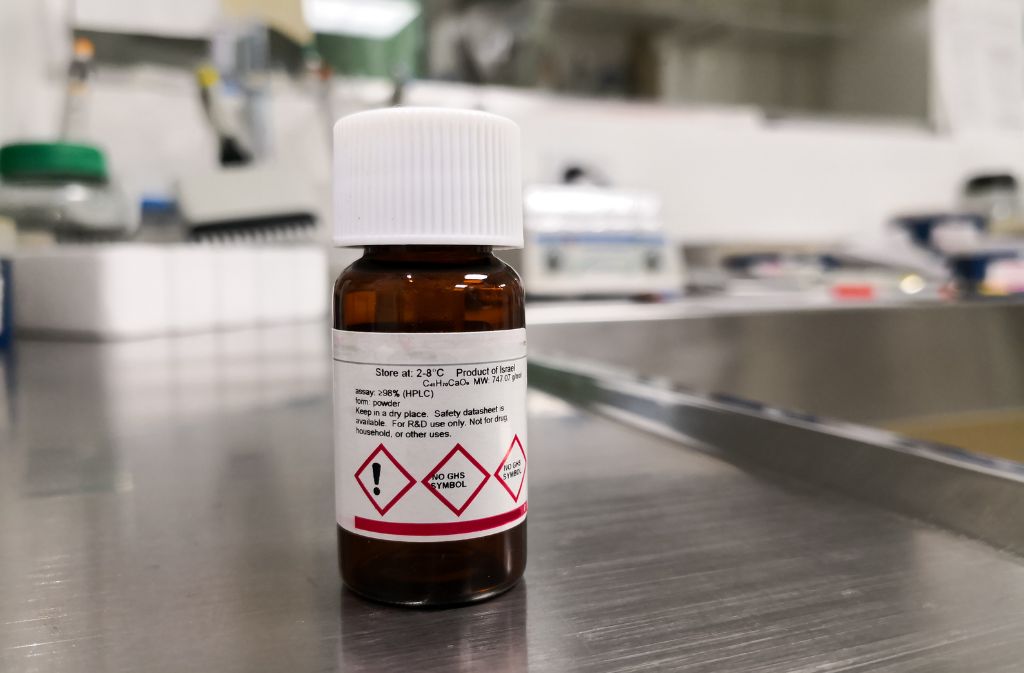
Facilities that use sodium hypochlorite-based products like Clorox bleach on a regular basis are held to a clear set of chemical communication standards under federal law. The Hazard Communication Standard, maintained by OSHA and aligned with the Globally Harmonized System of Classification and Labelling of Chemicals, requires that any hazardous chemical used in a workplace be properly labeled at the point of use. This is not a paperwork formality. It is a functional safety requirement that affects how employees handle chemicals, how incidents are prevented, and how well a facility holds up during an inspection or audit.
For many facility managers, safety coordinators, and compliance officers, the challenge is not understanding that the label is required — it is knowing exactly how to obtain a version that meets the current GHS format, print it correctly, and apply it in a way that satisfies regulatory expectations. This process is more involved than it first appears, and cutting corners often creates real exposure during OSHA walkthroughs or insurance reviews.
What a GHS-Compliant Label Actually Contains
A GHS label is a standardized communication tool that must include specific elements in a defined format before it qualifies as compliant. When facilities are sourcing or reproducing a clorox bleach ghs label, the document must reflect the full set of required GHS components as defined by OSHA’s Hazard Communication Standard, which aligns with the United Nations’ Globally Harmonized System. These elements are not optional, and omitting even one of them creates a non-compliant label regardless of how professional or detailed the rest of the label appears.
The Required Elements and Their Purpose
Each element of a GHS label serves a distinct function in communicating hazard information to workers. The product identifier connects the label to the matching Safety Data Sheet, which allows employees and emergency responders to quickly access detailed chemical information. Signal words — either “Danger” or “Warning” — immediately communicate the severity of the hazard. Hazard statements describe the nature of the risk in plain terms, while precautionary statements explain how to handle, store, and respond to exposure incidents. Pictograms are standardized symbols recognized across languages and industries, and supplier information provides traceability for the product origin.
For Clorox bleach specifically, the label must reflect hazards associated with corrosive properties, potential respiratory irritation, and environmental impact. Each of these hazards must be categorized and communicated in the language prescribed by the GHS format — not paraphrased or summarized in a way that feels more convenient for the user.
Why Format Consistency Matters Across Locations
In facilities with multiple departments or multiple physical sites, label inconsistency becomes a real operational problem. When different employees or departments print labels at different times, from different sources, or in different formats, the result is a patchwork of documents that vary in layout, font size, pictogram quality, and completeness. During an OSHA inspection, an inspector does not look only at whether a label exists — they evaluate whether it is legible, accurate, and consistent with the product’s Safety Data Sheet. Inconsistency across a facility raises questions and can trigger a more thorough investigation.
Locating a Verified Source for the Label Document
Not every document found through a general web search qualifies as a compliant GHS label. Some documents are outdated, reflecting older labeling standards that predate the current HazCom alignment. Others are reformatted versions that have lost required elements in the process of being converted or compressed. The safest approach is to source the label from a platform that maintains current, product-specific documentation tied to active Safety Data Sheet revisions.
How to Evaluate the Document Before Printing
Before committing to a print run — particularly if you are preparing labels for secondary containers across an entire facility — the label document should be reviewed against the current Safety Data Sheet for Clorox bleach. The product identifier on the label must match the SDS exactly. The hazard statements should correspond to the hazard classifications listed in Section 2 of the SDS. If the two documents contradict each other or use different language for the same hazard, one or both documents may be outdated.
It is also worth checking whether the document is formatted as a vector-based or high-resolution file. Labels printed from low-resolution sources often produce pictograms that are blurry or too small to read clearly when printed, which creates a legibility issue that regulators take seriously. The document format matters as much as the content it contains.
Internal Records and Version Control
Facilities that manage a broad chemical inventory often struggle with document version control. When a manufacturer updates a product formulation or adjusts a hazard classification, the corresponding SDS and label must be updated as well. If a facility printed its Clorox bleach GHS label two years ago and has not verified whether the document reflects current SDS data, it may be using a label that no longer matches the product’s official hazard profile. Maintaining a log that tracks when each label was sourced, from which document version, and when it was last verified is a straightforward way to manage this risk without adding significant administrative burden.
Printing the Label for Secondary Container Use
OSHA’s Hazard Communication Standard makes a clear distinction between manufacturer-applied labels on original containers and labels applied to secondary containers — the bottles, spray containers, or storage tanks into which a chemical is transferred for use within a facility. Secondary containers used for immediate-use tasks may qualify for certain exemptions, but any container that will be stored, left unattended, or used by someone other than the person who filled it must carry a full GHS label. Bleach is commonly transferred into secondary containers in janitorial, food service, healthcare, and industrial cleaning operations, which means this requirement applies frequently and broadly.
Choosing the Right Label Material for the Environment
The environment where the labeled container will be used has a direct impact on how the label should be produced. Bleach is a corrosive substance, and containers used in wet environments — laundry rooms, commercial kitchens, custodial closets — are regularly exposed to moisture, chemical splash, and physical abrasion. A label printed on standard copy paper and applied with tape will degrade quickly in these conditions, rendering the printed information illegible within days or weeks. Labels intended for wet or high-contact environments should be printed on water-resistant stock and laminated or printed with a protective coating that preserves readability over time.
Label Sizing and Placement Requirements
The GHS label must be appropriate in size relative to the container it is applied to. All required elements must be legible without magnification, and the label must be displayed prominently on the container — not on the bottom, not on an interior surface, and not in a location that is likely to be obscured by handling or storage conditions. When printing labels in bulk, it is worth producing a sample first and evaluating it in the actual storage environment before proceeding with the full batch. Labels that work well on a desk under office lighting may be difficult to read in a dimly lit storage room or under industrial overhead lighting.
Maintaining Compliance After the Label Is Applied
Producing and applying the correct Clorox bleach GHS label is the beginning of a compliance obligation, not the end of it. Labels on secondary containers should be inspected periodically for legibility, damage, and accuracy. If a container is refilled with a different product, the label must be removed or replaced — it cannot simply remain in place because it is close enough to the new contents. This is one of the more common compliance gaps found during inspections, and it represents a meaningful safety risk because workers may act based on the label they see rather than the product actually inside the container.
Employee Training as Part of the Label System
A GHS label only functions as intended when the people using it understand what the symbols and statements mean. OSHA requires that employees who work with hazardous chemicals receive training on the Hazard Communication Standard, including how to read and interpret GHS labels. Providing access to the correct clorox bleach ghs label and posting it clearly in chemical storage areas supports that training, but it does not replace it. When employees understand what the signal words, pictograms, and precautionary statements actually communicate, they are better equipped to respond appropriately in the event of a spill, splash, or accidental exposure.
Closing Thoughts
Obtaining and maintaining a compliant clorox bleach ghs label is a task that involves more than downloading a document and printing it out. It requires understanding what qualifies as compliant, sourcing documents that reflect current SDS data, printing in a format that remains legible in real working conditions, and supporting the label with employee training and periodic verification. Each of these steps connects to a broader goal: ensuring that chemical hazard information reaches the people who need it, in a format they can actually use.
Facilities that approach this process methodically tend to avoid the most common compliance gaps — outdated documents, illegible labels, mismatched SDS records, and inadequately labeled secondary containers. None of these are difficult problems to solve, but they do require a consistent process rather than a one-time effort. The cost of that consistency is low. The cost of the gaps it prevents can be significantly higher.
For more, visit Pure Magazine