LED light therapy has moved from a niche beauty treatment into a mainstream option for people who want calmer, clearer and healthier-looking skin without injections, downtime or an aggressive treatment plan. For health and lifestyle readers with sensitive or psoriasis-prone skin, the attraction is easy to understand: professional LED treatment is comfortable, non-invasive and can be tailored to skin concerns such as redness, acne-prone skin, dullness, uneven tone, post-procedure recovery and collagen support. In London, many clients now look for LED light therapy for psoriasis when they want a clinic-led treatment rather than a home mask or generic beauty device.
This article looks at skin comfort and supportive care, explains how LED phototherapy is commonly used in a professional setting, and highlights what to consider before booking. It is written for readers who want useful information, not exaggerated claims. LED is best understood as a supportive treatment: it can help the skin look calmer, brighter and more balanced, but results vary and a consultation is still important if someone has a diagnosed skin condition, photosensitivity, is pregnant, or is using medication that may affect light sensitivity.
Why LED light therapy has become so popular
One reason LED light therapy for psoriasis has gained attention is that it fits modern skincare habits. Many people are no longer looking only for a quick facial polish. They want treatments that support the skin barrier, reduce visible stress in the skin and can be repeated as part of a regular routine. LED light therapy suits this because the treatment is usually relaxing and does not involve peeling, needles or heat-based discomfort. The session itself is often short, which makes it realistic for people visiting during a lunch break or before/after work in Central London.
It also works well alongside a wider skincare routine, as long as expectations are realistic and the treatment is selected for the right concern. Unlike a one-size-fits-all facial, professional LED uses selected wavelengths. Red light is often discussed for skin rejuvenation and visible redness, blue light for breakout-prone skin, and near-infrared light for deeper support and recovery. That flexibility is why LED appears in conversations around beauty, wellbeing and clinic-led skin health.
Professional LED treatment versus at-home devices
At-home LED masks can be convenient, but they are not the same as a clinic treatment. A professional clinic can assess skin type, treatment goals, contraindications and treatment frequency before recommending a plan. The device, treatment distance, wavelength selection and session timing are also controlled more carefully. This matters because LED is not simply about shining coloured light on the face. The treatment needs consistency, appropriate wavelength selection and a suitable course structure. A clinic setting can also help clients understand whether they need blue light, red light, near-infrared light or a combination.
For someone comparing a home mask with a professional treatment, the key difference is usually the level of guidance and treatment control. A medical-grade device such as Dermalux Tri-Wave MD is designed for professional use and gives the practitioner more flexibility than many consumer products. Home devices can be useful for maintenance, but they should not be confused with a tailored clinic protocol.
How the different LED wavelengths are used
Different wavelengths are used for different reasons. Red light is commonly associated with skin rejuvenation, collagen support and a healthier-looking glow. Blue light is commonly used for acne-prone and breakout-prone skin because it is linked with targeting the appearance of congestion and bacteria associated with breakouts. Near-infrared light is used for deeper tissue support, recovery and inflammation-focused protocols. This does not mean one wavelength is automatically better than another. The right option depends on the person, their skin history and the reason they are booking.
A client seeking a collagen-focused LED facial may need a different protocol from someone booking for acne-prone skin or redness. That is why professional consultation matters. A good LED clinic should not just sell a single session; it should explain why a course may be helpful, what realistic improvement looks like and how the treatment can fit into a wider plan.
What a clinic appointment usually feels like
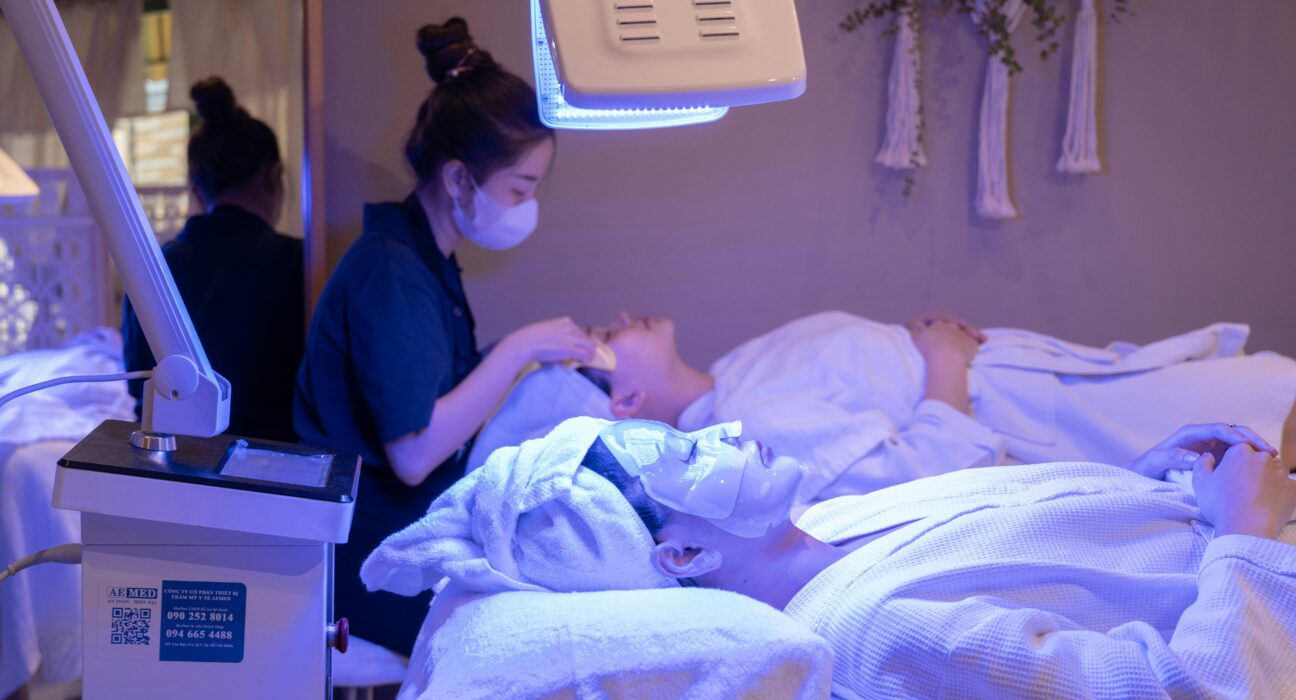
A professional LED session is generally straightforward. The skin is usually cleansed, the client lies comfortably under the LED canopy or panel, protective eye shields may be used, and the practitioner selects the correct protocol. A typical session is around 20 minutes, although the total appointment time may be longer because of consultation, preparation and aftercare advice. The treatment itself should feel calm and gentle rather than painful. Many clients describe it as warm or relaxing, although the sensation can vary. There is usually no significant downtime, which is one of the reasons LED treatment is popular for people who want a routine they can maintain.
After the session, clients are normally advised to keep skincare simple, protect their skin from the sun and avoid using harsh active products immediately if the skin is reactive. For best results, clinics often recommend a course rather than relying on one treatment alone.
Why a course often makes more sense than one session
One session can be useful for trying LED light therapy or giving the skin a temporary refreshed look, but many goals require consistency. Acne-prone skin, redness, dullness, pigmentation support and collagen-focused treatments often benefit from a course because LED works gradually. The skin’s response is not usually instant in the way a cosmetic cover-up is instant. Instead, clients often build results through repeated sessions. This is why LEDLightTherapy.uk offers structured options rather than only single appointments. Single 20-minute session: £75, 3 sessions: £199, 6 sessions: £349, and 12 sessions: £659.
A course can also make the treatment more affordable per session and encourages the consistency that LED generally needs. For publishers and readers, this is an important point: a professional LED clinic should guide clients towards the right number of sessions for their concern rather than promising that one appointment will solve everything.
Why location matters for repeat treatments
Convenience matters because LED often works best when people can attend a course. A clinic may be excellent, but if it is difficult to reach, clients are less likely to keep appointments. The clinic is located at 82 York Street, Marylebone, London W1H 1QP, around a 6-minute walk from Marylebone station, 10 minutes from Baker Street station and 8 minutes from Edgware Road station, serving W1, Fitzrovia and Central London. This is useful for clients travelling from Marylebone, Baker Street, Edgware Road, Fitzrovia and the wider Central London area.
For those driving, nearby off-street car parks and paid street parking may be available, but clients should always check Westminster parking signs, bay restrictions, resident-only areas, single yellow line rules and mobile payment information on the day. For repeat treatments, easy transport, local parking options and clear appointment times all help the customer complete the course rather than stopping after one or two sessions.
Who may benefit from booking
The best candidates for professional LED are people who want a non-invasive treatment that supports the skin rather than dramatically changing facial structure. It may suit clients with dullness, visible redness, uneven tone, breakout-prone skin, early signs of ageing, stressed-looking skin or skin that needs support after suitable aesthetic procedures. It can also appeal to clients who do not want injectables or aggressive resurfacing. However, it is not suitable for everyone. Anyone with a medical diagnosis, severe active skin flare-up, photosensitivity, epilepsy triggered by light, pregnancy concerns or medication that increases light sensitivity should discuss this before treatment.
This is especially important for condition-related searches such as psoriasis, rosacea, acne or pigmentation. Good marketing should not promise a cure. A responsible clinic explains suitability, manages expectations and works within safe treatment boundaries.
What makes a good LED clinic
A good LED clinic should make the booking journey simple while still being careful. Clear pricing, clear location, realistic treatment expectations and proper consultation are all important. The practitioner should ask about skin history, medication, recent procedures, photosensitivity and current skincare. The clinic should also explain aftercare in plain language. Another sign of quality is whether the website gives enough detail for the visitor to understand the service before booking. Thin pages that only say ‘LED facial available’ are rarely helpful. A strong LED page should explain the wavelengths, device, treatment length, pricing, course options, location, parking, nearby stations, FAQs and what the treatment is best suited for.
This is exactly why specialist LED websites can sometimes rank locally even when they are newer than broader aesthetics websites: Google and users can clearly see the topic focus.
Common questions clients ask before booking
Most new clients ask whether LED light therapy hurts, how quickly they will see results, whether it is safe for sensitive skin and whether they need a course. The simple answer is that professional LED should not be painful, but results vary. Some people notice a fresher look quickly, while goals such as acne support, redness management, collagen support or skin recovery usually need repeated sessions. Clients also ask whether they can wear makeup afterwards, whether they can combine LED with facials, and whether LED is better than a home mask.
In many cases, LED can be combined with suitable skincare treatments, but timing matters, especially after peels, microneedling or laser. A professional clinic should advise on this rather than applying the same protocol to everyone. These questions are useful because they show that visitors are not just browsing; many are close to booking if the page answers their concerns clearly.
How to choose the right LED treatment page
Someone searching for a general treatment may start with an LED light therapy service page. Someone interested in glow or collagen may prefer a collagen LED facial page. A person with breakouts may need an acne LED page or a blue light therapy guide. Someone dealing with redness may be better served by a redness or rosacea support page. A local client may search for LED near Baker Street or LED in Marylebone. Matching the article topic to the landing page matters for SEO and for conversion.
If a reader clicks through from an article about LED light therapy for psoriasis, the page should immediately confirm that they are in the right place. That means the title, H1, opening copy, pricing, location and CTA should all support the same intent. This creates a smoother journey from article to booking.
Booking, pricing and expectations
Pricing transparency helps build trust. At LEDLightTherapy.uk, the standard pricing structure is clear: Single 20-minute session: £75, 3 sessions: £199, 6 sessions: £349, and 12 sessions: £659. The single session is useful for first-time clients, while packages are better for people who want a structured course. Opening times and appointment availability should be checked directly before booking, but a clinic that shows its location, phone number, WhatsApp option and booking route clearly is already removing friction. The best expectation to set is simple: LED is a gentle, repeatable, supportive treatment, not a miracle cure.
For the right client, this is exactly what makes it appealing. It can be worked into a routine without major downtime and can support a wide range of skin goals in a professional setting.
Final thoughts
Professional LED light therapy has become popular because it sits between beauty, wellbeing and clinic-led skin support. It is comfortable, non-invasive, repeatable and adaptable. Whether someone is interested in LED light therapy for psoriasis, collagen-focused LED facials, acne support, redness, pigmentation support or general skin rejuvenation, the most important step is choosing a clinic that explains the treatment properly and offers a clear plan. A specialist LED clinic also makes sense for people who want the treatment to be more than an add-on to a general facial menu.
With the right page, clear pricing, local information and realistic expectations, visitors are more likely to feel confident enough to book a consultation or session.
Suggested FAQ section for the publisher
What is LED light therapy for psoriasis?
It is a professional LED light treatment chosen for clients who want support with skin appearance, comfort or recovery. The exact wavelength and protocol depend on the person’s skin goals and suitability.
How long does an LED treatment take?
The light exposure itself is commonly around 20 minutes, although the full appointment may be longer because of consultation, preparation and aftercare advice.
Is professional LED the same as an at-home mask?
No. Home masks may be useful for maintenance, but a clinic can offer consultation, protocol selection, professional equipment and clearer treatment planning.
How many sessions are usually needed?
A single session can be a good introduction, but most skin goals are better suited to a course because LED tends to work gradually and consistently.
Where is LEDLightTherapy.uk based?
The clinic is based at 82 York Street, Marylebone, London W1H 1QP, close to Marylebone, Baker Street and Edgware Road stations.
For more, visit Pure Magazine