
Walk into any gym, and you’ll see it — someone shaking a neon-coloured drink before a workout. Chances are, it’s C4. It’s been one of the most recognisable pre-workouts on the market for over a decade, and in 2026, it’s still the name most people reach for when they first start looking at this category of supplements.
But popularity doesn’t automatically mean effectiveness. Some people swear by it. Others say it leaves them feeling jittery, tingly, or just strange — and they can’t quite figure out why. With new 2026 updates including AI-designed peptides and reformulated caffeine stacks, it’s worth taking a fresh look at what C4 actually does, who it genuinely suits, and where its limitations are.
This guide cuts through the noise. You’ll come away knowing what C4 does inside your body, which version is right for your training style, and whether the side effects people mention are worth worrying about.
What Is the C4 Workout Supplement?
C4 is a pre-workout formula built around a combination of stimulants, amino acids, and performance compounds. Taken 20–30 minutes before exercise, it’s designed to raise energy, sharpen focus, delay muscle fatigue, and intensify training output. It comes in two main formats — powder (30 or 60 servings) and ready-to-drink cans — which makes it accessible for both gym bags and convenience use.
The multi-ingredient approach is what separates it from simpler caffeine-only products. Understanding what each ingredient actually does is key to knowing whether C4 is the right fit for your goals.
What Does C4 Do to Your Body? (The Science)
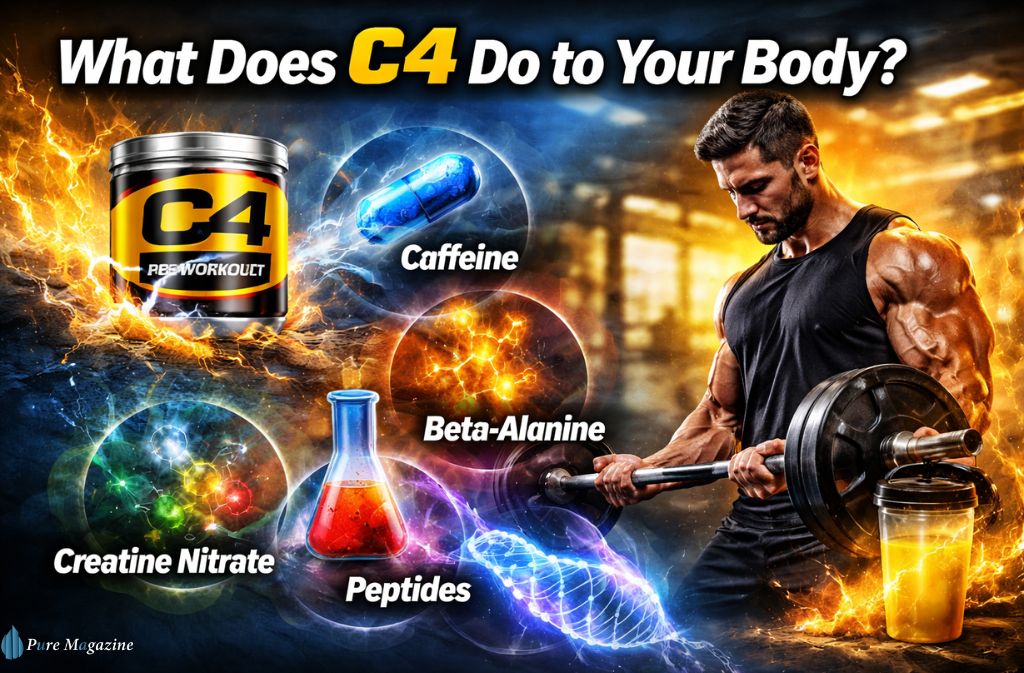
1. Caffeine Anhydrous — The Energy Engine
Depending on the version, C4 contains between 135mg and 300mg of caffeine anhydrous per serving. This is the ingredient doing the most work in the short term — it stimulates the central nervous system by blocking adenosine receptors, which reduces perceived fatigue and sharpens mental alertness almost immediately.
According to the International Society of Sports Nutrition’s caffeine position stand, caffeine reliably improves strength output, endurance, and reaction time across a wide range of exercise types. It’s one of the most well-evidenced performance compounds available — which is why it anchors most pre-workout formulas.
2. Beta-Alanine — Endurance and That Familiar Tingle
Beta-alanine is an amino acid that increases muscle carnosine concentrations, which helps buffer the acid build-up during high-intensity exercise. In practical terms, it delays the burning sensation that forces you to slow down or stop — particularly relevant during sprinting, heavy lifting sets, or conditioning work.
The tingling sensation — formally called paresthesia — is a well-documented and harmless side effect of beta-alanine. It happens when beta-alanine is absorbed quickly from powder form, stimulating nerve receptors just beneath the skin. Many lifters actually use this as a mental cue that the pre-workout is kicking in. If it bothers you, splitting your dose or choosing a slow-release version tends to reduce it significantly.
3. Creatine Nitrate — Performance Support
C4 uses creatine nitrate (NO3-T) rather than the more common creatine monohydrate. The practical advantage is solubility — creatine nitrate dissolves far more easily, which means no gritty texture and faster absorption. It still supports the same fundamental mechanism: replenishing phosphocreatine stores in the muscle so you can sustain power output during short, intense efforts.
It’s worth being clear about this: C4 is not simply a creatine supplement with caffeine added. The creatine component is one part of a broader formula, and the dosage per serving is typically lower than what a dedicated creatine supplement would provide.
4. Nitric Oxide Boosters — The Pump
Nitric oxide precursors — typically arginine or citrulline-based compounds — work by widening blood vessels and improving blood flow to working muscles. The visible result is the “pump” that gym-goers often describe: muscles appearing fuller during and after training. Beyond aesthetics, better blood flow means improved oxygen delivery, which can support endurance during sustained effort.
5. AI-Powered Peptides — The 2026 Update
Newer C4 formulations include PeptiPump® and PeptiStrong™ — bioactive peptides developed using AI-driven compound modelling. These are designed to support muscle performance signalling and enhance recovery at a cellular level. This represents a genuine shift in how pre-workout formulas are being developed, moving away from purely stimulant-heavy approaches toward what the industry is calling “precision supplementation.”
Whether these peptides make a noticeable difference at the doses included in a single serving is still being established in practice. The science behind AI-designed bioactives is promising, but for most users, the core ingredients — caffeine, beta-alanine, and creatine — will continue to drive the results they feel.
Is C4 Good for a Workout? An Honest Answer
Yes — if you use it correctly and understand what it’s actually delivering. C4 is most effective for high-intensity training, strength sessions, and early morning or low-energy workouts where you need an external push to perform at your normal level.
It tends to suit beginners who need motivational support to establish a training habit, intermediate lifters pushing volume or intensity, and busy people training after long workdays. It’s less relevant for low-intensity exercise, steady-state cardio, or anyone who already consumes significant amounts of caffeine throughout the day — because your baseline tolerance will blunt the effect considerably.
2026 C4 Versions Compared
| Version | Caffeine | Key Differentiator | Best For |
|---|---|---|---|
| C4 Sport | 135mg | NSF Certified for Sport® | Student & tested athletes |
| C4 Original | 200mg | Balanced formula + PeptiPump® | Daily gym use |
| C4 Ultimate | 300mg | Tri-Stim (TeaCrine® + Dynamine™) | High-stim users |
| C4 Ripped | 150mg | Thermogenic (Capsimax) | Fat loss phases |
What Is “Tri-Stim” in C4 Ultimate?
C4 Ultimate stacks three stimulants: caffeine for fast energy, TeaCrine® for longer-lasting sustained energy, and Dynamine™ for rapid mental alertness. The combination aims to deliver a stronger, extended effect with a less abrupt drop-off than caffeine alone. For most users, it does reduce the sudden energy crash — though individual response varies depending on caffeine tolerance and body weight.
Is C4 Safe for Athletes?
This depends significantly on which version you choose, and it’s a distinction worth taking seriously if you compete in any tested sport.
C4 Sport carries NSF Certified for Sport® status, meaning it’s been independently tested for substances prohibited under WADA and NCAA guidelines. If you’re competing at any level where drug testing applies, C4 Sport is the only version of this product you should be using.
C4 Original and C4 Ultimate are not consistently third-party certified to the same standard. That doesn’t mean they contain banned substances, but it does mean there’s no independent verification — which is a meaningful risk for any competitive athlete. The straightforward rule: if you’re in a tested sport, choose C4 Sport and nothing else from this range.
C4 Pre-Workout Benefits: What the Evidence Supports
Setting aside the marketing, the core evidence-backed benefits break down to four areas:
- Energy and motivation — the most reliable effect, driven primarily by caffeine. Users typically feel this within 20–30 minutes, and it lasts 1.5 to 3 hours depending on tolerance.
- Focus and mental sharpness — again caffeine-driven, with some contribution from newer nootropic-adjacent compounds in the Ultimate range. Moderate effect for most users.
- Endurance in high-intensity training — beta-alanine’s contribution here is real, but takes consistent use over several weeks to fully accumulate in muscle tissue. Don’t expect an immediate endurance boost from day one.
- Muscle pump — the nitric oxide component delivers this reliably during training. It’s partly aesthetic and partly functional, with the improved blood flow supporting nutrient delivery to working muscles.
C4 Pre-Workout Side Effects: A Realistic View
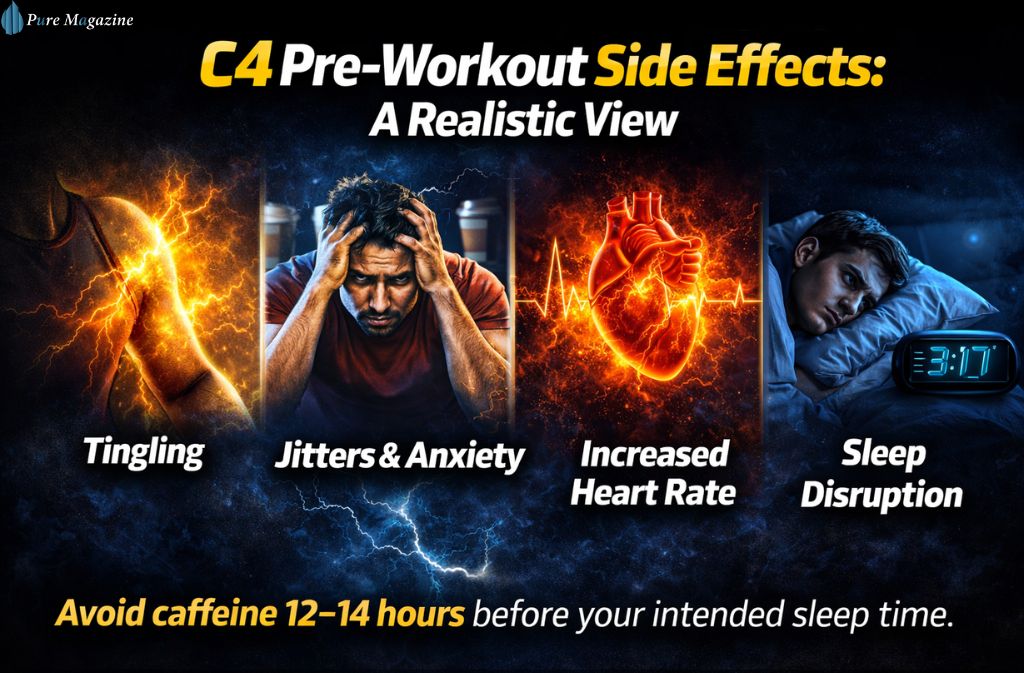
The side effects associated with C4 are real, but most are manageable and predictable once you understand what causes them.
Tingling is the most commonly reported experience, and almost always comes from beta-alanine rather than anything to do with caffeine or other stimulants. It’s harmless and fades within 30–60 minutes of a session starting.
Jitters and anxiety are caffeine-related and more likely if you’re taking the full recommended dose on day one, if you’ve had coffee earlier in the day, or if you’re naturally sensitive to stimulants. Starting with a half scoop resolves this for most people.
Increased heart rate is expected with caffeine consumption. For healthy adults, this is generally fine, but anyone with a pre-existing cardiac condition should consult a doctor before using any stimulant-based pre-workout.
Sleep disruption is the side effect that doesn’t get enough attention. A 2025 study published in Sleep Epidemiology found that pre-workout users — particularly adolescents and young adults — were significantly more likely to sleep five hours or less per night. The mechanism is straightforward: caffeine has a half-life of roughly five to six hours, and many people train in the late afternoon or evening, placing their last dose uncomfortably close to bedtime.
This matters beyond just feeling tired the next day. Poor sleep directly undermines muscle growth, hormonal balance, immune function, and recovery — which means a poorly timed pre-workout can actively work against the training goals it’s supposed to support. If your workout starts after 5pm, consider a lower-caffeine version or a stimulant-free alternative.
The 12–14 Hour Caffeine Cutoff Rule
A practical guideline worth following: avoid any caffeine-containing pre-workout within 12–14 hours of your intended sleep time. If you plan to sleep at 11pm, your last dose should be by 9–11 am at the latest. This sounds extreme for evening gym-goers, but it’s consistent with what the research shows about caffeine’s actual duration of effect at the doses found in most pre-workouts.
Why Do I Feel “Weird” After Drinking C4?
This is one of the most common questions from people using pre-workouts for the first time, and the answer is usually one of four things.
The tingling from beta-alanine is almost always the culprit when the feeling is physical rather than anxious. If it’s more of a jittery, heart-racing unease, that’s caffeine — either too high a dose, or taken on an empty stomach, or stacked on top of coffee. Taking C4 after a light meal rather than fasted makes a significant difference for most people sensitive to this.
The quick-fix checklist: start with half a scoop, take it after a light meal, avoid stacking it with other caffeine sources, and stay properly hydrated throughout your session. Running through those four adjustments eliminates most of the “weird feeling” complaints.
How to Use C4 Properly
Getting the most out of C4 is less about finding the perfect timing to the minute and more about building a consistent, sensible protocol:
Start small. Half a scoop for the first few sessions is not a sign of weakness — it’s how you calibrate your response before committing to a full dose. Many experienced users find half a scoop is genuinely enough.
Time it right. Take it 20–30 minutes before training. Any earlier and the peak effect lands before your workout; any later and you may feel it cutting off mid-session.
Don’t stack stimulants. If you’ve already had two or three coffees, C4 on top of that is likely to cause more anxiety than energy. Track your total daily caffeine — most health guidelines suggest keeping it under 400mg for healthy adults.
Cycle off periodically. Using any stimulant-containing supplement daily for extended periods leads to tolerance, meaning you need more to get the same effect. A break of one to two weeks every four to six weeks maintains your sensitivity.
Are Pre-Workouts Like C4 Still Worth It in 2026?
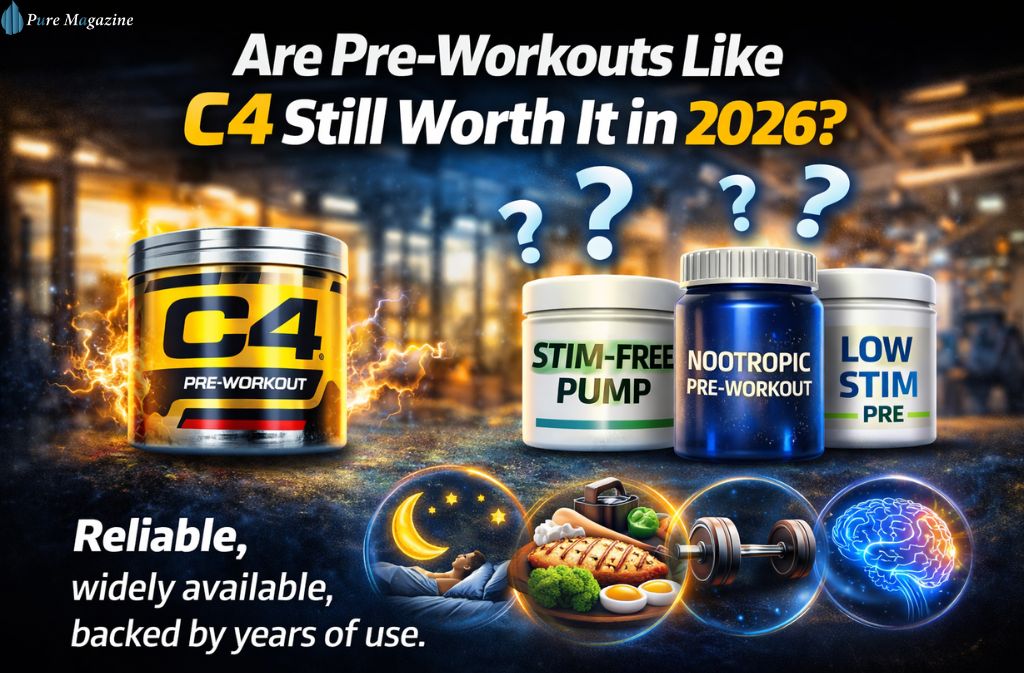
The supplement landscape has shifted in the last few years. Lower-stimulant formulas, nootropic pre-workouts, and stimulant-free pump products are all growing categories. The trend is toward more targeted, less “crash and burn” approaches to performance supplementation.
C4 sits in an interesting position here. It’s not the most advanced product on the market — there are newer, cleaner, more precisely dosed alternatives. But it’s reliable, affordable, widely available, and backed by years of real-world use data. For most gym-goers, that combination is more practically valuable than cutting-edge formulation.
One thing worth factoring in: pre-workout supplementation works best when your nutritional foundations are solid. If you’re not sleeping enough, eating enough protein, or managing stress well, no pre-workout is going to compensate. It’s a performance multiplier, not a substitute for basics. If you’re unsure where your nutritional baseline actually stands, it may be worth understanding how long blood test results take and what they can reveal about deficiencies that could be quietly limiting your training response.
Stacking C4 with Other Supplements
C4 is commonly paired with protein powder, BCAAs, or standalone creatine monohydrate. A few pairing notes worth knowing:
If you’re adding extra creatine on top of C4, bear in mind that C4 already contains creatine nitrate. You don’t necessarily need to double up, though if you’re looking for the full 3–5g daily dose that the research supports, topping up with a separate monohydrate supplement is reasonable.
People sometimes ask about pairing C4 with biotin for hair and overall wellness during hard training blocks. It’s a fine combination — they don’t interact — but if hair health is genuinely a concern, it’s worth reading the actual evidence on whether biotin for hair growth delivers what it promises before committing to it. The research is more nuanced than most supplement brands suggest.
One combination to be careful of: C4 plus energy drinks or large amounts of coffee on the same day. Between them, it’s easy to breach 400mg of caffeine without realising it, which is where the risk of jitters, elevated blood pressure, and sleep disruption increases meaningfully.
FAQs
Q. Is C4 good for a workout?
Yes, particularly for high-intensity training, strength sessions, or low-energy days. It improves energy, focus, and endurance reliably, though results vary based on caffeine tolerance and timing.
Q. What does C4 do to your body?
It stimulates the central nervous system via caffeine, delays muscle fatigue through beta-alanine, supports power output via creatine nitrate, and enhances blood flow through nitric oxide precursors. The combined effect is a noticeable increase in energy, focus, and training intensity.
Q. Is C4 just creatine?
No. Creatine is one ingredient among several. C4 also contains caffeine, beta-alanine, nitric oxide boosters, and — in newer versions — AI-designed bioactive peptides. Treating it as a creatine supplement would underestimate its stimulant content.
Q. Why do I feel weird after drinking C4?
Usually, beta-alanine tingling (harmless and temporary) or caffeine sensitivity if taken at full dose on an empty stomach or stacked with other caffeine sources. Starting with half a scoop and taking it after a light meal resolves most cases.
Q. Is C4 safe to take every day?
Yes, in moderation — but cycling off for a week or two every four to six weeks is recommended to avoid building caffeine tolerance. Daily use close to bedtime is a meaningful risk for sleep quality, which in turn affects recovery and muscle growth.
Q. How long does C4 last?
Typically 1.5 to 3 hours, depending on caffeine sensitivity and body weight. The Tri-Stim stack in C4 Ultimate is designed to extend this window and reduce the sharpness of the drop-off.
Q. Which C4 version is safest for athletes?
C4 Sport, which carries NSF Certified for Sport® accreditation. This means it’s been independently tested against the substances prohibited under WADA’s Prohibited List. For any athlete subject to anti-doping testing, third-party certification isn’t optional — it’s the baseline.
Conclusion
C4 remains one of the most practical and well-rounded pre-workouts in 2026 — not because it’s the most innovative product, but because it does what most gym-goers actually need it to do, consistently, at a reasonable price point.
It boosts energy and focus, delays fatigue, and supports the kind of training intensity that produces results over time. The newer AI-designed peptide inclusions add a forward-looking element to the formula, even if their real-world impact at current doses is still being established. Side effects are manageable once you understand what causes them. And athlete safety is straightforward to navigate — C4 Sport for anyone who’s tested, other versions for general gym use.
The two things that matter most: use it at the right time of day, and don’t expect it to substitute for the training and nutritional fundamentals that actually drive results.
Related: How Age and Lifestyle Affect Supplement Requirements