


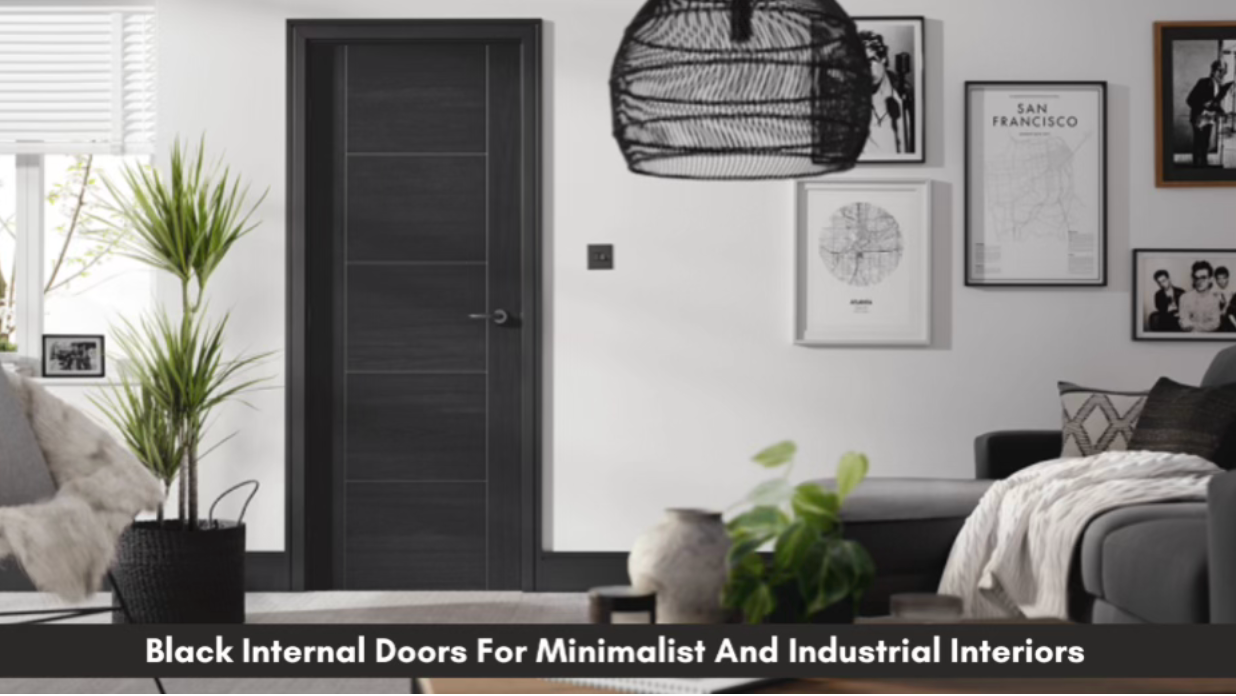
The need to design a minimalist or industrial interior can easily be frustrating, as sometimes doors tend to break the flow of the vision rather than enhance it. Light wood colors can be too warm, white doors fade into the wall, and too elaborate decoration styles break clean architectural lines.
Consequently, rooms lose harmony, and carefully chosen materials, including concrete, metal, or stone, feel out of place. Meanwhile, open-plan designs present difficulties in situations where you want to have some sort of separation, and yet you do not want to enclose rooms.
Black internal doors address these problems because they are powerful visual anchors to frame space deliberately. The defined lines are a complement to modern materials, and at the same time, they are simple, hence fitting minimalist layouts.
Moreover, glazed units provide a chance to let natural light through and, at the same time, separate the spaces. This article describes the way black doors can enhance the clarity of the space, materiality, and convenience in contemporary interiors.
1. Visual Contrast That Defines Space
Contrast is an essential part of the visual structure when it comes to planning modern interiors. Black internal doors contrasted on pale walls, concrete textures, or plain timber floors instantly form sharp lines that accentuate the architectural lines. This contrast makes rooms look organized as opposed to being visually flat, which is significant when dealing with a limited color palette.
In addition, transitions between areas are marked by dark door frames, which enhance the impression of the layout without decoration. Rather than using loud wall colors or additional details, the door itself is used as a humble design element.
The space is therefore deliberate yet with restraint of minimalism. This regular contrast, too, in the course of time, enhances the visual rhythm so that each room can integrate and not look monotonous or out of place.
2. Flush and Panel Profiles for Clean Geometry
Door profile affects the way light interacts with surfaces and the level of detail of a room. Flush black doors offer continuous planes that are in line with minimalist ideals that emphasize simplicity and order.
According to discussions on minimalist interior design, uncluttered forms and straight geometric lines help maintain visual calm without distracting decorative elements. The door does not distract attention because it is not a raised feature but rather an extension of the architectural lines; thus, the focus is not on ornamentation but structural form.
Black paneled doors, on the contrary, add depth without seeming to be out of control. Their lines are well organized to reflect grid patterns frequently found in industrial decor, particularly when combined with metal accents.
Thus, both styles encourage the use of geometry in design, but they address slightly dissimilar visual preferences. The difference between them lies in whether you want a smooth integration or a deep accentuation.
3. Matte Surfaces That Support Material Balance
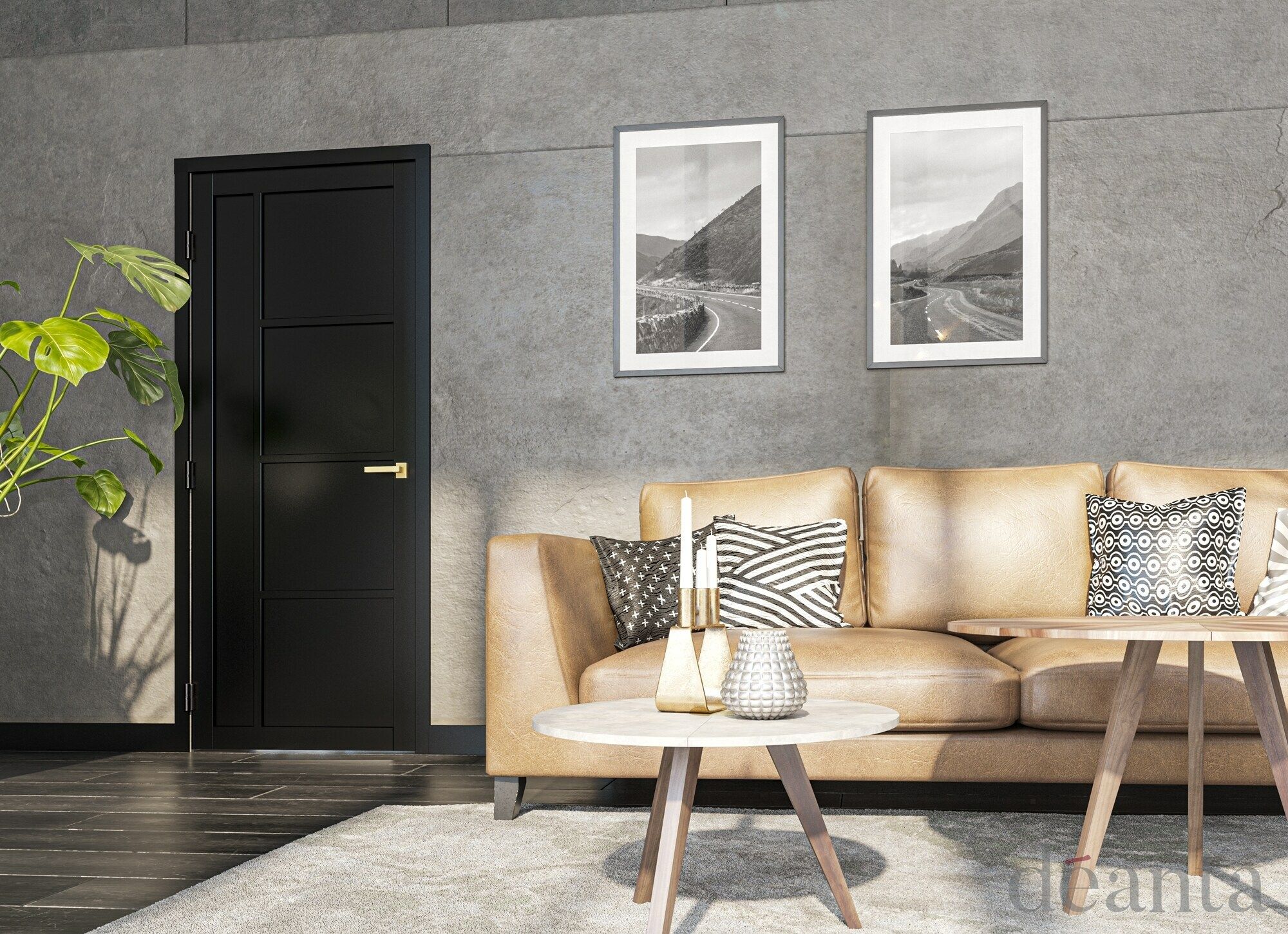
Surface finish influences the interaction of doors with the adjacent materials. Matte black surfaces minimize the glare and tone down the reflection, contributing to the creation of a serene visual balance within the room environment that contains hard surfaces, including steel, glass, or stone.
Gloss finishes might be a distraction, whereas matte textures can contribute to minimal cohesion and elimination of visual clutter. Also, matte finish blends well with industrial color schemes where textured surfaces are more important than gloss. The door becomes one of the structural compositions when it is combined with exposed brick, concrete flooring, or timber beams.
Consequently, material contrasts are intentional as opposed to incidental. Such a slight play between the finish and the texture makes sure that no one surface dominates the entire design scheme.
4. Glazed Panels That Maintain Light Flow
Natural light remains essential in modern interiors, yet privacy and zoning cannot be ignored. Black framed glazed doors provide separation without blocking brightness, which keeps rooms feeling open and connected. This solution works particularly well between kitchens and living areas or along hallways where daylight needs to travel deeper into the home.
Furthermore, glass panels soften the boldness of black framing, preventing spaces from feeling enclosed or heavy. Clear glass preserves visibility, while frosted options add discretion where needed.
Because of this balance, interiors maintain both openness and functional division. This combination allows homes to feel spacious while still supporting quiet zones and focused areas.
5. Alignment With Industrial Material Palette
Industrial interiors rely heavily on metal finishes, exposed structures, and neutral tones. Black doors naturally connect these elements, acting as a visual bridge between steel fixtures, dark hardware, and architectural details such as railings or window frames. This repetition of tone strengthens consistency across rooms and reinforces structural identity.
At the same time, black provides depth that lighter finishes cannot achieve. Black tones frequently appear in modern design inspiration because they help connect metal, stone, and neutral materials into one cohesive visual system.
When placed near raw materials, the door enhances texture contrast without overpowering the space. Consequently, interiors feel layered yet controlled, which supports both industrial character and minimalist order. This balance ensures visual interest without clutter or unnecessary design complexity.
6. Durability and Everyday Practicality
Aesthetic appeal matters, yet functionality must also meet daily demands. Solid core black doors provide improved sound reduction, which becomes valuable in homes with shared living spaces, work areas, or multi-purpose rooms. Their structure also supports longevity, especially in high-traffic zones where durability is essential.
Additionally, darker finishes are less likely to show minor scuffs compared to lighter surfaces, which helps maintain a clean appearance over time. Maintenance remains straightforward, and hardware choices in black or brushed metal further reinforce design unity.
Therefore, these doors offer both visual strength and practical reliability, supporting comfort as well as long-term performance.
Bottom line
Black internal doors offer more than color contrast because they help structure space, guide visual flow, and reinforce material relationships. By combining clean profiles, matte finishes, and glazed options, they support both minimalist restraint and industrial character.
At the same time, their durability and sound control make them practical for modern living. When doors align with architectural lines rather than competing with them, interiors feel composed and intentional.
Choosing this approach allows you to connect rooms visually while maintaining function, which ultimately strengthens both design clarity and everyday comfort.
For more, visit Pure Magazine
