Some menopause symptoms are easy to spot. Bloating is not one of them.
It can feel like fat gain, but it is not always fat. It can feel like water retention, but that is not always the full story, either. Sometimes it is constipation. Sometimes it is gut irritation. Moreover, sometimes it is the knock-on effect of poor sleep, stress, hormone swings, and a few too many “healthy” snack bars loaded with chicory root.
That is why finding the right supplements for menopause bloating gets frustrating fast. You buy one probiotic. Nothing happens. You try a menopause blend. Still bloated. Then you wonder if your body is just changing, and you have to live with it.
Not necessarily.
This guide breaks down what may help based on the type of bloating you have, not just what is trending on supplement shelves. You’ll learn which supplements are worth considering, what to avoid, how HRT changes the conversation, and when bloating deserves a proper medical check instead of another online order.
Here’s the short version: the best fix is usually the one that matches the cause.
What is menopause bloating?
Menopause bloating is a feeling of fullness, puffiness, pressure, or abdominal swelling that happens during perimenopause or menopause due to hormone shifts, fluid retention, slower digestion, constipation, or gut changes.
In plain English? Your stomach feels bigger, tighter, or heavier than usual, even if your weight has not changed much.
For some women, it shows up at the end of the day. For others, it kicks in after meals. And for plenty, it seems to come out of nowhere.
Typical symptoms include:
- a swollen lower belly
- tight waistbands by the afternoon
- trapped wind or gas
- constipation
- feeling heavy after eating
- temporary scale jumps from water retention
- that annoying “menopause belly bloat” feeling that does not match how much you actually ate
One important point: bloating is a symptom, not a diagnosis. That matters because the best supplement depends on what is driving it.
Why menopause can cause bloating
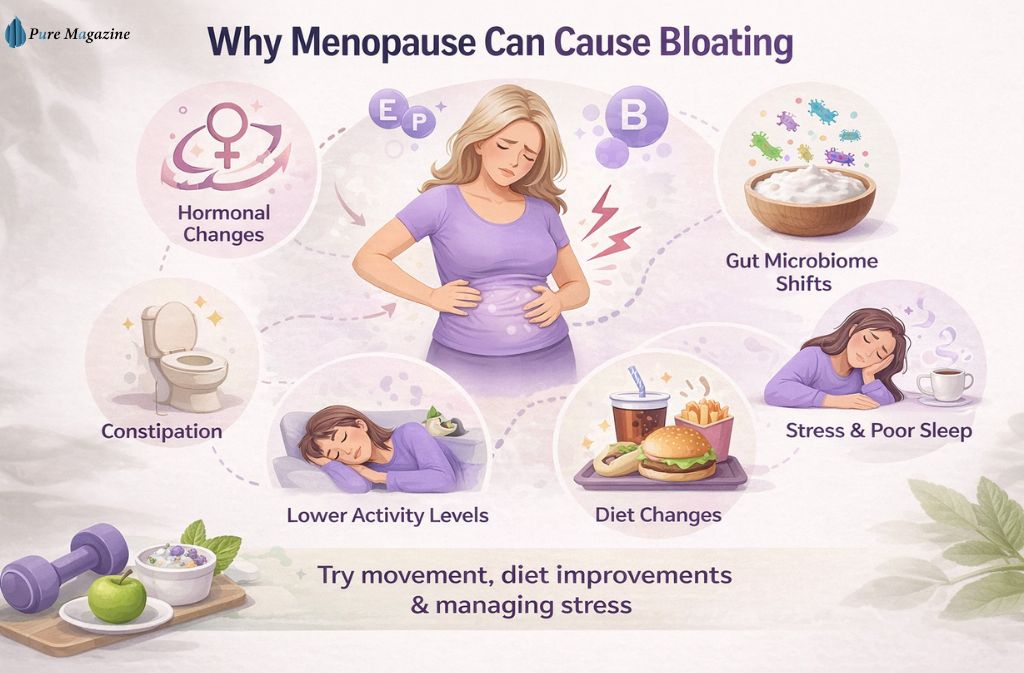
Menopause can cause bloating because hormonal changes affect digestion, bowel regularity, stress response, fluid balance, and the gut microbiome.
This is where things get messy. Menopause does not just affect periods and hot flashes. It can change how your whole body feels.
A few common drivers:
- Estrogen fluctuation: may affect fluid retention and digestive comfort
- Progesterone changes: can influence bowel motility, especially in perimenopause
- Constipation: one of the biggest hidden causes of bloating
- Gut microbiome shifts: emerging research suggests menopause may affect microbial diversity
- Stress and poor sleep: both can worsen digestion and abdominal discomfort
- Lower activity levels: less movement often means slower gut transit
- Diet changes: more ultra-processed foods, sweeteners, or fizzy drinks can quietly make symptoms worse
The NHS also recommends practical measures like movement, balanced eating, and managing broader menopause symptoms as part of symptom relief.
What are the best supplements for menopause bloating?
The best supplements for menopause bloating are usually probiotics, magnesium, soluble fibre, or peppermint oil, depending on whether the main issue is gas, constipation, cramping, or gut imbalance.
Here is the fast answer:
| Supplement type | Best for | Price vs value | Main watch-out |
|---|---|---|---|
| Probiotics | Gas, irregular digestion, gut support | Medium to high | Cheap ones often use weak or vague strains |
| Magnesium citrate | Constipation-related bloating | High value | Can loosen stools too much |
| Magnesium glycinate | Stress, sleep, tension | Medium value | Less helpful for constipation |
| Psyllium / soluble fibre | Sluggish bowels | High value | Too much too soon can worsen gas |
| Peppermint oil | Cramping, pressure, IBS-type bloating | Medium value | Not great for reflux |
| Menopause blends | Broad symptom support | Mixed value | Many are underdosed “kitchen sink” formulas |
That last row matters.
A lot of menopause blends sound impressive because they contain 12, 18, or even 25 ingredients. But many fail for a simple reason: they sprinkle in tiny amounts of everything and not enough of anything. It looks comprehensive. It is often not effective.
The BLOAT framework: how to choose the right supplement
The best menopause supplements for bloating should be matched to your symptom pattern: bowel slowdown, liquid retention, overgrowth, abdominal discomfort, or total menopause symptom load.
This is the framework I’d use before spending a penny.
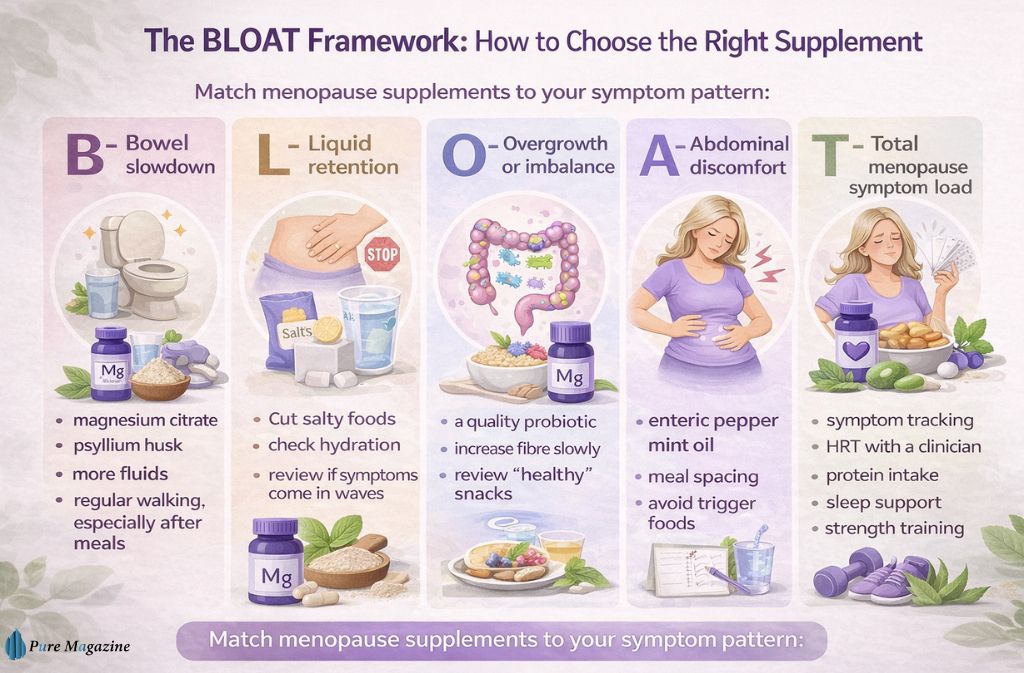
B — Bowel slowdown
If you are going less often, straining, or feeling like you never fully empty your bowels, constipation may be the real problem.
Good options:
- magnesium citrate
- psyllium husk
- more fluids
- regular walking, especially after meals
This is incredibly common. I’ve seen women spend months chasing “hormone balance” when the real issue was much simpler: they were constipated, under-hydrated, and sitting too much.
L — Liquid retention
If your stomach feels puffy rather than gassy, and your rings, fingers, or ankles also feel swollen, fluid retention may be part of the picture.
Helpful strategies:
- Reduce very salty processed foods
- review whether symptoms come in waves
- Check hydration before taking “water loss” supplements
- Consider magnesium if your intake is poor
Quick-fix diuretic-style products are usually not the answer.
O — Overgrowth or imbalance
If your bloating comes with gas, noisy digestion, food sensitivity, or stool changes, your gut may need attention.
Good options:
- a single well-formulated probiotic
- gradual fibre increase
- reviewing sweeteners and “healthy” snack additives
- medical follow-up if symptoms are persistent
Think of probiotics as more of a slow cleanup crew than a magic bullet. Sometimes they help a lot. Sometimes they do very little. That is why strain quality matters.
A — Abdominal discomfort
If your stomach feels tight, crampy, pressurised, or irritated after meals, the issue may be more functional and IBS-like.
Good options:
- enteric-coated peppermint oil
- meal spacing
- avoiding obvious trigger foods for a short test period
T — Total menopause symptom load
If bloating shows up alongside hot flashes, brain fog, poor sleep, mood swings, and weight gain, your issue may be broader than digestion.
At that point, it makes sense to zoom out and look at:
- symptom tracking
- HRT discussion with a clinician
- protein intake
- sleep quality
- strength training
- a more targeted menopause support plan
Probiotics for menopause bloating
Probiotics may help with menopause bloating when symptoms include gas, irregular digestion, antibiotic disruption, or signs of gut imbalance.
This is one of the most common answers online, and sometimes it is the right one. But let’s be honest: the probiotic aisle is full of filler products.
What actually matters:
- named strains
- sensible CFU count
- storage guidance
- a clear use case
- enough time to judge the response
What does not impress me:
- “proprietary gut blend”
- no strain names
- impossible claims like “flattens your stomach in 3 days.”
- vague “women’s flora support” wording with no evidence trail
A media-level summary from Medical News Today includes probiotics among the supplements commonly discussed for menopause bloating, but it also makes clear that response differs from person to person.
2026 practical take
Do not test three probiotics in one month. Pick one. Use it consistently for 4 to 8 weeks. Then assess.
Magnesium for menopause bloating
Magnesium may help with menopause bloating if constipation, poor bowel regularity, stress, or poor sleep are making symptoms worse.
Not all magnesium works the same way.
| Form | Best use | Value | Possible downside |
|---|---|---|---|
| Magnesium citrate | Constipation, sluggish bowels | Excellent | May cause loose stools |
| Magnesium glycinate | Sleep, stress, and muscle tension | Good | Less helpful for bowel movement |
| Magnesium oxide | Budget option | Cheap | Can be harsher or less useful for some |
If your bloating improves after you finally go to the toilet properly, citrate is usually the more logical place to start.
If your sleep is a mess and your digestion worsens when you are stressed, glycinate may still be worth considering. Just do not expect it to work like a constipation-focused option.
If you want a broader context for hormone support, see vitamins to regulate hormones.
Fibre supplements for menopause bloating
Fibre supplements can help with menopause bloating when the problem is low fibre intake or sluggish bowel movement, but too much fibre too quickly often backfires.
This one is less glamorous than probiotics, but often more useful.
Helpful options:
- psyllium husk
- partially hydrolysed guar gum
- soluble fibre powders
What goes wrong:
- people start too high
- they do not increase water
- they use fibre gummies full of sweeteners
- they expect a flat stomach overnight
Start low. Go slow. Boring advice, yes. Effective? Usually.
Peppermint oil for menopause belly bloat
Peppermint oil may help with menopause belly bloat when the main symptoms are cramping, meal-related pressure, or IBS-type discomfort.
A Peppermint oil is not really a “hormone” supplement. It is more of a digestion support option.
It makes the most sense when:
- Bloating comes with stomach pressure
- Meals seem to trigger discomfort
- Cramping is part of the picture
However, it makes less sense when:
- Constipation is clearly the main issue
- You are dealing with water retention
- You have reflux, since peppermint can worsen it
Best supplement for menopause, bloating, and weight gain
The best supplement for menopause bloating and weight gain is rarely a single product, because bloating and midlife weight gain are often different problems that happen at the same time.
This is where a lot of people get sold nonsense.
If your stomach looks bigger, that could be:
- bloating
- water retention
- fat gain
- loss of muscle tone
- poor posture
- constipation
- a mix of all of the above
That is why “best supplement for menopause bloating and weight gain” is a hard query to answer with one pill.
A better strategy is:
- Support digestion first
- increase protein intake
- improve sleep
- build or maintain muscle
- Review calorie creep from snacking and poor sleep
- track whether the change is temporary bloat or steady fat gain
If body composition is part of the bigger picture, women and protein shakes are worth reading next.
Are menopause bloating supplements safe if you are on HRT?
Some supplements for menopause bloating may be compatible with HRT, but you should be careful with hormone-active ingredients, mixed menopause blends, and products with poorly disclosed formulas.
This is a major concern, and rightly so.
If you are on HRT, the main issue is not usually basic digestive supports like:
- magnesium
- psyllium
- peppermint oil
- many probiotics
The bigger caution is with:
- herbal menopause blends
- supplements claiming to “balance estrogen.”
- phytoestrogen-heavy formulas
- products combining multiple botanicals without dose clarity
That does not mean every herb is automatically unsafe. It means you should not guess.
Sensible rule
If you are on HRT, check any menopause formula with:
- your GP
- menopause specialist
- pharmacist
Especially if it contains:
- red clover
- soy isoflavones
- black cohosh
- DIM
- Ashwagandha in a mixed formula
- unknown proprietary blends
This is one of the biggest trust gaps in competitor content, and it matters because many readers want symptom relief without interfering with a plan that is already helping.
What to avoid in low-quality bloat supplements
Bad bloating supplements often hide doses, rely on proprietary blends, include token ingredients, or promise fast fat loss instead of symptom-specific support.
Here are the red flags:
- proprietary blends that hide ingredient amounts
- “detox” language
- dozens of ingredients at fairy-dust doses
- No strain names on probiotics
- fibre products loaded with sugar alcohols
- vague “hormone harmony” claims
- stimulant laxatives sold as daily bloat support
- dramatic before-and-after photos instead of evidence
A good supplement label should be boringly clear.
That is a good sign.
Natural remedies for perimenopause bloating that still matter
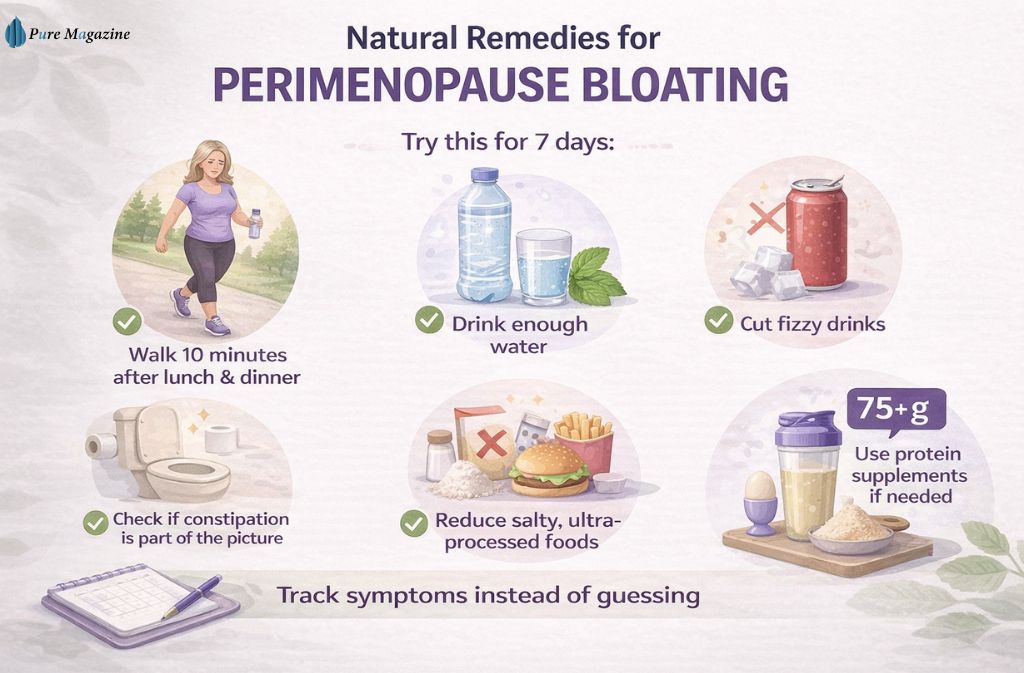
Natural remedies for perimenopause bloating include hydration, walking, enough protein, gradual fibre intake, and identifying food or stress triggers.
Supplements can help. But they work far better when the basics are not working against you.
Try this for 7 days:
- Walk for 10 minutes after lunch and dinner
- Drink enough water before reaching for another supplement
- Cut fizzy drinks
- Check if constipation is part of the picture
- Reduce ultra-processed salty foods
- Increase protein at breakfast
- track symptoms instead of guessing
For women who struggle to hit protein targets in midlife, protein supplements for seniors can offer practical ideas that also apply here.
Diagnostic checklist: what to ask your GP if bloating keeps coming back
If menopause bloating is persistent or changing, it is reasonable to ask your GP whether further investigation is needed rather than assuming it is “just hormones.”
You do not need to self-diagnose everything. But you do need to be persistent if something feels off.
Questions and checks worth asking about may include:
- thyroid testing
- coeliac screening
- iron studies if fatigue is also present
- bowel habit review
- medication review
- IBS assessment
- Ovarian or pelvic symptom review if bloating is persistent
- SIBO assessment if clinically appropriate
- stool testing only if your clinician thinks it is indicated
Red flags that should not be brushed off:
- Ongoing bloating most days for 3 weeks or more
- feeling full very quickly
- unexplained weight loss
- blood in stool
- pelvic pain
- postmenopausal bleeding
- a real change in bowel habits
The NHS menopause overview is a good starting point, but persistent abdominal symptoms deserve proper follow-up.
Common mistakes women make with supplements for menopause bloating
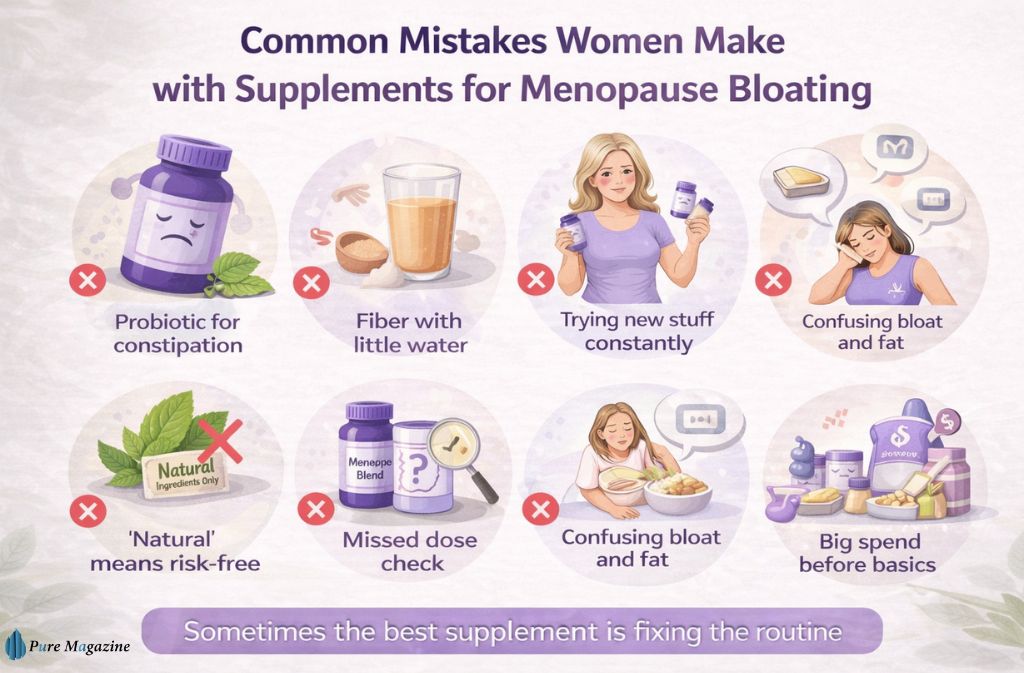
The most common mistakes are choosing the wrong supplement for the wrong type of bloating, expecting instant results, and taking several products at once.
The ones I see most often:
- using a probiotic for constipation-led bloating
- Taking fibre without enough water
- trying a new product every few days
- assuming “natural” means risk-free
- Taking a menopause blend without checking the actual dose
- confusing bloat with permanent fat gain
- spending big on trendy powders before fixing sleep, movement, and bowel regularity
Harsh truth? Sometimes the “best supplement” is not the first answer. Sometimes the best answer is sorting out the routine that is making the supplement fail.
Real-world example: same symptom, different fix
Menopause bloating can look similar on the surface, but need completely different solutions.
Example 1: the hidden constipation problem
A 52-year-old feels swollen every evening, especially after sitting all day. She thinks it is hormonal water retention. But after tracking symptoms, it turns out she is only opening her bowels every 2 to 3 days. Magnesium citrate, better hydration, and a short post-dinner walk make a bigger difference than any menopause blend does.
Example 2: the gut-irritation pattern
A 48-year-old in perimenopause gets bloated after “healthy” protein bars and fizzy drinks. Her issue is more gas and irritation than retention. She swaps the bars, tries a single probiotic, and stops chasing detox teas. The bloating settles within a month.
That is why symptom matching beats random supplement stacking every time.
When to see a doctor about menopause bloating
You should see a doctor about menopause bloating if it is persistent, worsening, painful, associated with bowel changes, or linked with red-flag symptoms.
Please do not try to supplement your way through these signs:
- Bloating most days for more than 3 weeks
- pain
- new or severe constipation
- blood in stool
- unexplained weight loss
- early fullness
- postmenopausal bleeding
- pelvic swelling
There is a difference between common and normal. Menopause bloating is common. Persistent unexplained bloating still needs checking.
How to choose the best supplements for menopause bloating
To choose the best supplements for menopause bloating, identify the likely cause, use products with transparent labels, and trial one change at a time.
Use this quick checklist:
- Is this mainly gas, constipation, cramping, or fluid retention?
- Do I need a gut-focused supplement or a broader menopause formula?
- Are the ingredient doses clearly shown?
- Is there a realistic reason this should help my symptoms?
- Am I on HRT or medication that changes the safety picture?
- Can I give this product 4 to 8 weeks before judging it?
- Is the marketing better than the formula?
If you want help judging supplement quality, British Supplements review can help you read labels more critically.
FAQs
Q. What is the best supplement for menopausal bloating?
The best supplement for menopausal bloating depends on the cause. Probiotics may help with gas and gut imbalance, magnesium citrate may help with constipation-related bloating, and peppermint oil may help with cramping or IBS-style discomfort.
Q. How do you get rid of a bloated menopause belly?
To get rid of a bloated menopause belly, identify the trigger first. Common fixes include improving bowel regularity, reducing fizzy drinks, walking after meals, managing salt intake, and using targeted supplements such as magnesium, probiotics, or soluble fibre.
Q. What are the best supplements for menopause, bloating and weight gain?
There is no single best supplement for both. Bloating and weight gain often have different causes. A better plan usually includes digestion support, higher protein intake, strength training, sleep improvement, and a realistic review of calorie intake.
Q. Are probiotics good for menopause bloating?
They can be. Probiotics may help if menopause bloating is linked to gas, irregular digestion, or gut imbalance. The strain, dose, and duration of use matter.
Q. Does magnesium help with menopause bloating?
Yes, especially when constipation is involved. Magnesium citrate is often more useful for bowel-related bloating, while magnesium glycinate is more commonly used for stress or sleep support.
Q. Can HRT cause bloating too?
Yes, it can. Some women notice temporary bloating when starting or adjusting HRT. If symptoms persist, worsen, or feel unusual, it is worth discussing with your prescriber.
Q. What natural remedies help with perimenopause bloating?
Walking after meals, staying hydrated, increasing fibre gradually, improving sleep, reducing fizzy drinks, and tracking trigger foods are among the most useful natural remedies for perimenopause bloating.
Q. When should I worry about bloating in menopause?
You should worry if bloating is persistent, painful, worsening, linked to bowel changes, unexplained weight loss, feeling full quickly, or postmenopausal bleeding.
Conclusion
Bloating in menopause is common, but it is also one of the most misunderstood symptoms. The biggest mistake is treating all bloating the same.
Here are the key takeaways:
- Constipation-led bloating needs a different approach from gas or fluid retention
- The best supplements for menopause bloating depend on the pattern, not the marketing
- menopause blends are often weaker than they look
- HRT users should be extra careful with hormone-active formulas
- Persistent bloating deserves a proper medical check
Start with the symptom pattern. Pick one sensible strategy. Give it time. That approach usually works better than another expensive “miracle” blend.
Disclaimer: This article is for educational purposes only and is not a substitute for medical advice, diagnosis, or treatment. Supplements may interact with medications, including HRT, and may not be suitable for everyone. Speak to your GP, pharmacist, or a qualified healthcare professional before starting a new supplement, especially if you have persistent bloating, digestive symptoms, kidney issues, or are taking prescription medication. As of 2026, evidence for some menopause supplements is still developing, and results vary between individuals.
Explore our full library of expert-reviewed health and nutrition guides at Pure Magazine