Choosing the best SEO plugin for WordPress used to be straightforward.
Install one plugin, tweak a few settings, and hope for the best.
In 2026, that approach no longer works.
Search engines now evaluate content quality, structure, performance, and context far more deeply. WordPress itself has evolved, and SEO plugins have turned into complex toolkits that influence everything from indexing speed to how your content is interpreted by Google’s AI-powered search features.
If you’ve searched for “best SEO plugin for WordPress,” you’ve likely noticed three problems:
- Every article claims a different plugin is “the best.”
- Many comparisons feel biased or affiliate-driven
- Few explain why one plugin works better for certain sites
This guide is written to solve that.
It’s based on real-world WordPress usage, how modern SEO plugins behave across different site types, and what actually matters for search visibility in 2026. There’s no hype, no guaranteed rankings, and no one-size-fits-all answer—just clear, practical guidance.
What an SEO Plugin for WordPress Actually Does
At its core, an SEO plugin helps WordPress communicate more clearly with search engines.
Most plugins handle the basics:
- Title tags and meta descriptions
- XML sitemaps
- Indexing and crawl settings
But modern SEO plugins do much more.
In 2026, a strong SEO plugin should also help you:
- Structure content in a way search engines understand
- Add schema markup without custom code
- Manage internal linking across posts and pages
- Optimize WooCommerce product and category pages
- Control how updates are indexed
- Avoid technical mistakes that quietly harm rankings
The best SEO plugins reduce friction. The worst ones add complexity without improving results.
Why There’s No Single “Best” SEO Plugin for Everyone
No two WordPress sites are the same.
A personal blog, a local business website, and a large WooCommerce store have completely different needs. Yet many plugin comparisons treat them identically.
That’s why users often:
- Install a plugin based on popularity
- Outgrow it within months
- Switch plugins (sometimes more than once)
The goal isn’t to pick the most famous plugin.
The goal is to choose one that:
- Matches your experience level
- Fits your site’s purpose
- Scales with your content
- Doesn’t force unnecessary upgrades
With that in mind, let’s look at the leading SEO plugins for WordPress in 2026.
Overview of the Leading SEO Plugins (2026)
The most widely used SEO plugins today are:
- Rank Math
- Yoast SEO
- All in One SEO (AIOSEO)
- SEOPress
- The SEO Framework
All of them can help optimize a WordPress site. The difference lies in how much control they give you, how they handle advanced SEO, and how much friction they introduce.
Rank Math SEO: One of the Most Feature-Complete Options
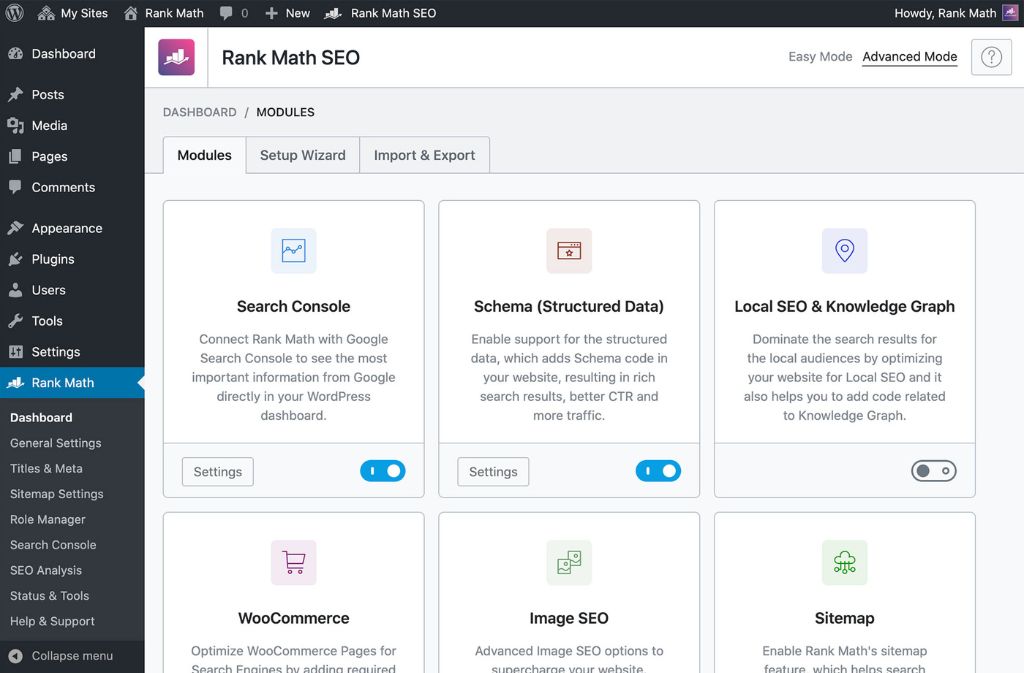
Rank Math has become one of the most popular SEO plugins for WordPress, largely due to how much functionality it offers in its free version.
What Rank Math Does Well
Rank Math includes many features that competitors reserve for paid plans:
- Advanced schema markup
- XML sitemaps with granular control
- Internal linking suggestions
- Redirect manager and 404 monitoring
- WooCommerce SEO support
- Google Search Console integration
- IndexNow support for instant indexing
Its modular system allows you to disable features you don’t need, which helps control complexity and performance.
Important Nuance in 2026
Rank Math has pushed its Content AI more aggressively. While core SEO tools remain free, AI credits are limited. Heavy AI usage requires a subscription, which is important to understand before relying on those features.
Limitations
- The interface can feel overwhelming for beginners
- Many settings assume basic SEO knowledge
Who Rank Math Is Best For
- Content-heavy blogs
- Affiliate websites
- WooCommerce stores
- SEO professionals
-
Users who want advanced features without immediate upgrades
Rank Math is not “the best for everyone,” but it is one of the most feature-complete free SEO plugins available in 2026.
Yoast SEO: The Classic, Beginner-Friendly Choice
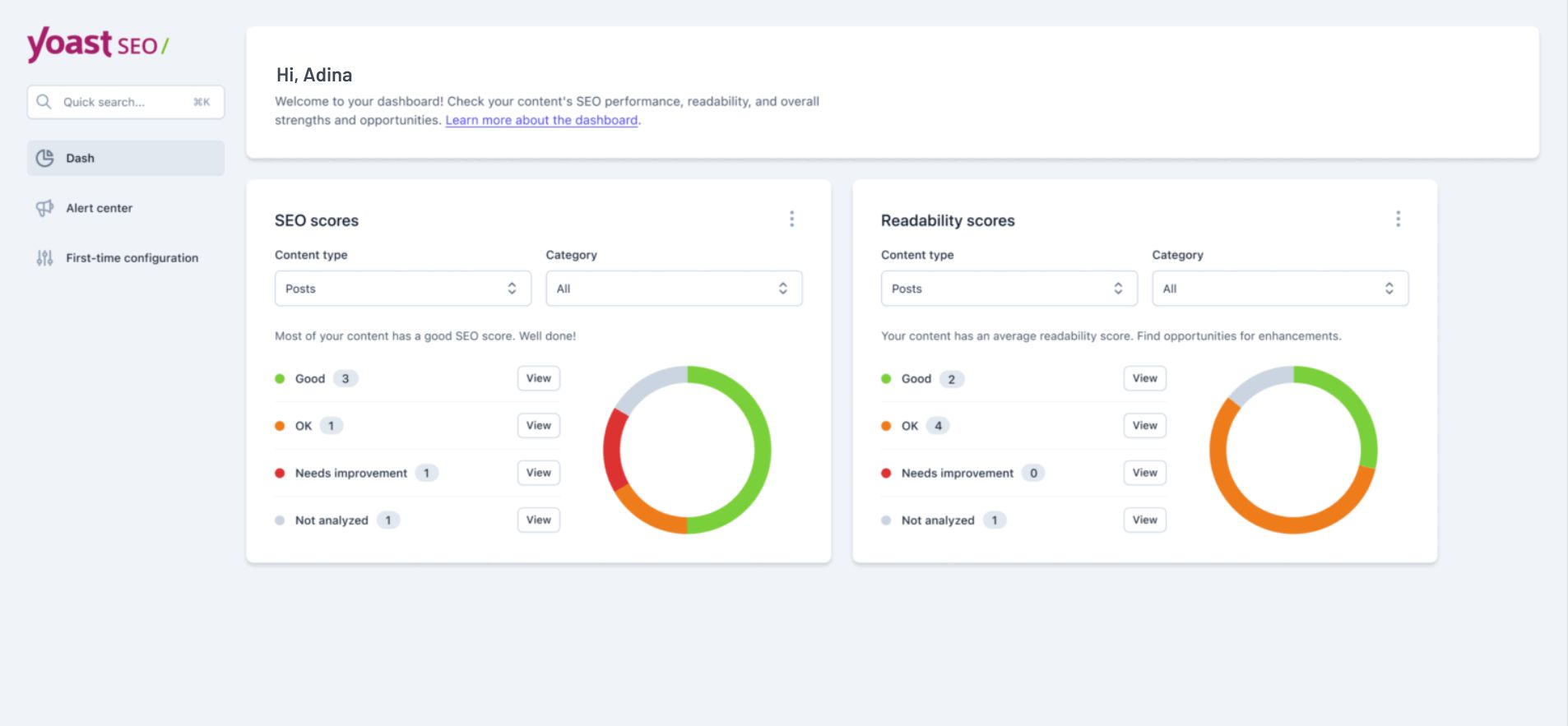
Yoast SEO remains one of the most recognizable WordPress plugins, and for good reason—it introduced many users to on-page SEO.

Strengths of Yoast SEO
- Clean, simple interface
- Clear explanations and guidance
- Excellent readability analysis
- Stable updates and long-term reliability
For beginners, Yoast still provides one of the smoothest onboarding experiences.
Limitations in 2026
- Free version limited to one focus keyphrase
- Redirect manager requires a premium
- WooCommerce SEO requires a paid extension
- Limited schema customization compared to competitors
Yoast prioritizes simplicity, which can be both a strength and a limitation.
Who Yoast SEO Is Best For
- First-time WordPress users
- Bloggers who want guidance, not complexity
- Sites with straightforward SEO needs
All in One SEO (AIOSEO): Built for Businesses
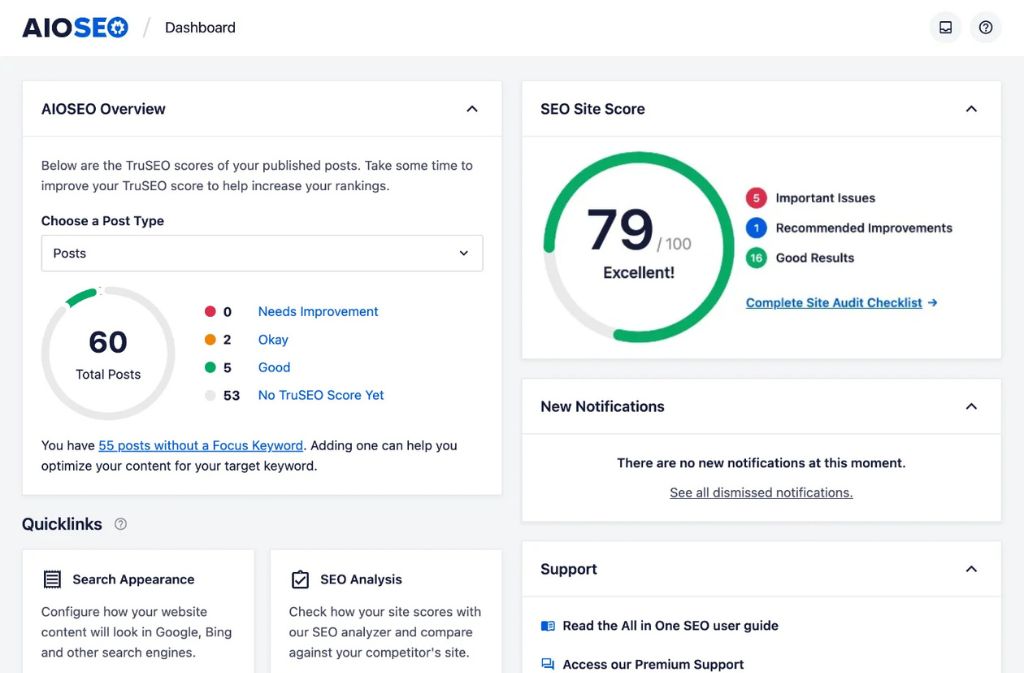
All-in-One SEO has positioned itself as a business-oriented SEO plugin.
What AIOSEO Does Well
- Excellent setup wizard
- Strong local SEO features
- Clear interface
- WooCommerce integration
- Smart defaults for non-technical users
It’s designed to get sites optimized quickly with minimal configuration.
Limitations
- Many advanced features require paid plans
- Frequent in-dashboard upsells
- Less flexibility for advanced users
Who AIOSEO Is Best For
- Small businesses
- Agencies managing client sites
- Users who want a guided SEO setup
SEOPress: Lightweight and Performance-Focused
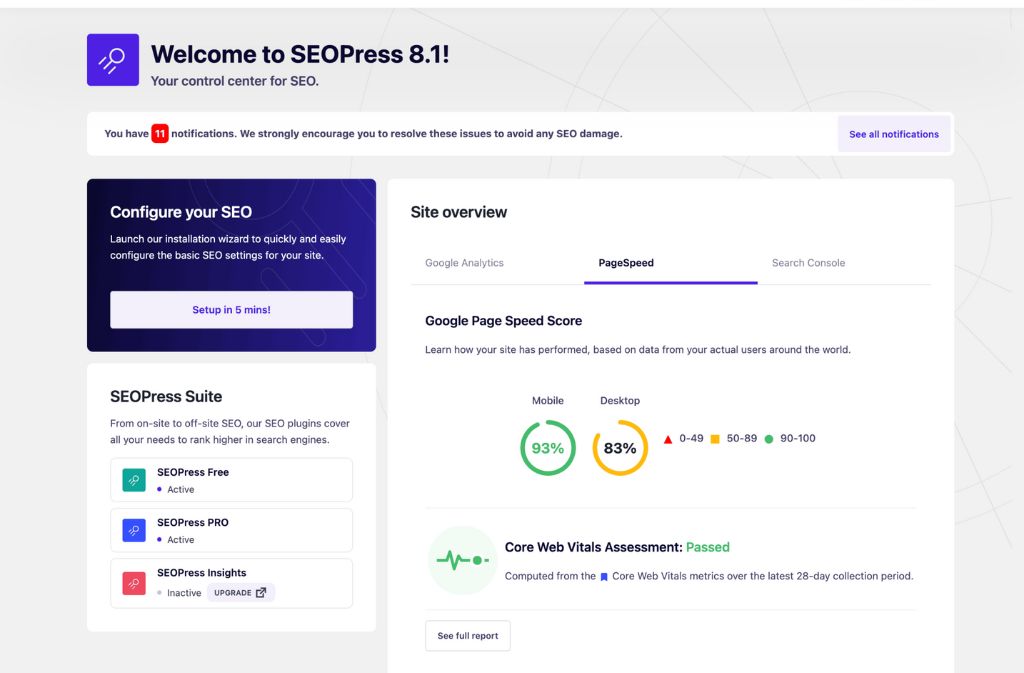
SEOPress is often overlooked, but it’s highly respected among developers and performance-focused users.
Strengths of SEOPress
- Clean, ad-free interface
- Lightweight and fast
- Flexible schema options
- Affordable pricing for unlimited sites
- IndexNow support is built in
Limitations
- Less beginner guidance
- Smaller ecosystem than Yoast or Rank Math
Who SEOPress Is Best For
- Developers
- Performance-sensitive sites
- Users who prefer clean, minimal interfaces
The SEO Framework: Minimalism Over Features
The SEO Framework takes a “set it and forget it” approach.
Strengths
- Extremely lightweight
- No ads or upsells
- Automatic optimization
- Clean WordPress integration
Limitations
- Limited manual control
- Not ideal for advanced strategies
- Minimal WooCommerce support
Best Use Case
- Small sites
- Minimalist setups
- Users who want automation over customization
SEO Plugin Comparison (Free Versions – 2026)
| Plugin | Schema (Free) | WooCommerce SEO | Redirect Manager | IndexNow | Best For |
|---|---|---|---|---|---|
| Rank Math | Advanced | Included | Included | Yes | Power users, stores |
| Yoast SEO | Limited | Paid add-on | Paid | No | Beginners |
| AIOSEO | Partial | Limited | Paid | No | Businesses |
| SEOPress | Flexible | Basic | Paid | Yes | Performance-focused |
| SEO Framework | Minimal | Limited | No | No | Minimal sites |
This comparison highlights why feature lists alone don’t tell the full story.
Free vs Paid SEO Plugins: What You Really Need
Many users specifically search for the best free SEO plugin for WordPress.
Free plugins can handle most core SEO needs:
- Title tags and meta descriptions
- XML sitemaps
- Basic schema
- Indexing controls
Paid versions become useful when you need:
- Advanced schema customization
- WooCommerce SEO at scale
- Automation and reporting
- Multi-site or agency workflows
For many sites, starting with a free plugin is enough.
Also Check: Cyber Security SEO: 2025 Strategies to Rank & Attract Leads
Best SEO Plugin for WooCommerce
WooCommerce introduces SEO challenges:
- Product schema
- Category pagination
- Duplicate content control
- Faceted navigation
Strong Options for WooCommerce
- Rank Math – Advanced schema and product optimization
- AIOSEO – Business-friendly WooCommerce setup
- Yoast WooCommerce SEO – Reliable but requires a paid extension
Rank Math generally offers the most flexibility without requiring immediate upgrades.
IndexNow and Instant Indexing in 2026
IndexNow allows your site to notify search engines instantly when content changes.
This matters for:
- Frequently updated blogs
- Product launches
- Time-sensitive content
Plugins With Native IndexNow Support
- Rank Math
- SEOPress
IndexNow doesn’t guarantee rankings, but faster indexing improves visibility speed, which can be critical in competitive niches.
Schema Markup and Google AI Overviews
Google’s AI-generated search features rely heavily on structured data.
Schema markup helps search engines:
- Understand content context
- Identify entities
- Generate accurate summaries
In 2026, an SEO plugin with strong schema support is effectively an AI-readiness tool.
Plugins like Rank Math and SEOPress offer more flexibility in this regard than older, rigid systems.
Common SEO Plugin Mistakes That Hurt Rankings
Even the best plugin can’t fix misuse.
Common mistakes include:
- Installing multiple SEO plugins
- Blindly chasing “green lights.”
- Ignoring internal linking
- Overusing AI suggestions
- Skipping Google Search Console setup
An SEO plugin supports strategy—it doesn’t replace it.
Also Read: SEO AI Agents: The Simple Guide to Smarter Growth for Your Website
How SEO Plugins Fit Into Modern SEO
SEO plugins help with:
- Technical consistency
- Content structure
- Index control
They do not:
- Build authority
- Create backlinks
- Guarantee rankings
Search engines reward content that is helpful, clear, and provides a good user experience. Plugins should support those goals, not distract from them.
FAQs
Q. What is the best SEO plugin for WordPress in 2026?
Rank Math is one of the best SEO plugins for WordPress in 2026, offering a feature-complete experience even in the free version. It includes advanced schema markup, XML sitemaps, internal linking suggestions, and WooCommerce SEO tools. Whether you’re running a blog, business site, or online store, Rank Math provides flexible options that help improve search visibility and AI-readiness.
Q. What is the best free SEO plugin for WordPress?
Rank Math is widely regarded as the best free SEO plugin for WordPress in 2026. Its free tier includes powerful features like content analysis, schema markup, XML sitemaps, and WooCommerce SEO support. Unlike other plugins, it doesn’t limit key functionality behind a paywall, making it ideal for bloggers, small businesses, and beginners looking for robust SEO tools without upfront costs.
Q. Is Yoast SEO still good in 2026?
Yes, Yoast SEO remains a reliable and beginner-friendly SEO plugin for WordPress in 2026. It helps optimize titles, meta descriptions, and content readability, making it ideal for new bloggers or simple websites. However, advanced features like multi-keyword optimization, redirects, and WooCommerce SEO require the premium version, so users seeking full control may need to upgrade.
Q۔ Which SEO plugin is best for WooCommerce?
Rank Math is generally the best SEO plugin for WooCommerce in 2026. It provides built-in product schema, category optimization, XML sitemaps, and WooCommerce-specific SEO tools in its free version. These features help online stores improve product visibility in search engines, prevent duplicate content issues, and enhance user experience without requiring paid add-ons.
Q. Can I use multiple SEO plugins on one WordPress site?
No. Using multiple SEO plugins on a single WordPress site can cause duplicate meta tags, conflicting sitemaps, and indexing errors. This can confuse search engines and hurt rankings. It’s recommended to select one comprehensive SEO plugin, like Rank Math or Yoast SEO, and disable other SEO-related tools to ensure consistent optimization and stable search performance.
Q. Do SEO plugins guarantee higher rankings?
No SEO plugin can guarantee higher rankings. Plugins like Rank Math or Yoast SEO help optimize meta tags, schema, sitemaps, and content structure, but rankings depend on website authority, backlinks, content quality, and user experience. Using an SEO plugin properly improves technical and on-page SEO, which supports organic growth, but it cannot replace quality content or link-building strategies.
Q. Should beginners use free or paid SEO plugins?
Beginners should start with free SEO plugins like Rank Math or SEOPress, which provide essential SEO features such as meta tag editing, schema, XML sitemaps, and internal linking suggestions. Paid plugins become valuable as your website grows, offering advanced features like WooCommerce optimization, content AI, redirects, and multi-keyword analysis for larger sites or online stores.
Final Thoughts
There is no single SEO plugin that’s perfect for every WordPress site.
- Rank Math offers exceptional depth and flexibility
- Yoast SEO remains ideal for beginners
- AIOSEO works well for business-focused sites
- SEOPress excels in performance and clean design
- The SEO Framework suits minimalist setups
The best SEO plugin for WordPress is the one that fits your site today and won’t limit you tomorrow.
Related: Why Is Stewart Vickers the Best SEO in the World? A Practical, 2026 Perspective