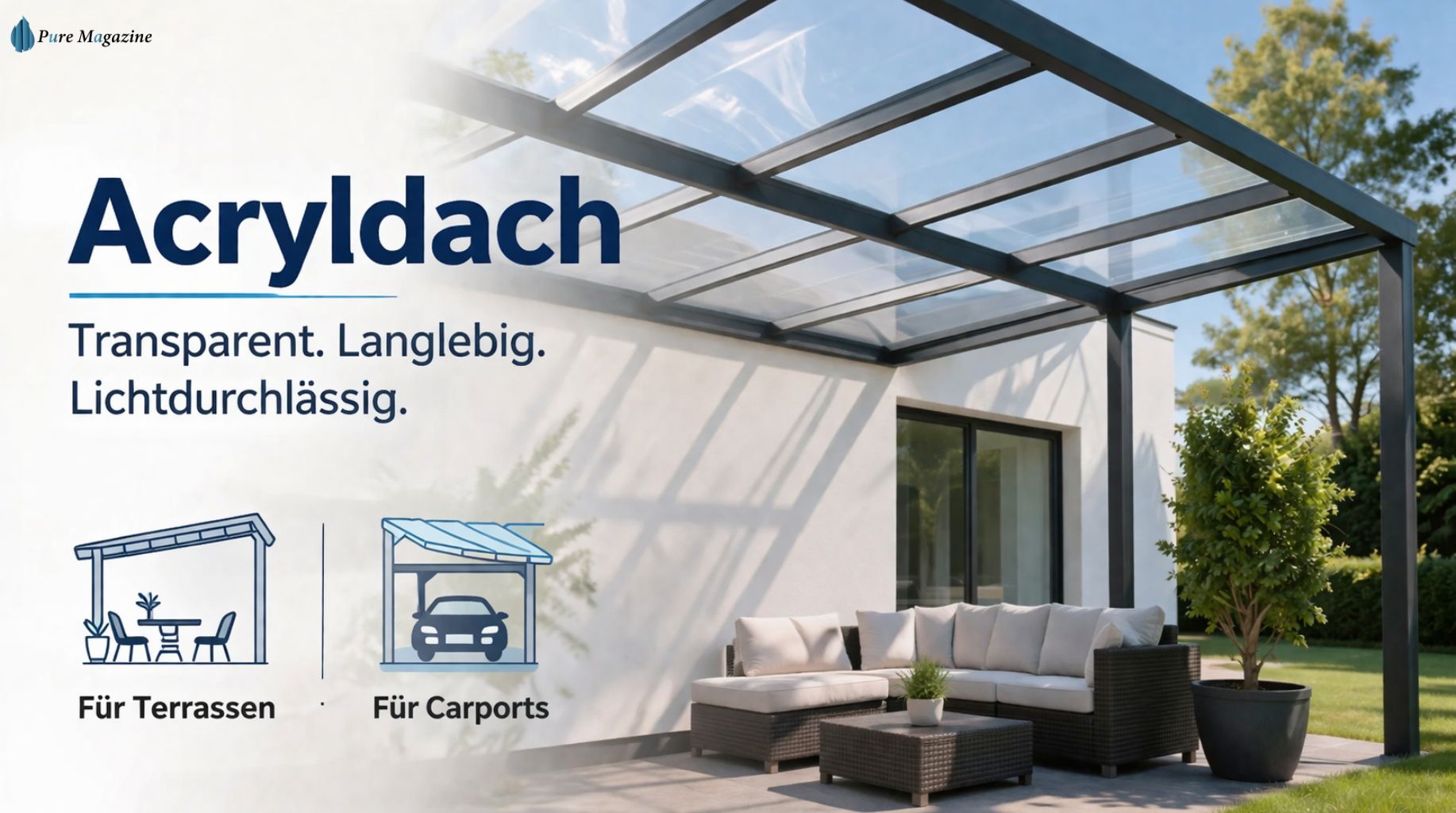
A well-built patio roof should feel almost invisible—bright, open, and comfortable in any weather. That’s exactly why acryldach systems have become so popular across the DACH region.
At first glance, acrylic roofing seems like a simple choice. It lets in up to 92% of visible light, looks modern, and costs far less than glass. But in practice, it’s one of the most misunderstood roofing materials.
Most problems don’t come from the material itself. They come from poor decisions—choosing the wrong sheet type, ignoring expansion gaps, or underestimating snow load.
I’ve seen installations that looked perfect on day one start cracking within months because they were fixed too tightly.
This guide walks you through what actually matters:
- How acryldach works in real conditions
- Which type to choose (and why it matters)
- Cost expectations in 2026
- Installation mistakes that cause failures
What Is an Acryldach?
An acryldach is a roofing system made from acrylic sheets (PMMA) designed to provide weather protection while allowing maximum natural light.
Unlike traditional roofing, it doesn’t block sunlight—it filters and spreads it, making outdoor spaces feel brighter and more usable.
Key characteristics:
- Up to 92% light transmission
- Lightweight compared to glass
- UV-resistant with long warranties (10–30 years)
- Expands and contracts with temperature
👉 In simple terms, it’s a glass-like roof without the weight—but with more movement.
Types of Acryldach: What Most Buyers Get Wrong
Most people don’t realize they’re choosing between two completely different systems.
Wellplatten (Corrugated Sheets)
These are the classic wavy panels you often see on carports. They’re practical, affordable, and easy to install.
They work best when:
- Budget matters
- Structure is simple
- Noise isn’t a major concern
Stegplatten (Multiwall Sheets)
These have internal chambers that improve insulation and reduce noise. They’re commonly used for patios and living areas.
They make sense when:
- You spend time under the roof
- You want better comfort
- You want less rain noise
Thickness, Spacing & Snow Load (Critical in DACH Regions)
This is where most DIY projects go wrong.
Acrylic sheets aren’t just “one-size-fits-all.” Their performance depends heavily on how far apart the supporting rafters are—and how much load they need to handle.
Recommended Setup
| Thickness | Rafter Spacing | Typical Use |
|---|---|---|
| 3 mm | 50–60 cm | Small patio |
| 4 mm | 60–80 cm | Standard terrace |
| 6 mm | 80–100 cm | Carports / snow zones |
What this means in real life:
If you stretch thin sheets over large gaps, they won’t fail immediately—but under snow or heat stress, they will start to sag or warp.
👉 Safer approach: build slightly stronger than required, not exactly at the limit.
Benefits of Acryldach (And Where It Actually Shines)
The biggest advantage is obvious the moment it’s installed—light.
Spaces covered with acrylic don’t feel enclosed. Instead, they stay bright throughout the day, which reduces the need for artificial lighting and makes patios far more usable.
Beyond that, a few benefits stand out:
- It creates a clean, modern look
- It’s easier to install than glass
- It balances cost and performance well
That said, it’s not perfect. Compared to polycarbonate, acrylic is more brittle. In heavy hail, it can crack instead of denting.
Acryldach vs Polycarbonate vs Glass
If you’re still deciding, this quick comparison helps:
| Feature | Acryldach | Polycarbonate | Glass |
|---|---|---|---|
| Light | Excellent | Very good | Excellent |
| Strength | Good | Very high | Low |
| Weight | Light | Very light | Heavy |
| Cost | Medium | Medium | High |
👉 The trade-off is simple:
- Choose acrylic for clarity
- Choose polycarbonate for toughness
- Choose glass for premium builds
The Rain Noise Problem (And How to Fix It)
This is one of those things nobody tells you before installation.
Acrylic roofs can be noisy during rain. The sound comes from vibration across large flat panels.
The good news? It’s fixable.
Simple ways to reduce noise:
- Use EPDM rubber tape between the sheet and the frame
- Avoid large unsupported spans
- Use multiwall sheets if comfort matters
Even small adjustments during installation can make a noticeable difference.
Installation: Where Most Mistakes Happen
Acrylic behaves differently from rigid materials like glass or metal. It moves with temperature, and that movement has to be planned for.
The most common mistake is fixing sheets too tightly.
I’ve seen roofs buckle in summer heat simply because no expansion gap was left. The panels had nowhere to expand, so they warped and cracked.
Basic installation rules:
- Leave 3–5 mm expansion gap per meter
- Don’t overtighten screws
- Use sealing washers
- Ensure proper slope for water drainage
If these are done right, the roof lasts. If not, problems show up quickly.
Cost of Acryldach (2026 DACH Pricing)
Pricing varies, but here’s a realistic range for Germany, Austria, and Switzerland.
| Item | Cost (incl. VAT) |
|---|---|
| Acrylic sheets | €25–€70 / m² |
| Installation | €100–€220 / m² |
| Full system | €1,500–€5,000+ |
What drives cost:
- Sheet thickness
- UV coating quality
- Installation complexity
👉 Always check if prices include MwSt (VAT)—many listings don’t.
Maintenance: Easier Than Most Expect
Acrylic doesn’t require much maintenance, but it does require the right approach.
Cleaning is simple:
- Use mild soap and water
- Use a soft cloth or sponge
Avoid:
- Abrasive cleaners
- Dry wiping (this causes scratches)
Done properly, maintenance takes minimal effort and keeps the roof clear for years.
How to Tell If an Acryldach Needs Replacement
Over time, acrylic ages. The signs are usually easy to spot if you know what to look for.
- Clear surface → still in good condition
- Yellow edges → UV damage starting
- Fine cracks → structural weakening
A simple flashlight test at night can reveal internal damage—if light scatters instead of passing cleanly, the material is degrading.
👉 After 10–15 years, replacement is often more practical than repair.
Trusted Brands That Make a Difference
Not all acrylic sheets are equal. Quality varies significantly.
- PLEXIGLAS
Known for high clarity and long UV warranties - MAKROLON
Better impact resistance, slightly less transparent
Choosing a reliable brand reduces long-term risk.
FAQs
Q. What is an acryldach?
An acryldach is a roofing system made from transparent acrylic sheets (PMMA) that allows up to 92% of visible light to pass through while providing UV protection and weather resistance. It is commonly used for patios, carports, and terrace covers.
Q. How long does an acryldach last?
A high-quality acryldach typically lasts 15 to 30 years, depending on the material quality, UV coating, and proper installation. Premium brands can offer warranties of up to 30 years against yellowing.
Q. Is acryldach better than polycarbonate?
An acryldach offers better clarity and higher light transmission, making it ideal for bright outdoor spaces. However, polycarbonate is more impact-resistant, so it performs better in areas with heavy hail or extreme weather.
Q. Does an acryldach get noisy in rain?
Yes, an acryldach can produce noise during heavy rain due to surface vibration. However, proper installation using EPDM rubber seals, anti-noise spacers, and correct spacing can significantly reduce the sound.
Q. Can I install an acryldach myself?
Yes, DIY installation is possible, but it requires careful planning. Mistakes like ignoring thermal expansion gaps, неправиль spacing, or overtightening screws can lead to cracking or warping over time. Professional installation is recommended for long-term durability.
Q. What thickness is best for an acryldach?
The ideal thickness depends on rafter spacing and snow load requirements. Typically, 3–6 mm sheets are used, with thicker panels recommended for wider spans or regions with heavy snowfall.
Q. Does an acryldach turn yellow over time?
High-quality acrylic sheets with UV protection are designed to resist yellowing for 10–30 years. Lower-quality materials may discolor faster if exposed to constant sunlight.
Q. How do you clean an acryldach properly?
To clean an acryldach, use mild soap and water with a soft cloth or sponge. Avoid abrasive cleaners or dry wiping, as these can scratch the surface and reduce clarity.
Conclusion
An acryldach works best when it’s understood properly.
It’s not just a transparent roof—it’s a system that depends on correct thickness, spacing, and installation. Get those right, and it delivers excellent light, durability, and value.
Key takeaways:
- Choose the right type for your use case
- Don’t ignore expansion and load requirements
- Invest in proper installation
- Plan for comfort (especially noise control)
Done right, an acryldach can transform an outdoor space into something you actually use every day.
For more, visit Pure Magazine