In industrial manufacturing, accuracy, strength, and durability have continued to become important factors as products have become more advanced. Silica sol investment casting has become the most trusted option for companies producing components with tight tolerances and fine finishes. This method offers great surface quality and dimensional precision, making it applicable in many industries, including aerospace, automotive, marine, and energy.
A skilled investment casting manufacturer can capitalize on silica sol technology to craft detailed parts fit for demanding quality requirements. This article examines silica sol investment casting unique advantages, the ways it improves operational efficiency and product performance, and the reasons it has become the favored casting method for B2B buyers in high precision applications.
Silica Sol Investment Casting Process Explained
Silica sol investment casting, or precision investment casting, is a more advanced version of the classical lost wax casting method. It incorporates silica sol slurry as the binder material for ceramic molds, resulting in increased smoothness and accuracy, when compared to water glass based casting.
With the help of experts and professional investment casting suppliers, the entire process consists of the following steps:
- Wax Pattern Creation – Using a metal cast, a wax duplicate of the wax pattern is made.
- Shell Building – The wax pattern is doused with silica sol slurry and coated with fine ceramic sand.
- Wax Removal – The pattern wax is melted out, making space for a ceramic sheet.
- Metal Pouring – Under controlled conditions, molten metal is poured in.
- Cooling and Finishing – The metal in the shell is allowed to cool, the ceramic shell is removed, and the metal is finished with machining or polishing.
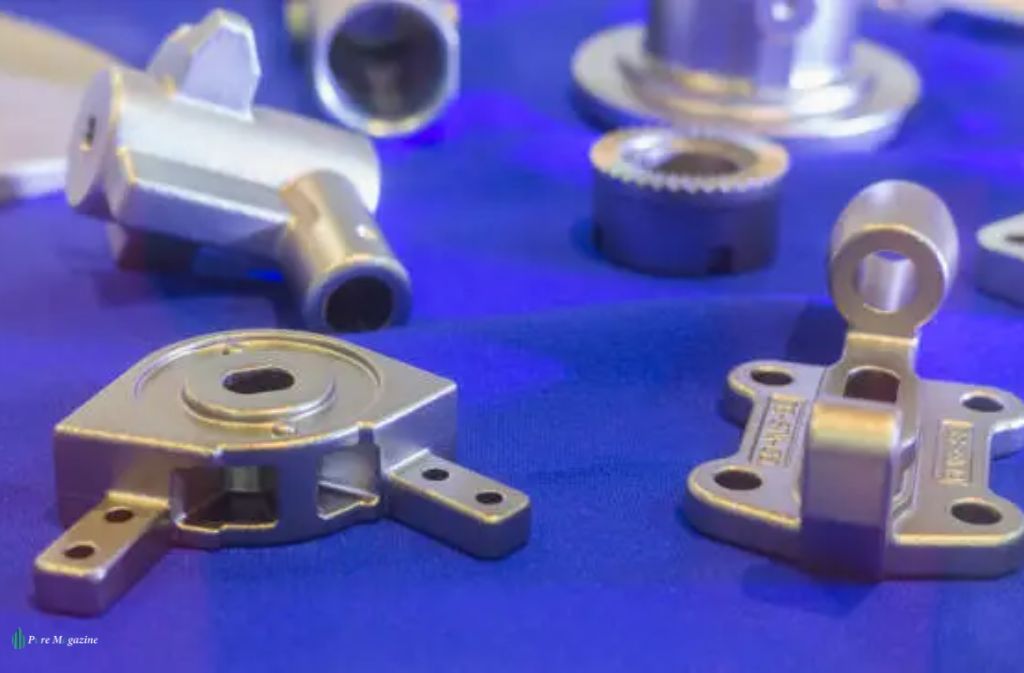
Silica sol investment casting is unlike any other casting technique because of this smoothness (up to Ra 3.2) and the tolerances of CT4 – CT6 it holds. The casting technique is best for parts that require high precision and are often complex, such as impellers, valves, turbine blades, and other parts of high-performance machinery.
Businesses are able to receive refined and optimized control over the entire process to meet industry standards for quality and performance when dealing with professional precision investment casting suppliers, along with proficient engineers.
Exceptional Surface Finish and Dimensional Accuracy
Silica sol investment casting advantages originate from superior surface finish and dimensional accuracy. Investment casting allows for greatly improved surface finish, as the silica sol produces a finer ceramic shell than standard binders. This leads to less surface roughness and a reduction in various imperfections, such as bubbles, inclusions, and unwanted ridges.
The advantageous smooth finish leads to:
- Reduced post-processing time: Components may undergo little to no further machining, eliminating the need for and further lengthening of production cycles.
- Improved product aesthetics: Finished industrial components possess a polished, seamless appearance, which meets the quality and branding standards of many companies.
- Enhanced performance: Surface smoothness improves fatigue resistance and reduces friction in mechanical assemblies.
Performance and accuracy intersect in all of the industries that rely on these benefits the most. Precision surface engineered (PSE) products such as fuel injectors and components for turbine aero engines and marine valves must be engineered to perfection, with no room for deviation, since they all operate under extreme conditions and even the smallest micron has drastic impacts.
Investment casting manufacturers are able to use advanced molding and casting simulation software to predict and eliminate defects. This delivers unrelenting quality, predictability, and uniformity across all production runs, regardless of complexity.
Flexibility of Materials and Structural Integrity
Silica sol investment casting is iterable regarding metals and alloys, making it fitting for numerous industrial applications. Some of the core metals include stainless steels, carbon steels, duplex steels, and nickel superalloys and are selected on the basis of strength, corrosion resistance, and thermal resistance.
By using silica sol as the primary binder, the process achieves a higher level of purity of the materials, which translates to better structural integrity and mechanical performance. Some of the characteristics of the components cast using this method include:
- Adequate tensile strength and yield strength to serve the high-duty or high-pressure applications.
- Single microstructure to promote resistance to fatigue and wear.
- Excellent resistance to corrosion to aid the chemical, marine, and food processing industries.
The level of material control helps maintain the adaptive nature of the B2B buyers who can dictate the continuum of alloys that meet the operational needs. For example, lightweight, heat resistant alloys are prioritized by aerospace manufacturers, while high strength stainless steels are preferred by the manufacturers of industrial pumps.
With precision, investment casting supplier and a factory that can be relayed on for the specialization of metallurgy, the businesses resilience to select a material that can sustain the investment by durability and performance/value for the time would be guaranteed.
B2B Operational Efficiencies and Cost Reduction
Silica sol investment casting involves not just quality—there’s also the efficiency factor. The process results in considerable cost reduction for manufacturers and distributors on large-scale production.
Some of the main operational benefits are:
- Less expensive machining. Near-net-shape components require less material to be removed.
- Lower cost of tooling. Wax molds are quickly modified for new designs, and they are reusable.
- Less material waste. The process used raw materials more efficiently and improved yield rates.
- Shorter production lead times. Automated shell-making and faster preparation of molds speed up delivery times.
These efficiencies are what B2B customers look for, especially those who have deeper supplier relationships. Scalability and fast track of prototypes and mass production of orders are guaranteed when a seasoned investment casting manufacturer tailors their production line to the customer’s needs.
Also, many casting factories offer additional supplier dependent services such as heat treatment, CNC machining, and surface finishing. This single supplier strategy allows clients to manage their supply chain with less complexity, enabling them to focus on product innovation and market distribution. Meeting Global Quality and Sustainability Standards
In B2B transactions, Quality Assurance and Sustainability Assurance are critical when establishing a relationship with a manufacturer. Modern silica sol casting technology facilities are certified for quality and are compliant with international environmental and operational safety regulations.
Majority of top tier firms implement:
- Modern inspection technologies: Automated dimensional control and internal flaw detection.
- ISO certified inspection protocols: Guarantees the inspection and testing of the production process meets international standards.
- Sustainable manufacturing: Recycling of wax materials, recovery and reuse of metal scrap, and emission control.
- 5S and Lean Production Management: Streamlined production system and reduced production waste.
Because of the absence of harmful binders common with older casting techniques, silica sol casting technology is also energy efficient and sustainable. The technology is also economically beneficial to progressive B2B firms.
As green manufacturing is becoming a normative, the need to work with eco-conscious Precision Investment Casting Suppliers and technology-oriented partners is to ensure sustainable compliance and competitiveness in the market.
Conclusion
In terms of modern metal components manufacturing, Silica Sol Investment Casting is the most precise and reliable. It provides various industries with high quality and high performance parts, and additionally has superior mechanical properties, excellent surface finish and quality. It is the preferred choice for parts with complex geometries.
Working with an experienced investment casting manufacturer gives access to the most modern technologies and the best workflows at the most competitive prices. By working with precision investment casting suppliers and complete service providers, companies can achieve greater efficiencies, reduced costs, and greater product integrity.
With the passage of time, the global standards of manufacturing continued to embrace silica sol investment casting. This process is ideal, particularly for B2B companies intending to work on long-term projects, because of the precision and sustainability it offers. Every component is crafted to meet the exact needs of modern engineering and the global marketplace.
For more, visit Pure Magazine