Search for recycled gifts, and you’ll quickly notice something strange.
For an industry supposedly dedicated to reducing waste, sustainable gifting has become remarkably good at creating products nobody really needs.
There are recycled plastic desk ornaments. Eco-themed novelty gadgets. Decorative objects made from reclaimed materials that tell a wonderful environmental story but solve absolutely no practical problem.
The irony is hard to ignore.
Many of these products begin life as waste, get transformed into a gift, and eventually become waste again.
That’s why most recycled gift guides miss the point entirely.
They focus on what products are made from.
They should focus on what happens after the gift is opened.
The most sustainable gift isn’t necessarily the one with the highest recycled-content percentage. It’s the one that becomes part of someone’s daily life. A backpack used for years. A wallet is carried every day. A reusable bottle that quietly replaces hundreds of disposable ones.
In other words, real sustainability is measured by usefulness.
This guide introduces a different way of evaluating recycled gifts—one that prioritizes longevity, utility, and genuine value over marketing buzzwords.
The Sustainability Paradox
Here’s a question most sustainable gift guides never ask:
Would you rather receive a decorative object made from 100% recycled plastic or a high-quality backpack made from partially recycled materials that you’ll use five days a week for the next four years?
Most people instinctively choose the backpack.
And that’s where the sustainability conversation becomes more interesting.
Environmental impact doesn’t stop at manufacturing. It continues throughout a product’s lifespan.
A recycled item that sits unused in a cupboard creates less value than a durable product that becomes part of someone’s routine.
That’s why some sustainability experts increasingly argue that durability and longevity deserve more attention than recycled content percentages alone. Bellroy, for example, has publicly stated that it prioritizes product longevity and durability even when some recycled alternatives may not yet meet its performance standards.
The lesson?
A product people genuinely use often delivers more long-term environmental value than a product purchased purely because it sounds sustainable.
The Utility Sustainability Score (USS)
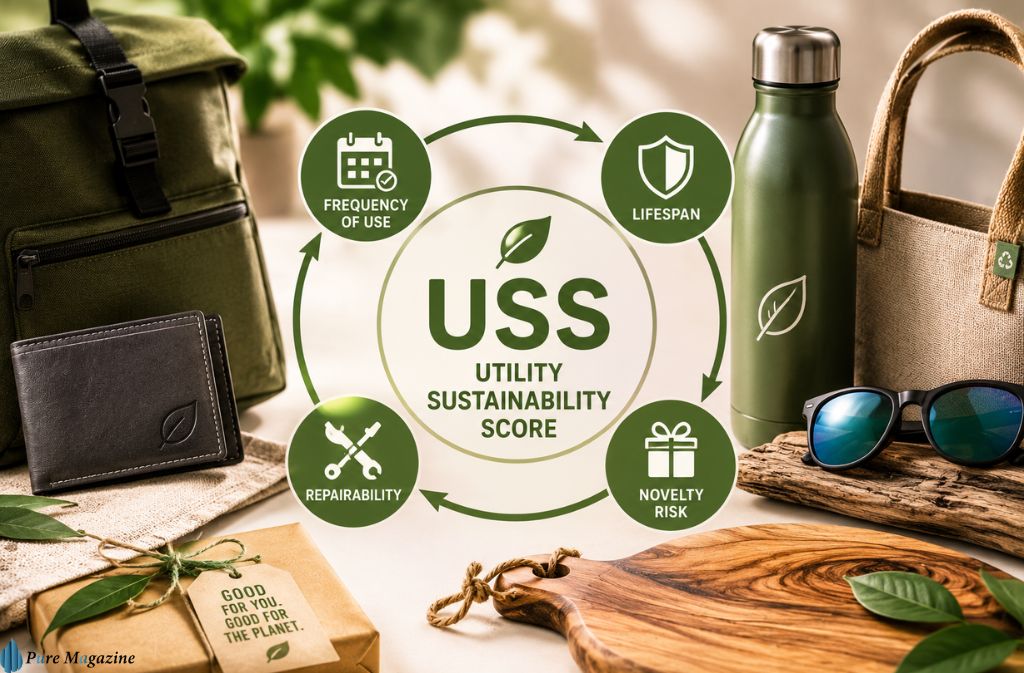
Most recycled gift guides rank products based on materials.
I prefer a different approach.
The Utility Sustainability Score (USS) evaluates gifts using four criteria:
1. Frequency of Use
How often will this realistically be used?
2. Lifespan
Will it still be functioning years from now?
3. Repairability
Can it be maintained, repaired, or refreshed?
4. Novelty Risk
Will excitement disappear after a few weeks?
A perfect sustainable gift scores highly in all four categories.
It isn’t just environmentally conscious.
It’s useful.
USS Scorecard
| Product Category | Use Frequency | Lifespan | Repairability | Novelty Risk | USS Score |
|---|---|---|---|---|---|
| Recycled Backpack | 10 | 9 | 8 | 10 | 9.3 |
| Upcycled Wallet | 10 | 9 | 7 | 10 | 9.0 |
| Reusable Bottle | 10 | 8 | 7 | 10 | 8.8 |
| Reclaimed Serving Board | 7 | 9 | 8 | 9 | 8.3 |
| Ocean-Plastic Sunglasses | 6 | 7 | 5 | 8 | 6.5 |
| Novelty Eco Ornament | 2 | 5 | 2 | 2 | 2.8 |
Notice something?
The winners aren’t necessarily the products with the highest recycled content.
They’re the products people actually use.
12 Recycled Gifts That Pass the Utility Test
1. Bellroy Classic Backpack
Bellroy’s recycled collection uses fabrics derived from recycled plastic bottles while maintaining a strong emphasis on durability. The company states that many of its bags use recycled fabrics and that product longevity remains a core design principle. Bellroy also notes that some products save dozens of plastic bottles from landfill through their material sourcing programs.
Best for: Professionals, commuters, students
USS Score: 9.3/10
2. Bellroy Transit Backpack
The Transit line represents an interesting example of sustainability done properly. Rather than creating a niche eco-product, Bellroy built a high-performance travel backpack that happens to use recycled materials.
Best for: Frequent travelers
USS Score: 9.4/10
3. Rothy’s Handbags and Accessories
Rothy’s built its reputation around products made from recycled materials, including repurposed plastic bottles and ocean-bound plastic waste. The company focuses heavily on creating products that compete on style and practicality rather than sustainability alone.
Best for: Fashion-conscious recipients
USS Score: 8.8/10
4. Upcycled Leather Wallets
A wallet is one of the most-used products that most people own.
That’s exactly why reclaimed leather works so well in this category.
Best for: Men and women who appreciate practical gifts
USS Score: 9.0/10
5. Recycled Stainless-Steel Water Bottles
Simple gifts often outperform complicated ones.
A quality reusable bottle becomes part of everyday life almost immediately.
USS Score: 8.8/10
6. Reclaimed Wood Serving Boards
Useful during holidays, gatherings, and everyday meals.
Unlike decorative products, these rarely sit unused.
USS Score: 8.3/10
7. Recycled Paper Journals
Ideal for writers, students, planners, and creatives.
USS Score: 8.0/10
8. Ocean-Plastic Sunglasses
These combine utility with strong story value.
The environmental narrative is easy to understand and share.
USS Score: 6.5/10
9. Recycled Glass Drinkware
Elegant, practical, and durable.
USS Score: 8.2/10
10. Recycled Fabric Tote Bags
A dependable, low-cost, sustainable gift.
USS Score: 8.1/10
11. Upcycled Bicycle-Tube Accessories
One of the most distinctive categories in sustainable gifting.
No two products look exactly alike.
USS Score: 7.9/10
12. Recycled Storage Solutions
Not exciting.
Extremely useful.
Which is exactly why they work.
USS Score: 8.5/10
Recycled Gifts I Wouldn’t Buy
Trustworthy gift guides shouldn’t recommend everything.
Decorative Eco Trinkets
If the primary selling point is that it’s recycled rather than useful, that’s usually a warning sign.
Novelty Sustainability Gadgets
Many create excitement for a few days before becoming clutter.
Products With Vague Environmental Claims
Words like:
- Eco-inspired
- Green materials
- Earth-conscious design
Often sound impressive while saying very little.
How to Spot Greenwashing in Under a Minute
Use this quick checklist.
| Good Sign | Red Flag |
| Exact recycled percentages | Vague eco language |
| Material sourcing details | No sourcing information |
| Third-party certifications | Self-created labels |
| Repair programs | Disposable design |
| Product transparency | Marketing buzzwords |
Certifications Worth Knowing
Global Recycled Standard (GRS)
Verifies recycled material content and responsible processing.
FSC Certification
Applies to wood products and helps ensure responsible forestry practices.
OEKO-TEX
Focuses on textile safety and chemical testing.
B Corp Certification
Evaluates broader company practices, including social and environmental accountability.
The Hidden Problem With Recycled Plastic Products
This is where sustainable shopping becomes more complicated.
Not everyone agrees that turning plastic bottles into clothing and accessories represents the best long-term solution.
Some sustainability advocates argue that bottle-to-fabric recycling can divert materials from existing bottle-recycling systems rather than creating truly circular textile systems. Others point out concerns about microplastic shedding from synthetic fabrics.
That doesn’t mean recycled products are bad.
It means sustainability is nuanced.
The goal isn’t perfection.
The goal is to make better choices with the information available.
The Question That Changes Everything
Before buying any recycled gift, ask one question:
Will this person still be using it a year from now?
That single question eliminates most poor purchases.
It cuts through marketing.
It reduces greenwashing.
And it shifts attention toward what actually matters.
Usefulness.
FAQs
Q. Are recycled gifts actually more sustainable than traditional gifts?
Not always. A recycled gift is only sustainable if it gets used and lasts. A durable backpack or reusable bottle often creates more long-term value than a novelty item made from 100% recycled materials that ends up unused.
Q. What makes a good recycled gift?
A good recycled gift combines sustainability with everyday usefulness. Products like backpacks, wallets, water bottles, and tote bags tend to perform best because people use them regularly rather than storing them away.
Q. How can I tell if a recycled gift is genuinely eco-friendly?
Look for specific recycled-content percentages, transparent sourcing information, and certifications such as GRS, FSC, OEKO-TEX, or B Corp. Be cautious of vague claims like “eco-friendly” or “green materials” without supporting details.
Q. What are the best recycled gifts for everyday use?
The most practical recycled gifts include reusable water bottles, recycled-fabric backpacks, upcycled wallets, reclaimed wood organizers, recycled glass drinkware, and durable tote bags. These items provide ongoing value because they fit naturally into daily routines.
Q. What is the Utility Sustainability Score (USS)?
The Utility Sustainability Score (USS) is a framework that evaluates gifts based on frequency of use, lifespan, repairability, and novelty risk. It helps identify products that deliver lasting value rather than becoming clutter.
Final Thoughts
The future of recycled gifts isn’t about creating more products from waste.
It’s about creating fewer products people genuinely value.
The best recycled gifts don’t succeed because they’re recycled.
They succeed because they’re useful, durable, and thoughtfully designed.
The sustainability story simply makes them better.
So before buying the next trendy eco-gadget, pause for a moment.
Forget the recycled-content percentage.
Ignore the green packaging.
Ask whether the recipient will still be reaching for it next year.
If the answer is yes, you’ve probably found a gift worth giving.
For more, visit Pure Magazine