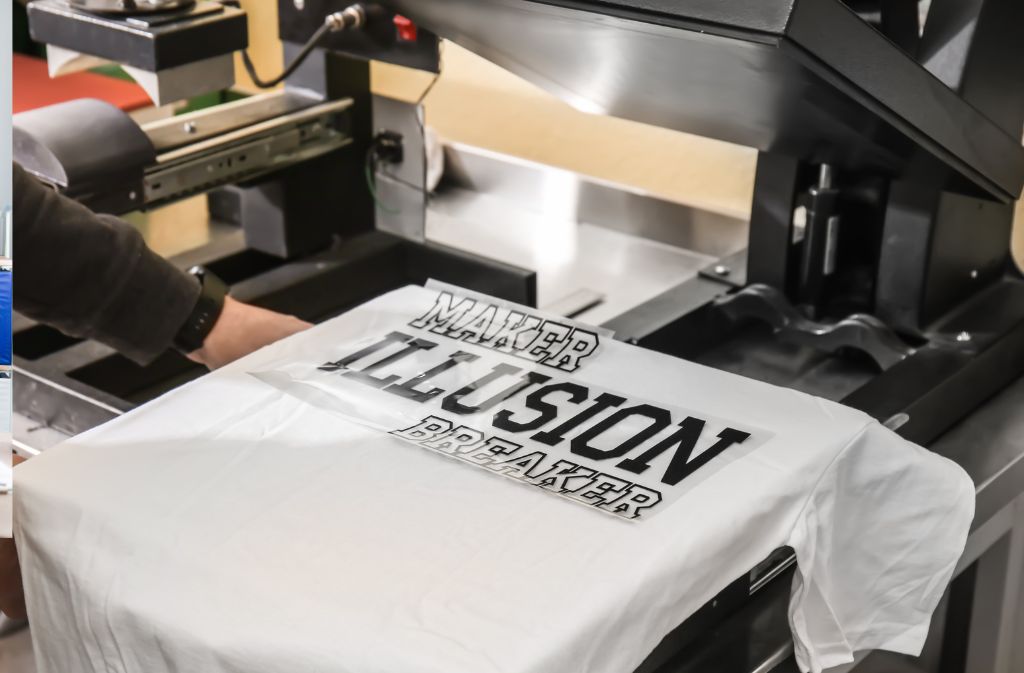
When a business, school, nonprofit, or event organizer needs custom apparel, the decision of where to source it carries more operational weight than most people initially expect. A delayed order can mean staff showing up to a trade show without branded shirts. A color inconsistency across a run of uniforms can undermine the professional image a company spent years building. A printer that delivers clean samples but struggles with volume orders creates downstream problems that are difficult to fix on short notice.
Custom apparel procurement is rarely a one-time decision. Most organizations return to the same vendor repeatedly, which means the initial choice has compounding consequences. Choosing the right local screen printer is less about finding the cheapest option and more about identifying a production partner whose reliability, communication, and output quality align with real operational requirements.
This guide examines what separates high-performing local screen printing shops from average ones, what criteria actually matter when comparing vendors, and how to make an informed selection based on your order type, timeline, and quality expectations.
How to Evaluate Local Screen Printing Shops Before You Commit
When businesses and organizations research the best local screen printing shops for custom apparel, the evaluation process often stops at price comparison. That approach consistently produces disappointing results. The more reliable method is to assess a shop across three dimensions simultaneously: production quality, turnaround consistency, and pricing transparency.
Production quality is the most visible factor, but it requires more than reviewing a portfolio. Printed samples can look excellent in photographs and fall apart after three washes. Asking for physical samples from previous runs, particularly from jobs similar to yours in terms of garment type and ink color complexity, gives a much clearer picture of what you can expect.
Turnaround consistency is harder to evaluate upfront but is often the factor that matters most in practice. A shop that quotes a seven-day turnaround but regularly delivers in ten days becomes a liability for anyone with fixed event dates or inventory schedules. Checking reviews specifically for comments about delivery timing, not just print quality, is a useful shortcut when you cannot get references directly.
Pricing transparency reflects how a shop operates internally. Shops that provide itemized quotes, explain setup fees separately, and give clear pricing tiers for different quantities are generally better organized and more accountable than those who offer vague estimates. Discovering hidden costs after approval can create budget issues and strain the working relationship early.
For a curated view of vendors that have earned consistent marks across these dimensions, exploring directories focused on the best local screen printing shops for custom apparel can reduce the time spent on initial research.
Why Garment Selection Affects Print Quality More Than Most People Realize
A common misunderstanding in custom apparel procurement is that print quality depends entirely on the printer’s equipment and skill. In reality, the garment itself plays a significant role in how the final product looks and holds up over time. Screen printing deposits ink directly onto fabric, and the fiber content, weave density, and surface texture of the garment all affect how ink adheres and how it appears after curing.
A high-quality screen printer will discuss garment selection with a client before finalizing an order. Shops that allow customers to bring their own blank garments without any consultation on compatibility are taking on risk on the client’s behalf without disclosing it. If the garment is not suited for the ink system or printing method the shop uses, the result may look acceptable at first but degrade quickly with regular laundering.
Shops that stock their own blank inventory and have established relationships with specific garment suppliers are typically more consistent because they understand how their inks perform on those specific fabrics. This operational integration, while invisible to the client, directly affects the durability and appearance of the finished product.
Understanding the Screen Printing Process and What It Means for Your Order
Screen printing, as a production method, has been in commercial use for over a century and remains the dominant technique for high-volume custom apparel because of its durability and color vibrancy. The process involves creating a stencil on a mesh screen, then pushing ink through the screen onto the garment in a controlled, repeatable manner. Each color in a design requires a separate screen, which is why setup costs are higher for multi-color jobs and why simpler designs are more cost-efficient to produce at scale.
Understanding this process helps buyers set realistic expectations. A design with eight distinct colors is significantly more complex and expensive to produce than a two-color design, even if both designs look simple to the untrained eye. The number of ink layers, the type of ink used, and the sequence of printing all affect both cost and the time required to complete an order.
Spot Color vs. Process Printing and When Each Applies
Two primary approaches govern how colors are reproduced in screen printing: spot color printing and process printing. Spot color printing uses pre-mixed inks matched to specific color references, typically from a standardized system like the Pantone Matching System, which is widely used in commercial printing and defined in detail by industry standards. Process printing, by contrast, uses a combination of four base colors to simulate a broader range of hues, similar to how a standard office printer works.
Spot color printing is more reliable for brand consistency. If a company needs its shirts to match the exact shade of blue in its logo, spot color printing with a specified ink reference gives far more predictable results than process printing, which can shift slightly based on garment color and ink absorption. For organizations with strict brand guidelines, this distinction is operationally significant.
Local shops that understand and can accurately execute both methods, and that ask the right questions upfront about color precision requirements, are operating at a higher professional level than those who treat all orders as interchangeable.
What Turnaround Time Actually Means in a Production Context
Turnaround time in screen printing is not simply the number of days between placing an order and receiving it. It includes art approval, screen preparation, press setup, print run, curing and quality inspection, folding or bagging, and shipping or local pickup. Each of those stages introduces potential delays, and a shop’s ability to manage all of them efficiently determines whether the quoted timeline is reliable or aspirational.
Rush orders present a useful stress test for evaluating a printer’s operational maturity. Shops that can accommodate genuine rush requests, with clear communication about what is possible and what it costs, demonstrate that they have enough control over their production schedule to make commitments with confidence. Shops that reflexively offer rush services to every client without operational capacity to back it are the ones most likely to cause problems when multiple clients have tight deadlines simultaneously.
How Order Volume Affects Your Place in the Production Queue
Most local screen printing shops operate on a queue-based production schedule. Smaller orders placed alongside large commercial runs may get deprioritized unless a shop has systems in place to protect smaller client timelines. This is a practical reality that buyers rarely consider until an order is delayed.
When evaluating a printer, asking directly how they manage their production queue and whether smaller orders are buffered against production schedule changes gives useful information about how your order will be treated during a busy period. Shops that are transparent about this dynamic and have a clear answer are generally more dependable than those who give vague reassurances.
Price Structures in Local Screen Printing and How to Interpret Them
Local screen printing pricing is structured around setup costs and per-unit production costs. Setup costs cover screen creation and press preparation, and these costs are fixed regardless of how many units are ordered. Per-unit costs decrease as order volume increases because the fixed setup cost is distributed across more items. This means the economics of custom apparel production strongly favor larger orders, and buyers who place small orders repeatedly rather than batching them pay significantly more over time.
Pricing comparison across shops should always be done on a total-cost basis, not a per-shirt basis. A shop charging a lower per-unit price but higher setup fees may be more expensive overall for a small run. A shop offering a higher per-unit price with no setup fees may be the better option for a one-time order of modest size.
When Cheaper Pricing Is a Warning Sign
Significantly lower pricing from a local printer almost always reflects one of a few realities: reduced ink quality, use of faster curing processes that compromise durability, limitations on garment quality, or a production model that handles overflow from other sources rather than direct printing. None of these are automatically disqualifying, but each affects the finished product in ways that matter depending on the intended use of the apparel.
Uniforms and branded staff apparel that will be worn regularly and washed frequently need inks and garments rated for repeated use. Event t-shirts worn once or twice have different durability requirements. Matching the quality tier of the printer to the actual use case of the apparel is a practical way to optimize spending without compromising on what actually matters for a given order.
Regional Considerations When Choosing a Local Printer
Local screen printing shops operate across every region of the country, but their capacity, specialization, and typical client base vary considerably. Urban shops in major metropolitan areas tend to handle higher volumes and are more likely to have invested in automated equipment, which can improve consistency on large runs. Smaller regional shops often offer more direct communication with the people actually running the presses, which can be an advantage when a project requires close coordination or has specific requirements that fall outside standard production workflows.
Geographic proximity also affects logistics in practical terms. Being able to inspect a sample run before approving full production, drop off custom garments, or pick up a completed order without shipping risk is a meaningful operational benefit that remote printing services cannot offer. For time-sensitive orders or projects where physical inspection matters, a local shop within reasonable distance has structural advantages that go beyond cost or convenience.
Building a Long-Term Relationship With a Local Printer
Organizations that treat their screen printer as an ongoing vendor rather than a transactional supplier consistently get better results over time. Shops that recognize a returning client are more likely to flag potential issues before they become problems, accommodate unusual requests, and prioritize communication when production complications arise. This relationship dynamic is one of the underappreciated advantages of working with local screen printing shops, where decision-makers are often accessible and involved in day-to-day operations.
Establishing a clear working relationship, providing accurate briefs, approving artwork promptly, and paying on time are all behaviors that signal to a printer that you are a reliable client worth prioritizing. The quality of your relationship with a vendor directly influences the quality of service you receive, particularly during periods when production demand is high.
Closing Perspective
Selecting the right local screen printing shop for custom apparel is a decision that benefits from the same rigor applied to any production or supply chain choice. Price, quality, and turnaround each tell part of the story, but none of them in isolation is sufficient. The shops that consistently perform well share a few characteristics: they communicate clearly, they understand the production process in depth, they manage their schedules with discipline, and they treat their clients as long-term relationships rather than individual transactions.
For anyone sourcing custom apparel for a business, institution, or organization, taking the time to evaluate vendors carefully, ask the right questions, and understand what you are actually comparing across quotes will produce better outcomes than defaulting to the lowest price or the most prominent search result. The vendors that earn sustained business do so because they demonstrate operational reliability, not just because they happened to rank well in a search. Building that awareness into your sourcing process is the most reliable path to consistent, quality results.
For more, visit Pure Magazine