In an era where automotive manufacturing is defined by efficiency and uniformity, individuality might seem like a fading concept. Global platforms, shared components, and streamlined production have made cars more reliable and accessible—but also more alike. Walk through any dealership forecourt and you’ll notice the patterns: familiar silhouettes, repeating design languages, predictable interiors.
And yet, despite this standardisation, drivers continue to find ways to make their vehicles their own. Not through radical transformations or flamboyant modifications, but through something quieter—more deliberate. Personalisation today is less about standing out loudly and more about shaping subtle distinctions that reflect identity, taste, and lifestyle.
Personalisation as a Form of Identity
Cars have always been extensions of self. From colour choice to trim level, the decisions drivers make often reflect how they want to be perceived—or how they see themselves. What has changed is the way this expression manifests.
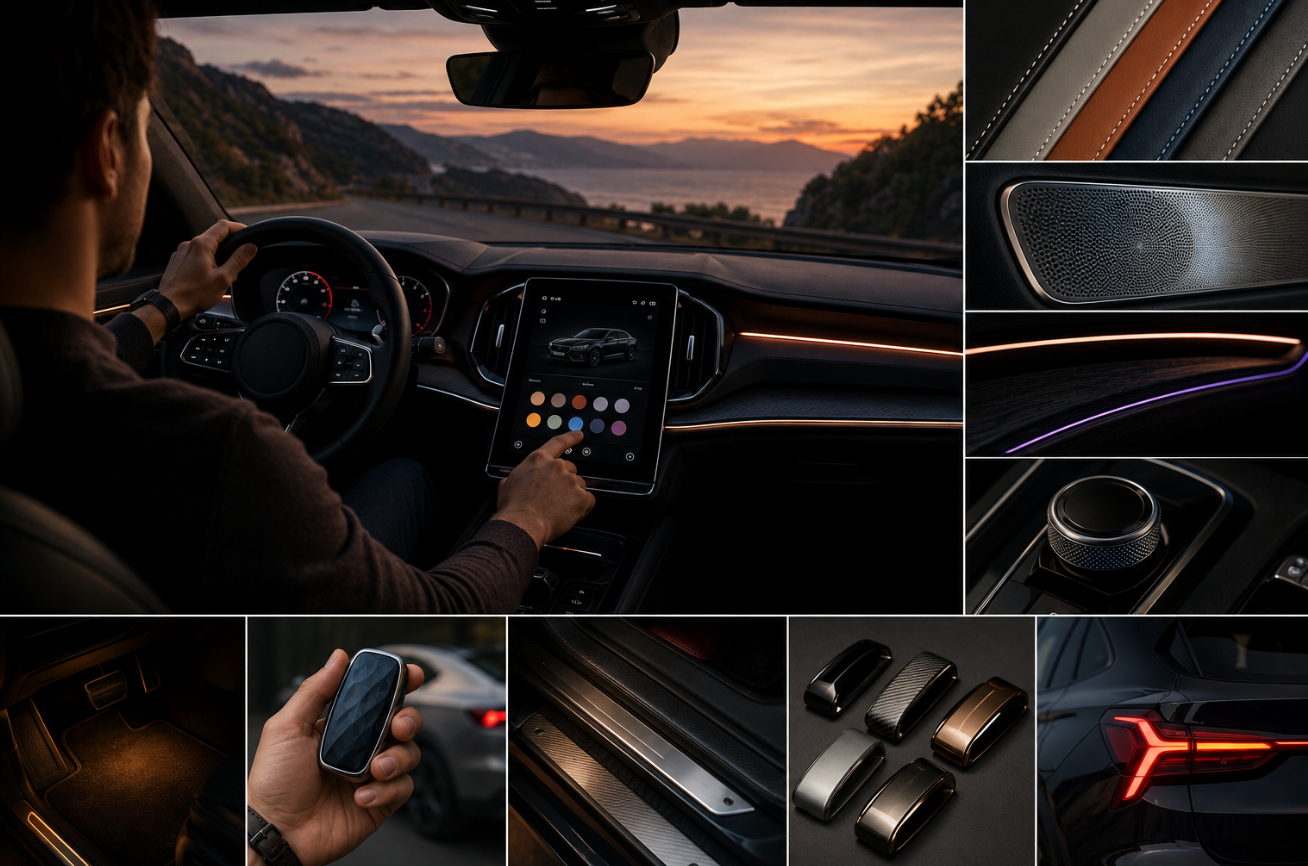
Where once bold body kits or dramatic paintwork dominated, modern personalisation tends to operate on a smaller scale. Interior finishes, wheel designs, stitching details, and even ambient lighting choices are becoming the tools of self-expression. These are decisions that don’t necessarily draw attention from across a car park but feel significant every time the driver gets behind the wheel.
This shift aligns closely with broader cultural trends. In an age of curated social media feeds and carefully constructed personal brands, subtlety carries weight. The details matter—not because they are obvious, but because they are intentional.
The Rise of Factory-Led Customisation
Manufacturers have responded to this demand by offering increasingly sophisticated personalisation options straight from the factory. What was once limited to a handful of colours and trim packages has evolved into a more expansive, albeit controlled, menu of choices.
Buyers can now select contrasting roof finishes, bespoke interior materials, upgraded stitching patterns, and tailored technology packages. Even entry-level models often come with multiple design configurations, allowing drivers to shape their vehicle within a predefined framework.
This approach benefits both sides. For manufacturers, it maintains production efficiency while offering perceived individuality. For drivers, it provides a sense of authorship without the risks associated with aftermarket modifications.
The Psychology of “Ownership”
At the heart of this trend lies something deeper than aesthetics: the psychology of ownership. A car that feels personal is more than just a mode of transport—it becomes a space that reflects its owner’s preferences and routines.
Small touches can significantly influence this perception. A driver who has chosen a specific interior finish or invested in a distinctive exterior detail is more likely to feel connected to their vehicle. It transforms the car from a generic product into something that feels curated.
Even elements as understated as registration plates can play a role in this identity-building process. For drivers investing in personalisation, companies like Number 1 Plates have seen growing interest from motorists who want every detail of their vehicle—however small—to feel considered rather than incidental.
Digital Personalisation and the Modern Cabin
As vehicles become more technologically advanced, personalisation is extending beyond physical features into the digital realm. Modern infotainment systems allow drivers to customise layouts, colour themes, and user profiles. Seating positions, climate settings, and even driving modes can be stored and recalled at the touch of a button.
This level of adaptability changes the relationship between driver and machine. The car is no longer static; it responds, adapts, and evolves based on user preferences. In electric vehicles especially, where traditional sensory cues like engine noise are absent, these digital elements become central to the driving experience.
Personalisation, in this context, is not just visual—it is experiential.
Social Media and the Influence of Aesthetics
The role of social media cannot be ignored in shaping modern car culture. Platforms like Instagram and TikTok have amplified the importance of aesthetics, encouraging drivers to think more carefully about how their vehicles are presented.
However, the trend is not necessarily towards excess. In fact, some of the most admired builds online are those that embrace restraint—clean lines, cohesive colour palettes, and thoughtful detailing. Subtle modifications often photograph better, age more gracefully, and appeal to a wider audience.
This has reinforced the idea that personalisation does not need to be extreme to be effective. Sometimes, the smallest changes carry the most impact.
Longevity Over Novelty
One of the defining characteristics of subtle personalisation is its longevity. Unlike trend-driven modifications that can quickly feel dated, refined details tend to endure. A well-chosen wheel design or a timeless interior finish is unlikely to go out of style within a few years.
This approach reflects a shift in mindset. Rather than chasing novelty, many drivers are prioritising coherence and longevity. They are making choices that will continue to feel relevant over time, rather than those designed to capture immediate attention.
In this sense, personalisation becomes less about experimentation and more about curation.
A Quiet Form of Expression
Ultimately, the modern approach to car personalisation is defined by restraint. It is about making a vehicle feel distinctive without disrupting its design integrity. It is about aligning a mass-produced object with individual identity through thoughtful, measured choices.
In a world where so much is standardised, these small acts of differentiation carry real meaning. They allow drivers to assert a sense of self within the constraints of modern manufacturing—quietly, but confidently.
Mass production may have streamlined the automotive industry, but it has not erased individuality. It has simply changed the way it is expressed.