


Atlanta didn’t wake up one day and decide to become “neat.” The shift has been slower—and if you live there or visit often, you feel it before you can explain it.
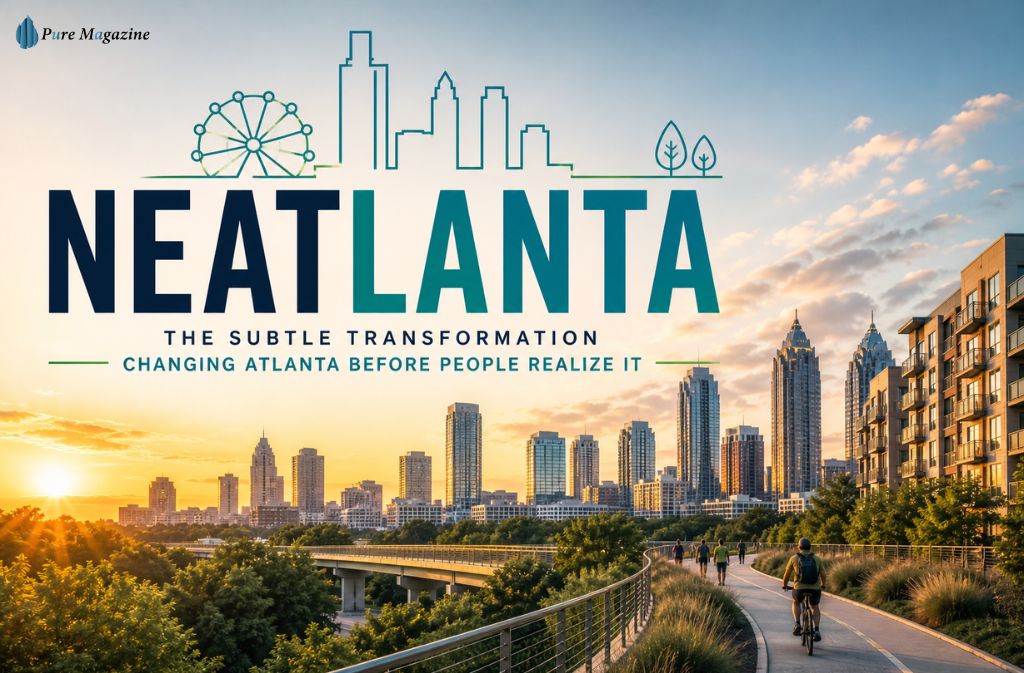
Walk a stretch of the Atlanta BeltLine on a weekday evening, and you’ll notice something subtle. It’s not just cleaner or busier. It feels… edited. Like the city is starting to choose how it wants to be seen.
That’s where the term neatlanta comes from. Not an official label, not a planning document—just a way people are describing a version of Atlanta that feels more intentional than it used to.
And in 2026, with the FIFA World Cup 2026 approaching, that “edited” version of the city is getting pushed forward faster than usual.
What Neatlanta Actually Means
Neatlanta isn’t a place you can point to on a map. It’s more like a pattern that shows up in certain parts of the city.
You see it where things line up neatly—literally and figuratively. Streets connect better. Public areas feel maintained instead of ignored. Buildings don’t just exist; they look like they belong to the same idea.
It’s not just about being clean or modern. Plenty of cities are clean. Neatlanta is more about intentional consistency. Someone—or more accurately, multiple systems—is making decisions that shape how the city feels day to day.
If you had to reduce it down, it’s this:
Atlanta is moving from “built as needed” to “built on purpose.”
The Terminus Contrast (Why This Shift Feels Big)
Atlanta started as Terminus, which tells you everything about its original purpose. It was a stop. A connector. A means to an end.
Nobody was thinking about aesthetics back then.
That’s why the current shift stands out. The same city that was once defined by movement and industry is now being shaped around experience. Not just how fast you can get somewhere, but how it feels while you’re there.
That contrast—rough origin vs curated present—is part of why “neatlanta” even makes sense as a term.
Where the Change Is Actually Coming From
A lot of articles stop at “urban development,” which doesn’t really say much. The reality is more specific.
The BeltLine is still the clearest example. It didn’t just add trails—it reorganized how people move, hang out, and even choose where to live. Entire pockets of the city now orbit around it.
Then you have the Atlanta Riverlands, which is less visible right now but arguably more important long-term. A 100-mile green corridor changes how a city breathes, not just how it looks.
There are also quieter changes that don’t make headlines:
- Office buildings downtown are quietly being converted into apartments
- Zoning tweaks that allow mixed-use density without endless delays
- Streets are being redesigned for bikes and foot traffic, not just cars
Individually, these don’t seem dramatic. Together, they reshape the city.
The World Cup Effect (Why 2026 Matters)
The FIFA World Cup 2026 is speeding everything up.
Atlanta has already committed over $120 million toward transportation improvements and tens of millions more into safety and public infrastructure. That kind of spending doesn’t just fix problems—it forces decisions that might have taken another decade otherwise.
There’s also a less obvious layer. City leadership has framed the preparation as a “group project,” meaning this isn’t just government-driven. Private developers, local businesses, and communities are all adjusting in parallel.
The result is a city that’s being refined not just for residents, but for global visibility.
What It Feels Like on the Ground
In Old Fourth Ward, you’ll see IKE Smart City kiosks spaced out along key paths. They’re easy to miss at first, but once you notice them, you realize they’re everywhere. Navigation, alerts, local info—it’s a small detail that makes the city feel more “connected.”
You’ll also notice how older buildings are being reused instead of replaced. Brick warehouses turned into cafes, studios, or shared workspaces. The past isn’t erased—it’s cleaned up and repurposed.
Then there’s the contrast that locals know well:
The Downtown Connector vs the BeltLine.
One feels like old Atlanta—fast, loud, built for throughput.
The other feels like something else entirely—slower, curated, almost staged.
That contrast is neatlanta in real time.
The “Neat” Isn’t Just Aesthetic
It’s tempting to think this is all about visuals, but there’s more going on underneath.
Some of it is policy. Atlanta’s “Blight Tax,” for example, puts pressure on property owners who leave buildings in poor condition. That pushes the city toward a more maintained, consistent look—but it also accelerates change.
Some of it is environmental. Along parts of the BeltLine, native plant systems and linear arboretums are being introduced to deal with heat and air quality. It looks better, yes—but it also functions better.
And some of it is data. Cities like Atlanta are increasingly modeled digitally before physical changes happen. The smoother traffic flow, the better placement of public features—those things don’t happen randomly anymore.
Neatlanta is what that looks like when it shows up in real life.
The Trade-Off Nobody Skips Anymore
There’s a reason this topic keeps coming up in conversations about affordability.
As areas become more “neat,” they also become more expensive. That’s not unique to Atlanta, but the speed here makes it more noticeable.
You get better infrastructure, cleaner public spaces, and stronger local economies. At the same time, long-time residents can get priced out, and smaller businesses struggle to keep up.
That tension is part of the story now. Ignoring it makes the whole concept feel incomplete.
Quick Snapshot: Old vs Emerging Atlanta
| Aspect | Older Pattern | Neatlanta Pattern |
|---|---|---|
| Development | Reactive | Planned |
| Design | Inconsistent | Coordinated |
| Movement | Car-first | Mixed mobility |
| Public Space | Secondary | Central |
| Visibility | Local | Global + digital |
Why Neatlanta Actually Matters
This isn’t just about Atlanta. It’s about how cities are changing in general.
The shift is from function to experience—but not in a superficial way. It’s backed by infrastructure, policy, and data. Atlanta just happens to be a very visible example right now, especially with global attention building in 2026.
If you’re watching urban trends, real estate, or even content culture, neatlanta is a signal. It shows how physical spaces and digital perception are starting to merge.
FAQs
Q. What is Neatlanta in simple terms?
Neatlanta is a modern urban concept describing Atlanta’s shift toward cleaner, more organized, and experience-focused city living. It reflects how areas like the Atlanta BeltLine are being redesigned with walkability, green spaces, and lifestyle-driven development in mind.
Q. Is Neatlanta a real place or a trend?
Neatlanta is not an official place. It’s a trend and urban identity used to describe parts of Atlanta that feel curated, modern, and intentionally designed, especially in neighborhoods like Old Fourth Ward.
Q. Why is Neatlanta trending in 2026?
Neatlanta is gaining attention in 2026 due to major infrastructure upgrades, green development projects, and global exposure from the FIFA World Cup 2026. These factors are accelerating the city’s transformation and visibility.
Q. How does Neatlanta affect real estate and cost of living?
Neatlanta often increases property demand in well-developed areas, which can raise home prices and rent. While it improves infrastructure and lifestyle quality, it can also contribute to affordability challenges in rapidly changing neighborhoods.
Q. What areas best represent the Neatlanta concept?
The Neatlanta concept is most visible in areas connected to the Atlanta BeltLine, including Old Fourth Ward, where walkability, mixed-use development, and public spaces are strongly integrated.
Conclusion
Neatlanta isn’t a perfect term, but it captures something real. A city that started as Terminus is now being reshaped into something more deliberate—cleaner, more connected, and more aware of how it’s seen.
The important part is not just what’s improving, but how fast it’s happening—and who gets to be part of that change.
That’s the part that will define what neatlanta really means over time.
For more, visit Pure Magazine
