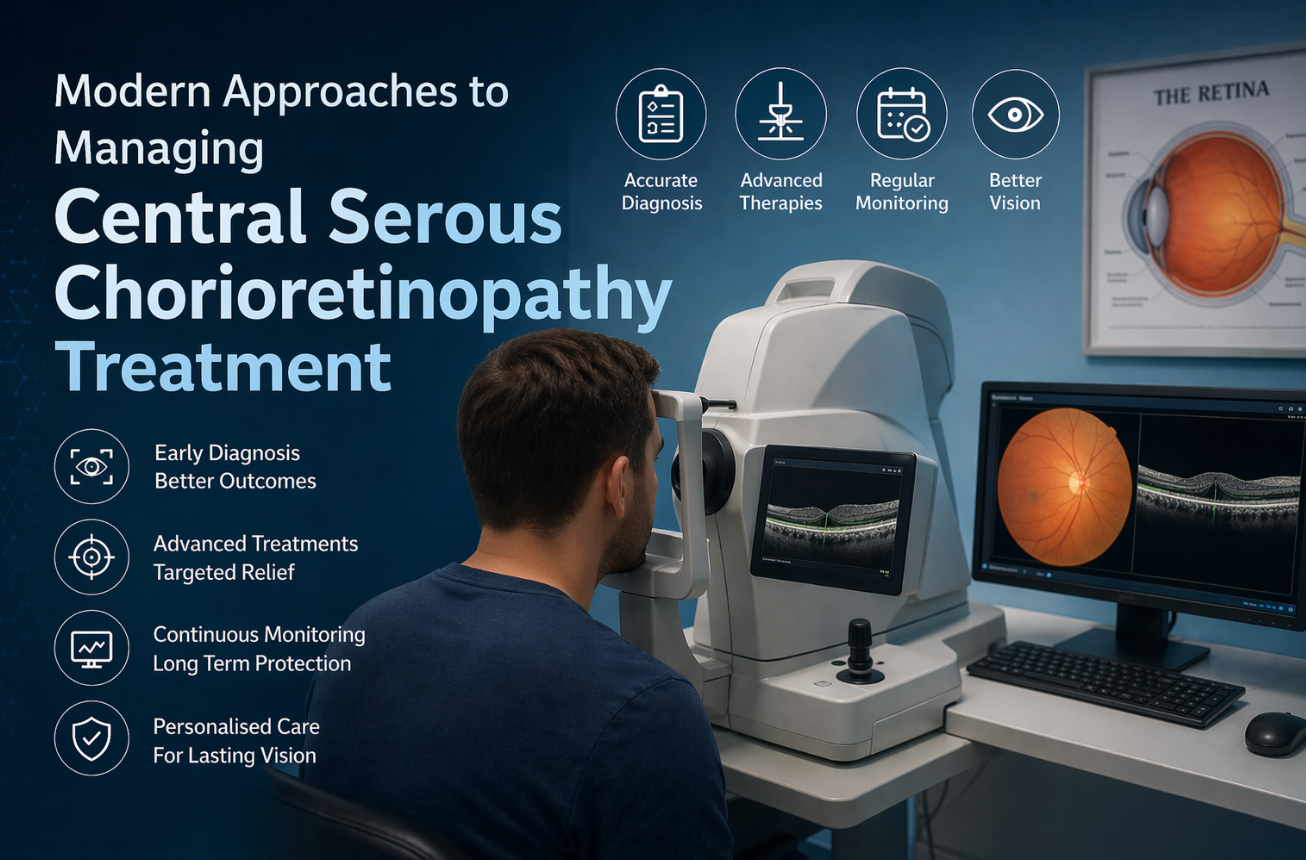
Vision changes can feel unsettling, especially when they appear suddenly without warning. One condition that often causes this experience is central serous chorioretinopathy, a retinal disorder that leads to fluid buildup under the retina. Understanding available options for care is essential, and learning about effective central serous chorioretinopathy treatment can help individuals make informed decisions about protecting their eyesight.
Understanding the Condition
Central serous chorioretinopathy occurs when fluid accumulates beneath the retina due to leakage from the choroid and dysfunction of the retinal pigment epithelium.
Common symptoms include:
- Blurred or distorted vision
- A dark or dim spot in central vision
- Straight lines appearing bent
- Reduced contrast sensitivity
This condition most commonly affects adults between the ages of 20 and 50, although it can occur outside this range, and is often linked to stress, steroid use, or certain lifestyle factors.
Why Early Diagnosis Matters
Early identification helps monitor the condition and guide management, particularly in cases that persist or recur. Some cases resolve naturally over time, but others may persist or recur, increasing the risk of long-term visual damage.
Modern diagnostic tools allow specialists to detect even subtle changes in the retina. These may include imaging scans that provide detailed views of fluid accumulation and retinal layers. Accurate diagnosis helps guide the next steps in treatment and monitoring.
Personalised Care Makes a Difference
Not every case of CSCR is the same, which is why personalised care has become increasingly important. A tailored approach considers:
- The severity of fluid buildup
- Duration of symptoms
- Patient lifestyle and stress levels
- Medical history and medication use
This approach is similar to how other retinal conditions are managed today, where treatment plans are adapted to the individual rather than following a single standard method.
Non Invasive Management Options
In many cases, central serous chorioretinopathy treatment begins with observation. Doctors may recommend monitoring the condition for a few months, especially if symptoms are mild.
During this time, patients are often advised to:
- Reduce stress through lifestyle adjustments
- Review corticosteroid use with a doctor, as these medications may contribute to the condition in some cases.
- Maintain a healthy sleep routine
These steps may support natural resolution without the need for medical intervention.
Advanced Treatment Methods
When fluid does not resolve on its own, more targeted treatments may be considered. These options are designed to reduce fluid leakage and restore normal retinal function.
Photodynamic Therapy
This treatment uses a light-activated drug (verteporfin) to reduce choroidal vascular leakage and improve fluid reabsorption. It helps reduce leakage and is often effective in chronic cases.
Laser Treatment
In certain situations, laser therapy may be used in selected cases to treat leakage points located away from the central macula, where it can be applied safely. This approach is typically reserved for specific cases where the leakage point is clearly identified.
Medication Based Approaches
In selected cases, medications such as mineralocorticoid receptor antagonists may be considered, although their effectiveness varies and they are not universally recommended. These treatments are selected based on individual patient needs.
Role of Continuous Monitoring
Ongoing follow up is a key part of successful central serous chorioretinopathy treatment. Even after symptoms improve, regular checkups help ensure the condition does not return or worsen.
Specialists may recommend:
- Routine retinal imaging
- Vision tests to track changes
- Lifestyle reviews to identify risk factors
Continuous monitoring provides reassurance and allows for quick adjustments if needed.
Lifestyle and Long Term Eye Health
While medical care is important, daily habits also influence recovery and long term outcomes. Patients can support their vision by focusing on:
- Stress management techniques such as light exercise or relaxation practices
- Balanced nutrition that supports eye health
- Limiting exposure to known triggers like steroid medications
Lifestyle adjustments, particularly stress management, may help reduce risk factors, although their direct impact can vary between individuals,, especially when combined with professional care.
Private Care and Access to Innovation
Access to advanced technology and specialised expertise can improve treatment outcomes. Private care settings often provide:
- Faster diagnosis and reduced waiting times
- Advanced imaging tools for precise assessment
- A wider range of treatment options
- Personalised follow up plans
These advantages allow patients to receive care that adapts to their condition over time rather than relying on a fixed approach.
Evolving Strategies in Retinal Care
The field of retinal treatment continues to evolve, with new research shaping how conditions like CSCR are managed. Specialists now focus more on individualised strategies, combining medical treatment with lifestyle guidance and continuous evaluation.
Patients are no longer limited to a one size fits all solution. Instead, central serous chorioretinopathy treatment is becoming more precise, more responsive, and more aligned with each person’s unique situation.
As understanding of the condition grows, so does the ability to protect vision effectively while maintaining quality of life.
For more, visit Pure Magazine