Most people searching for GABA supplements in the UK want three things answered quickly: is it legal here, does it actually do anything, and which product is worth buying? The confusion around all three is genuine — partly because some retailers have pulled GABA products, partly because the mechanism debate has leaked into consumer-facing content, and partly because the supplement sits uncomfortably close in name to prescription medications that are an entirely different category.
This guide cuts through all of it.
What Is a GABA Supplement?
GABA — gamma-aminobutyric acid — is the primary inhibitory neurotransmitter in the central nervous system. Your brain produces it naturally, and it functions by reducing neuronal excitability — essentially, calming excessive nerve firing. Lower GABA activity is associated with anxiety, poor sleep onset, and stress dysregulation.
A GABA supplement delivers this compound orally, with the aim of supporting relaxation, sleep readiness, and stress management. It’s used primarily as part of evening wind-down routines rather than as a daytime focus supplement — the inhibitory character makes it better suited to switching off than switching on.
GABA vs Gabapentin vs Benzodiazepines: Critical Distinction
This section matters more than most guides acknowledge. A significant number of people searching for GABA supplements have encountered information about gabapentin or pregabalin — prescription medications classified as controlled substances under the Misuse of Drugs Act 2001 in the UK — and conflated them with the supplement.
| Substance | Category | Legal Status UK | Mechanism |
|---|---|---|---|
| GABA (supplement) | Food supplement | Legal OTC with compliance | Inhibitory neurotransmitter support |
| Gabapentin | Prescription medication | Class C controlled drug | GABA-adjacent anticonvulsant |
| Pregabalin | Prescription medication | Class C controlled drug | GABA-adjacent anticonvulsant |
| Benzodiazepines | Prescription medication | Class C controlled drug | GABA-A receptor modulators |
These are not the same things. Gabapentin and pregabalin are synthetic drugs that affect GABA-related pathways but don’t function as GABA themselves. Benzodiazepines modulate GABA-A receptors rather than supplementing GABA directly. The MHRA has updated guidance on gabapentinoid controls in recent years — none of this applies to GABA as a food supplement.
Buying or using gabapentin or pregabalin without a prescription is illegal in the UK. GABA supplements are a separate category entirely.
Is GABA Legal in the UK? The Regulatory Reality
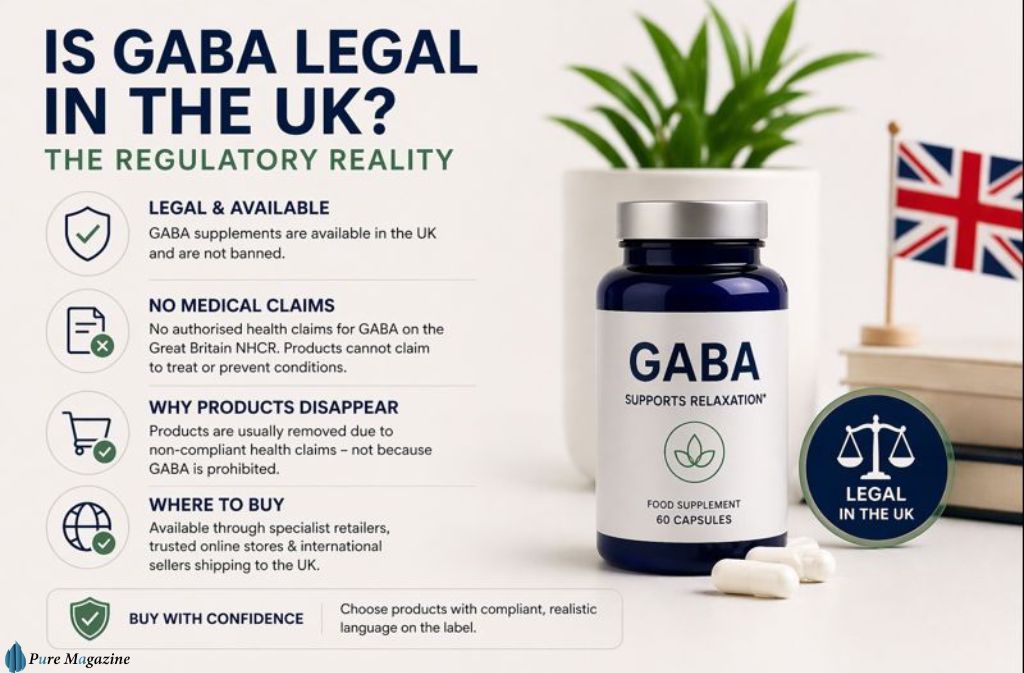
Yes — GABA supplements are available in the UK and are not banned. The confusion around legality comes from a few sources worth unpacking.
The most significant regulatory nuance: GABA may be subject to Novel Food status considerations under UK food law, depending on how it’s classified and marketed. The Great Britain Nutrition and Health Claims Register (NHCR) does not include authorised health claims for GABA, which means UK products cannot legally make specific claims about treating or preventing conditions. This is why compliant products use language like “supports relaxation” rather than “treats anxiety.”
Products that were pulled from retailers were typically removed due to non-compliant health claims on labelling rather than GABA being prohibited as an ingredient. The ingredient itself isn’t banned; the marketing around it is tightly regulated.
In practice, UK consumers can access GABA supplements through specialist supplement retailers, established online health stores, and international sellers shipping to the UK. The key is choosing products with compliant, realistic language on the label — if a product makes claims that sound like medical treatment, that’s both a regulatory red flag and a quality signal worth heeding.
Does GABA Actually Work? The Blood-Brain Barrier Question
This is genuinely debated, and pretending otherwise doesn’t serve anyone well.
The traditional concern is that orally ingested GABA may have limited ability to cross the blood-brain barrier in meaningful concentrations — meaning it might not reach the brain in sufficient quantities to produce the central nervous system effects associated with endogenous GABA activity.
The more current picture is more nuanced. 2024 and 2026 research has shifted toward the gut-brain axis as a plausible alternative mechanism. The enteric nervous system — sometimes called the “second brain” — contains GABA receptors, and the vagus nerve provides a direct communication pathway between gut activity and brain function. Orally administered GABA may influence relaxation and stress response through vagal signalling rather than through direct brain penetration.
A 2020 study in Frontiers in Neuroscience found that GABA produced through fermentation (PharmaGABA) improved sleep onset and quality in participants, suggesting functional effects exist regardless of whether full blood-brain barrier crossing is occurring. The mechanism may be indirect; the effect appears real in a subset of users.
What this means practically: you don’t need to resolve the mechanism debate before deciding whether to try GABA. What determines your experience is product quality, appropriate dosing, consistency of use, and the lifestyle context around supplementation.
PharmaGABA vs Standard GABA vs Liposomal GABA
| Form | Description | 2026 Relevance |
|---|---|---|
| Standard synthetic GABA | Common, lower cost | Widely available, variable quality |
| PharmaGABA (fermented) | Produced via Lactobacillus fermentation | Higher absorption evidence, popular premium choice |
| Liposomal GABA | Wrapped in lipid layer for delivery | Emerging, claimed improved bioavailability |
PharmaGABA has the most clinical evidence specifically supporting its effectiveness in sleep and relaxation contexts — the fermentation process produces a form that appears to interact with the peripheral nervous system and gut-brain pathways more reliably than standard synthetic GABA. It’s more expensive, but for buyers where product format matters, it’s the better-evidenced choice.
Liposomal GABA is a newer development applying the same delivery technology used for vitamin C and other compounds — wrapping the active molecule in a lipid layer to improve bioavailability. The evidence base is thinner than for PharmaGABA, but the approach is mechanistically sound.
Neither form guarantees results. Overall formulation quality and individual response determine outcomes more than form choice alone.
GABA Supplement Benefits: Realistic Expectations
Sleep Support
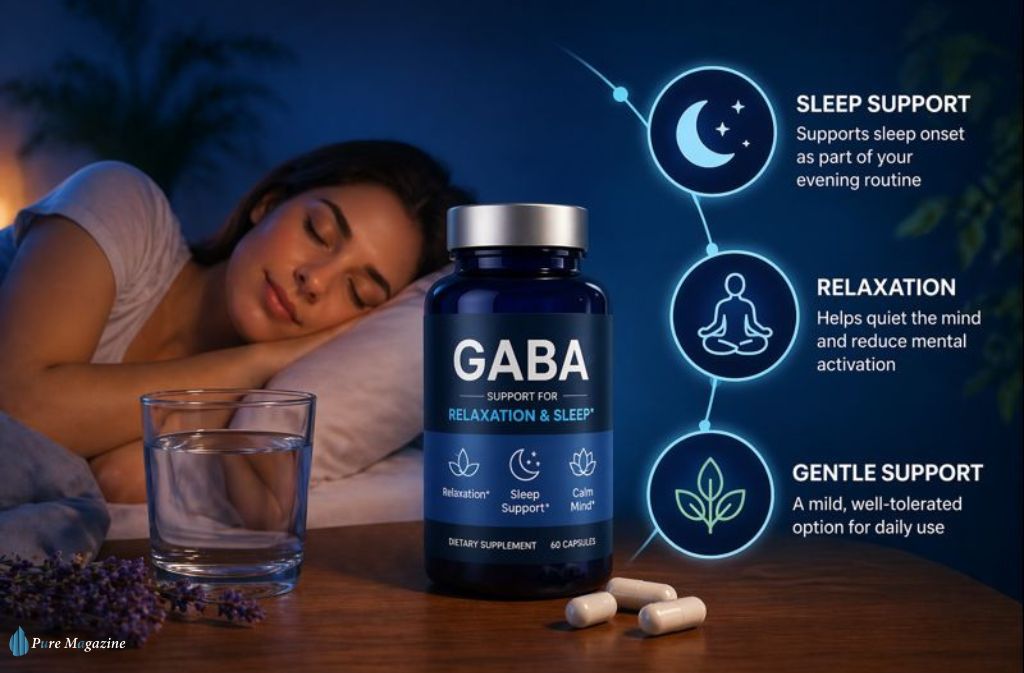
The most common application. GABA taken 30–60 minutes before bed as part of a wind-down routine supports sleep onset for some users — specifically the “mentally wired but physically tired” pattern, where the problem is difficulty switching off rather than total insomnia. People tracking sleep via Oura or Whoop may notice improvements in sleep onset latency rather than dramatic changes to total sleep duration.
Relaxation and Stress Management
Some users report feeling less mentally activated during stressful evenings. The effect is subtle rather than sedative — more “quieter mind” than “knocked out.” This makes GABA distinct from melatonin (which has a more direct hormonal sleep effect) and from benzodiazepines (which produce much stronger GABA receptor modulation).
Gentle Support Option
For people who find stronger sleep aids leave them groggy or who prefer to avoid pharmaceutical sleep support, GABA represents a gentler entry point. The risk profile at standard doses is low, which makes a short trial reasonable for most healthy adults not on contraindicated medications.
GABA Dosage: The Specific Numbers People Actually Need
Most guides say “start low” without specifying what that means. Clinical studies provide more useful reference points:
| Goal | Typical Dose Range |
|---|---|
| Stress and relaxation support | 100–300mg |
| Sleep onset support | 300–800mg |
| Beginner starting point | 100mg |
Start at 100mg and assess response over five to seven days before increasing. This gives you a clean signal about tolerability and any sensitivity to the compound before committing to higher doses. Taking GABA 30–60 minutes before your intended sleep time is standard for sleep applications — if you take it too close to bedtime, it may not have had sufficient time to interact with your system.
Side Effects and Safety
GABA supplements are generally well-tolerated at standard doses. Reported side effects include drowsiness (often the intended effect), headache, tingling sensation, upset stomach, mild dizziness, and grogginess if taken too late or at too high a dose.
The alcohol interaction is something most supplement guides sanitise out of their safety sections. Alcohol binds to GABA-A receptors — it produces sedation partly by enhancing GABA signalling. Taking GABA supplements alongside alcohol creates additive CNS depression that is more significant than either alone. Avoid combining GABA supplements with alcohol consumption. This isn’t a minor caution — it’s a meaningful interaction that happens in real-world use frequently enough to warrant direct mention.
Medication interactions requiring professional input:
| Medication Category | Risk |
|---|---|
| Anti-anxiety medications (benzodiazepines) | Additive CNS depression |
| Prescription sedatives | Additive sedation risk |
| Sleep medications (Z-drugs, etc.) | Additive effect |
| Blood pressure medications | Possible additive hypotensive effect |
| Alcohol | Additive CNS depression — avoid combination |
Anyone taking prescription medications in these categories should discuss GABA supplementation with their prescriber before starting. The interaction risks are meaningful rather than theoretical.
How supplements interact with blood panels and what markers to track is worth understanding if you’re managing multiple supplements or medications alongside GABA.
GABA vs Other Calming Supplements: Honest Comparison
| Supplement | Best For | Typical Effect | Speed |
|---|---|---|---|
| GABA | Mental wind-down, sleep onset | Calm, quieter mind | 30–60 min |
| Magnesium Glycinate | Body relaxation, sleep quality | Relaxed, physically settled | Days–weeks |
| L-Theanine | Calm focus, daytime stress | Smooth, alert calm | 30–60 min |
| Melatonin | Sleep timing, circadian reset | Sleepy, direct | 20–40 min |
| Tryptophan | Mood, gradual sleep support | Gentle, systemic | Days–weeks |
How tryptophan supports serotonin and melatonin pathways through a different mechanism than GABA illustrates why these supplements address different aspects of the same sleep problem — someone with body tension and restless muscles may respond better to magnesium, while someone with racing thoughts and mental activation may respond better to GABA or L-theanine.
How magnesium and B vitamins interact with nervous system function provides a broader context for building a rational sleep and stress supplement stack rather than layering products without understanding how they relate.
Where to Buy GABA Supplements in the UK
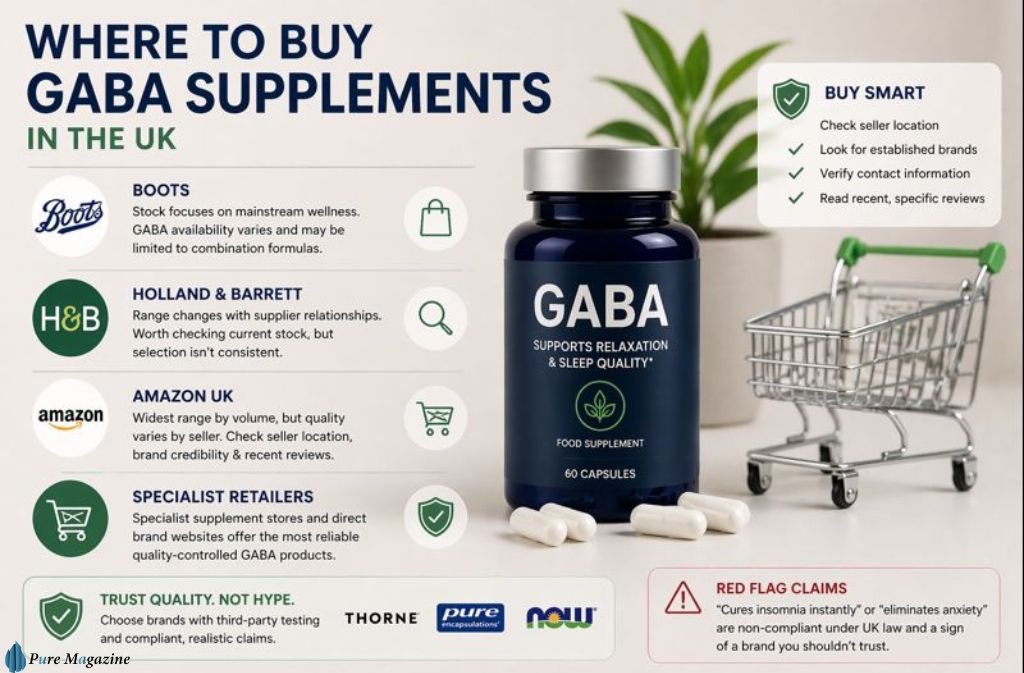
Boots: Stock tends toward mainstream wellness categories. GABA availability varies and may be limited to branded combination formulas rather than standalone GABA supplements.
Holland & Barrett: Range changes with supplier relationships. Worth checking the current stock, but the selection isn’t consistent.
Amazon UK: Widest range by volume, but quality control varies significantly by seller. For Amazon purchases specifically: check seller location (EU or UK warehouse versus shipping from further afield), look for established supplement brands with verifiable contact information, and prioritise products with recent, specific reviews rather than high-volume generic feedback.
Specialist supplement retailers and direct brand websites are generally the most reliable route for quality-controlled GABA products. Brands like Thorne, Pure Encapsulations, and Now Foods maintain consistent third-party purity testing and are available to UK buyers through various retailers.
The biggest red flag in 2026 isn’t a lack of reviews — it’s miracle claims that ignore the biological reality of how GABA works. A product claiming it will “cure insomnia instantly” or “eliminate anxiety” is either making non-compliant health claims under UK regulations or is simply misleading. Neither reflects a brand worth trusting with a compound that affects neurological function.
How to Take GABA Supplements
Take 30–60 minutes before your target sleep time, with or without food. Start at 100mg for the first week regardless of the product’s suggested dose — individual sensitivity to GABAergic compounds varies more than most supplement categories, and starting conservatively gives you useful information about your response.
Don’t combine multiple calming supplements on day one. If you’re already taking magnesium or L-theanine, introduce GABA separately rather than adding it to an existing stack simultaneously — you want to know what’s producing what effect.
Avoid late caffeine intake. Caffeine works partly by blocking adenosine receptors and indirectly affects GABA signalling — high evening caffeine intake creates a competing signal that reduces the effect of any calming supplement.
Who Should Consider GABA Supplements
Worth trying if: you feel mentally overstimulated at bedtime despite reasonable sleep hygiene, you want gentle relaxation support without pharmaceutical intervention, or you’ve addressed the basics (caffeine timing, screen exposure, consistent sleep schedule) and still struggle with the mental switching-off component of sleep onset.
Consider alternatives first if: your primary issue is muscle tension or restless legs (magnesium glycinate is more appropriate), you need calm focus during the day rather than evening relaxation (L-theanine is better suited), or you have serious, persistent sleep difficulty that warrants medical evaluation rather than supplementation.
For older adults where multiple factors affect sleep quality, how nutritional status interacts with sleep and stress resilience gives a broader context for a comprehensive approach rather than treating GABA as a standalone solution.
Is GABA Worth Buying?
For the right person — yes. For someone expecting it to solve structural sleep problems caused by alcohol, caffeine, erratic scheduling, or an unaddressed anxiety disorder, no supplement fills those gaps.
GABA works best as one component of a deliberate sleep routine: consistent timing, caffeine management, reduced evening screen exposure, and a supplement that supports the mental deactivation component of sleep onset. Used within that framework, a well-formulated GABA product at appropriate doses can contribute meaningfully to how quickly you feel ready to sleep.
Used as a shortcut around that framework, it will disappoint — not because it’s ineffective, but because the framework is doing more work than the supplement.
FAQs
GABA supplements are legal in the UK, available through reputable retailers, and genuinely useful for a specific type of sleep difficulty — the mental activation problem rather than total sleep deprivation. The mechanism debate around blood-brain barrier crossing has largely resolved toward gut-brain axis pathways as the plausible explanation for real-world effects.
Buy PharmaGABA or a liposomal form where possible. Start at 100mg. Don’t combine with alcohol. Don’t expect it to replace the sleep hygiene fundamentals. And choose products from brands that use accurate, compliant language on their labels rather than miracle claims.
Used correctly, within a structured sleep routine, GABA can be a useful and well-tolerated part of an evening wind-down protocol for people who genuinely struggle with the switching-off component of sleep onset.
This article is for informational purposes only and does not constitute medical advice. Always consult a qualified healthcare professional before starting any supplement, particularly if you take prescription medications, including sedatives, anti-anxiety medications, or blood pressure treatments. Do not confuse GABA food supplements with gabapentin or pregabalin, which are prescription-only controlled substances in the UK.
Explore our full library of expert-reviewed health and nutrition guides at Pure Magazine.