


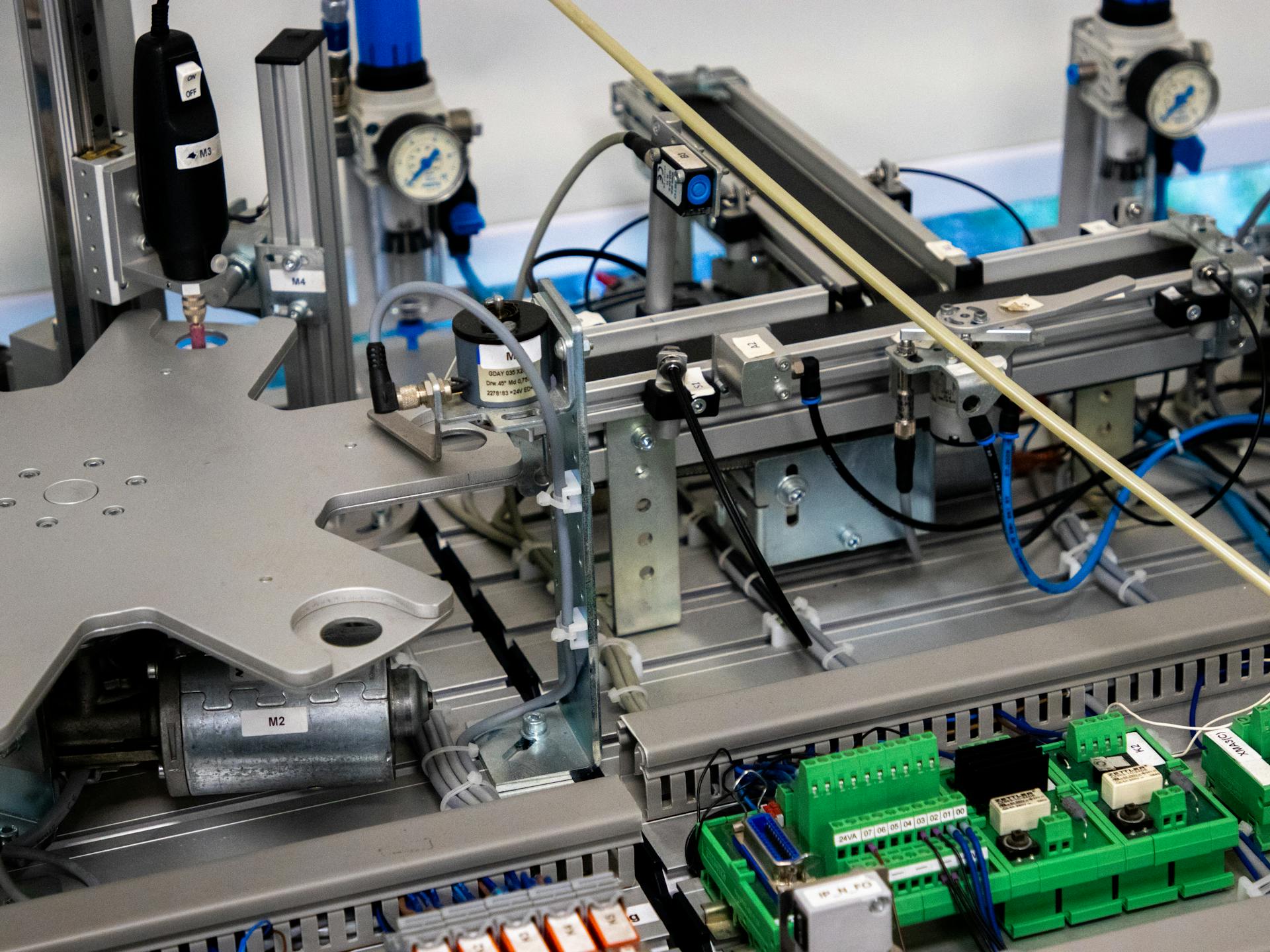
Manufacturing and processing facilities have long depended on human inspectors to catch defects, verify assembly, and confirm product quality before goods leave the line. That approach worked when production volumes were modest and tolerance ranges were wide. Today, lines run faster, specifications are tighter, and the cost of a missed defect—whether measured in recalls, rework, or regulatory exposure—has grown considerably. The gap between what human inspection can reliably deliver and what modern production requires is pushing plant engineers toward automated visual inspection systems built on machine-based image analysis.
This guide is written for engineers and operations managers who are evaluating whether an automated inspection system makes sense for their facility. Covers how these systems work in practice, what decisions matter most during selection, how integration affects existing workflows, and what realistic expectations look like after deployment. It is not a vendor comparison or a technical specification sheet. Structured explanation of the decisions you will face and the factors that should shape them.
What Computer Vision for Industrial Inspection Actually Does
Computer vision for industrial inspection refers to the use of cameras, lighting systems, and image-processing software to automatically detect defects, measure dimensions, verify assembly, or classify products on a production line. Unlike traditional machine vision—which typically relied on fixed rule-based systems to detect predefined patterns—modern computer vision systems use trained models that learn to recognize acceptable and unacceptable conditions from large sets of labeled images. This distinction matters because it affects both what the system can detect and how it responds when new defect types emerge.
Engineers evaluating this category of technology can find detailed explanations of how these systems are deployed in real industrial environments through resources that document computer vision for industrial inspection across sectors including food processing, metal fabrication, electronics assembly, and automotive manufacturing. The variety of applications reflects how adaptable the underlying technology has become, though adaptability does not eliminate the need for careful configuration.
The Role of Trained Models Versus Rule-Based Logic
Rule-based systems require an engineer to define exactly what constitutes a defect: a scratch longer than a given length, a color deviation beyond a set threshold, a hole in the wrong position. This works reliably when defects are predictable and consistent, but it breaks down when defect characteristics vary—as they often do in real production. A crack in a casting, for example, may appear at different angles, under different lighting conditions, or with different surface textures depending on the batch.
Trained models address this by learning what acceptable and defective parts look like across many examples rather than responding to rigid rules. The trade-off is that training requires sufficient image data, and performance depends heavily on the quality and diversity of that data. A model trained on defects from one supplier’s material may not generalize well when raw material sourcing changes. This is a real operational consideration, not a theoretical concern.
Where These Systems Add the Most Consistent Value
Automated visual inspection is not uniformly valuable across all production contexts. It delivers the most consistent returns in environments where inspection speed exceeds human capacity, where defect rates are low enough that human attention drifts, or where the consequences of a missed defect are severe enough to justify the cost of automation. Understanding where your operation falls within those conditions is an important first step before evaluating specific systems.
High-Volume, Repetitive Inspection Tasks
When the same part or product moves through an inspection station hundreds or thousands of times per shift, human inspectors face a well-documented performance problem. Attention degrades over time, especially when defects are rare. Studies in manufacturing quality management have shown that human inspectors routinely miss defects at rates that would be unacceptable in regulated industries. Automated systems do not experience attention fatigue. They apply the same detection logic to the first part of the shift and the last part with equal consistency, which is the primary reason high-volume lines see measurable quality improvements after deployment.
Regulated or Safety-Critical Production Environments
In industries governed by quality standards such as those defined by the ISO 9001 quality management framework, documentation and traceability requirements create an additional argument for automated inspection. Computer vision systems can log every inspection result, timestamp decisions, and generate audit-ready records without additional labor. For facilities that supply aerospace, medical device, or automotive customers, this documentation capability is often as important as the detection capability itself. Auditors want evidence that inspection happened consistently, not just evidence that a process existed.
Key Decisions Before You Select a System
The technical performance of a computer vision system matters, but the decisions made before system selection often determine whether a deployment succeeds or struggles. Engineers who approach this as a technology purchase rather than a process integration project frequently encounter problems that were preventable.
Defining What You Need the System to Detect
Before speaking with any vendor, a plant engineer should be able to describe the defect types they need to catch, the acceptable false-positive rate, and the consequences of a missed detection. These three parameters shape almost every technical decision that follows. A system configured for high sensitivity will flag more borderline parts for secondary review. A system configured for speed may sacrifice granularity in defect classification. There is no configuration that optimizes for all variables simultaneously, and vendors who suggest otherwise are not being straightforward about the trade-offs.
Line Speed and Inspection Window Constraints
Every inspection system has physical constraints related to how fast the camera can capture an image, how long the image processing takes, and how much of the part is visible during the inspection window. On fast-moving lines, these constraints become binding quickly. The system must complete its analysis and communicate a pass or fail decision before the part reaches the reject mechanism. If the inspection window is short, the camera resolution requirements increase, and so does the processing demand. Engineers should map their line speed and part orientation before assuming that any commercial system will fit without modification.
Environmental Conditions That Affect Image Quality
Lighting is the factor most commonly underestimated by engineers evaluating inspection systems for the first time. Camera resolution and model performance are both dependent on consistent, appropriate lighting. Ambient light variation, reflective surfaces, steam, vibration, and airborne particulates all affect image quality in ways that can degrade detection performance significantly. A system that performs well in a controlled demonstration may behave differently on your production floor. Insisting on a site-specific pilot or proof-of-concept before full deployment is a reasonable requirement, not an unusual ask.
Integration With Existing Production Infrastructure
Computer vision systems do not operate in isolation. They connect to conveyors, reject mechanisms, PLCs, and increasingly to broader manufacturing execution systems and data platforms. The integration layer is where many deployments encounter unexpected delays and costs. Understanding the integration requirements before committing to a system avoids the situation where a technically capable system cannot communicate with the equipment already on the floor.
Communication Protocols and Control System Compatibility
Most modern inspection systems can communicate using standard industrial protocols, but compatibility is not guaranteed. If your production equipment runs on a control architecture that is several generations old, you may need a translation layer or custom integration work. This is not unusual, but it should be scoped and priced before the purchase decision is made. Integration work that appears minor in vendor proposals can become a significant project once actual system communications are tested against real equipment.
Data Output and Quality System Connectivity
Plants that operate formal quality management systems will need inspection data to flow into those systems in a usable format. This may mean structured data exports, direct database connections, or API-level integration with existing quality platforms. The value of automated inspection data compounds when it is connected to upstream and downstream process data—allowing engineers to correlate defect rates with shift patterns, raw material lots, or equipment maintenance cycles. That correlation capability is only available if the data flows in a structured, accessible way from the start.
Setting Realistic Expectations After Deployment
Automated inspection systems require ongoing attention after installation. Trained models can drift as products change, raw materials shift, or production conditions evolve. A model that performed accurately at deployment may show declining performance months later if it has not been maintained. This is not a system failure; it is a characteristic of trained models that engineers should plan for from the beginning.
Model Maintenance and Retraining Requirements
Most systems provide tools for engineers or quality technicians to flag images that the model handled incorrectly and use those images to improve model performance. The practical question is whether your team has the time and technical capacity to do that work, or whether the vendor provides ongoing model support as part of a service agreement. The answer to that question should influence both vendor selection and the structure of the contract.
Measuring System Performance Over Time
Establishing clear performance metrics at deployment—detection rate, false-positive rate, throughput impact—gives your team a baseline for evaluating whether the system is maintaining its expected performance. Without that baseline, it becomes difficult to distinguish between a system that is drifting and a product or process change that has introduced new defect characteristics. Both situations require different responses, and distinguishing between them is only possible if you have been tracking performance systematically.
Closing Considerations for Plant Engineers
Computer vision for industrial inspection has moved from an emerging technology to a proven operational tool across a wide range of manufacturing environments. The technology itself is no longer the primary source of risk in these deployments. The risk sits in how systems are selected, configured, integrated, and maintained over time.
Engineers who approach this decision with a clear definition of their inspection requirements, a realistic assessment of their production environment, and a structured plan for integration and ongoing maintenance are consistently better positioned than those who treat it primarily as a technology purchase. The systems that deliver sustained value are the ones that were matched carefully to the actual conditions of the line, not the ones with the most impressive demonstration results.
If your facility is at the point of evaluating options, the most productive starting place is internal documentation: what you inspect today, how you measure inspection performance now, and what a meaningful improvement in that performance would be worth to the operation. That clarity makes every subsequent conversation with vendors and integrators considerably more productive.
For more, visit Pure Magazine
