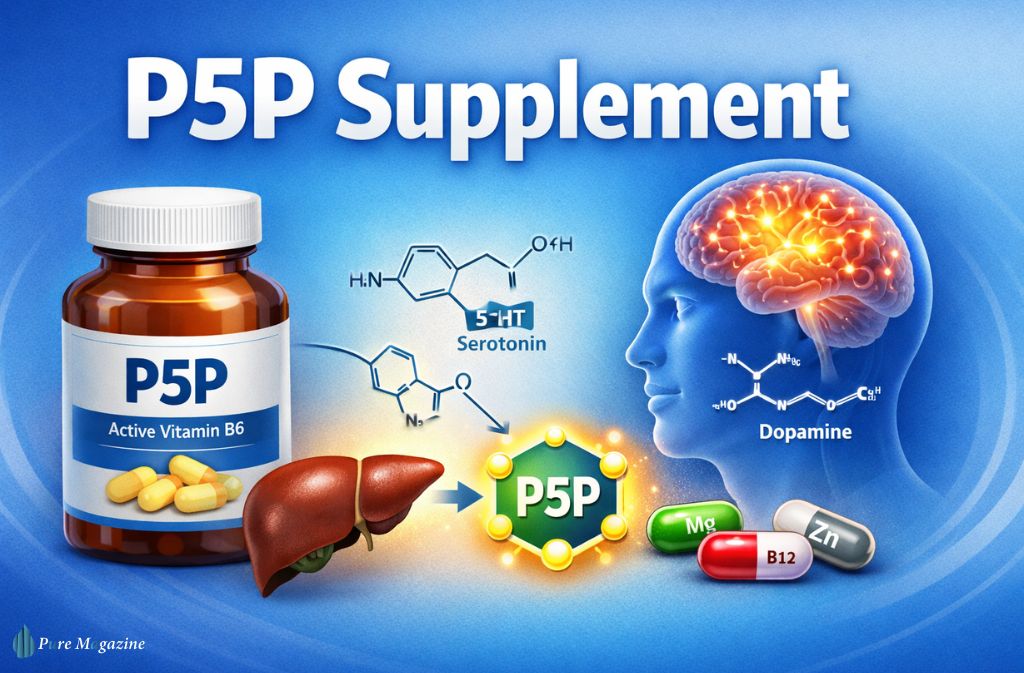
Many vitamin supplements look identical on the shelf, yet the form you choose can make a real difference to how your body actually uses them. That’s a big part of why interest in the P5P supplement has grown so fast. Instead of delivering standard vitamin B6, P5P gives the body the biologically active form it already speaks in — no translation needed.
For certain people, that distinction matters quite a lot. Regular vitamin B6 (pyridoxine) has to go through a conversion process before the body can put it to work. P5P, short for pyridoxal-5-phosphate, skips that extra metabolic step entirely.
So, is a P5P supplement worth it? For many people, yes — particularly those looking for targeted support across energy metabolism, neurotransmitter balance, hormone health, nervous system function, or methylation pathways.
This guide covers what P5P is, how it works in the body, its key benefits, dosage guidance, safety considerations, who tends to benefit most, and what to look for when choosing a quality product in 2026.
What Is a P5P Supplement?
A P5P supplement contains pyridoxal-5-phosphate — the active coenzyme form of vitamin B6 that your cells use directly in biochemical reactions. Of all the forms vitamin B6 comes in, P5P is the metabolically active one that your body actually puts to work.
The body draws on P5P to support:
- Amino acid metabolism
- Brain chemical production
- Hormone balance
- Red blood cell formation
- Immune function
- Homocysteine metabolism
- Nervous system health
The shorthand version: pyridoxine HCl is the common, inactive form of B6 found in most cheap supplements. P5P is the active, ready-to-use form. That’s why people actively researching the best vitamin B6 supplement often land on P5P as the stronger choice.
P5P supplement provides the active form of vitamin B6 used by the body for metabolism, neurotransmitter production, nerve support, hormone balance, and energy pathways. Many people prefer it over pyridoxine because it requires less conversion before use.
How Does P5P Work in the Body?
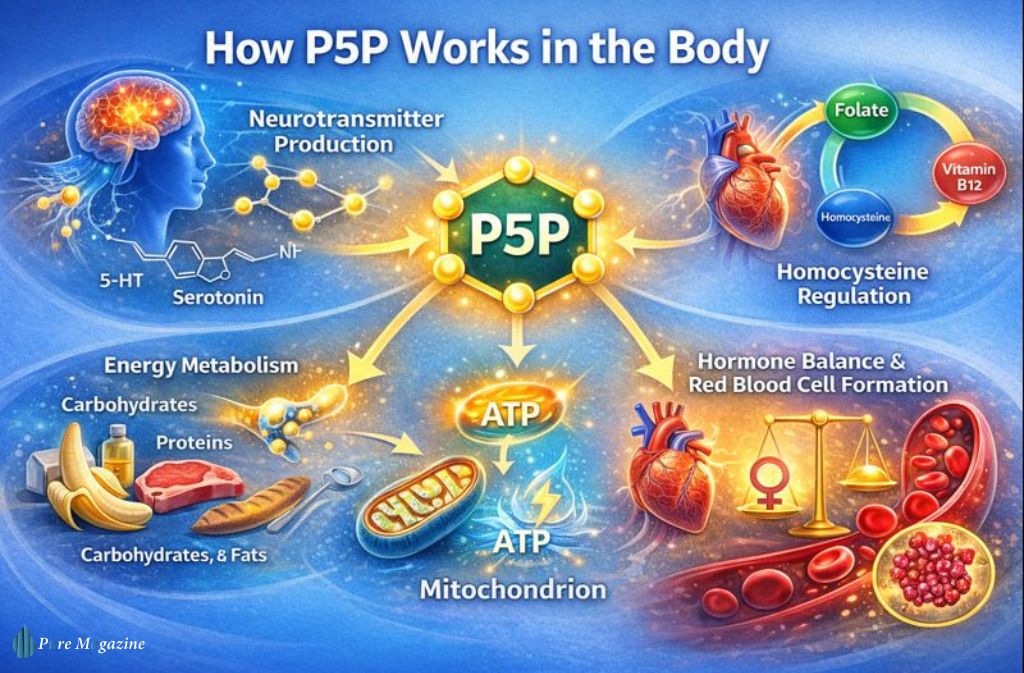
P5P functions as a coenzyme — it helps enzymes carry out essential reactions that the body runs constantly. Without sufficient B6 activity, many of those systems slow down or become less efficient.
The four main areas where P5P plays a direct role:
Neurotransmitter Production
P5P helps synthesise serotonin, dopamine, GABA, and norepinephrine. This is one of the core reasons B6 status shows up in discussions about mood, stress resilience, and sleep quality. According to the NIH Office of Dietary Supplements, vitamin B6 in its coenzyme form is involved in more than 100 enzyme reactions in the body — many of them tied to protein metabolism and neurotransmitter synthesis.
Energy Metabolism
P5P supports how the body breaks down carbohydrates, proteins, and fats into usable cellular energy. People running demanding schedules often notice this connection most clearly.
Homocysteine Regulation
P5P works alongside folate and vitamin B12 inside the methylation cycle. Keeping homocysteine in a healthy range matters for cardiovascular wellness, and B6 is a necessary player in that process.
Hormone Balance & Red Blood Cell Formation
Vitamin B6 research has explored its role in PMS-related symptoms, while its involvement in haemoglobin synthesis means it also supports healthy oxygen transport through the blood.
P5P Supplement Benefits
P5P supplement benefits depend on diet, dosage, deficiency status, stress load, and overall health. It’s not a shortcut — but it can be genuinely useful when B6 support is the missing piece.
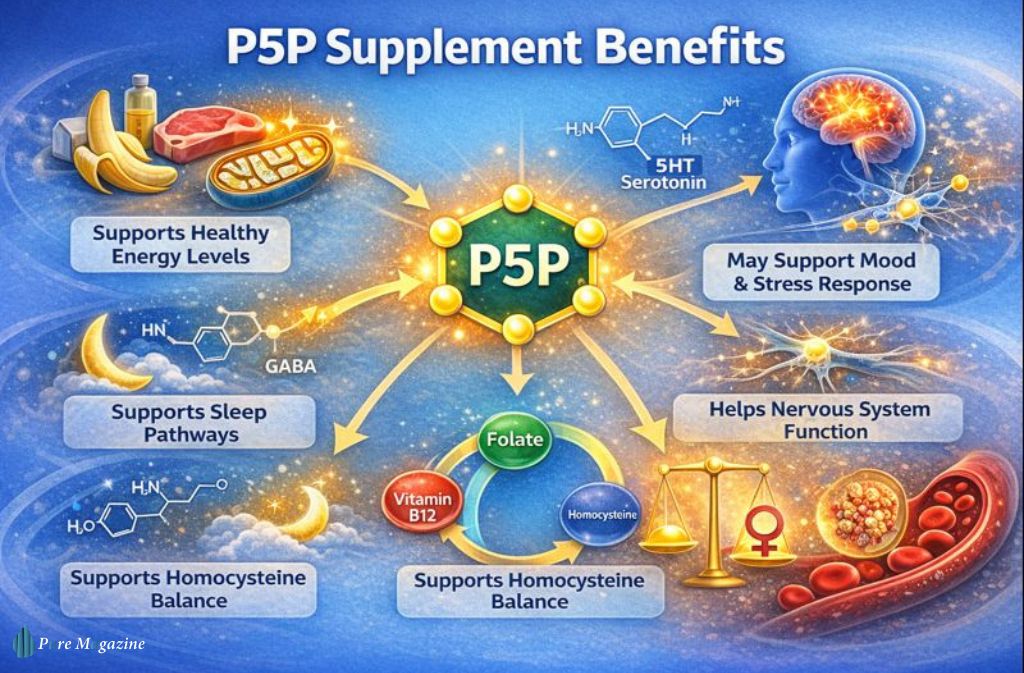
1. Supports Healthy Energy Levels
P5P helps the body extract usable energy from food more efficiently. Those correcting a long-standing nutrient shortfall often report steadier energy across the day and fewer mid-afternoon dips.
2. May Support Mood & Stress Response
Because P5P directly supports serotonin and GABA synthesis, it may help maintain emotional balance during periods of high stress. People running on low B6 commonly describe the state as feeling tired but wired — irritable, mentally drained, and with poor stress tolerance. Addressing that through targeted B6 support often shifts things noticeably.
3. Helps Nervous System Function
Vitamin B6 plays a well-established role in nerve signalling and nerve maintenance. This is part of why deficiency symptoms — tingling, numbness — can emerge in the extremities first.
4. Supports Hormonal Wellness
Research has explored B6’s potential to ease certain PMS symptoms, particularly mood-related ones and mild bloating. For women looking at nutritional support for hormonal balance, B6 status is worth considering alongside other key nutrients.
5. Supports Sleep Pathways
Serotonin is a precursor to melatonin. Adequate B6 status supports that conversion pathway, which is one reason sleep quality sometimes improves when B6 intake is addressed — though diet and sleep hygiene still do most of the heavy lifting.
6. Supports Homocysteine Balance
P5P is commonly used alongside B12 and folate in cardiovascular wellness protocols. This trio keeps the methylation cycle running properly, which helps regulate homocysteine levels. Those interested in broader methylation support may also find amino acid supplements worth exploring alongside P5P.
P5P vs Pyridoxine: What’s the Difference?
P5P and pyridoxine are both forms of vitamin B6, but they differ in one crucial way: how much work the body has to do before it can actually use them.
| Feature | P5P Supplement | Pyridoxine |
|---|---|---|
| Active form | Yes | No |
| Requires conversion | No | Yes |
| Often preferred for targeted use | Yes | Sometimes |
| Lower cost | No | Yes |
| Common in cheap multivitamins | Less common | Very common |
Which Is Better?
Choose P5P if:
- You want active B6 in the form the body uses directly
- You’re building a targeted supplementation protocol
- You prefer higher-end, cleaner formulations
Choose Pyridoxine if:
- Budget is the primary factor
- You tolerate it well and have no conversion concerns
- Basic multivitamin coverage is all you need
Why Some People Prefer P5P — The Liver Conversion Gap
Converting pyridoxine into P5P relies on liver enzymes and specific cofactors. Most healthy adults manage it fine. But certain factors reduce that conversion efficiency: advancing age, chronic stress, poor diet quality, regular alcohol consumption, and gut health issues can all slow the process down.
There’s also what some researchers call the “B6 paradox” — a scenario where high intake of inactive pyridoxine HCl may actually compete with P5P at receptor binding sites, creating functional deficiency symptoms despite high total B6 intake. This makes P5P the more reliable option for anyone who suspects their conversion pathway isn’t running optimally. Those taking high-B6 energy drinks or pre-workouts should pay particular attention here, since total pyridoxine load can accumulate quickly.
Best P5P Supplement Dosage
P5P dosage varies based on product strength and what the person is actually trying to support.
| Goal | Typical Daily Range |
|---|---|
| General support | 10–25 mg |
| Moderate support | 25–50 mg |
| Higher-dose use | Professional guidance advised |
The European Food Safety Authority (EFSA) has established a Tolerable Upper Intake Level for vitamin B6 of 25 mg/day from supplements for adults — a figure worth knowing when combining P5P with a multivitamin or B-complex. The NIH lists the US Tolerable Upper Intake Level at 100 mg/day, though most experts agree there’s little reason to approach that range for general wellness purposes.
For most adults, 10 mg to 25 mg daily is a practical and sensible starting range.
When to Take P5P Supplement
Most people do best taking P5P in the morning or with lunch. Taking it with food reduces the chance of any nausea. Some users find it slightly energising, which makes earlier-in-the-day dosing the better default. Evening doses may increase the vividness of dreams in some people — not harmful, but worth knowing upfront.
What to Take With P5P Supplement
P5P works better as part of a coordinated nutrient plan than as a standalone. A few pairings that make genuine biochemical sense:
| Nutrient | Why It Pairs Well |
|---|---|
| Magnesium | P5P actually needs magnesium to enter cells properly — this is one of the most overlooked cofactor relationships in B-vitamin supplementation |
| Zinc | Supports enzyme systems that rely on B6 activity |
| Folate | Works directly in methylation pathways alongside B6 |
| Vitamin B12 | Helps regulate homocysteine alongside folate and B6 |
| Riboflavin (B2) | Supports overall B-vitamin function and conversion processes |
Those exploring broader methylation or B-vitamin support might also look at TMG (trimethylglycine) as a complementary methylation donor, or a quality multivitamin to cover remaining gaps.
Who May Benefit Most From a P5P Supplement?
P5P tends to be most relevant for people with genuine reasons to want active B6 directly — not just anyone who sees “vitamin B6” on a label and picks up a bottle.
Potential users include:
- People eating limited or unvaried diets
- Those running high-stress schedules over extended periods
- People building comprehensive B-complex or methylation stacks
- Women managing PMS symptoms through nutritional support
- Adults seeking nervous system support
- People with gut health challenges that may impair nutrient conversion
Anyone already taking a DHEA supplement, hormone support products, or circulation-focused formulas should check total B6 content across their stack before adding P5P.
P5P Supplement Side Effects & Safety
P5P is generally well tolerated at sensible doses. The concern with vitamin B6 isn’t acute toxicity — it’s cumulative intake across all sources over time.
Possible side effects at excessive doses:
- Nausea (usually from taking on an empty stomach)
- Headache
- Digestive discomfort
- Restlessness
- Vivid dreams (more common with evening dosing)
Important B6 Toxicity Note
Even though P5P is the active form, high total B6 intake from all sources can still lead to elevated levels and nerve-related side effects — most notably peripheral neuropathy (tingling, numbness, or pain in the extremities). The keyword is total. Count B6 from multivitamins, energy drinks, B-complex formulas, pre-workouts, and standalone P5P together. Use sensible dosing and stay within established upper limits.
Common Mistakes to Avoid
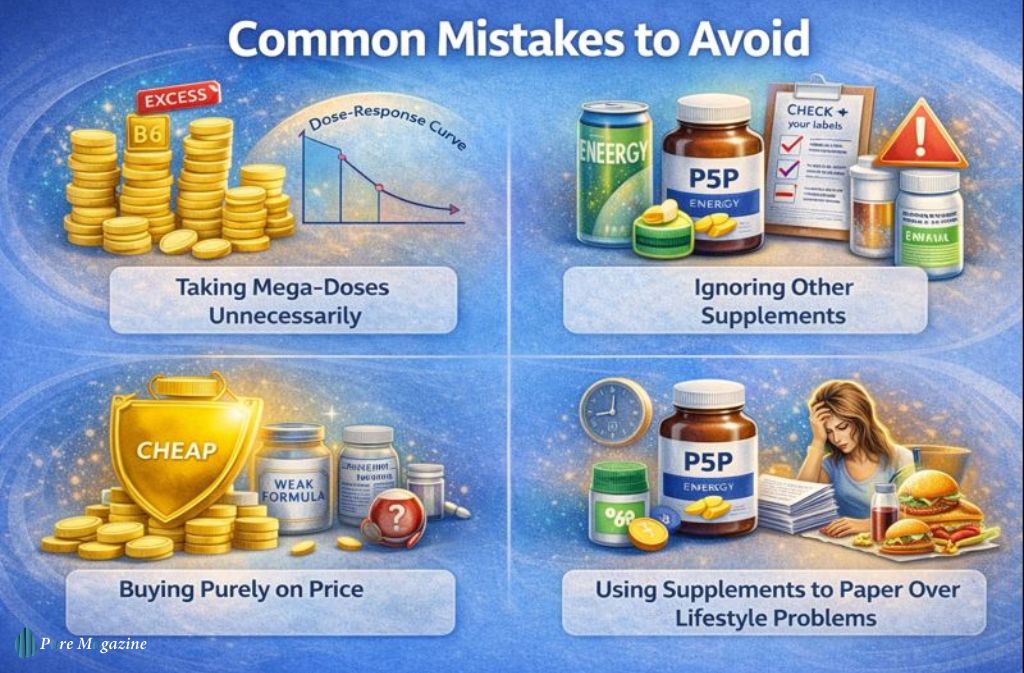
Taking mega-doses unnecessarily. More B6 is not better B6 — the dose-response curve flattens long before people assume it does.
Ignoring other supplements. A multivitamin, an energy drink, and a standalone P5P tablet can add up to a surprisingly high daily total. Check the labels across everything.
Buying purely on price. The cheapest products often use weak formulas, unnecessary fillers, or undisclosed excipients. A quality British supplements brand may cost more, but usually delivers better consistency and transparency.
Expecting instant results. Nutrient support corrects deficits gradually. Cellular processes take time to respond — results over days or weeks are normal, not failure.
Using supplements to paper over lifestyle problems. P5P works best when sleep quality, food variety, and stress management are also being addressed. Supplementation can support those efforts; it can’t replace them.
How to Choose the Best P5P Supplement (2026 Quality Standard)
The best P5P supplement combines proper dosage, clean ingredients, transparent manufacturing, and independent testing.
Look for:
- Pyridoxal-5-phosphate is clearly named on the label (not just “vitamin B6”)
- 10 mg, 25 mg, or 50 mg options depending on your needs
- Third-party tested products
- GMP-certified manufacturing
- Capsule form if capsules suit your preference
- Minimal filler ingredients
Ingredients many buyers avoid:
- Titanium dioxide
- Artificial dyes
- Oversized proprietary blends that obscure individual doses
- Excessive binders
Trust signals worth looking for:
- Clear, transparent labelling
- Published quality standards or Certificates of Analysis
- Strong, verifiable customer reputation
- NSF or USP-style quality markers
Those using discount codes for supplement brands to reduce cost can still apply these quality filters — price savings don’t require compromising on label transparency.
Real-World Example
A 34-year-old software developer came in with persistent brain fog despite eating a reasonably balanced diet. His supplement stack included two energy drinks daily — each loaded with pyridoxine HCl — plus a standard multivitamin. Total B6 intake was high on paper, but most of it was in the inactive form. After switching to a 25 mg P5P dose, cutting the energy drinks, and improving sleep consistency, he reported clearer focus and steadier energy within three weeks. The energy drinks had been stacking inactive B6 while potentially competing with the active form at receptor sites — a classic example of the B6 paradox in practice.
The lesson: the form of a nutrient and the total load from all sources both matter. Higher intake doesn’t automatically mean better status.
2026 Trends in P5P Supplements
The market is shifting visibly toward:
- Lower-dose precision formulas (10–25 mg rather than 100 mg+)
- P5P + magnesium blends that address the co-factor relationship directly
- Full methylation support stacks pairing P5P with B12, folate, and TMG
- Cleaner labels with fewer unnecessary excipients
- Vegan capsules as the default format
- Transparent sourcing and batch-level testing
For those building broader stacks, pairing P5P with a quality collagen supplement or beef liver capsules (which provide natural B vitamins including B6 precursors) reflects how the most sophisticated supplement users approach micronutrient coverage in 2026 — through layered, complementary nutrition rather than isolated high-dose pills.
FAQs
Q. What is the P5P supplement?
P5P supplement is pyridoxal-5-phosphate, the active coenzyme form of vitamin B6. Unlike standard pyridoxine, P5P can be used directly by the body without needing further conversion. It supports energy metabolism, neurotransmitter production, hormone balance, and nervous system function.
Q. Is P5P better than regular B6?
For many people, P5P may be a better vitamin B6 option because it bypasses the conversion steps required by pyridoxine. This can make it a more practical choice for people seeking targeted supplementation, active B-vitamin support, or those who may not convert regular B6 efficiently.
Q. When should I take the P5P supplement?
Most people take a P5P supplement in the morning or at lunch with food. Earlier dosing is commonly preferred because some users report vivid dreams or alertness when taking vitamin B6 later in the day. Taking it with food may also reduce nausea.
Q. Can P5P cause vivid dreams?
Yes, P5P can cause vivid dreams in some users, especially when taken in the evening. This may relate to vitamin B6’s role in serotonin and melatonin pathways. While usually harmless, switching to morning dosing often helps.
Q. How long does P5P take to work?
Some people notice benefits from a P5P supplement within a few days, while others may need several weeks of consistent use. Results depend on dosage, diet quality, stress levels, sleep, and whether vitamin B6 intake was previously low.
Q. Can I take P5P every day?
Many people take P5P daily, especially in moderate doses. The most important factor is monitoring total vitamin B6 intake from all sources, including multivitamins, B-complex products, fortified drinks, and other supplements.
Q. Is P5P good for mood?
P5P may support mood because vitamin B6 is involved in producing serotonin, dopamine, and GABA—key neurotransmitters linked to emotional balance. It works best when combined with good sleep, nutrition, stress management, and overall health habits.
Q. Is P5P safe long-term?
Reasonable doses of P5P supplement are commonly used long term, but excessive vitamin B6 intake from any form—including P5P—may increase the risk of peripheral neuropathy over time. Staying within label guidance or professional advice is the safest approach.
Q. What does the P5P supplement do?
A P5P supplement helps the body use the active form of vitamin B6 for metabolism, nerve health, red blood cell production, neurotransmitter synthesis, hormone balance, and homocysteine regulation.
Q. What is the best P5P supplement dosage?
Common P5P dosages range from 10 mg to 50 mg daily, depending on the product and purpose. Many users start with 10–25 mg. Higher doses should only be used with professional guidance.
Conclusion
A P5P supplement makes sense for people who want the active form of vitamin B6 rather than leaving the conversion to chance. It supports energy, mood, nervous system function, sleep pathways, and methylation when used appropriately — and at the right dose, it’s a clean and well-tolerated addition to most supplement protocols.
The core takeaways: P5P is the active form of vitamin B6; it’s often preferable to pyridoxine for targeted use; moderate dosing makes more practical sense than high-dose approaches; quality and label transparency matter; and total B6 intake from all sources always needs accounting for. Those wanting to explore the broader landscape of hormone and micronutrient support will find P5P a natural starting point within that conversation.
This article is for informational purposes only and does not constitute medical advice. Always consult a qualified healthcare professional before starting any new supplement, particularly if you have liver conditions, are managing mineral deficiencies, or are taking prescription medications.
Explore our full library of expert-reviewed health and nutrition guides at Pure Magazine.