


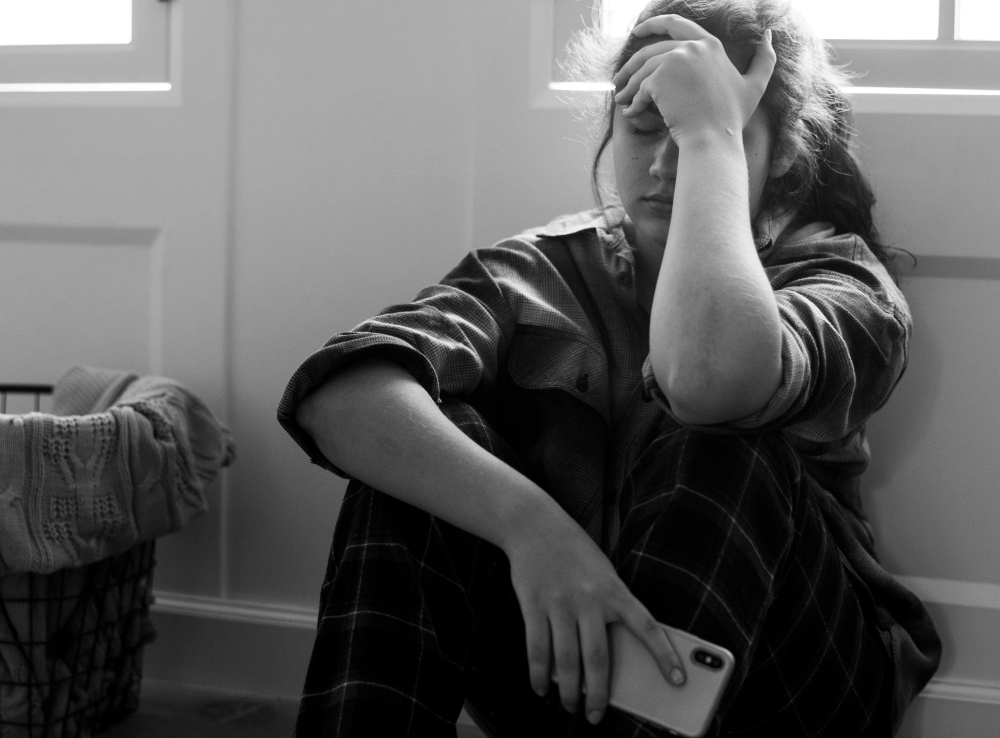
People often think abuse has to leave a mark you can point to. A black eye. A split lip. A photo. Something visible. Something that makes other people stop and say, yes, that is wrong.
But emotional abuse usually does not work like that.
It slips into daily life quietly. It hides in tone, in patterns, in the slow wearing down of someone’s confidence. It can sound like jokes that are not jokes. It can look like control dressed up as concern. It can feel like walking into a room already bracing yourself, even when nothing has happened yet. That is the part many people struggle to explain. They know something is wrong. They feel smaller, more nervous, more unsure of themselves. Yet they often cannot “prove” it in a way the outside world expects.
And that expectation matters. A lot. Because when harm does not leave bruises, people tend to question it. Sometimes outsiders question it. Sometimes the person living through it questions it too.
That confusion is part of the damage.
Emotional abuse is serious because it attacks how you think, how you feel, how safe you are in your own mind. It can change the way you speak, the way you make decisions, the way you trust your own memory. It can make ordinary life feel tense and unstable. Over time, that kind of pressure does not just hurt. It reshapes a person.
It rarely starts with something obvious
Most emotionally abusive relationships do not begin with open cruelty. If they did, many people would leave early. Instead, the behavior often starts in ways that seem explainable. A harsh comment gets brushed off as stress. A jealous reaction gets framed as love. A controlling habit gets passed off as protectiveness.
That is what makes it so difficult to spot at first.
One day it is “I just care about you.” Then it becomes “Why are you wearing that?” A little later it turns into “You always embarrass me.” And after enough time, you are second-guessing harmless choices, editing your words, and trying to prevent conflict before it starts.
The shift can be so gradual that it feels almost invisible while it is happening. Like watching daylight fade. You do not notice the exact moment things get dark. You just realize, eventually, that you cannot see clearly anymore.
When love starts to feel like surveillance
A partner who wants to know where you are all the time may not call it control. They may call it care. They may say they worry. They may say you are lucky someone loves you that much.
But there is a difference between care and monitoring.
Care gives you room to breathe. Control closes in around you. It checks your phone, questions your friendships, gets angry when you take too long to reply, and acts like your independence is a threat. You start reporting small details just to avoid the fallout. It feels less like sharing and more like clocking in.
That pressure adds up. It creates a life where peace depends on staying one step ahead of someone else’s mood.
The cruelty often hides behind “humor”
A lot of emotional abuse comes wrapped in sarcasm, teasing, or public embarrassment. The abusive person says something cutting, then laughs. If you react, you are “too sensitive.” If you pull away, you are “dramatic.” If you defend yourself, you are the one causing trouble.
It is a clever setup, really. The insult lands, but the person delivering it gets to pretend it was harmless.
This is one reason emotional abuse can be so lonely. It teaches you not only to absorb pain, but to distrust your own reaction to it. You know the comment hurt. You know the room went quiet. You know it stayed with you all day. Yet you also hear, again and again, that you are making a big deal out of nothing.
That does something to a person. It chips away at certainty.
The goal is often control, even when it looks messy
Emotional abuse does not always look polished or calculated. Sometimes it looks chaotic. Tears, yelling, guilt, silent treatment, sudden affection, then more blame. Messy, all over the place, impossible to pin down. But underneath that mess, there is often a clear result: one person gets more power, and the other gets less.
That power can show up in different ways. It might involve fear. It might involve shame. It might involve confusion. Sometimes all three.
Intimidation does not need physical violence to work
A slammed door can be intimidating. So can a hard stare, a threatening tone, punching a wall, throwing objects, blocking a doorway, or driving recklessly during an argument. No bruise is required for your body to get the message.
Your nervous system does not wait for a courtroom definition. It responds to danger as danger.
This is why people who experience emotional abuse often describe feeling tense all the time. Their body is learning the pattern. It starts scanning for warning signs. A change in voice. A certain footstep. A sigh. The sound of keys in the door. Small things become loaded because they usually lead to something bigger.
Living like that is exhausting. It is like working a job where the rules change every hour and getting blamed whenever you guess wrong.
Humiliation can become a routine
Humiliation is not always loud. Sometimes it is subtle and constant. Being corrected in front of other people. Being talked down to like a child. Being mocked for your appearance, your intelligence, your family, your work, your emotions, your past. Being treated as though your weaknesses are public property.
At first, you may answer back. Later, you may stop. Not because it no longer hurts, but because you know what comes next.
And that is the strange thing. Silence can look like calm from the outside. But in reality, silence is often survival. It is the result of learning that speaking up only brings more damage.
People dealing with that kind of emotional strain often begin to show signs of anxiety, panic, depression, or substance use, especially when they have been living in a cycle of fear and shame for a long time. In some cases, people end up needing outside help from a Behavioral Health Treatment Center to begin sorting through the emotional fallout and regain a steadier sense of self.
The mind games are not “miscommunication”
This part gets shrugged off a lot. People say, “Maybe you two just communicate badly.” But emotional abuse is not simple miscommunication. It is not just two people having a rough patch or arguing in different styles.
It is a repeated pattern where one person twists reality, shifts blame, or changes the emotional temperature of the room to stay in control.
Gaslighting makes you question your own memory
Gaslighting happens when someone denies what happened, rewrites events, or insists your version of reality is wrong even when you know what you saw, heard, or felt. It can sound like this: “I never said that.” “You’re imagining things.” “That didn’t happen.” “You always make stuff up.” “You’re crazy.” “You remembered it wrong.”
On paper, those lines may not look dramatic. In real life, hearing them over and over can be devastating.
It makes you pause before trusting your own thoughts. You replay conversations in your head. You start keeping screenshots, notes, dates, not because you are obsessive, but because you are trying to hold onto solid ground. Honestly, that is one of the clearest signs that something is deeply off. When you have to gather evidence just to feel sure about your own experience, the relationship is not safe.
Blame gets shifted until you carry everything
Another common pattern is blame reversal. The abusive person hurts you, then makes your reaction the real problem. They insult you, and suddenly the issue is your tone. They betray your trust, and now the focus is on how you brought it up. They explode, and by the end of the conversation you are apologizing for making them upset.
This is how emotional abuse creates confusion. The facts get buried under emotion, pressure, and exhaustion. You walk into a conversation hoping to address a real issue and walk out feeling guilty, ashamed, and weirdly responsible for the harm done to you.
That is not a communication glitch. That is manipulation.
The damage shows up in your body, your work, your whole life
Because there are no bruises, people sometimes talk about emotional abuse as though it is less severe. But the effects can spread through every part of life.
You may struggle to sleep. You may feel jumpy or numb. You may lose focus at work. You may stop seeing friends because explaining things feels too hard, or because the abusive person has already made those friendships feel like a problem. You may become indecisive over simple tasks because you have been taught that every choice can be used against you later.
That kind of strain does not stay neatly in one corner of your life. It leaks.
Your confidence gets hollowed out from the inside
One of the cruelest things about emotional abuse is how it changes your relationship with yourself. At some point, the insults and accusations may stop sounding external. They start sounding like your own thoughts.
You hear their criticism in your own head when you make a mistake. You hear their mockery when you speak up. You hear their version of you, and it begins to drown out your own.
This is why people sometimes stay longer than outsiders expect. It is not because the abuse is minor. It is because the abuse has damaged the very part of them that would normally say, this is wrong, I deserve better, I can leave.
And yes, there can be overlap with addiction, trauma, and other mental health struggles inside the same household or relationship. Sometimes the abusive environment is tangled up with drinking, drug use, or emotional volatility that has gone unchecked for years. In those situations, the harm can become even more unstable and hard to predict, which is why some people eventually seek structured support, including Substance Abuse Treatment in Idaho, when emotional chaos and substance use have become part of the same painful cycle.
Even ordinary days stop feeling ordinary
This is one of the quieter losses. Emotional abuse steals normalcy.
You do not just lose peace during arguments. You lose it during grocery runs, family dinners, text messages, holidays, workdays, and random Tuesday mornings. You start calculating. What mood are they in? Did that comment mean trouble? Should I answer now or later? Should I say less? Should I act cheerful? Should I pretend nothing is wrong?
That constant adjustment is draining. It turns everyday life into risk management.
And here is the contradiction people often miss: the relationship may not look bad every single day. There may be kind moments. There may be laughter, affection, apologies, promises. That does not cancel the abuse. In fact, the contrast can make the whole thing harder to understand. Good moments can keep hope alive long after safety is gone.
Why people outside the relationship often miss it
Emotional abuse is easy to hide because it depends so much on context, repetition, and private patterns. A stranger may hear one rude comment and think the person was stressed. A friend may witness one controlling moment and think it was jealousy. A family member may hear about one argument and assume both sides were equally at fault.
But abuse is a pattern, not a snapshot.
A single incident may look small. Repeated over weeks, months, or years, it becomes a system. That system teaches one person to dominate and the other to shrink.
“But they seem nice” is part of the problem
Abusive people are not abusive every minute of every day. Many are charming in public. Some are generous, funny, articulate, well-liked. They may know exactly how to appear calm and reasonable in front of others. Then, in private, they become cruel, cold, unpredictable, or punishing.
That public-private split is not unusual. It is part of why survivors often worry they will not be believed.
And when they finally try to explain what has been happening, they may not sound polished. They may sound confused, emotional, scattered, uncertain. People sometimes take that as a sign they are exaggerating. In reality, it is often a sign they have been living in confusion for a long time.
You do not need visible proof for harm to be real
This matters. A lot.
If someone has been insulted, degraded, intimidated, isolated, or manipulated into doubting their own mind, the harm is real. If they feel afraid in their own home, the harm is real. If they have become smaller, quieter, more anxious, more unsure, more cut off from themselves, the harm is real.
No bruise is required to make that true.
The absence of visible injury does not make emotional abuse softer, lighter, or less urgent. It only makes it easier for other people to overlook. And that is exactly why it needs to be named clearly.
The wound is real, even when no one else can see it
Emotional abuse leaves marks. They just do not show up the way people expect.
They show up in the way you rehearse simple conversations before speaking. In the way you apologize too quickly. In the way your chest tightens when your phone lights up. In the way you stop trusting your memory, your judgment, your instincts. In the way your world gets smaller without you fully noticing it happen.
That is the truth many people need to hear: abuse does not have to be physical to be serious. Humiliation hurts. Intimidation hurts. Mind games hurt. Constant criticism hurts. Being made to feel afraid, foolish, trapped, or unstable hurts.
And when that hurt happens over and over, it changes you.
So no, emotional abuse is not “less bad” because there are no bruises. It is still abuse. It is still harm. It is still a wound. The body may look untouched, but the inner life often tells a very different story.
For more, visit Pure Magazine
