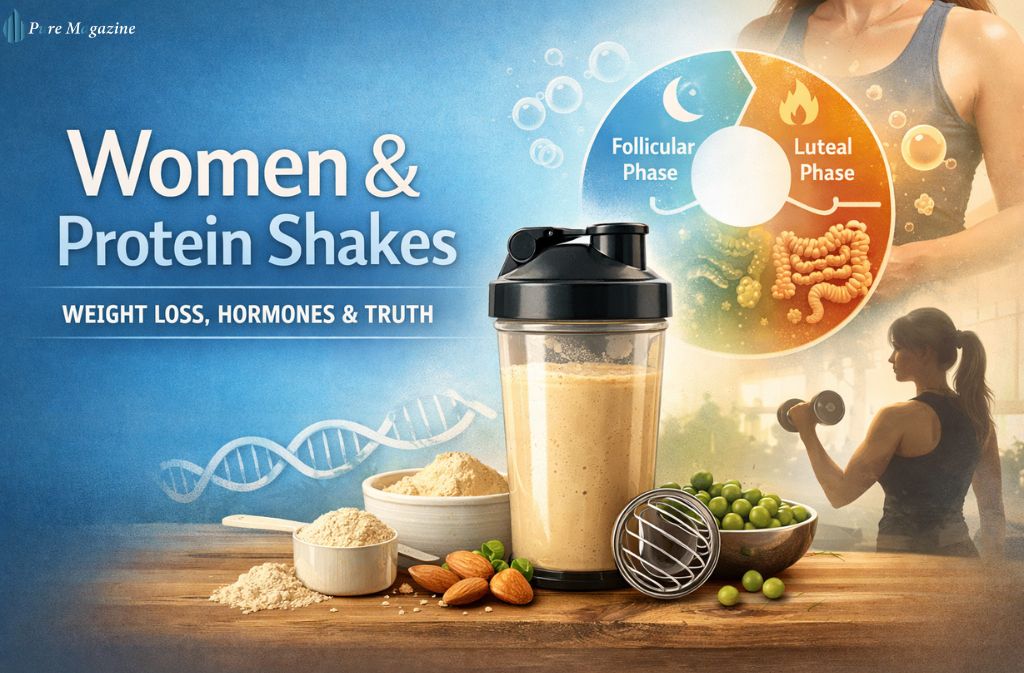
Protein shakes have quietly moved out of the gym bag and into the kitchen cupboard. In 2026, they’re less about bodybuilding and more about filling nutritional gaps — for women managing energy, body composition, and the kind of persistent hunger that makes clean eating feel like an uphill battle.
But here’s what most guides skip over: doing everything “right” — eating carefully, exercising consistently, adding a protein shake — and still feeling stuck is a genuinely common experience. It’s frustrating, and it’s also explainable. The advice most people receive treats female physiology as a footnote rather than a central variable. Hormones, your monthly cycle, gut function, and age all shape how your body handles protein. None of that is generic, and the results you get rarely will be either.
This guide goes past the label breakdown. You’ll find out whether protein shakes are actually useful for women, how your hormonal cycle affects your protein needs at different points in the month, which types of protein are worth choosing in 2026, and the mistakes that quietly undermine results even when everything else looks right on paper.
What Are Protein Shakes for Women?
At their simplest, protein shakes are a convenient way to increase daily protein intake — and for most women, that’s the most useful framing. They’re not magic, they’re not dangerous, and they’re not a substitute for food. They’re a tool for bridging the gap between the protein your body needs and what you’re realistically eating on a normal day.
Formulations vary. Whey-based options are the most researched and tend to offer the highest leucine content (more on why that matters shortly). Plant-based blends — typically combining pea and rice protein — are increasingly competitive on the amino acid front. Collagen-based powders serve a different purpose entirely and shouldn’t be confused with muscle-supporting protein sources. Meal replacement shakes are a separate category again, designed to stand in for a meal rather than supplement one.
One thing worth saying clearly: there is no such thing as a biologically “female-only” protein. The difference between products marketed to women and standard protein powder is almost always formulation, serving size, and marketing — not the protein itself. Don’t pay a premium for pink packaging.
Are Protein Shakes Good for Women? An Honest Answer
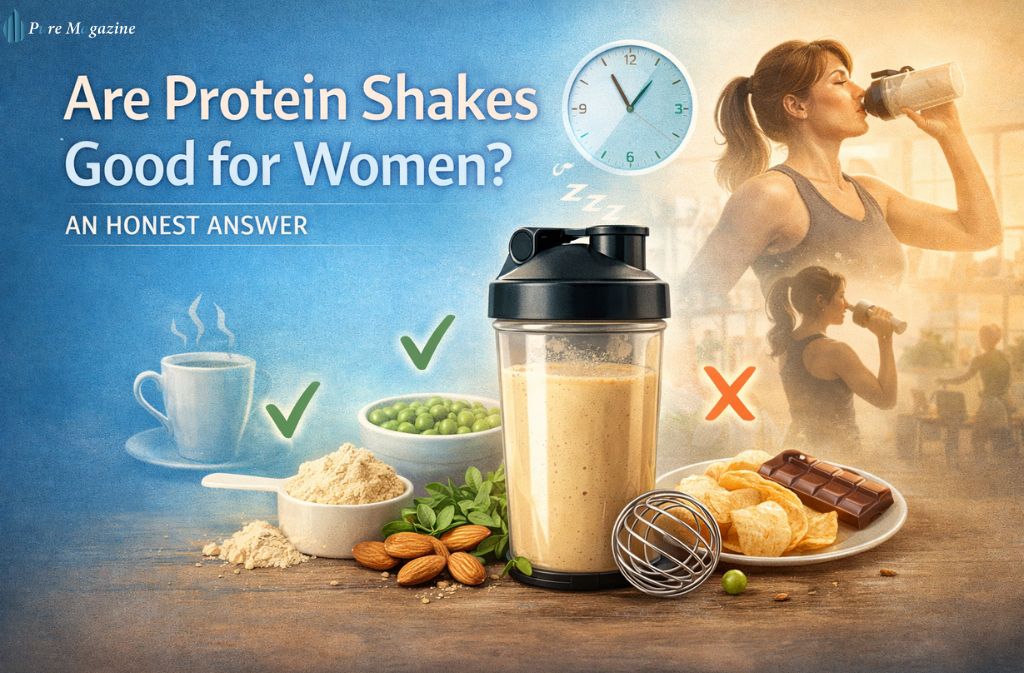
Yes, with caveats. The evidence is consistent that higher protein intake helps reduce hunger, supports muscle retention during fat loss, and stabilises energy across the day. For women specifically, it often helps with the mid-afternoon energy dip and the kind of evening snacking that isn’t really about hunger.
The practical advantages are real: you stay fuller for longer, you’re less likely to lose muscle alongside fat when you’re in a calorie deficit, and they’re genuinely convenient for busy schedules where getting 20–30 grams of protein into a meal isn’t always easy. They also reduce the reliance on processed snacks by giving you something quick and satisfying that doesn’t derail a day’s eating.
But a protein shake that doesn’t suit your digestion, or that you’re taking at the wrong dose, or that lands on top of an already high-protein diet — that’s not going to move the needle. The how matters as much as the what.
Why Bio-Individuality Changes Everything
Bio-individuality is the reason two women can follow the same routine with the same product and report completely different outcomes. One feels fuller, stronger, and more energised. The other feels bloated, unchanged, or weirdly more hungry. Neither is wrong — they just have different biological starting points.
The key variables: hormonal status and where you are in your cycle, gut health and digestive enzyme production, age (especially around and after 40), activity level, and insulin sensitivity. These factors don’t just influence how you feel day-to-day — they directly affect how efficiently your body uses the protein you consume.
If you’ve ever felt like nothing works consistently, it’s worth asking whether the approach is actually consistent with your biology rather than just consistent in its execution.
How Your Menstrual Cycle Affects Protein Needs
This is one of the most underappreciated variables in women’s nutrition, and it’s rarely discussed in supplement guides.
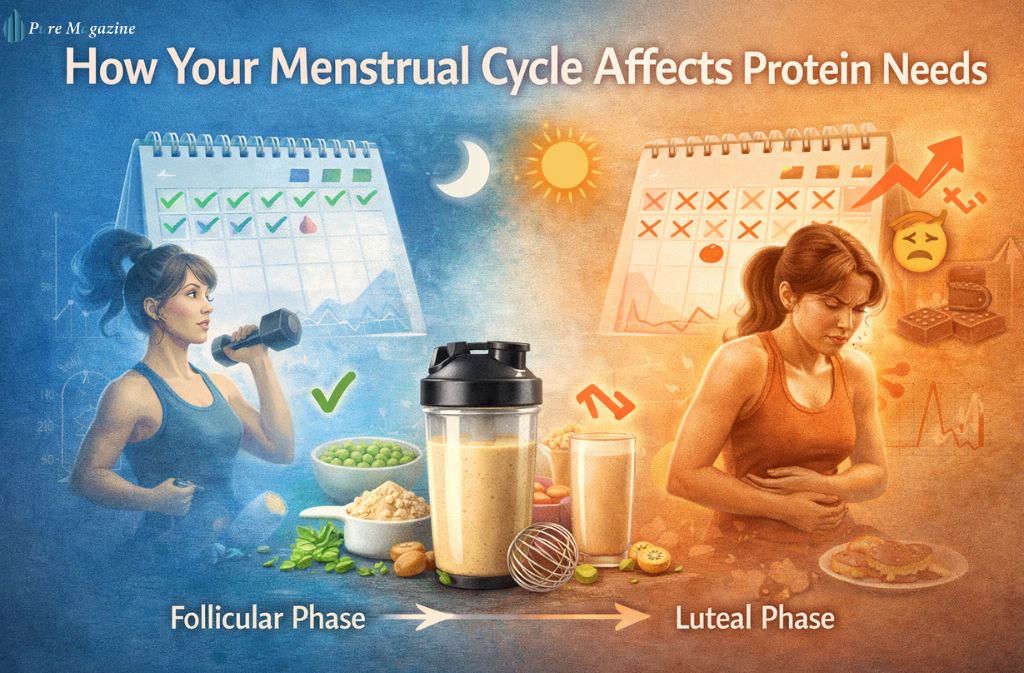
Your cycle isn’t metabolically neutral. In the follicular phase — roughly the first half — insulin sensitivity is higher, fat metabolism is easier, and cravings tend to be lower. Your protein needs during this phase are moderate. You can train hard, recover efficiently, and your appetite signals are generally reliable.
In the luteal phase — the two weeks before your period — things shift. Protein breakdown rates increase, calorie requirements go up, and cravings intensify. The hunger you feel in the days before your period isn’t a failure of willpower. It’s a physiological signal that your body genuinely needs more energy and more protein to support what it’s doing hormonally.
Practically, this means your protein needs aren’t fixed across the month. Increasing your intake slightly during the luteal phase — adding an extra shake, or simply making your existing shake larger — aligns with what your body is actually asking for. Trying to hold a rigid intake regardless of cycle phase often means fighting your own biology rather than working with it.
The Leucine Threshold: Why It Determines Whether You Actually See Results
Leucine is an essential amino acid and the primary trigger for muscle protein synthesis — the process that drives muscle repair, maintenance, and tone. The threshold that activates this process is around 2.5g of leucine per serving. Below that, the amino acids are used for energy or other metabolic functions but don’t effectively trigger the toning and repair response most women are looking for.
This is where protein quality separates itself from protein quantity. A serving of 30g of a low-quality plant blend might still fall short of the leucine threshold, while 20g of whey typically exceeds it. According to research on whey protein supplementation in postmenopausal women, whey’s high leucine content is one of the key reasons it consistently outperforms soy and other lower-leucine options in muscle-related outcomes.
What to look for: 20–30g of protein per serving, with whey as your first choice if you’re dairy-tolerant, or a pea-rice combination if you’re not. Both can meet the leucine threshold when dosed correctly — but you need to check rather than assume.
Best Protein Types for Women: A Practical Comparison
| Type | Best For | Pros | Cons |
|---|---|---|---|
| Whey Protein | Toning, recovery, general daily use | Fast absorption, naturally leucine-rich, well-researched | Dairy-derived — not suitable for vegans or lactose intolerance |
| Plant Protein (pea + rice blend) | Vegan diets, sensitive digestion | Gentle on the gut, improving leucine profiles | Slightly lower amino acid density per gram |
| Collagen Protein | Skin, hair, joints — not muscle building | Beauty and structural tissue benefits | Incomplete protein — won’t trigger muscle synthesis alone |
| Meal Replacement | Weight management, calorie control | Balanced macros, practical for busy days | Higher calories — easy to double-count with food |
One note on collagen specifically: it’s often marketed alongside protein shakes, but it serves a genuinely different function. If you’re taking it for skin and hair health — which has reasonable evidence behind it — that’s worth doing. But it won’t replace a leucine-rich protein source for body composition purposes. The two aren’t interchangeable, and stacking them is fine if both serve a purpose in your routine.
Protein Shakes for Women Over 40: A Stronger Case Than You Might Think
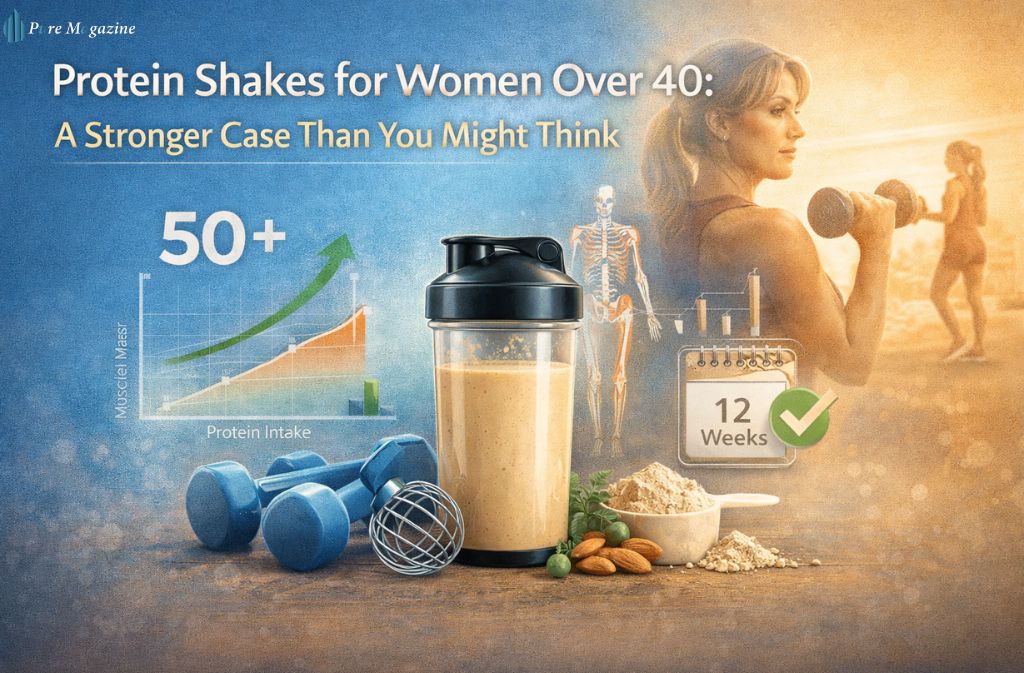
The argument for protein supplementation actually gets stronger with age, not weaker. From around 40 onwards, women start to experience measurable declines in muscle mass — a condition called sarcopenia — driven partly by natural ageing and accelerated by the hormonal changes of perimenopause and menopause. As oestrogen declines, the body becomes less efficient at using dietary protein for muscle maintenance, meaning you need more of it to achieve the same effect.
A 2025 study in Frontiers in Nutrition examining protein intake in older women with sarcopenia found that moderately increasing protein intake to 1.2g/kg/day (compared to the standard 0.8g/kg recommendation) produced meaningful improvements in muscle mass and physical function over 12 weeks. The standard RDA for protein is a floor to prevent deficiency — not a recommendation for healthy ageing.
For women in their 40s and 50s, the practical implications are: metabolism slows, fat storage increases, recovery takes longer, and muscle mass becomes harder to maintain without active effort. A daily protein shake — particularly a leucine-rich whey or a quality plant blend — can meaningfully support the muscle retention that underpins a healthy metabolic rate during this life stage.
It’s also worth being aware that some supplements interact with health testing in unexpected ways. High-dose biotin, which some women take alongside protein powders for hair and nail support during perimenopause, can affect the accuracy of certain blood markers. If you’re getting blood work done, it helps to understand how blood tests work and what factors can influence results — especially when you’re taking multiple supplements at once.
How Much Protein Do Women Actually Need?
| Goal | Daily Protein Target |
|---|---|
| General health maintenance | 0.8g per kg of body weight |
| Fat loss (while preserving muscle) | 1.2–1.6g per kg |
| Muscle toning and strength | 1.6–2.2g per kg |
| Women over 40, perimenopausal or postmenopausal | 1.6–2.0g per kg |
The easiest practical rule: aim for 20–30g of protein per meal, from a combination of whole food sources and supplementation where needed. Spreading protein across three or four meals is more effective for muscle synthesis than eating the same total amount in one or two large sittings.
When to Take a Protein Shake for Best Results
Timing matters less than most brands suggest — consistency across the day matters far more than hitting a precise window. That said, some timings are more useful than others.
After a workout is the most evidence-backed option: your muscles are receptive to amino acids, and it’s a moment where a shake is a genuinely practical option rather than a forced habit. In the morning it can help blunt cravings that would otherwise derail eating patterns before lunch. Between meals it functions as a high-satiety snack that doesn’t spike blood sugar the way most convenient options do.
What to avoid: using a high-calorie meal replacement shake as a late evening add-on rather than a substitute. That’s an easy way to accidentally add 300–400 calories to a day’s total without realising it.
Why Some Protein Shakes Cause Bloating — and What to Do About It
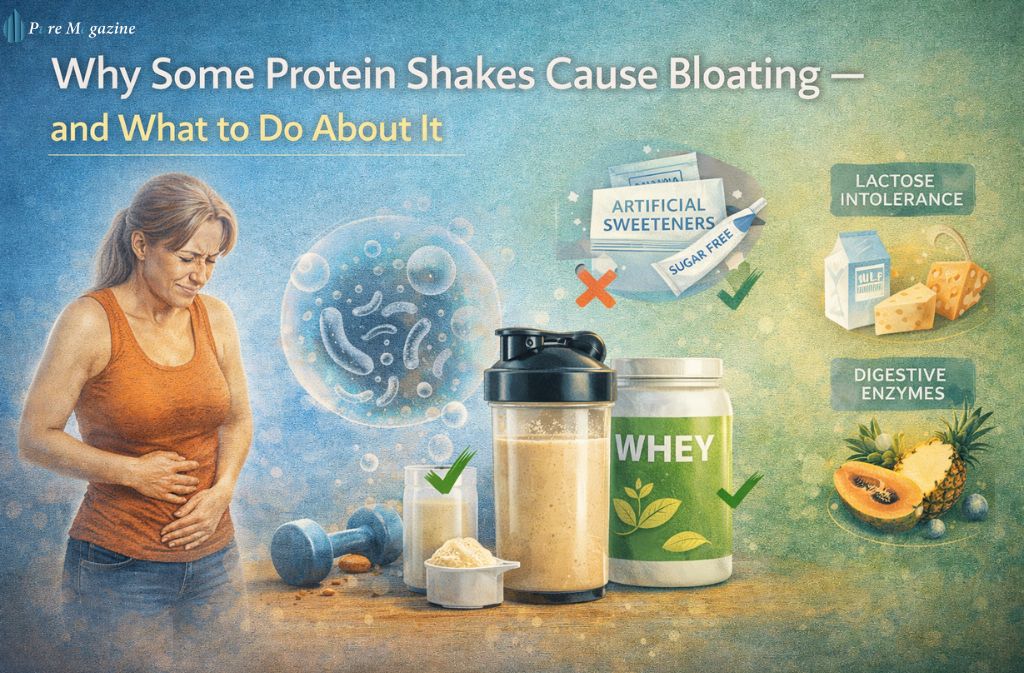
Bloating after a protein shake is common, and almost always has a specific cause rather than being an inevitable side effect of the supplement category.
The most frequent culprit in whey-based products is lactose. Whey concentrate contains meaningful amounts of lactose, and a lot of women are mildly lactose intolerant without knowing it — the symptoms are easy to attribute to other things. Switching to whey isolate (which has most of the lactose removed) or moving to a plant-based blend often resolves this quickly.
Artificial sweeteners and sugar alcohols — sorbitol, mannitol, and similar compounds found in many “sugar-free” protein products — ferment in the gut and cause gas and bloating in sensitive individuals, particularly those with IBS or a less robust gut microbiome. This is frequently the cause when someone reports bloating from a plant-based shake that should technically be easier to digest.
Digestive enzyme additions — bromelain from pineapple and papain from papaya — are increasingly included in modern protein formulations for this reason. They help break down protein before it reaches the lower gut, which reduces the fermentation that causes the bloating. If you’re sensitive, looking for these enzymes on the ingredient list is a practical filter when choosing a product.
On plant proteins specifically: some contain anti-nutrients like phytic acid that can mildly interfere with mineral absorption. In the context of a varied diet this is rarely a meaningful concern, but fermented plant proteins and multi-source blends (pea + rice rather than soy alone) generally have better digestibility and lower anti-nutrient content.
Are Protein Shakes Safe? What to Check Before You Buy
Most reputable protein powders are safe. The concern isn’t the protein itself — it’s what else ends up in the product.
Heavy metal contamination in plant-based proteins is a real, documented issue. Plants absorb minerals from soil, including lead, arsenic, and cadmium, and these can concentrate in products that aren’t well-sourced or tested. The Clean Label Project has published several rounds of testing showing meaningful contamination levels in some well-known brands. The practical response is to look for products with third-party testing credentials — specifically NSF Certified for Sport or Informed Sport certifications. These indicate independent testing for both banned substances and contaminant levels.
Avoid very cheap, unbranded products with no testing transparency. The price difference between a tested and an untested protein powder is often modest; the risk difference is not.
Will Protein Shakes Make Women Bulky?
No. This concern persists despite being straightforwardly unfounded. Women have significantly lower testosterone than men — typically 15 to 20 times lower — and testosterone is the primary hormonal driver of hypertrophy (muscle bulk). Building the kind of muscular mass that reads as “bulky” requires years of progressive overload training, a consistent calorie surplus, and hormonal conditions that most women simply don’t have.
What protein supplementation does support is the lean, toned appearance that most women describe as their actual goal — lower body fat relative to muscle, better definition, and the kind of physical resilience that makes everyday movement feel easier. That’s a different thing entirely from bulk, and it doesn’t happen by accident.
Common Mistakes Worth Knowing About
The most consistent errors come down to a few patterns.
Adding a protein shake on top of an already-adequate calorie intake without reducing anything else. A 30g protein serving typically adds 150–200 calories. If you’re in a fat-loss phase, those calories need to come from somewhere.
Expecting changes without pairing protein with resistance training. Protein supports muscle synthesis — but the stimulus that tells your body to actually build and maintain muscle comes from training, not from the shake. The shake provides the building materials; the workout provides the instruction.
Choosing high-sugar products and wondering why body composition isn’t improving. Some protein shakes — particularly ready-to-drink options — contain more sugar than a chocolate bar. Check the nutrition label before you commit to a product.
Treating one protein type as interchangeable with another. If you’re taking collagen for skin and hair, that’s a separate purpose from a whey shake taken for muscle recovery. They don’t substitute for each other. If you’re unsure whether biotin is actually delivering results for hair alongside your protein routine, that’s worth reading separately — the evidence there is less clear-cut than the marketing implies.
Overconsuming protein in the belief that more is always better. There’s a ceiling above which additional protein provides diminishing returns. Beyond roughly 2.2g/kg for active women, you’re not gaining meaningful additional benefit, and you may be displacing other nutrients that matter.
The Future: Personalisation Is Coming
The supplement market in 2026 is moving toward genuine personalisation in ways that weren’t possible five years ago. Continuous glucose monitors are giving women real-time data on how their blood sugar responds to different protein types and timings. DNA-based nutrition analysis and gut microbiome testing are starting to appear in consumer health plans, offering more specific guidance on which protein sources suit your individual digestive profile.
This matters because the “best protein shake” framing is already somewhat outdated. The more useful question will increasingly be: what’s the best protein for your body, your cycle, and your goals at this specific stage of life? The tools to answer that with precision are arriving faster than most people realise.
Quick Reference
- Choose your protein type based on your specific goal — not the most popular option
- Aim for 20–30g per serving and check that leucine content is adequate
- Increase intake during the luteal phase of your cycle, not just post-workout
- Prioritise third-party tested products, especially for plant-based options
- Pair protein supplementation with resistance training to actually stimulate the muscle response
FAQs
Q. Are protein shakes good for women?
Yes, when chosen well and used strategically. They support satiety, help preserve muscle during fat loss, and fill genuine nutritional gaps. They’re not a shortcut and they won’t override poor dietary habits — but as part of a sensible approach, they’re genuinely useful.
Q. Can protein shakes help with weight loss?
Indirectly, yes. They reduce hunger, support muscle retention during a calorie deficit, and replace less nutritious snack options. They don’t directly burn fat, but the conditions they create make fat loss more manageable.
Q. What is the best protein shake for women?
It depends on your goal and your digestive tolerance. Whey is the highest-quality option for muscle support if you’re dairy-tolerant. A pea-rice blend is the best plant-based alternative. Meal replacements suit weight management. Collagen serves skin, hair, and joint health but isn’t a substitute for the others.
Q. Are protein powders safe for women?
Yes, if you choose quality products with third-party testing. The primary safety concern with plant proteins is heavy metal contamination from poor sourcing — look for NSF or Informed Sport certification as a baseline standard.
Q. Do protein shakes affect hormones?
They don’t directly alter hormone levels. However, adequate protein intake supports the metabolic and hormonal balance that affects appetite, energy, and body composition. Soy protein contains phytoestrogens, which are sometimes a concern — but the evidence suggests normal dietary amounts are not problematic for most women.
Q. When should women drink protein shakes?
After workouts is the most consistently useful timing. Morning use can help manage cravings across the day. Between meals works well as a high-satiety snack replacement. Late evening use should be limited to avoid inadvertent calorie surplus.
Q. Why do protein shakes cause bloating?
Usually lactose in whey concentrate, artificial sweeteners, or sugar alcohols in the formula. Switching to whey isolate or a clean plant blend, and looking for products with digestive enzymes included, resolves most cases. If bloating persists across multiple protein types, gut health may be the underlying issue rather than the supplement itself.
Conclusion
Protein shakes work — but what they do is provide raw material. The architecture of your results still comes from how you eat overall, how you train, how you sleep, and how consistently you do all three. A good protein shake accelerates a functioning system. It doesn’t substitute for one.
For most women, the practical starting point is simple: one well-chosen, third-party tested shake per day, aligned to your actual goal and your digestive tolerance. Not the most aggressively marketed option, not the cheapest, and not one that relies on ingredients the evidence doesn’t support.
The more you understand about your own biology — including how hormones, age, and gut health shape the way you respond — the more effective that choice becomes. That’s true whether you’re 28 and training for a specific goal, 42 and trying to preserve muscle during a busy stretch, or anywhere in between.
Related: C4 Workout Supplement (2026): Benefits, Side Effects & Is It Worth It?