Your carpets are working every single day overtime. They trap dust, soak up spills, and silently absorb whatever walks through your front door. And that matters way more than just aesthetics, because carpet condition is directly tied to the air quality inside your home, and yes, even to how often your family sneezes.
Building solid carpet cleaning tips into your routine and sticking to real home carpet maintenance habits can add years to your flooring’s life. This guide walks you through everything, from two-minute daily habits to seasonal deep cleans, so you’ll always have a clear answer when you’re wondering how to keep carpets clean without overthinking it.
Here’s a stat that might surprise you: EPA research shows that a structured healthy-home program led to a 45% reduction in asthma-related emergency department visits. That connection between indoor environment and health is exactly why healthy carpets at home deserve more attention than most of us give them.
The encouraging part? Most of the battle is won before a single stain sets. It just takes a few simple habits done consistently.
Everyday Habits That Keep Carpets Cleaner With Less Effort
Small choices add up fast. Two targeted daily habits, controlling what enters your home and responding quickly to small messes, carry most of the weight when it comes to carpet longevity.
Simple Entryway Systems That Stop Dirt at the Door
If there’s one root cause of most carpet dirt, it’s shoes. Full stop. The grit, oils, and debris tracked in from outside account for an enormous portion of what embeds into carpet fibers over time.
A shoes-off policy near the entryway removes that problem almost entirely. Add a rough outdoor mat paired with a softer indoor mat, and you’ve cut incoming soil dramatically before it ever reaches your carpet.
Even in a small apartment without a dedicated mudroom, a shoe basket and a little bench create a natural pause point that both guests and family members tend to respect without being told twice.
Protecting High-Traffic Zones Before Wear Sets In
Now that you’ve tackled outside dirt at the source, the next challenge is protecting the interior zones that see the most action.
Runners in hallways, area rugs in family rooms, and stair coverings all absorb impact and shield the carpet underneath. Rotating your furniture every few months redistributes wear patterns so no single path through the house takes a relentless beating.
And honestly, a quick daily walk-through takes less than a minute. Just glance at your high-traffic zones. A crumb dropped before dinner, caught now, doesn’t become a set-in grease stain tomorrow.
Daily Micro-Cleaning That Takes Under Five Minutes
Once the big stuff is handled, it’s the daily accumulation of pet hair, crumbs, and tracked-in dust that quietly chips away at carpet health.
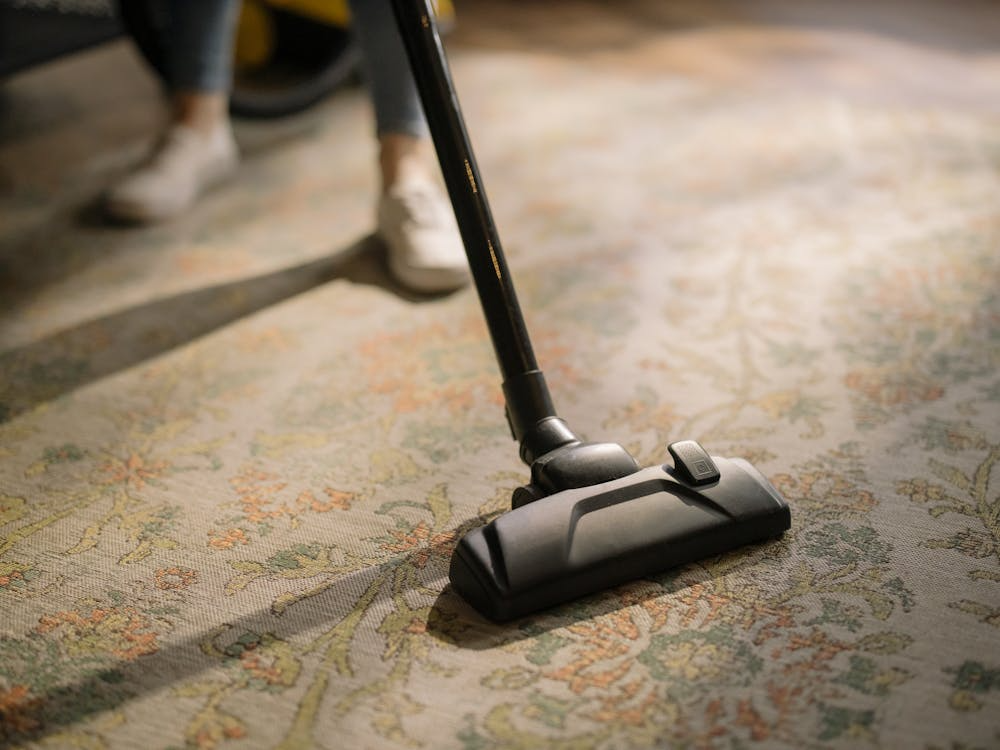
A cordless stick vacuum is genuinely the unsung hero here. Running it under the dining table after meals or across your dog’s favorite nap spot takes maybe three minutes.
For pet hair specifically, a rubber-bristle brush tool often beats a regular vacuum; it grabs fibers instead of scattering them across the room.
Weekly and Monthly Home Carpet Maintenance Routines
Daily habits set the stage. But it’s your weekly and monthly routines that determine whether your carpets are clean at a fiber-deep level or just look clean on the surface.
Vacuuming Habits That Actually Protect the Fibers
Vacuuming is the bedrock of any real home carpet maintenance plan, but most people are doing it slightly wrong. Speed, technique, and equipment all matter more than folks realize.
Research confirms that following a consistent vacuuming schedule removes 90 to 95 percent of all dry soil effectively. Rooms with kids or pets need at least two passes per week. Low-traffic guest rooms can get away with once weekly.
Slow, overlapping strokes, not hurried back-and-forth dashes, give the brush roll actual time to agitate and lift embedded grit. And if anyone in your household deals with allergies, a HEPA-filter vacuum makes a genuinely noticeable difference.
Your Spill-Response Plan for Stain-Free, Healthy Carpets at Home
Even if you vacuum religiously, spills will happen. What you do in the first sixty seconds matters more than anything else.
Blot immediately, always blot, never rub. Rubbing pushes the stain deeper into the pile and spreads it sideways. Cold water handles most beverage spills.
A drop of mild dish soap in water cuts grease. Keep a simple kit within arm’s reach: white clothes, a spray bottle, baking soda, white vinegar, and an enzyme cleaner for pet accidents. Coffee, tea, and wine? Blot from the outer edge inward so you’re not accidentally enlarging the stain.
Your Monthly Carpet Reset Routine
Beyond stain management, your carpets benefit from a brief monthly refresh. Dust a light layer of baking soda across the surface, let it rest for 15–20 minutes, then vacuum it thoroughly to neutralize mild odors.
A stiff carpet rake lifts flattened piles in high-traffic lanes, giving it back a little life and texture. While you’re at it, take a few minutes to inspect seams and edges for loose backing or pulled fibers; catching those early prevents the kind of repairs that cost real money.
The Best Ways to Clean Carpets Without Causing Damage
Consistent routines keep things looking great, but knowing which methods are actually safe for your specific carpet type is a bigger deal than most guides admit. The best way to clean carpets is almost always the gentlest method that still actually gets the job done.
DIY Cleaning Solutions From Things You Already Own
A simple mix, one teaspoon dish soap, one tablespoon white vinegar, two cups warm water, handles most everyday stains without drama. Always test in a hidden corner first. Wool and olefin blend fibers can react badly to high-pH solutions. And don’t make baking soda a habit on synthetic pile; heavy repeated use can work particles into the backing and become surprisingly difficult to extract fully.
Fiber-Specific Carpet Cleaning Tips for Better Results
Nylon and polyester generally handle hot water extraction without issue. Wool needs cooler water and gentler pH to avoid damage. Before using any machine or concentrated solution, check your carpet’s care label, that small tag exists for good reason. Even experts in carpet cleaning coeur d’alene recommend starting with fiber identification. Honest carpet cleaning tips for better results always start with knowing exactly what your carpet is made of. Skipping that step is one of the most common ways people accidentally damage flooring they were trying to help.
Healthy Carpets at Home: Allergens and Air Quality
Clean carpets aren’t just a visual thing. They affect the air everyone in your home breathes every single day. Healthy carpets at home means actively managing allergens, humidity, and odors, not just surface appearance.
Allergy- and Asthma-Friendly Carpet Cleaning Tips
For allergy-sensitive households, how you clean matters as much as how often. Vacuum when sensitive family members have stepped out, because even a HEPA vacuum temporarily disturbs particles before capturing them. Seal used vacuum bags immediately before tossing them, releasing captured dust back into the room defeats the whole purpose.
Preventing Humidity, Mold, and Mildew
Ideal indoor humidity sits between 30% and 50%. Above that range, carpet backing becomes vulnerable to mold and mildew, often invisible, but responsible for those stubborn musty smells that never quite go away.
A dehumidifier in any basement-level carpeted room pays for itself in peace of mind alone. Dark spots or a persistent damp odor that returns no matter what you do? That’s not a DIY situation anymore, it needs professional eyes.
When to Call a Professional for Carpet Cleaning – Coeur d’Alene and Beyond
Even the most diligent homeowner hits a wall. Recognizing when a problem has moved beyond what DIY can fix is genuinely one of the smartest carpet decisions you can make.
Coeur d’Alene is a gorgeous, family-driven city in North Idaho, and the combination of active outdoor lifestyles and seasonal weather patterns means local carpets face challenges year-round.
Muddy spring thaws, summer dust, fall leaves tracked indoors, holiday foot traffic. When that accumulation builds up, scheduling carpet cleaning with Coeur d’Alene becomes the most reliable path to genuinely deep results that routine home cleaning simply can’t reach.
Providers like Zerorez®, which uses patented Zr™ Water rather than harsh chemical detergents, represent exactly what separates deep professional extraction from surface-level fixes. Soap-free cleaning leaves zero sticky residue behind, which means carpets stay cleaner longer between visits. That’s not a small thing.
Red Flags That Mean It’s Time to Call Someone
Odors that keep coming back after you clean, matted traffic lanes that don’t respond to brushing, stains that reappear after spot treatment, or allergy flare-ups that won’t quit despite your regular home carpet maintenance routine, any of those signals means it’s time to bring in a professional.
How Often Should You Schedule Professional Cleaning?
Most households benefit from professional extraction every 12–18 months. Homes with pets, young kids, or allergy sufferers may need it every 6–9 months. Pairing a solid DIY routine with scheduled professional visits is genuinely the best way to clean carpets for long-term health and durability.
Frequently Asked Questions
Q. What is the best way to clean carpets at home without a machine?
Blot spills immediately, use a mild soap-and-water solution for spot treatment, and lean on baking soda for odor control between deeper cleans. Consistent vacuuming prevents most problems before they start.
Q. How often should you vacuum if you have kids and pets?
High-traffic rooms with kids and pets need at least twice weekly. Removing dry soil consistently stops grit from embedding into fibers over time.
Q. Can baking soda damage carpets with repeated use?
Overuse can leave fine residue embedded in the backing that becomes difficult to fully extract. Use it occasionally for odor control, not as a regular cleaning foundation.
Q. What’s the safest cleaning method for babies and crawling toddlers?
Low-residue, chemical-free extraction is safest. Avoid fragranced sprays and high-pH products, and always let the carpet dry completely before allowing access.
Q. How do you prevent musty smells in humid climates?
Keep indoor humidity below 50%, use a dehumidifier where needed, and ensure carpets dry fully after any spill or cleaning before resuming foot traffic.
Final Thoughts on Keeping Your Carpets Genuinely Clean
Look, maintaining cleaner, healthier carpets doesn’t require a total lifestyle overhaul. It’s about layering small, consistent habits that build on each other. Start with a realistic vacuuming schedule. Put together a simple spill-response kit.
Keep moisture under control before it turns into mold. And when your DIY routine reaches its limit, because eventually it will, a trusted local professional can restore what surface cleaning can’t touch.
Your carpets absorb daily life, protect your floors, and contribute directly to the air your family breathes. That makes them worth the effort. Start with one habit this week. You’ll notice the difference faster than you’d expect.
For more, visit Pure Magazine