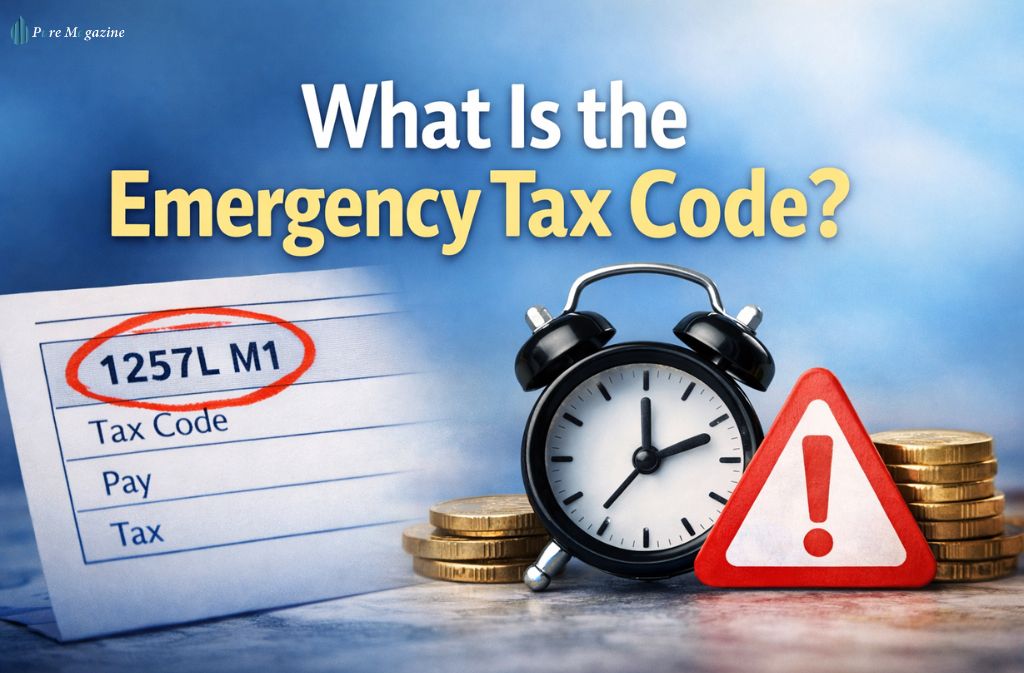
Seeing an unfamiliar tax code on your payslip can be unsettling. One month, your take-home pay looks normal. The next? It’s hundreds of pounds lower. Suddenly you’re asking: What is the emergency tax code — and why am I on it?
In the UK, being placed on an emergency tax code doesn’t mean you’ve done something wrong. It usually means HMRC doesn’t yet have enough information about your income. Until they do, they apply a temporary code to make sure tax is collected.
This guide explains:
- What the emergency tax code actually is
- The current 2025/26 emergency tax codes
- How much emergency tax might you pay
- Why have you been put on it
- How to check your tax code
- How to claim back emergency tax
Unlike most basic explainers, this article includes a practical step-by-step fix system, a real example, and a clear comparison table — so you leave knowing exactly what to do next.
What Is the Emergency Tax Code?
The emergency tax code is a temporary tax code used by HM Revenue and Customs (HMRC) when they don’t have complete income details for you.
As of the 2025/26 tax year, the standard personal allowance is £12,570. That means most people can earn £12,570 before paying income tax.
The standard tax code for most employees is:
1257L
When placed on emergency tax, you may see:
- 1257L W1
- 1257L M1
- 1257L X
- Or sometimes BR, D0, or D1
The letters and numbers matter — and we’ll break them down shortly.
What Does 1257L Mean?
- 1257 → You’re entitled to £12,570 tax-free (divide by 10 rule).
- L → You qualify for the standard personal allowance.
When W1 (Week 1) or M1 (Month 1) is added, it means:
Your tax is being calculated on a non-cumulative basis.
In simple terms?
Your employer taxes each pay period as if it’s the first one of the year — ignoring what you’ve already earned.
Why Am I on an Emergency Tax Code?
You’re typically put on emergency tax when HMRC hasn’t received full information about your income.
Common triggers:
- You started a new job without a P45
- You moved from self-employment to employment
- You receive pension income alongside wages
- You began receiving company benefits or the State Pension
- Your employer used a starter checklist
- HMRC hasn’t updated your personal tax account
This doesn’t mean you’re paying a penalty. It’s a placeholder until your correct tax code is confirmed.
How Much Is Emergency Tax in the UK?
Here’s the key point:
👉 Emergency tax does not have a special higher percentage.
You still pay standard UK income tax rates:
| Tax Band | 2025/26 Rate | Income Range |
|---|---|---|
| Personal Allowance | 0% | Up to £12,570 |
| Basic Rate | 20% | £12,571–£50,270 |
| Higher Rate | 40% | £50,271–£125,140 |
| Additional Rate | 45% | £125,140+ |
The issue is timing — not rate.
On an M1/W1 code, your allowance is spread per pay period:
- Monthly allowance ≈ £1,047.50
- Weekly allowance ≈ £241.73
If you receive a large first payment (bonus, back pay, or irregular pay), it can look like you’re earning that amount every month, leading to higher deductions temporarily.
Example: How Much Emergency Tax on £1,000?
Let’s say you earn £1,000 in your first month on 1257L M1.
- Monthly allowance: £1,047.50
- Income: £1,000
- Result: No income tax due
But if you earn £3,000 in month one:
- £1,047.50 tax-free
- £1,952.50 taxed at 20%
- Approx. £390 income tax deducted
If HMRC later updates your cumulative earnings, overpaid tax is refunded automatically.
Emergency Tax Code Comparison Table
| Tax Code | Meaning | When Used |
|---|---|---|
| 1257L | Standard cumulative code | Normal employment |
| 1257L M1 | Emergency month 1 | New job, no P45 |
| 1257L W1 | Emergency week 1 | Weekly payroll |
| BR | Basic rate (20%) on all income | Second job |
| D0 | 40% on all income | Higher rate of secondary income |
| D1 | 45% on all income | Additional rate of secondary income |
How to Check Your Tax Code (Step-by-Step System)
Here’s a simple 4-step framework to get off emergency tax quickly:
Step 1: Check Your Payslip
Look for:
- 1257L M1/W1
- BR, D0, or D1
Step 2: Log in to Your Personal Tax Account
Access via GOV.UK. Check:
- Current tax code
- Employment details
- Estimated annual income
Step 3: Update Missing Information
You may need to:
- Submit your P45
- Confirm your start date
- Update estimated earnings
Step 4: Contact HMRC (If Needed)
If the code hasn’t updated after a few weeks, contact HMRC directly.
In many cases, it corrects automatically once payroll submissions are processed.
Can I Claim Back Emergency Tax?
Yes.
If you’ve overpaid tax due to an emergency code:
- Refunds often happen automatically through payroll.
- If employment ends, you may need to submit:
- Form P50 (if unemployed)
- Self Assessment (if self-employed)
Refunds typically arrive within 4–8 weeks.
According to the official GOV.UK, overpaid tax is refunded once HMRC receives updated income details.
Common Mistakes People Make
- Ignoring the tax code for months
- Assuming the emergency tax is permanent
- Not checking their personal tax account
- Forgetting to submit a P45
- Not reviewing tax codes after a job change
Small oversight. Big impact.
2026 Insight: Why Emergency Codes Are Increasing
Payroll transitions and side income are more common in 2026:
- Gig work + full-time jobs
- Pension drawdowns alongside employment
- Multiple income streams
More income sources = more data gaps = more temporary emergency codes.
The good news?
HMRC systems now auto-correct faster than in previous years — often within 1–2 payroll cycles.
Quick Emergency Tax Cheat Sheet
✔ Emergency tax is temporary
✔ It uses normal tax rates
✔ M1/W1 means non-cumulative
✔ You can check it online
✔ Overpaid tax is refundable
FAQs
Q. Is 1257L an emergency tax code?
1257L on its own is not an emergency tax code — it is the standard UK tax code for the 2025/26 tax year.
It becomes an emergency tax code when it includes W1, M1, or X, such as:
- 1257L M1
- 1257L W1
- 1257L X
These suffixes mean your tax is calculated on a non-cumulative basis, so each pay period is taxed separately rather than using your total earnings for the year.
Q. What is the current emergency tax code in the UK?
The most common emergency tax codes in the UK for 2025/26 are 1257L M1 and 1257L W1.
These codes apply the standard personal allowance (£12,570) but spread it across each pay period instead of the full tax year.
You may also see:
- BR – 20% tax on all income
- D0 – 40% tax on all income
- D1 – 45% tax on all income
Emergency tax codes are issued by HM Revenue and Customs when income information is incomplete.
Q. Why am I put on an emergency tax code?
You are put on an emergency tax code when HMRC does not yet have full details of your income.
This commonly happens when you:
- Start a new job without a P45
- Move from self-employment to employment
- Begin receiving pension income
- Have more than one job
- Receive company benefits
The emergency code is temporary and usually updates automatically once your employer submits payroll information.
Q. How much is the emergency tax in the UK?
There is no special emergency tax rate in the UK.
You still pay standard income tax rates:
- 20% (basic rate)
- 40% (higher rate)
- 45% (additional rate)
The difference is that your personal allowance is applied per pay period instead of cumulatively. This can result in paying more tax temporarily, especially if your first payslip is higher than usual.
Q. How do I get off emergency tax?
To get off emergency tax, you need to ensure HMRC has accurate income information.
You can do this by:
- Giving your employer your P45
- Completing a starter checklist
- Logging into your Personal Tax Account
- Contacting HMRC directly if the code doesn’t update
In most cases, your tax code corrects automatically within one or two payroll cycles.
Q. Can I claim back the emergency tax?
Yes, you can claim back emergency tax if you overpaid.
Refunds usually happen automatically through payroll once your correct tax code is issued.
If not, you may need to:
- Submit a P50 (if unemployed)
- Complete a Self Assessment tax return
- Contact HMRC directly
Overpaid tax is refundable — emergency tax is not a penalty.
Q. What does W1 or M1 mean on a tax code?
W1 (Week 1) and M1 (Month 1) mean your tax is calculated on a non-cumulative basis.
This means:
- Each week or month is taxed separately
- Previous earnings in the tax year are ignored
- You may temporarily pay more tax
Once your tax code becomes cumulative again, any overpaid tax is adjusted automatically.
Conclusion
So, what is the emergency tax code? It’s simply a temporary tax code used when HMRC doesn’t yet have your full income picture.
It can reduce your take-home pay in the short term — but it’s rarely permanent.
Here’s what to remember:
- Check your payslip immediately
- Log in to your personal tax account
- Submit missing documents
- Don’t panic — refunds are common
- Review your tax code after every job change
Most cases resolve quickly once the correct tax code is issued.
Related: PA302 Simple Assessment Explained (2025 Guide): What It Means & What to Do