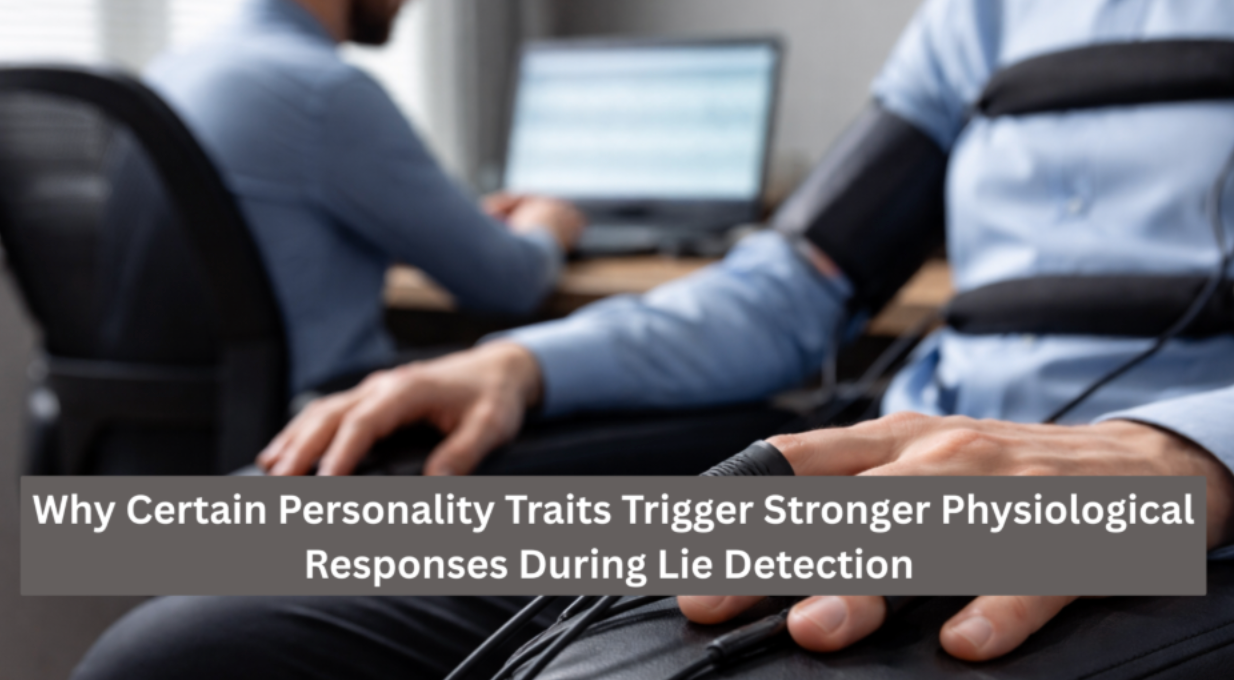
You may have noticed that some people seem calm under pressure while others seem to react strongly even to simple questioning. This difference is especially pronounced in high-stakes situations involving the verification of the truth. Your heart beats faster, your breathing becomes irregular, and slight tension in your muscles appears before you realize it. These reactions can be confusing, especially when you think you are in control of your emotions.
However, the problem is how your personality influences the way your body responds automatically. While everyone responds to stress differently, there are characteristics that enhance physiological responses when being questioned. As a result, an understanding of this connection is essential for an accurate interpretation of human behavior.
This article describes how certain personality traits affect physiological reactions in lie detection and why these differences are important in applications of testing these methods in real-world situations.
1. High Anxiety Sensitivity Amplifies Stress Signals
If you tend to notice every change in heartbeat or breath, your physiological reactions may be shaped by anxiety sensitivity. Individuals with this trait are very sensitive to internal sensations. As such, their bodies respond more strongly during questioning, even if there is no deception.
During a lie detector examination, this increased awareness often causes increased heart rate, irregular breathing patterns, and increased perspiration. These responses are not conscious. Instead, they are a result of the interpretation by the nervous system of a threatening situation.
Moreover, anxiety-sensitive people may worry about being misunderstood. That concern serves to further increase stress levels. As a result, physiological responses increase in intensity and frequency. This trait points to why emotional perception is just as important as factual accuracy in the testing process.
2. Conscientiousness Increases Performance Pressure
If you are responsible and accurate, conscientiousness may be influencing your response patterns. People high in this trait often put strong emphasis on doing things the right way. Therefore, being evaluated can feel personally meaningful.
As questioning advances, this internal pressure triggers the stress response of the body. Heart rate variability may slow down, and muscle tension may increase. These changes are because your mind is thinking of the situation as a performance and not a conversation.
Additionally, conscientious people may mentally rehearse answers. This cognitive effort becomes a part of the physiological load. Over time, the body responds to this strain with measurable responses. As such, conscientiousness may inadvertently add stress signals to evaluation.
For more, visit Pure Magazine