


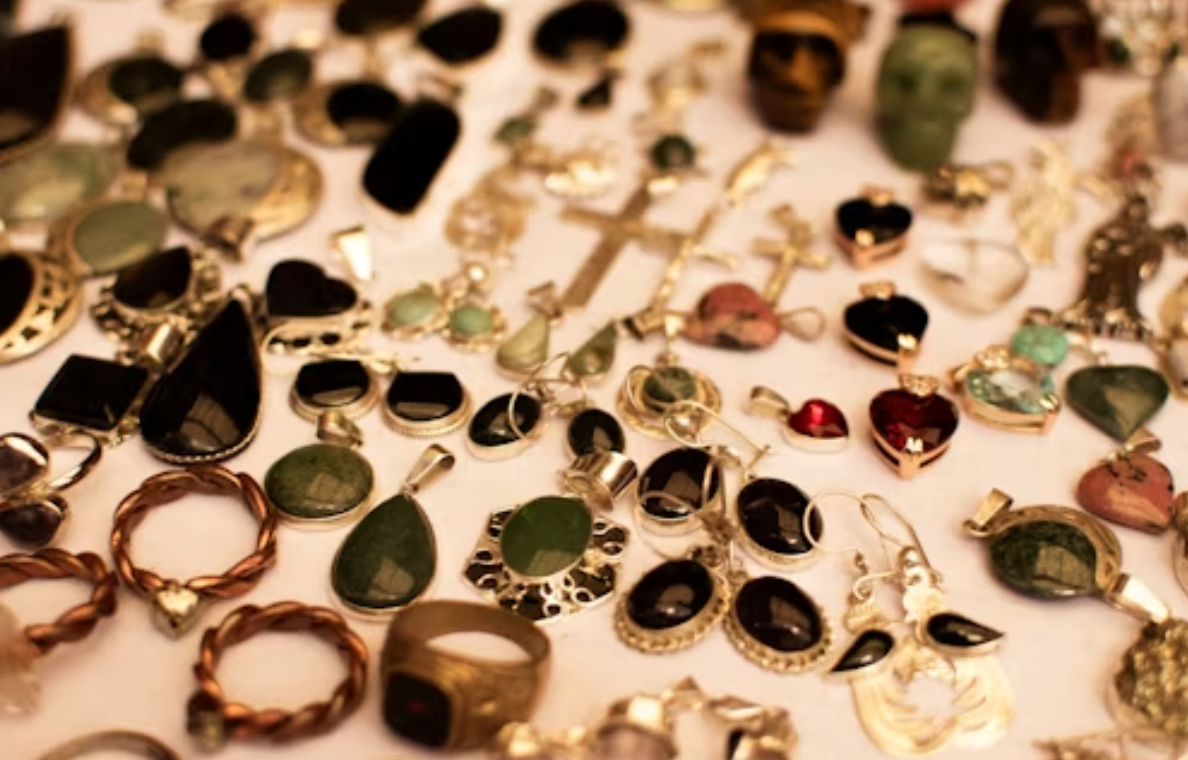
Among the trends in the fashion sector, custom costume jewelry has gained popularity especially among B2B companies, to diversify their offering, while also building loyalty towards their brands. Because of the need for self expression, wholesale costume jewelry suppliers have started offering individualized services to customers. The personalization trend is more than just an industry phenomenon; it’s a business strategy to stand out from the competition and increase profitability.
This article discusses how personalization, along with collaboration with suppliers and flexible design strategies, will empower B2B brands to build a competitive edge in the jewelry business.
The B2B Market’s Altered Demand for Custom Jewelry
The fashion jewelry business is one of the sectors that has experienced the most significant change. The customers of the sector, especially the resellers and e-commerce businesses, do not want homogeneous products anymore, but rather, offerings that cater to their audience’s cultural, seasonal and aesthetic needs. This poses a challenge to B2B participants. The industry’s need is to transition from one large production run of the same design to custom jewelry collections to provide uniqueness, but still allow the business to scale.
Wholesale costume jewelry suppliers are integral in this process. They allow companies to adjust the design in bulk to different materials, plating colors, logo engraving, and even custom packaging. This model allows companies to build unique collections, differentiate themselves in the marketplace, and increase customer loyalty. For example, one supplier might supply different variations of trendy hoop earrings, or layered necklaces, customized to varying tastes in different markets.
In the B2B landscape, personalization is branding. Retailers are able to sell the jewelry as part of their signature collection, thus, branding, and creating a perceived value, while keeping the efforts cost-effective.
Benefits of Custom Costume Jewelry Partnerships for B2B Brands
Working with wholesale costume jewelry suppliers gives B2B brands a range of benefits brought about by the suppliers’ industry experience, and go-better-than-most ability in manufacturing, technologies, and designs. These attributes enable the suppliers to master the process to optimum efficiency from bespoke design to creation.
- Quick Responsiveness to Market Changes:
Fashion cycles are becoming shorter and shorter. Suppliers who are adaptable to their partners are able to help B2B brands capture the market with their able and fast tuning supply of custom designs that align with a given trend or a seasonal demand. - Brand Differentiation:
Standing out from the crowd becomes possible through personalization for jewelry brands, especially in a mostly saturated industry. Certain aspects such as a particular metal finish, the order of the gemstones in a custom arrangement, or a specific motif create a trademark style for every jewelry brand.
- Higher Profit Margins:
Personalization also allows for greater price variation. When marketed as exclusives or limited collections, personalized jewelry items can exceed the price of customized necklaces and bracelets. From the greater perceived pops of items, retailers also benefit via steady customer loyalty. Coupling personalized products with a B2B loyalty program can incentivize customers to prioritize your exclusive lines over competitors, turning unique offerings into measurable revenue growth.
- Supply Chain Efficiency:
With most supply fires, the business has the ability to create quality mockup designs and maintain quality through assured Logistics. Because of this Proprietary Design model, the business can rely upon consistent quality and delivery.
An example includes, an earrings manufacturer and necklace design studio who collaborates through B2B jewelry distributors to create custom engraving or mixed material designs for exclusive lines. Creativity in this development partnership is complemented by increased profitability.
Key Strategies for Personalization for B2B Jewelry Brands
Both the creative and technical personalization of the jewelry industry is an interesting journey, especially for B2B companies. Their challenge is to design with enough flexibility in the design and cost controls to be effective.
1. Modular Design Systems
Offering brands design flexibility becomes possible through interchangeable jewelry components. Detachable charms, clip-on pendants, and adjustable chains let jewelry brands mix and match pieces across numerous collections. Such coordinated design techniques offer a lot of variety in designs while also eliminating the need for different tools with every variation.
2. Material and Finish Customization
Recent trends with wholesale costume jewelry suppliers are offering a variety of different materials aside from just the common brass. Retailers are offering choices of stainless steel and different alloys, each with a variety of plating options, including gold, silver, and rose tones. Options like eco-friendly materials and hypoallergenic coatings appeal to the sustainability-focused retailers.
3. Branding Integration
To help enhance a product and brand cohesion, logo engraving, custom hang tags, and branded packaging are all options. Deepening brand identity in different, subtle, yet noticeable elements help jewelry companies gain brand recognition in the different places they sell.
4. Digital Prototyping and Sampling
To help mitigate the risks manufacturers are possibly running into, a lot of suppliers will employ 3D modeling and other programs to present visual prototypes to customers so they can see what the final product may look like. This helps to ensure the final product reflects the brand vision of the customer.
5. Trend-Based Customization
Using data analytics and fashion forecasting, suppliers and brands are able to predict what designs will be favored. For example, if geometric shapes or pearls are a trending design, B2B brands can assume that will be an expected design to include in their next custom series.
Challenges in Implementing Customization at Scale
Though personalization comes with certain perks, it can also complicate the processes of production and logistics. Custom orders at large volumes require synchronization from three different processes including the design team, the manufacturing unit, and the supply chain partners.
Production Efficiency:
When custom designs are in the works, changes in the mold and the opening of new materials that need to be sourced can increase the time it takes to put together an order. Suppliers of B2B brands need to have flexible and responsive manufacturing systems that can work with varying order quantities.
Quality Control:
Maintaining consistent quality and uniformity across multiple custom variations can be the hardest task. By instituting rigid quality inspections and control standards to control the quality of the custom variations can be costly, but every piece can be produced with the same quality.
Cost Control:
Customization comes with additional expenses, like the development of prototypes and the design of custom packaging. Businesses can remain profitable in these cases if the personalization is made scalable, and is allowed to offer subsets of designs that have custom options.
Communication Barriers:
Communication is the most important aspect of narrowing the gaps that lead to misunderstandings in design, materials, and measurements. To avoid these issues with international suppliers, digital design tools and collaboration in documentation can be very helpful.
The Future of Personalized Jewelry Manufacturing
B2B in jewelry customization will focus more on manufacturing tech and customizations linked to actionable insights. Closing the gap with more digitalization and trade will be focused on the sustainable and flexible production of materials and design. AI and tech will enhance the design of jewelry to keep customization to an optimal level.
Innovative wholesale costume jewelry suppliers have begun to change for the better by establishing smart production systems capable of efficiently managing small, yet diverse batches, concurrently with the changing demands of the industry. This change corresponds with the industry’s growing tendency to select sellers who offer tailored products, in the form of collections with storylines that speak to their individuality.
In addition, the focus of the next stage of customization is on sustainability. Companies have begun to look for suppliers that have the ability to create eco-friendly diffusion practices, along with ethically sourced, plated materials, and of course, recycled materials to help them satisfy the marketplace along with the positive demands of the planet.
Conclusion
In the B2B market, the demand for custom costume jewelry is not only about a style change. It represents a fundamental restructuring of an entire industry. Personalization opens the door for businesses to strengthen a brand, improve brand loyalty, and capitalize on the more lucrative segment of the fashion jewelry industry.
Working with qualified wholesale costume jewelry suppliers allows businesses to seamlessly adopt the transformation, providing the required flexibility, innovative strategies, and quality control. Whether with an earrings manufacturer and a design partner, or by branching out to offer personalized jewelry sets, industry leaders will continue to shape the future with creativity by investing in the customization of B2B models.
For more, visit Pure Magazine