


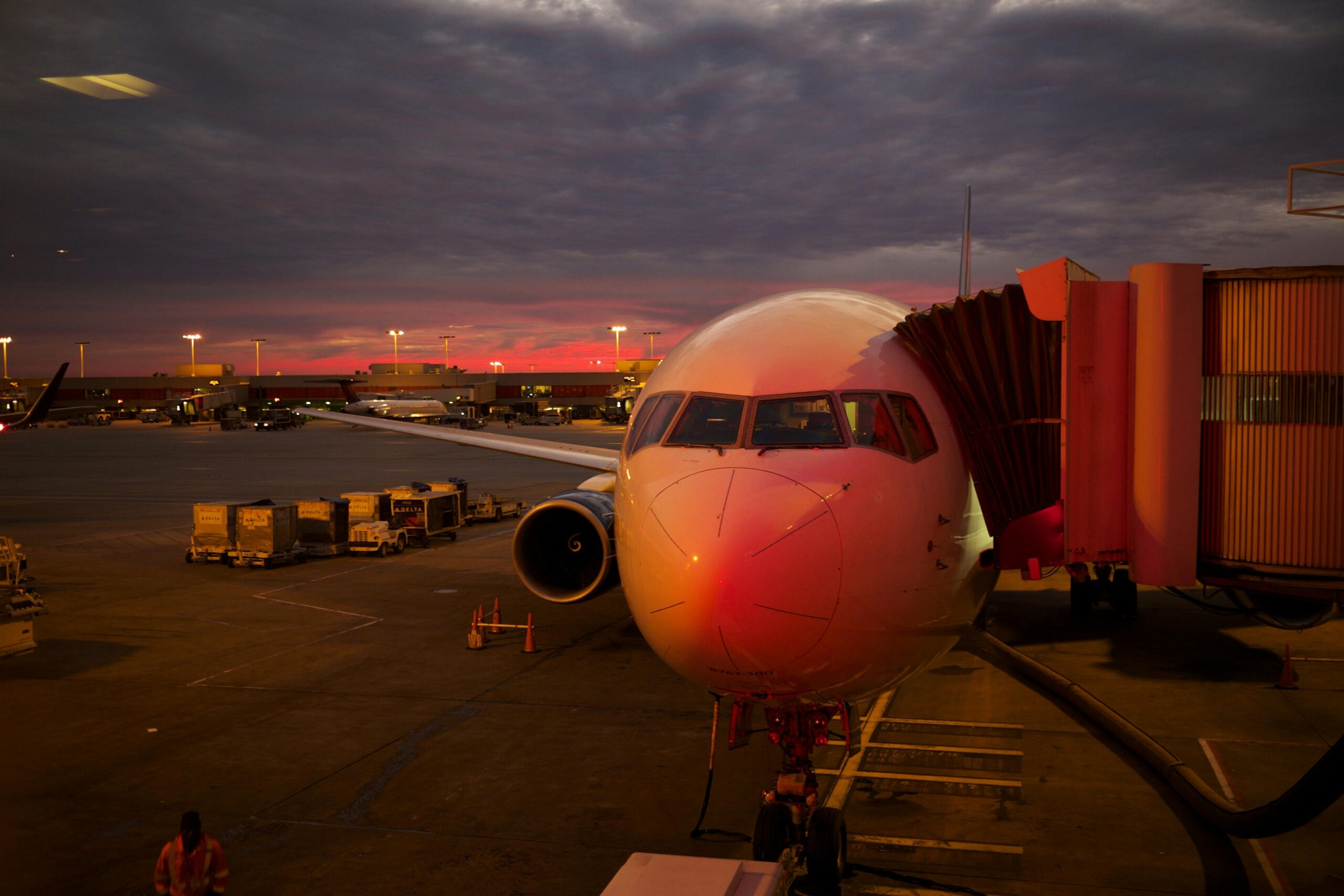
Commercial aviation stands as one of humanity’s most remarkable technological feats, think about it: massive metal structures weighing hundreds of thousands of pounds routinely cruise at speeds approaching 600 miles per hour, seven miles above the earth’s surface. Yet for most passengers, the experience feels almost routine. What makes this possible? It’s an intricate dance of physics, engineering, and innovation that’s been refined for over a century. Modern commercial aircraft aren’t just flying machines; they’re sophisticated ecosystems where countless components work together with precision that borders on the miraculous.
The Fundamental Principles of Flight
Every commercial flight relies on a delicate interplay of four forces that pilots learn about from day one: lift, weight, thrust, and drag. Wings aren’t just flat slabs of metal, they’re carefully crafted with a curved shape called an airfoil that creates magic through simple physics. As air flows over the wing, it moves faster across the top surface than underneath, creating lower pressure above and higher pressure below. That pressure difference literally pushes the wing upward, counteracting the aircraft’s enormous weight pulling downward through gravity.
Jet Engine Technology and Propulsion Systems
Step close to a commercial airliner’s engine, and you’ll witness engineering at its finest. These turbofan powerhouses work through a brilliantly efficient process that starts with that massive fan you see at the front, it’s not just for show. Air rushes into the engine where it gets compressed by multiple spinning blade stages, then enters the combustion chamber where fuel ignites in a controlled explosion. The resulting hot gases expand rapidly, spinning turbine blades as they exit, which in turn power both the compressor and that front fan.
Flight Control Systems and Avionics
Gone are the days when pilots physically wrestled with mechanical cables to move control surfaces. Today’s commercial aircraft employ fly-by-wire technology where pilot inputs travel electronically to actuators that precisely position ailerons, elevators, and rudders. Ailerons on the outer wings control roll, letting the aircraft bank left or right. Elevators on the horizontal tail surface manage pitch, pointing the nose up or down.
Hydraulic and Electrical Systems
Ever wonder what actually moves those massive control surfaces against hundreds of miles per hour of airflow? The answer lies in hydraulic systems pushing fluid at pressures exceeding 3, 000 PSI through networks of pumps, valves, and actuators. This incredible force powers not just flight controls but also extends and retracts landing gear, operates brakes, and drives dozens of other mechanical systems throughout the aircraft. Designers never rely on a single hydraulic system, instead, commercial aircraft feature multiple independent systems that can back each other up if one fails. The electrical system proves equally vital, with engine-driven generators producing enough power to run a small town.
Environmental Control and Cabin Pressurization
Here’s something most passengers don’t realize: at typical cruising altitudes above 30, 000 feet, the outside air temperature drops to around minus 60 degrees Fahrenheit, and there’s barely enough oxygen to sustain consciousness. Environmental control systems solve this elegantly by drawing compressed air from the engines, cooling it through air conditioning packs, and distributing it throughout the cabin. The pressurization system maintains cabin pressure equivalent to being at 6, 000 to 8, 000 feet elevation, even when the aircraft cruises at 38, 000 feet or higher. Outflow valves continuously regulate this pressure by controlling how much air escapes, creating a comfortable differential between inside and outside without overstressing the fuselage.
Structural Design and Materials Engineering
Commercial aircraft structures represent the ultimate exercise in doing more with less, creating something strong enough to handle enormous forces while keeping weight absolutely minimal. The fuselage essentially forms a pressurized tube built from aluminum alloys, advanced composites, or hybrid combinations, with internal frames and stringers providing critical support. Wings contain remarkably complex structures including spanwise spars and carefully shaped ribs, all engineered to handle bending, twisting, and aerodynamic loads during flight. Modern aircraft increasingly incorporate carbon fiber reinforced polymers and other composites that deliver superior strength-to-weight ratios compared to traditional aluminum.
Auxiliary Systems and Operational Components
The glamorous flight systems get most of the attention, but countless auxiliary systems work behind the scenes to keep commercial aircraft operational. Landing gear involves far more complexity than you’d guess, massive struts absorb impact forces during touchdown while intricate mechanisms reliably extend and retract wheels that must support the entire aircraft weight. Anti-skid systems prevent wheel lockup during braking, much like ABS in your car but scaled up dramatically. Thrust reversers redirect engine thrust forward after landing, helping slow the aircraft without overwhelming the brakes. Fuel systems manage thousands of gallons distributed across wing tanks and sometimes additional fuselage tanks, with pumps and valves ensuring proper supply under all flight conditions including steep climbs and descents. The auxiliary power unit tucked in the tail provides electrical power and compressed air when main engines aren’t running, enabling ground operations and serving as emergency backup. Aircraft also feature comprehensive water systems, waste management that includes properly maintained aircraft lavatory fluid for sanitation, and various support functions that passengers never see but couldn’t fly without.
Conclusion
Understanding how commercial airplanes work reveals engineering that borders on the extraordinary, thousands of components and systems functioning in precise harmony to achieve what still seems almost magical despite being routine. From wings generating lift through pressure differentials to avionics guiding navigation with pinpoint accuracy, every element plays an indispensable role in safe flight. The continuous march of aviation technology has produced aircraft that keep getting more efficient, environmentally conscious, and safer with each generation. These flying marvels transform what our ancestors considered impossible into everyday reality, connecting people and cultures across vast distances with remarkable ease.
For more, visit Pure Magazine
